Chrysocolla coating Quartz
Unknown Owner
Help improve this recordNo owner is registered for this specimen yet. If it's yours or you know more about it, you can add the owner, provenance, publications and other details.
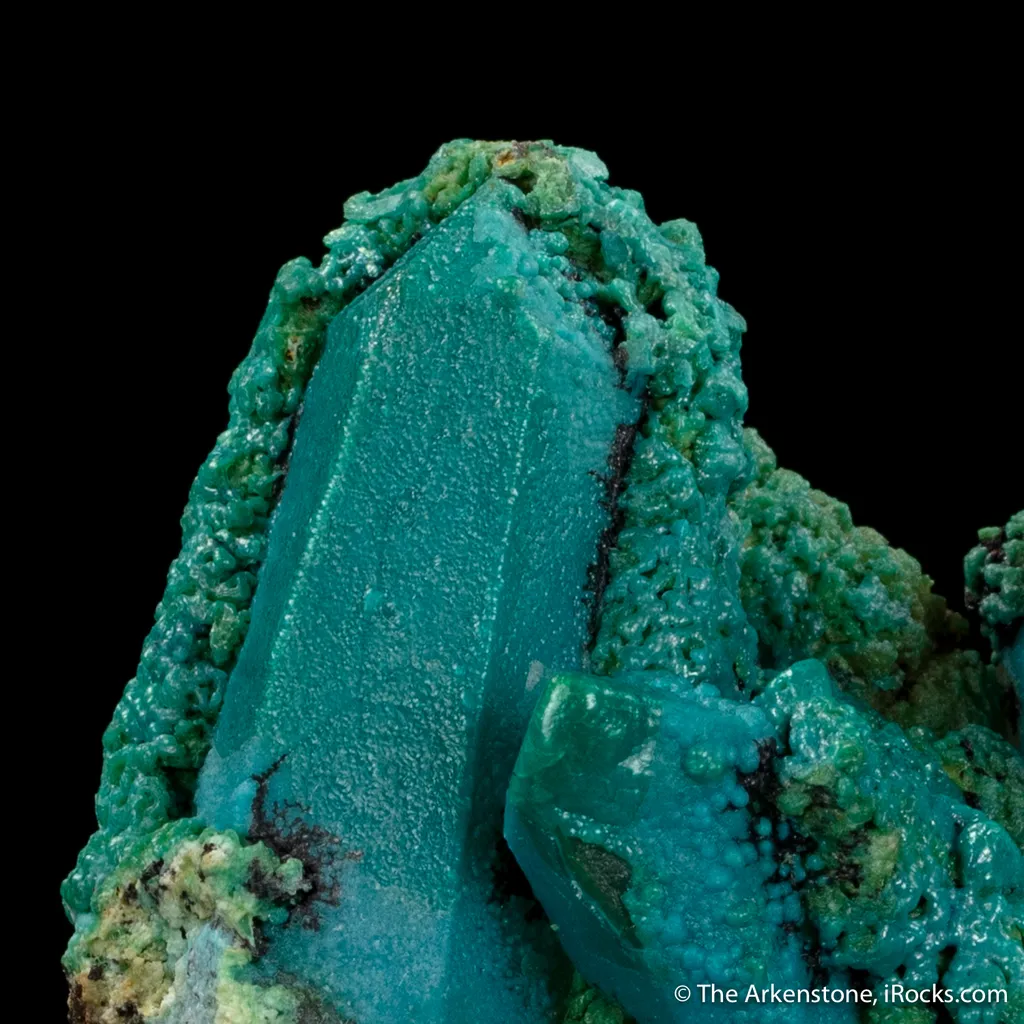
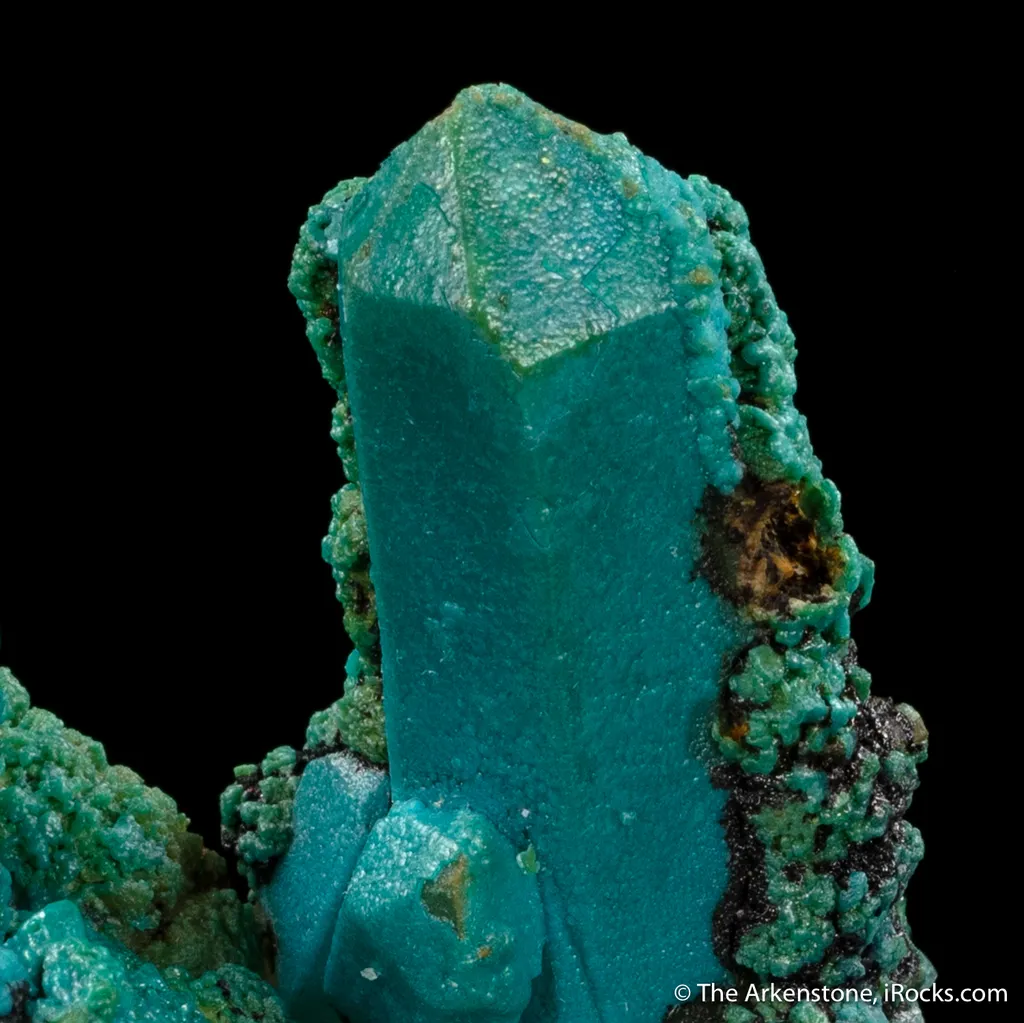
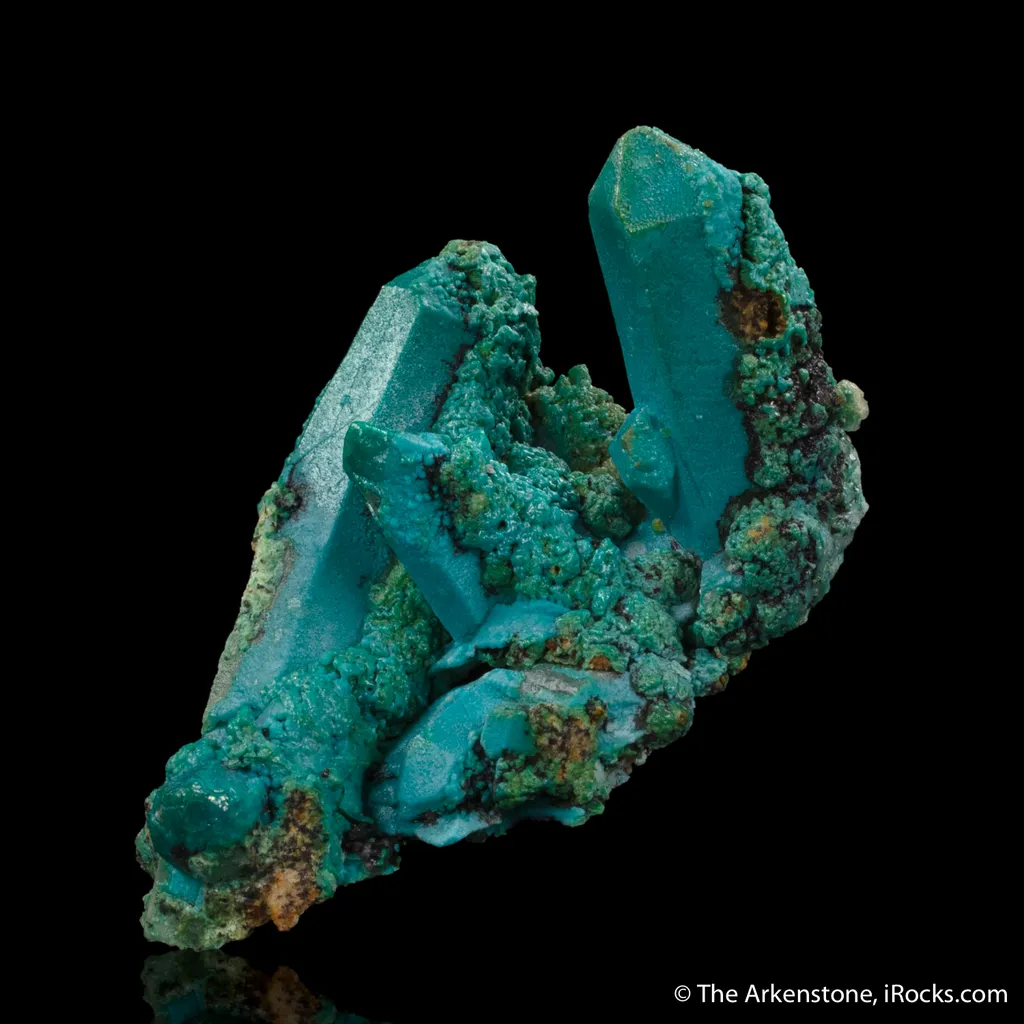
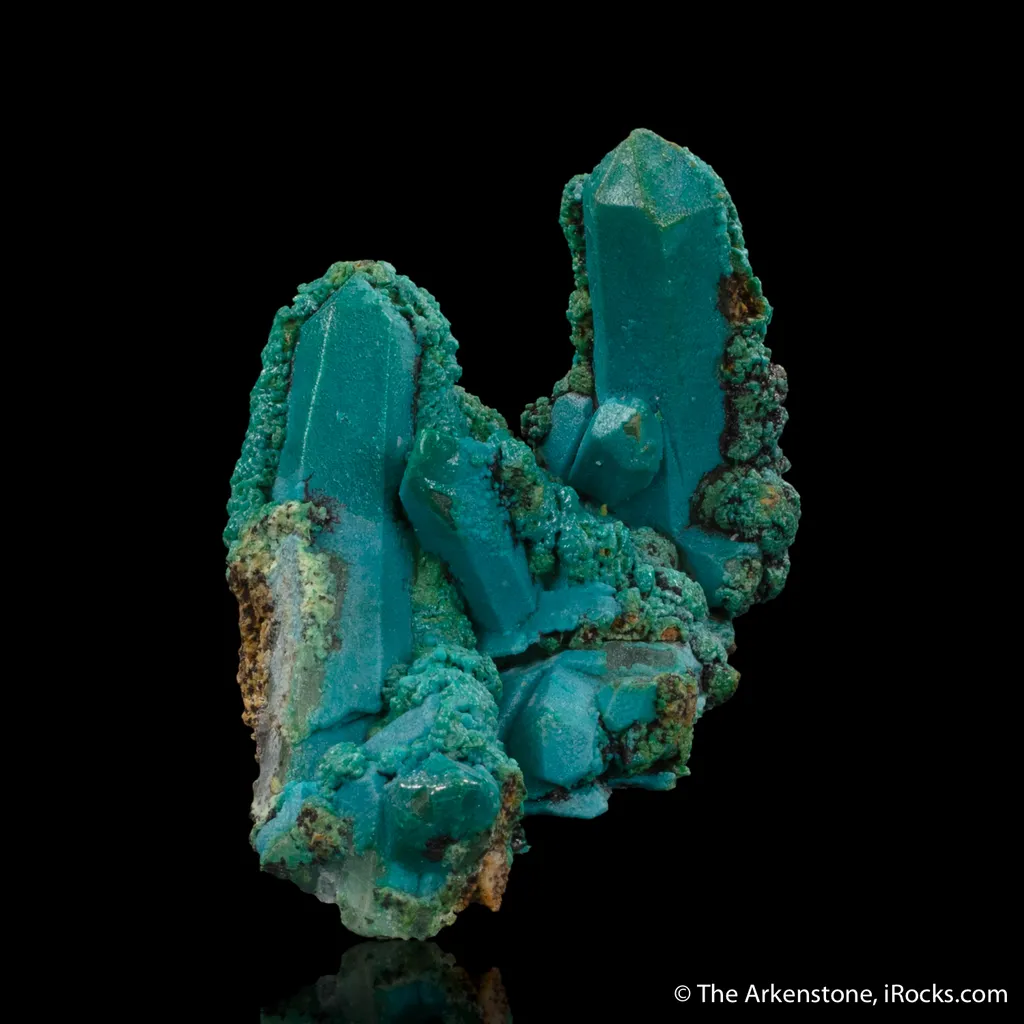
This is a stunning and unusual piece from a small find of 2018 (not well publicized because they all sold so quickly) featuring richly colored Chrysocolla coating columnar, terminated Quartz crystals. Several very well formed Quartz crystals with well defined faces and edges, from 1 to 5 cm in length, serve as a pedestal for a drapery of two generations of stunningly colored Chrysocolla and the result is this super aesthetic small cabinet piece. The first generation of Chrysocolla is a deep turquoise-blue and looks as though it was airbrushed on the Quartz and it completely covers the crystals. The second generation of Chrysocolla is more complex as it occurs as bubbly growths on the earlier generation and selectively covers only half of the Quartz prisms leaving the terminations uncovered so the points are quite prominent. This later generation is more of a green-blue color and the bubbly surface is a few millimeters thick. Minor Goethite staining is present in some of the recessed areas. This piece has both fantastic textural and color contrast. No repairs, and one of the few very elegant and high level pieces of a pocket that produced very few great specimens, and we bought all we could all at the time. This one ended up at the lab for trim and clean and then got lost in our warehouse when it came back just as COVID hit in 2020, so it is the last (and best in size) that we have.
Product details
SpeciesQuartz, Chrysocolla
SizeSmall Cabinet
Dimensions7.3 x 5.1 x 4.4 cm
Added on10/23/2024
LocalityPeru, Huancavelica, Tentadora Mine
Known provenance
| Date | Collector | Acquisition price |
|---|---|---|
| 08/2024 | Unknown Owner | Not disclosed |
| — | The Arkenstone | Not disclosed |
Learn more
Mineral guide
Learn about Quartz
a versatile mineral with clear, milky, and colored varieties; crystal forms, formation clues, and tips for identifying amethyst and citrine.Regional guide
Comments