Karur Amethyst Scepters & Clusters
Karur Amethyst Scepters & Clusters
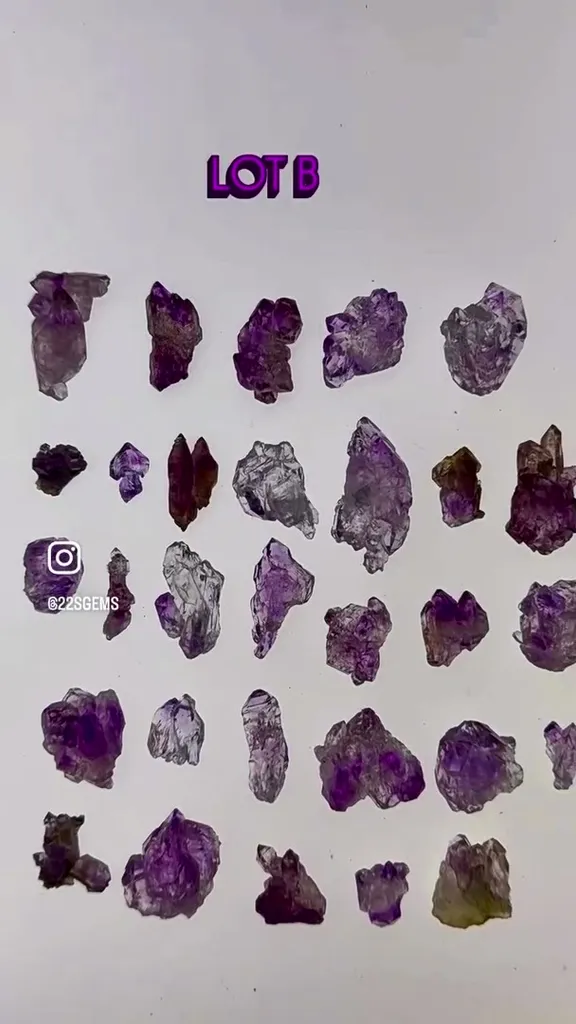
2 LOTS AVAILABLE
LOT A - 48 pieces SOLD
LOT B - 30 pieces AVAILABLE $325
Absolute Beauty with the form and stepping…
Karur Amethyst refers to unique amethyst crystals from the Karur region in Tamil Nadu, India, known for their distinct elestial formations (skeletal, hollow, or layered growth) and sometimes smoky hues, often appearing as scepters or flower-like clusters, offering deep spiritual energy and clarity for meditation and transformation. These crystals differ from typical amethyst, featuring complex growth patterns and sometimes coexisting with biotite or “Super Seven” inclusions, making them prized collector’s items.
Key Characteristics
Origin: Karur District, Tamil Nadu, India, particularly from mines like Kakamunurle.
Formation: Features unique elestial structures (skeletal, dissolution-growth) and often grows as scepters or flower-like sprays.
Color: Ranges from rich purple to smoky, with some showing color zoning or inclusions.
Energy/Metaphysical: Associated with profound spiritual growth, connection to higher consciousness, protection, and clarity, differing from other amethyst types.
Inclusions: May contain biotite or “Super Seven” (Melody’s Stone) minerals, adding to their unique properties.
Why It’s Special
Unique Growth: The elestial structure (skeletal, layered, or hollow) is less common in amethyst than other quartz types.
Distinct Energy: Its energy is considered different and more intense than amethyst from Brazil or Madagascar, according to crystal enthusiasts.
Collector’s Item: Highly sought after by collectors and spiritual practitioners for its rarity and distinct metaphysical qualities.
Comments