
Barite
Unknown Owner
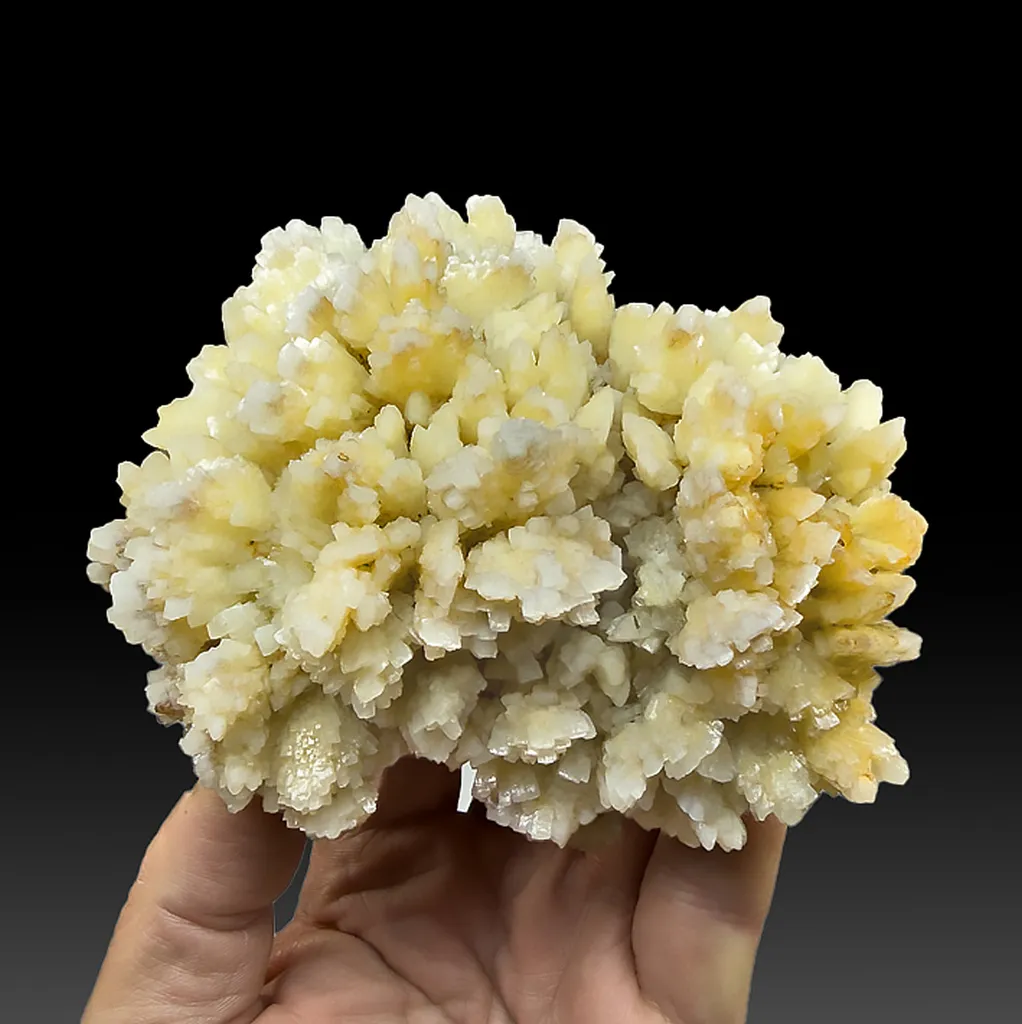
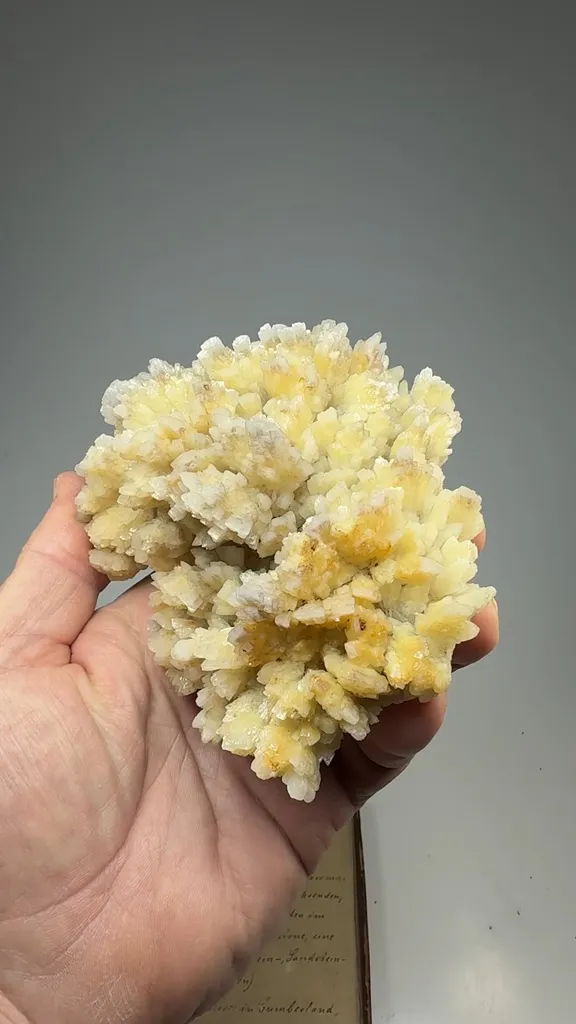
Very fine cluster barite crystals across the top of matrix. This is in excellent condition. A fine 19th century example previously from the collection of Wilhelm Hoyer.The Alston Moor mineral district, located within the North Pennine Orefield of Cumbria, England, is a world-famous historic mining locality celebrated for producing spectacular nineteenth-century barite specimens that typically exhibit massive, highly lustrous, tabular, or amber-colored prismatic crystals. Geologically, this historic deposit is situated within a thick sequence of Carboniferous-age limestone, sandstone, and shale strata that was fractured by regional faulting and subsequently intruded by the igneous Whin Sill complex. Low-temperature, highly mineralized hydrothermal fluids circulated through these extensive fault fissures and dissolution cavities, depositing a classic suite of lead-zinc ores along with abundant secondary barium sulfate minerals, allowing the heavy, translucent barite crystals to grow into pristine clusters within open mineral veins. Historically, organized underground shaft mining at Alston Moor dates back to at least the twelfth century, reaching its massive industrial peak during the nineteenth century under the management of the London Lead Company and the Greenwich Hospital estate, with dozens of active mines like the Holyfield, Rampgill, and Brownley Hill mines extracting vast quantities of galena and sphalerite. These intensive operations systematically declined as the primary ore bodies were depleted, leading to the gradual closure of nearly all major underground workings between the 1880s and World War I.Wilhelm Hoyer (1849-1913) was a prominent German engineer and mineral collector based in Hanover, whose professional work in railway construction and geology facilitated the assembly of a significant mineralogical collection. Geologically, Hoyer was noted for his deep expertise in the Mesozoic formations of northwestern Germany, particularly the Hildesheim area, where he meticulously documented and collected specimens from active quarries and construction sites. His collection was scientifically important for its comprehensive representation of regional minerals and fossils, reflecting the systematic approach of 19th-century European collectors who bridged the gap between industrial mining and academic mineralogy. Historically, Hoyer was active in the latter half of the 1800s and early 1900s, contributing numerous papers to geological societies and maintaining professional ties with major institutions of his era. Following his death, his extensive mineralogical and paleontological holdings were integrated into the collections of the University of Gottingen and the Prussian Geological Survey in Berlin, where they continue to serve as vital reference materials for researchers through 2026.
Product details
Species
SizeCabinet
Dimensions13.0 x 12.0 x 4.5 cm
Added on05/27/2026
Locality
Known provenance
| Date | Collector | Acquisition price |
|---|---|---|
| 05/2026 | Unknown Owner | $825.00 |
| — | Weinrich Minerals | Not disclosed |
Comments