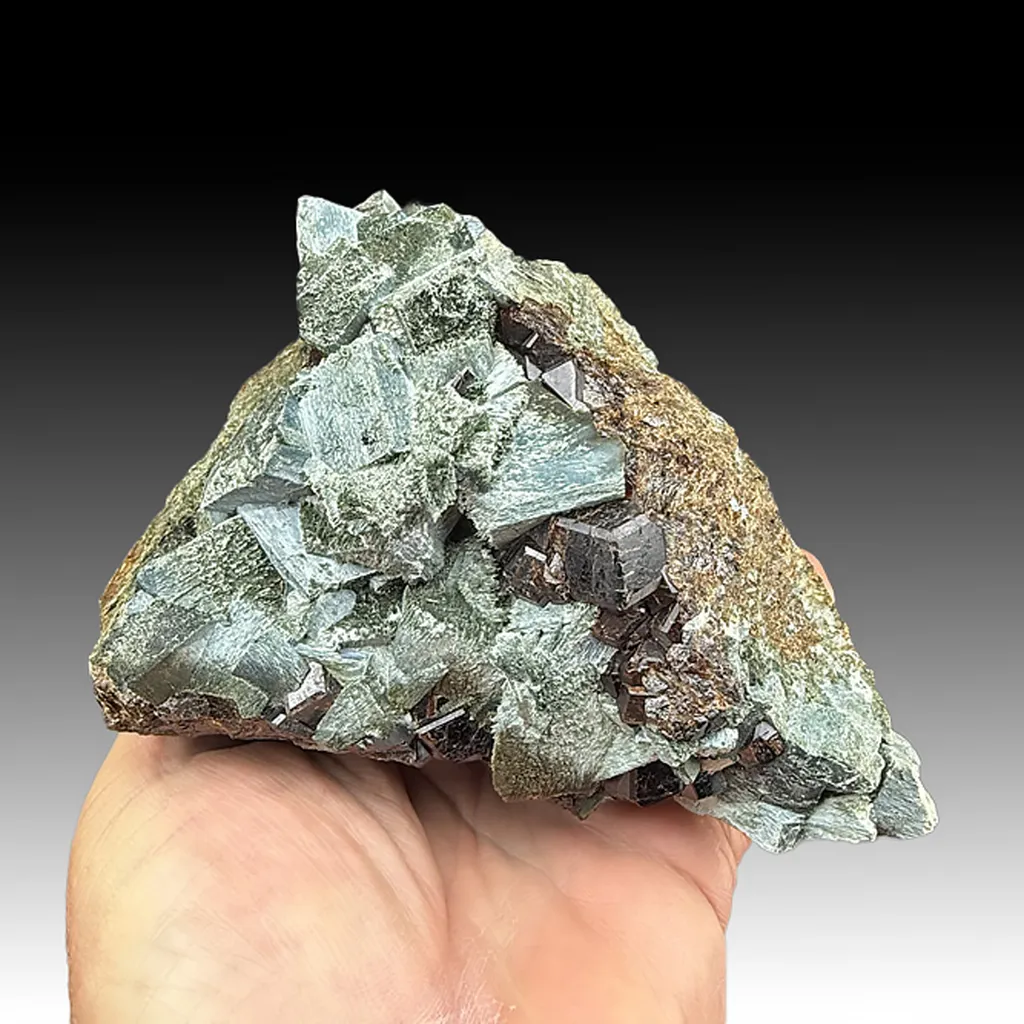
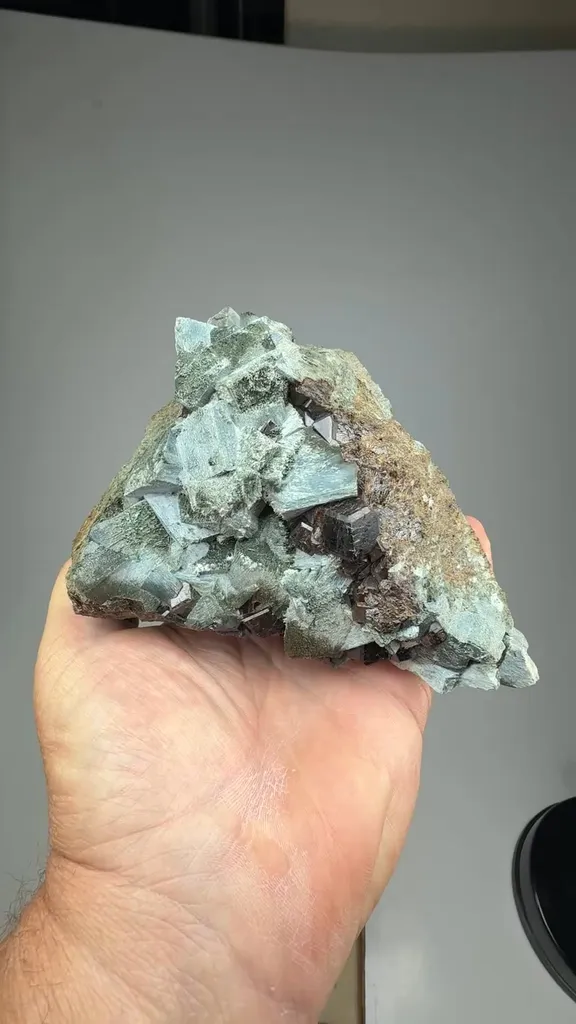
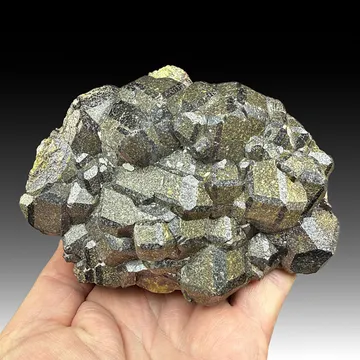
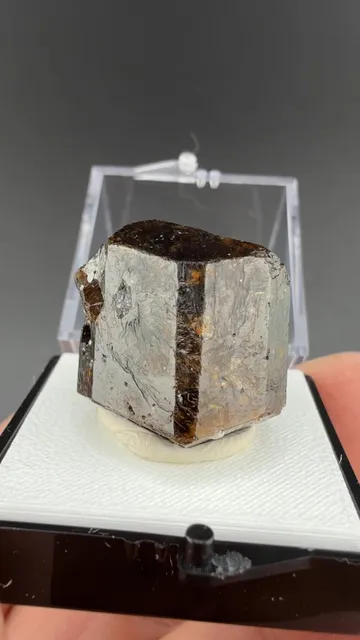
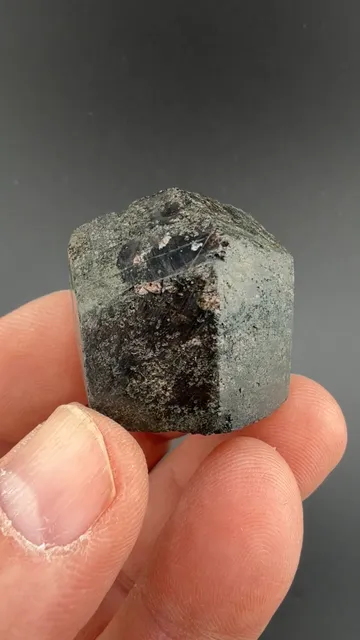
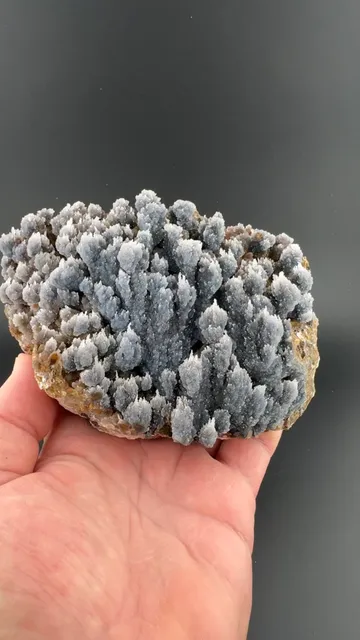
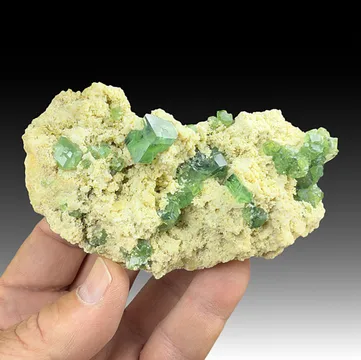
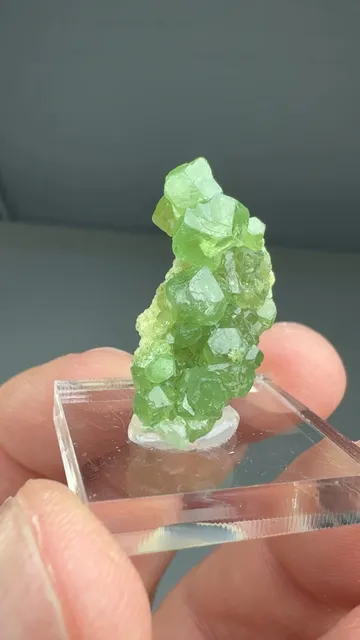
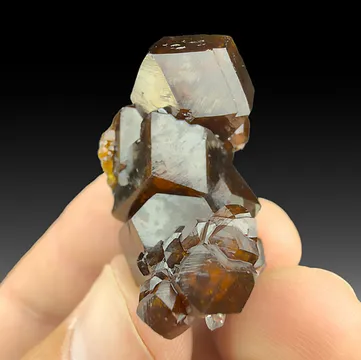
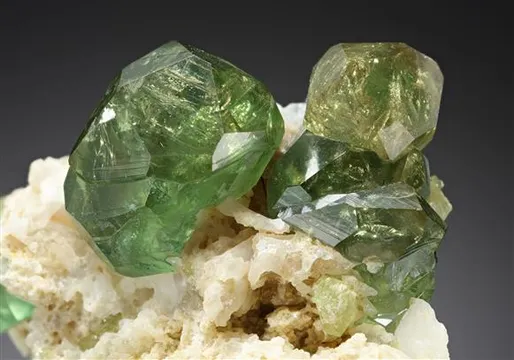
A classic old time example of what is commonly called uralite. This is a pseudomorph of green amphibole replacing blocky crystals of clinopyroxene. The crystals measure to 2.5 cm in size. Crystals of andradite are present as well. This is in very good condition. The specimen comes with an antique label as shown at the end of the video. The label has an original acquisition date of 1908 for the specimen.The Nordmark mining district, located in the Filipstad municipality of Varmland, Sweden, is a renowned mineralogical locality situated within the ore-rich Bergslagen province. Geologically, the area is characterized by Proterozoic-age skarn deposits formed through the metasomatic alteration of limestone and dolomite by granitic intrusions, resulting in a diverse assemblage of iron and manganese ores. Historically, mining and quarrying at Nordmark date back to at least the 14th century, with the district becoming a vital producer of high-quality magnetite for the Swedish iron industry through the 18th and 19th centuries. Major operations at mines such as the Nordmarksberg and Odalfaltet peaked during the 1800s, but commercial extraction eventually declined, with most significant mining activity ceasing by the mid-20th century, around the 1950s to 1960s. Today, the site remains a classic locality for mineral collectors through 2026, famous for producing exceptional specimens of magnetite, diopside, and various rare manganese minerals.The term uralite refers to a specific type of pseudomorph where a primary clinopyroxene crystal, typically augite, has been chemically and structurally altered into an amphibole, such as actinolite or hornblende, while still retaining the original external crystal form of the pyroxene. This process, known as uralitization, usually occurs under low-grade metamorphic conditions or during the late-stage hydrothermal cooling of igneous rocks. More broadly, a pseudomorph is a mineral that appears in the outward crystal form of another mineral species, occurring through processes of substitution, encrustation, or alteration. These formations are highly valued in mineralogy as they provide a visual record of the changing chemical and thermal environments that a rock has experienced over geological time.



 Ships from USA
Comments