
1
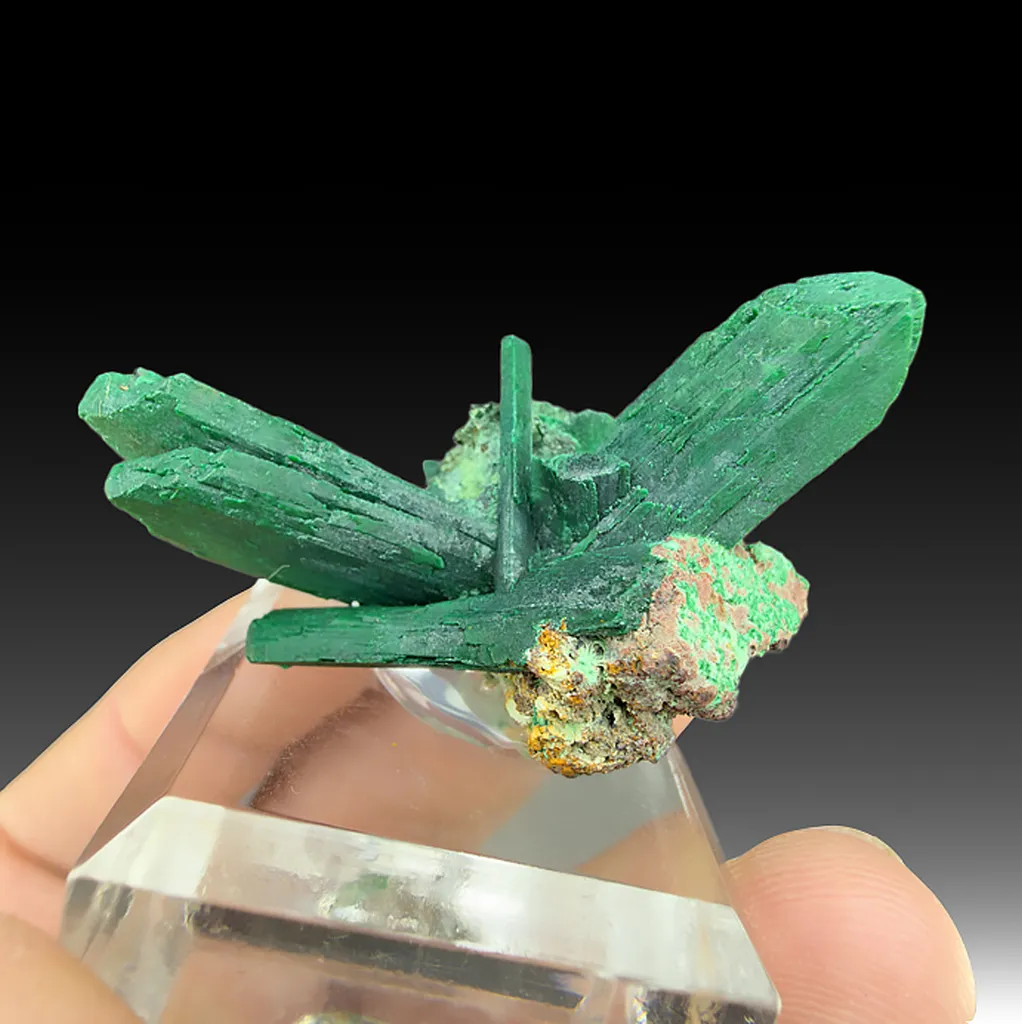
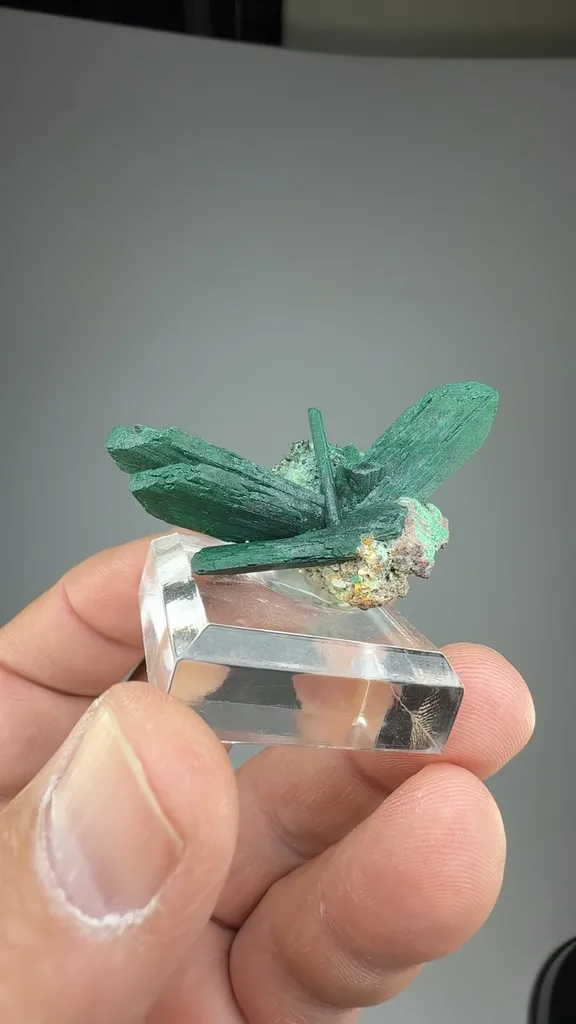
Malachite after Azurite
1


- Free shipping
- Seller offers an extended return window of up to 14 days
 Ships from USA
W
Weinrich MineralsFeatured
Aesthetic specimen showing crystals of azurite to 2.0 cm in height, these now replaced by green malachite, coming nicely off matrix. In super condition all around. A previous label comes with the specimen noting that this was collected by a John Mitchell, he was the mine boss at the Sacramento mine. Collected in 1918.The Sacramento Mine, located in the Warren Mining District of Bisbee, Arizona, was a cornerstone of the Copper Queen Consolidated Mining Company's operations. Geologically, the mine tapped into massive sulfide and oxide ore bodies formed by the replacement of Paleozoic limestones surrounding the Sacramento Hill porphyry stock. The site is famous for producing high-grade copper minerals, including brilliant blue azurite and rich green malachite, which often occurred in large, vuggy pockets within the oxidized zones. Historically, the Sacramento shaft was sunk in the early 1900s to serve as the primary hoisting and central terminal for the district's underground rail system. Mining and quarrying reached a turning point in 1917 when the top of Sacramento Hill began to be removed for open-pit mining, eventually creating a precursor to the massive Lavender Pit. The underground shaft continued to operate as a critical infrastructure point for ventilation and personnel until the mid-20th century.A pseudomorph is a mineralogical phenomenon where one mineral replaces another while perfectly preserving the external shape or crystal form of the original species. In the case of malachite after azurite, this process occurs through chemical alteration where the blue azurite (a copper carbonate) becomes unstable due to changes in groundwater chemistry or environmental conditions, gradually transforming into the more stable green malachite. Because both minerals share a similar chemical composition, the green malachite can slowly replace the azurite molecule by molecule, resulting in a specimen that possesses the deep green color and velvety texture of malachite but retains the distinct, sharp monoclinic crystal habits originally formed by the azurite. Historically, these specimens have been highly sought after at classic localities such as Bisbee, Arizona, and Tsumeb, Namibia, where the oxidation zones of copper deposits provided the perfect conditions for this transition.
Product details
Species
SizeMiniature
Dimensions5.0 x 3.3 x 2.5 cm
Listed on07/16/2026
Locality
SKU2242090
Learn more
Mineral guide
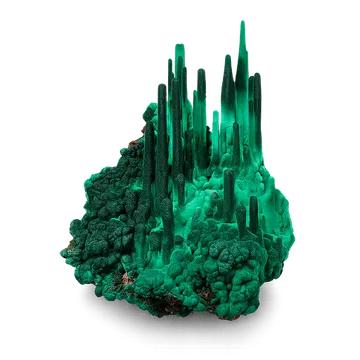
Learn about Malachite
vivid green banded crystals and botryoidal forms from copper deposits; color varieties, formation clues, and identification tips for collectors.Regional guide
Comments