
Stibarsen
Unknown Owner
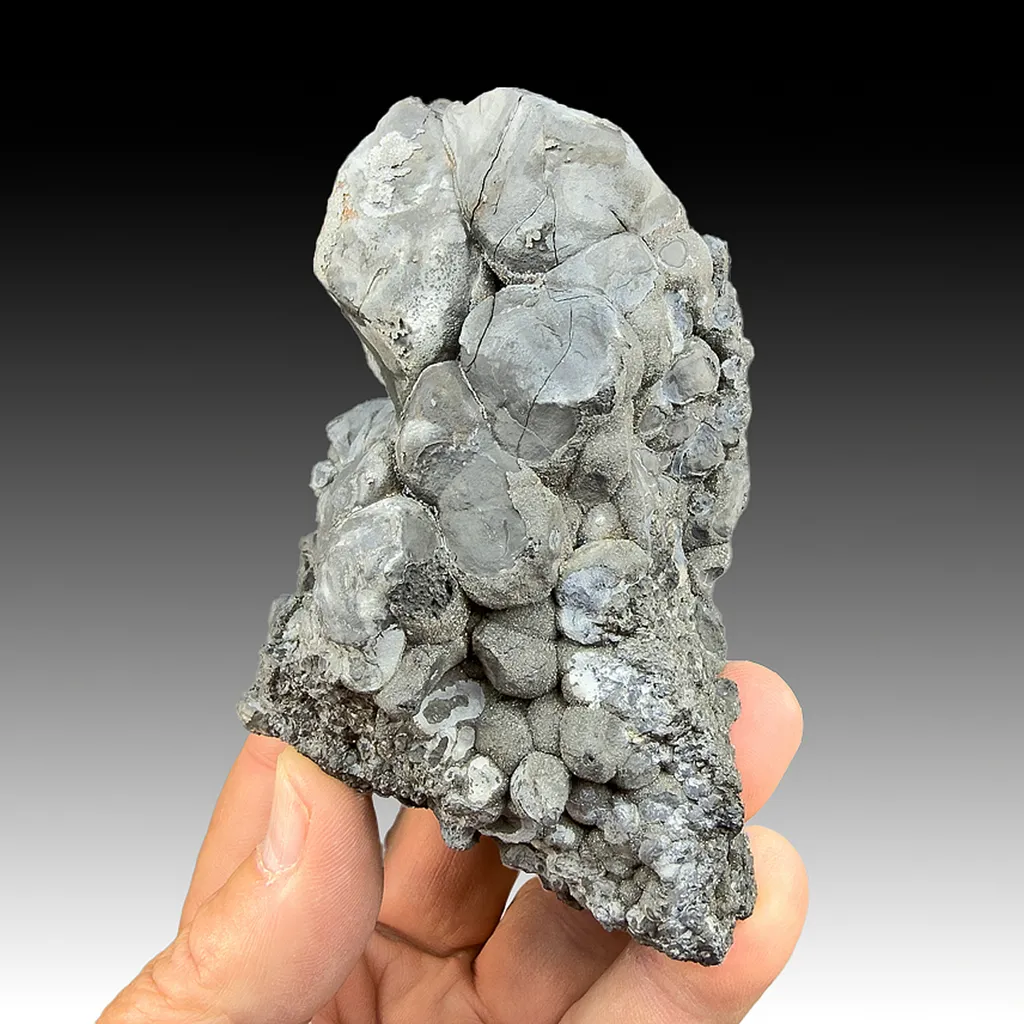
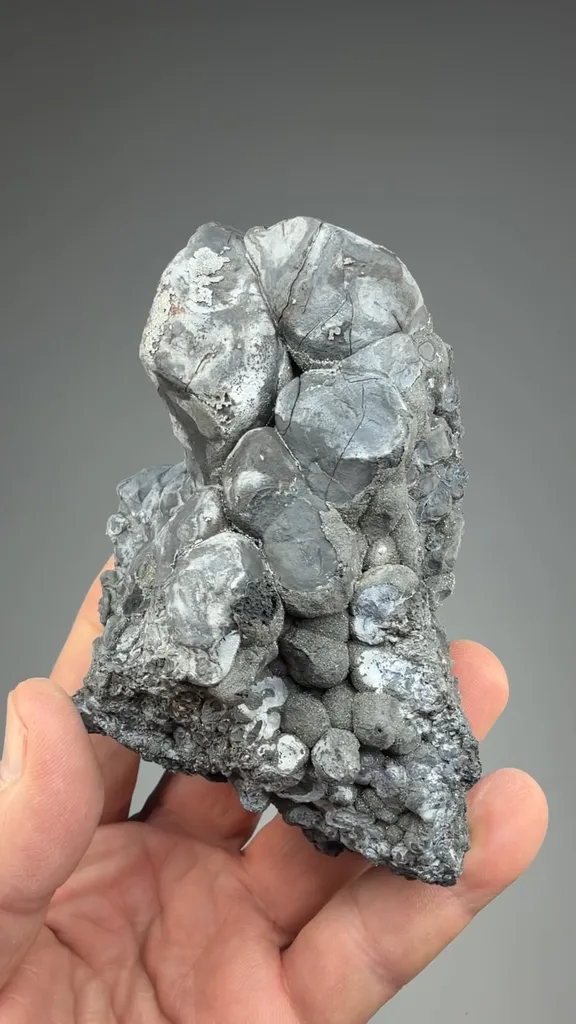
Gray botryoidal thick stibarsen with minor arsenopyrite. An excellent large example for the species. From the famous German locality, the specimen comes with an antique label as shown at the end of the video. This dates to the very early 20th century.The Samson Mine, located in Sankt Andreasberg within the Harz Mountains of Germany, is one of the most historically significant silver mines in Europe. Following the discovery of rich silver veins in the region, the mine officially opened in 1521 and operated nearly continuously for over four centuries until its closure in 1910. Geologically, the mine is situated in a complex network of hydrothermal veins that cut through Paleozoic sedimentary rocks. These veins are world-famous for their unique mineralogy, particularly the presence of rare silver-antimony sulfosalts like pyrargyrite (ruby silver) and dyscrasite. The Samson Mine is especially noted for producing some of the finest calcite crystals ever discovered, including the famous Andreasberg habit. At its peak in the 18th and 19th centuries, it was one of the deepest mines in the world, reaching a depth of approximately 810 meters. Today, the site is preserved as a UNESCO World Heritage museum and still houses the world's last functional Fahrkunst (man-engine), a mechanical device used to transport miners vertically using reciprocating rods.Stibarsen is a distinct mineral species consisting of an approximately equal mixture of antimony and arsenic, with the chemical formula SbAs. Historically, it was often referred to as allemontite, though that term is now technically used for mixtures of stibarsen with native antimony or arsenic. Geologically, it typically forms in hydrothermal veins and pegmatites, often appearing as distinct botryoidal (grape-like) or reniform masses with a metallic, lead-gray to tin-white luster that tarnishes to a duller brownish-black upon exposure to air. Its structure is trigonal, and it is most famous among collectors for its unique layered or "onion-skin" appearance when fractured. Significant localities for this mineral include the Sainte-Marie-aux-Mines in France and the Pribram district in the Czech Republic. Because it occupies a midpoint in the solid solution series between native arsenic and native antimony, stibarsen is of particular interest to mineralogists studying the crystallization of semimetals from low-temperature hydrothermal fluids.
Product details
Species
SizeCabinet
Dimensions13.0 x 8.0 x 6.0 cm
Added on05/17/2026
Locality
Known provenance
| Date | Collector | Acquisition price |
|---|---|---|
| 05/2026 | Unknown Owner | $650.00 |
| — | Weinrich Minerals | Not disclosed |
Comments