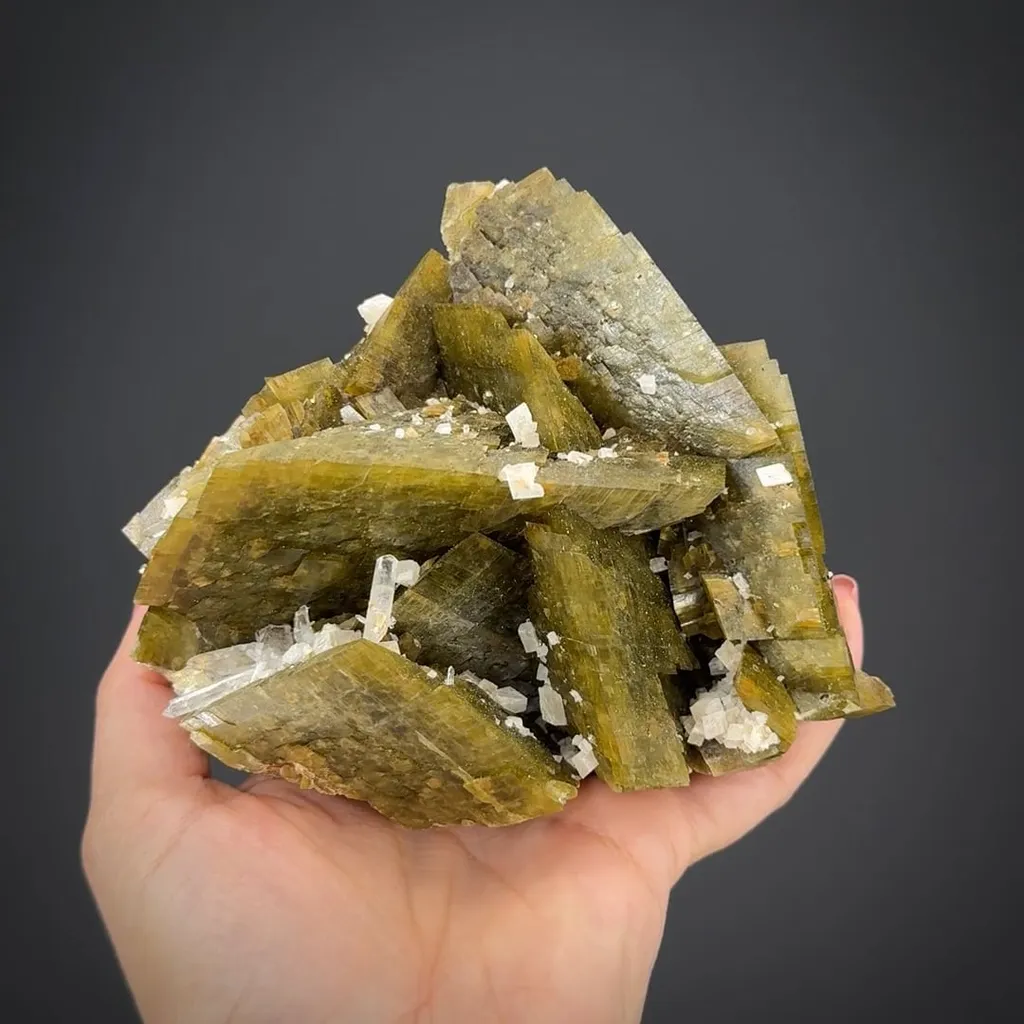
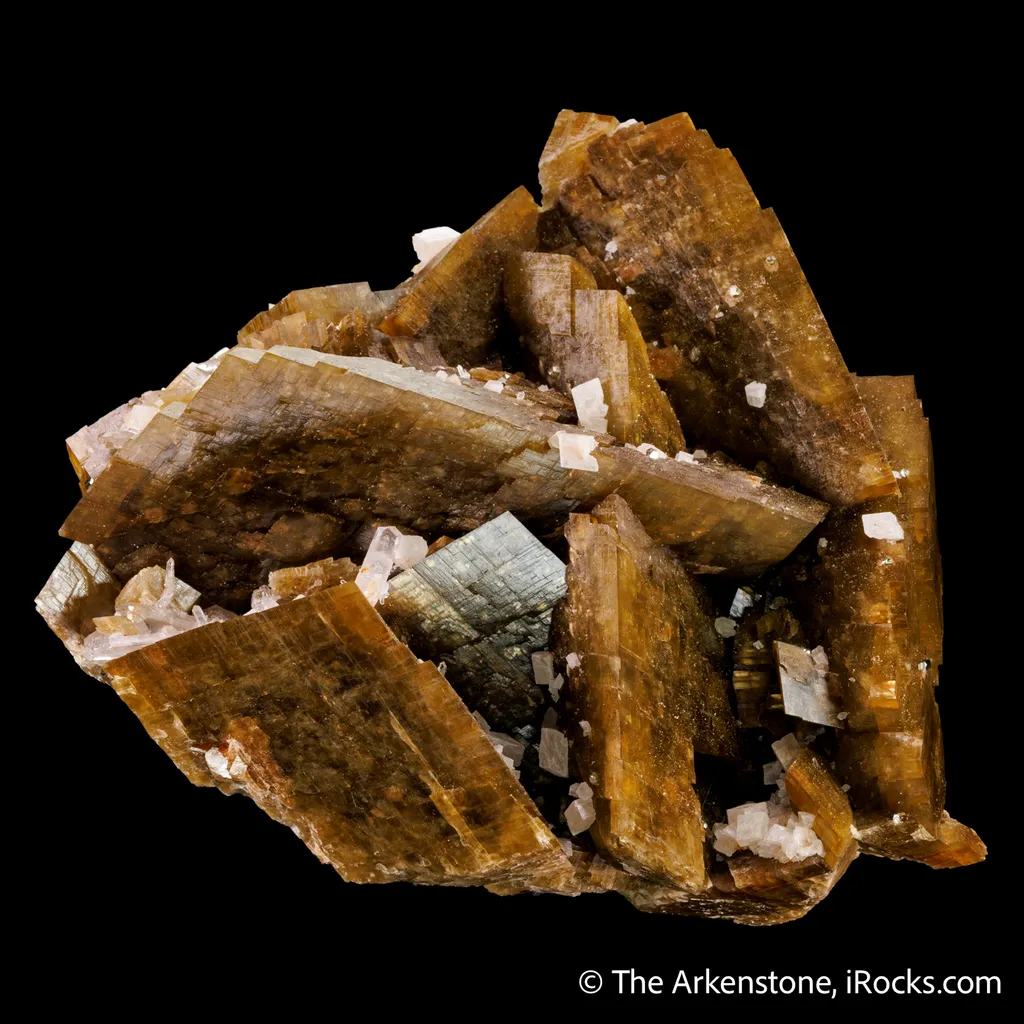
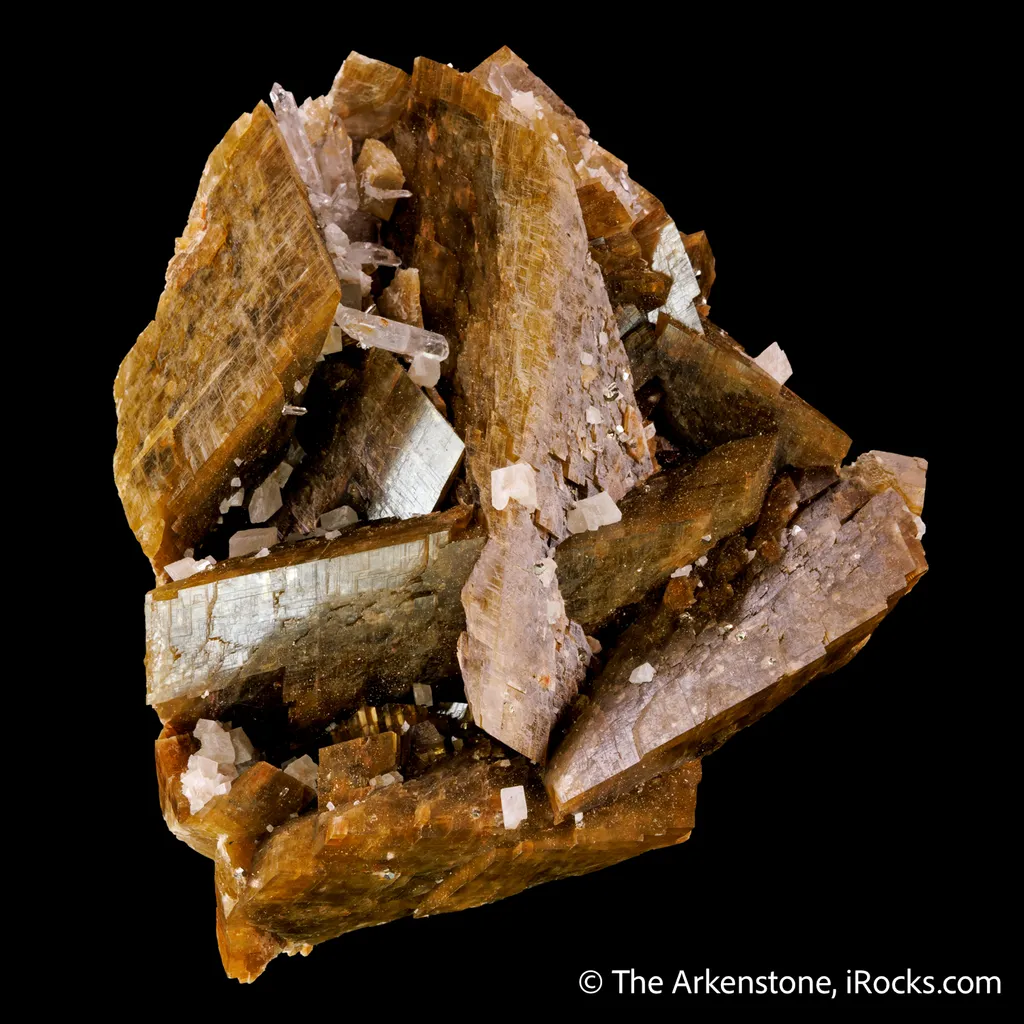
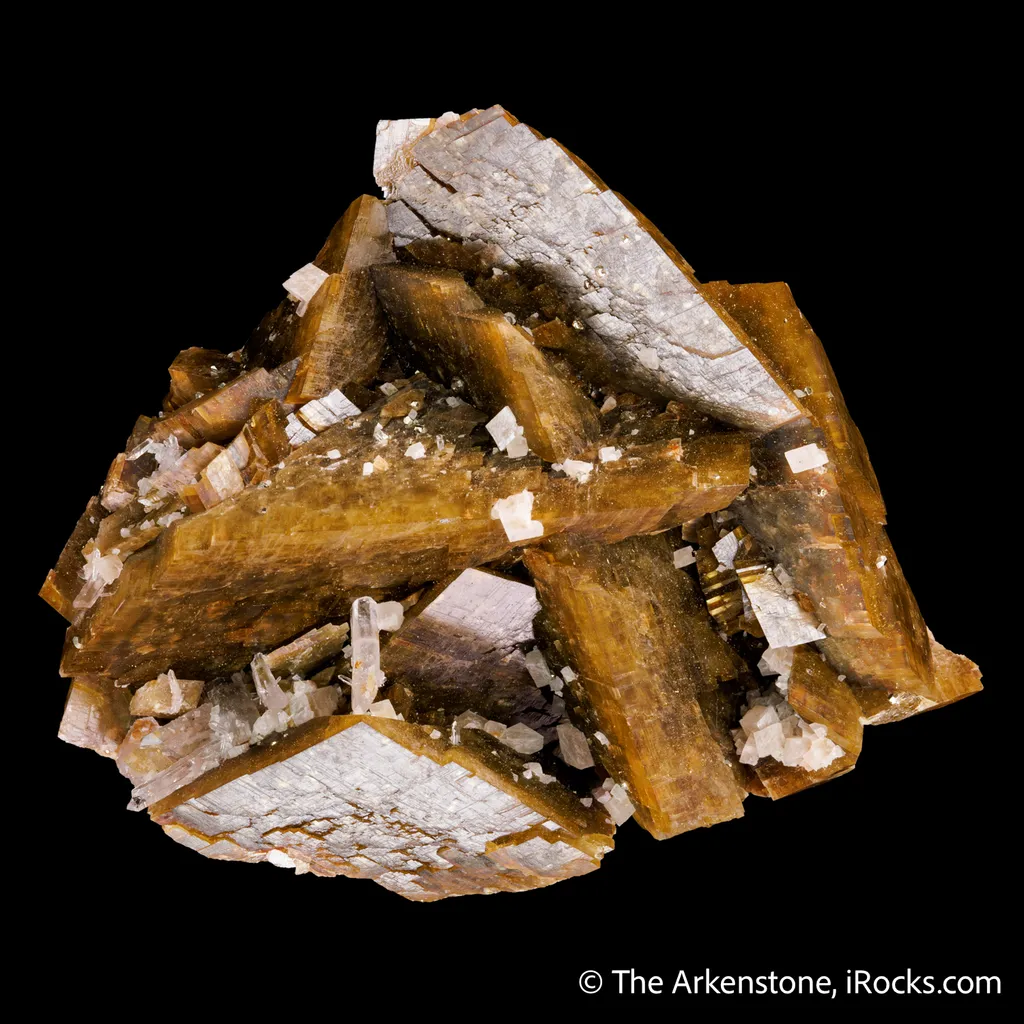
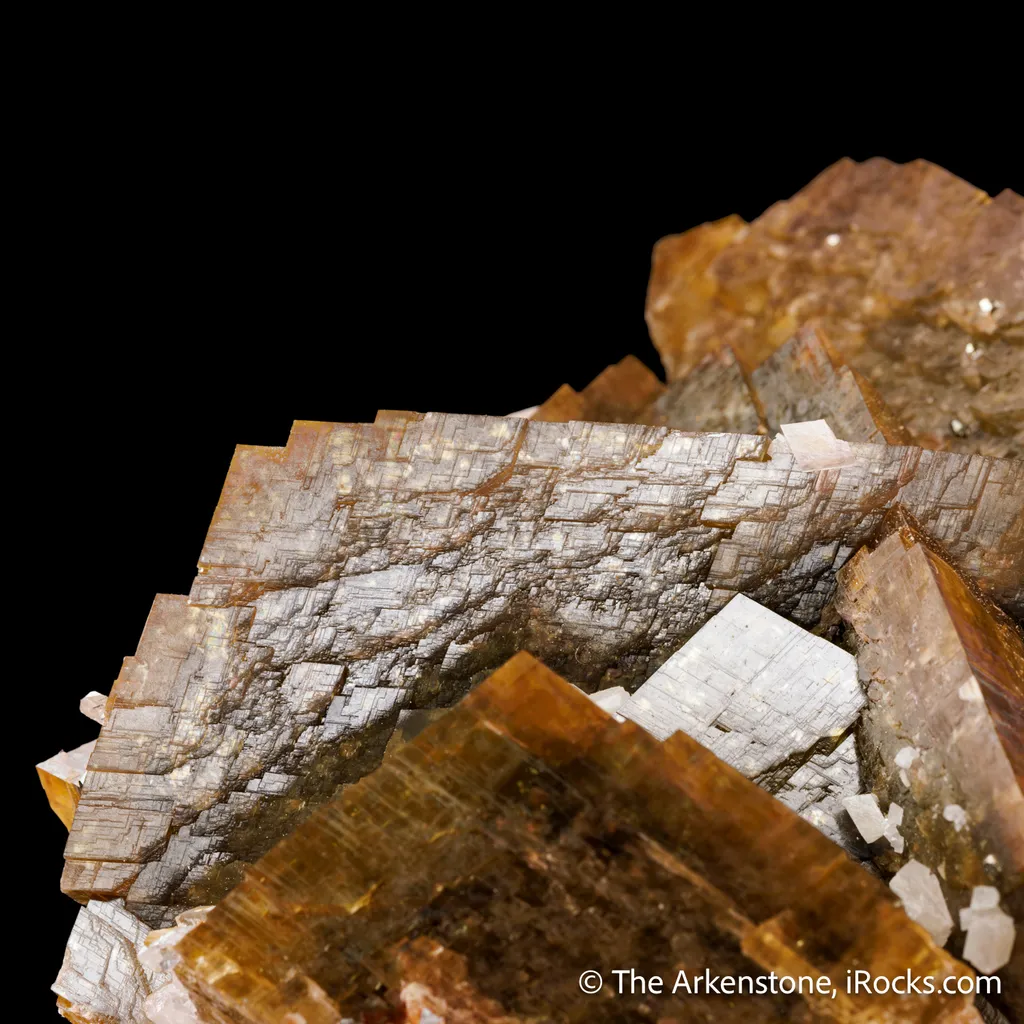
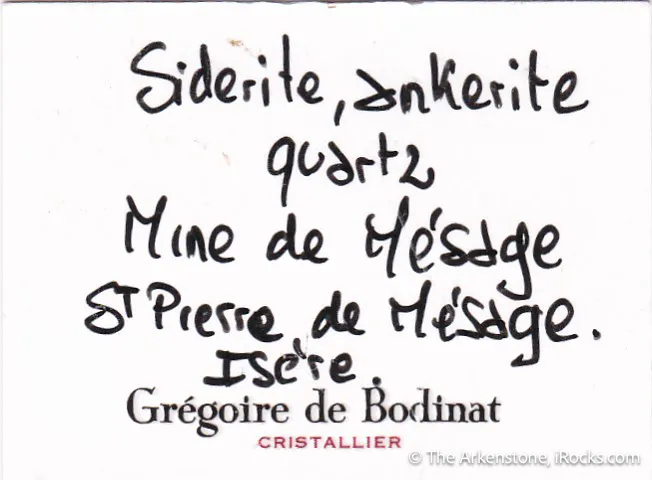
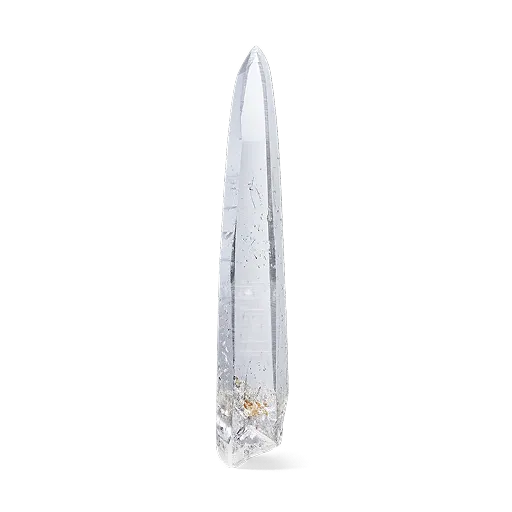
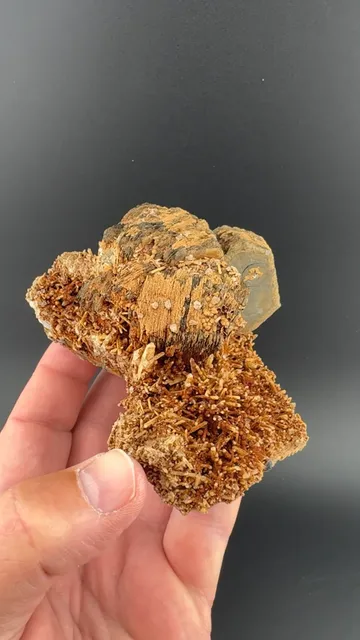
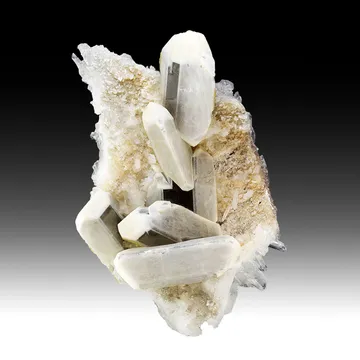
A cabinet sized museum quality example of a true mineral classic discovery, from Old Europe: first mined in the 1820s, the well-known Mésage iron mine has been worked intermittently and is now considered commercially inactive. Arguably the best-known mineral from all of Isere is Siderite, and historic examples are known from old museum back to the early 1800s. We once had a piece labelled 1812, if I recall. However, in the early 2000's Grégoire de Bodinat made a truly fantastic Siderite discovery in Mésage. Part of that find, this cabinet-sized group of very sharp, highly lustrous, compressed, translucent, greenish-brown Siderite rhombohedra is a stellar example. The Siderites range up to about 8 cm, and the pearly luster is so good that internally the crystals almost appear to be metallic. Associated with the Siderites are a small cluster of gemmy Quartz crystals and scattered rhombs of Ankerite up to about 5 mm. This piece has fantastic aesthetics that give it great presence, and a careful look allows you to appreciate the contrast brought by the Quartz and Ankerite. This is a great thing, and it is assuredly one of the finest-known examples of Siderite from Isere, or any European locality for that matter. The Liebetraus purchased it directly from the discoverer at the time it came out, and held it for decades.



Comments