
Carrollite
Unknown Owner
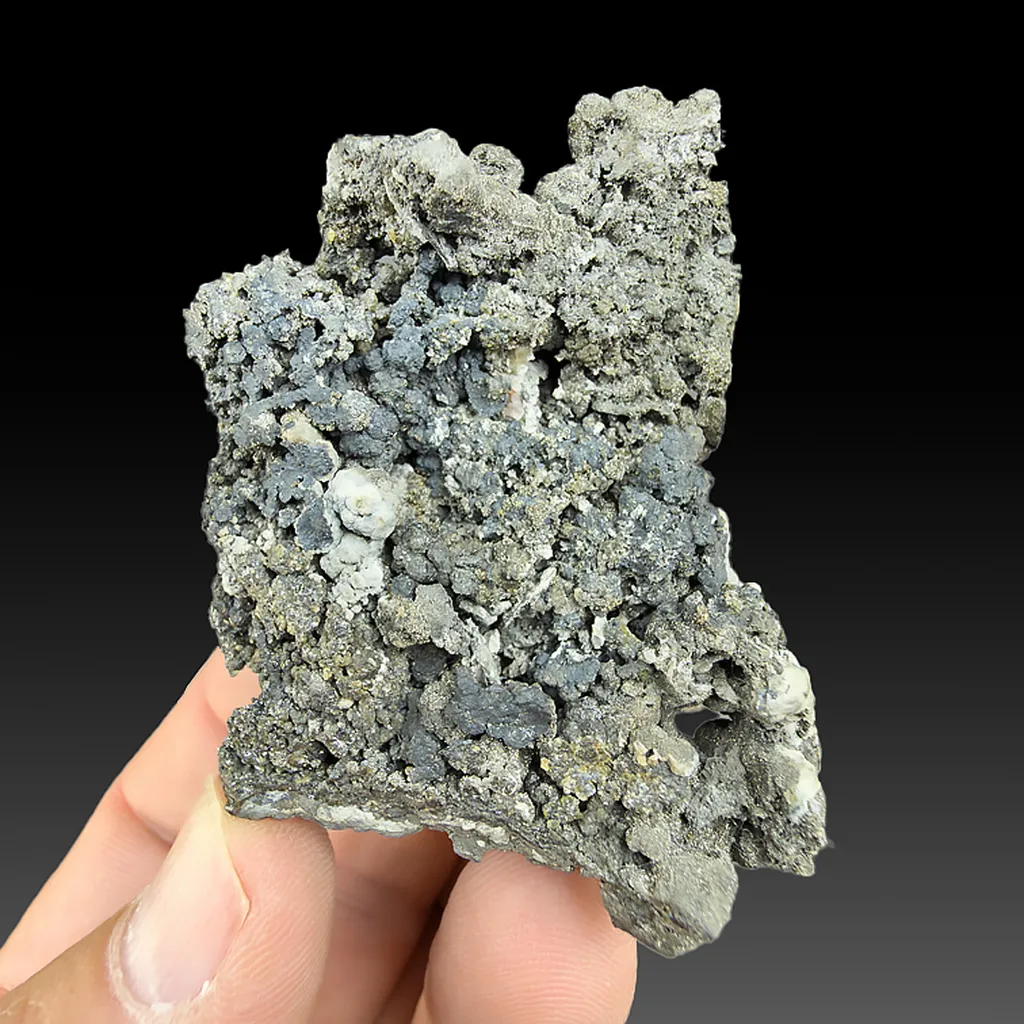
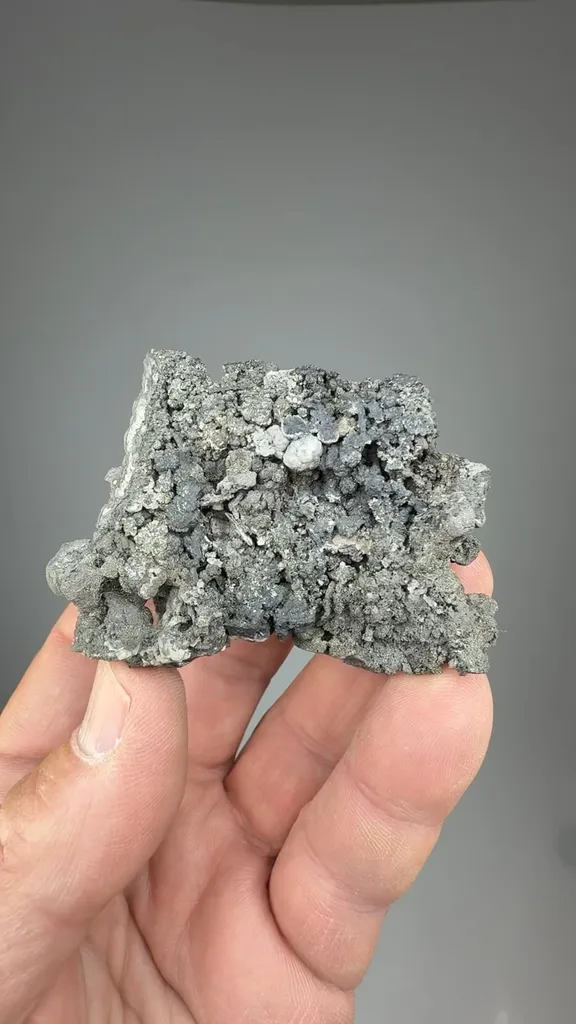
Sparkling metallic micro crystallized carrollite fairly rich throughout matrix. Neat old German classic. The specimen comes with several previous labels, including two from the U.S. National Museum, ex Washington A. Roebling collection. Another label from the dealer Larry Conklin. These are shown at the end of the video.Eiserfeld, located within the Siegerland siderite district of North Rhine-Westphalia, Germany, was home to several significant deep-level mining operations that exploited complex hydrothermal vein deposits. Geologically, these veins are hosted within Lower Devonian schists and sandstones, characterized by a primary mineralogy of siderite and quartz enriched with various sulfides, including the rare copper-cobalt-nickel thiospinel known as carrollite. The district is historically famous for producing sharp, metallic grey octahedrons of carrollite, particularly from the Eisenzecher Zug mine system, which reached depths exceeding 1,000 meters. Mining and quarrying in the Eiserfeld area date back to at least the 14th century, but industrial-scale production peaked during the 19th and early 20th centuries as Siegerland became a powerhouse for German iron and steel production. While the majority of the major mines in the area, such as the Reinhold Forster and the Eiserfelder Hutte, shuttered their operations by the 1960s, the legacy of Eiserfeld carrollite remains a hallmark of German systematic mineralogy.Washington A. Roebling, born in 1837 and deceased in 1926, was a distinguished civil engineer famous for directing the completion of the Brooklyn Bridge and for assembling one of the most comprehensive mineral collections in history. Geologically, his collection was renowned for its scientific breadth, eventually containing over 16,000 specimens that represented nearly every mineral species known during his lifetime. Roebling sought specimens based on chemical and crystallographic perfection rather than mere size or beauty, often corresponding with global dealers and scientists to acquire rare or newly discovered material. Historically, his passion for mineralogy provided a vital outlet during his long recovery from decompression sickness, and upon his death, his son donated the entire collection to the Smithsonian Institution along with a generous endowment for its maintenance. This gift, known as the Roebling Collection, remains a foundational pillar of the National Museum of Natural History, where it continues to serve as an invaluable resource for researchers and curators through 2026.Lawrence Conklin was a world-renowned mineral dealer based in New York City, widely regarded as one of the most knowledgeable and sophisticated figures in the history of the mineral trade. Operating from his office on 5th Avenue and later from his home in Connecticut, Conklin specialized in "antique" minerals and specimens with significant historical provenance. He was a meticulous researcher and an elegant writer, often publishing articles that corrected historical errors in mineralogical literature. His career spanned over five decades, during which he handled some of the finest known specimens from classic European and American localities, setting a high standard for aesthetic quality and documentation in the field.
Product details
Species
SizeSmall Cabinet
Dimensions7.0 x 5.0 x 4.0 cm
Added on05/14/2026
Locality
Known provenance
| Date | Collector | Acquisition price |
|---|---|---|
| 05/2026 | Unknown Owner | $815.00 |
| — | Weinrich Minerals | Not disclosed |
Comments