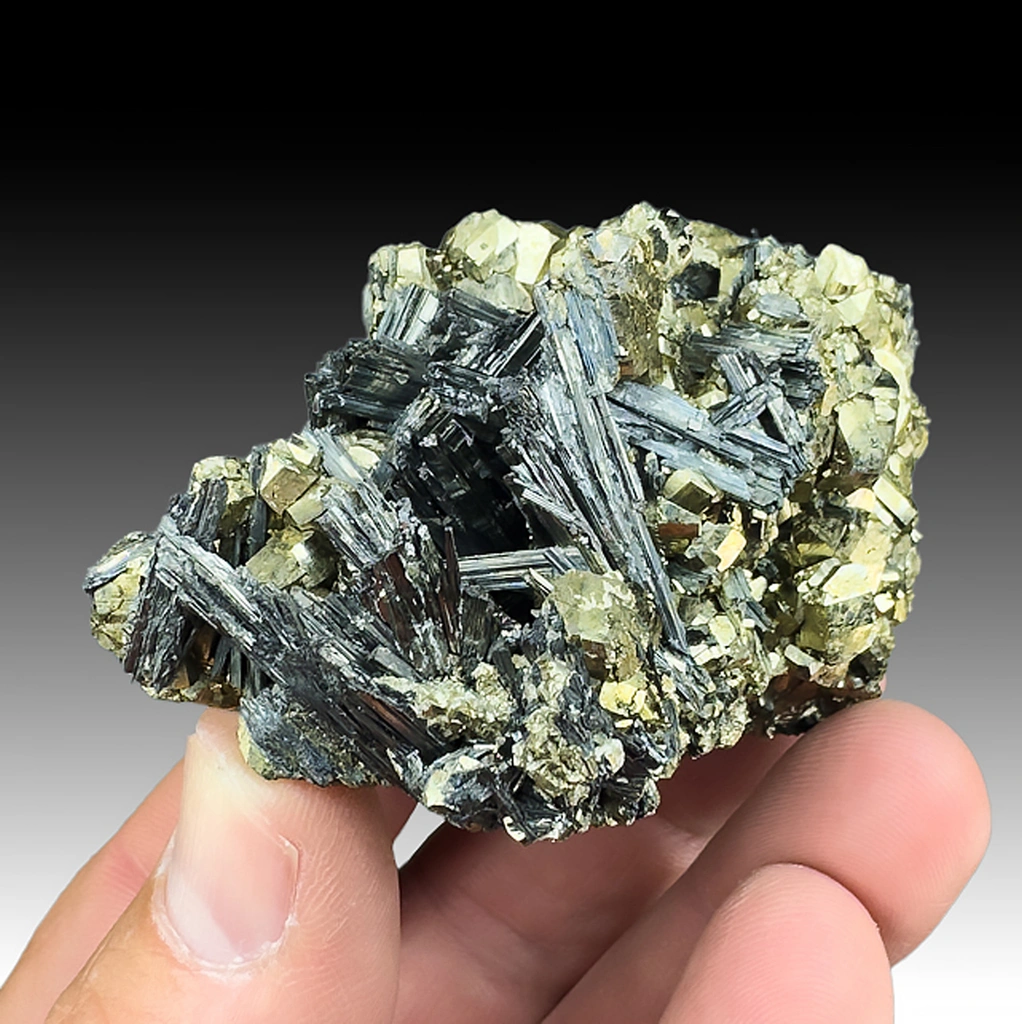
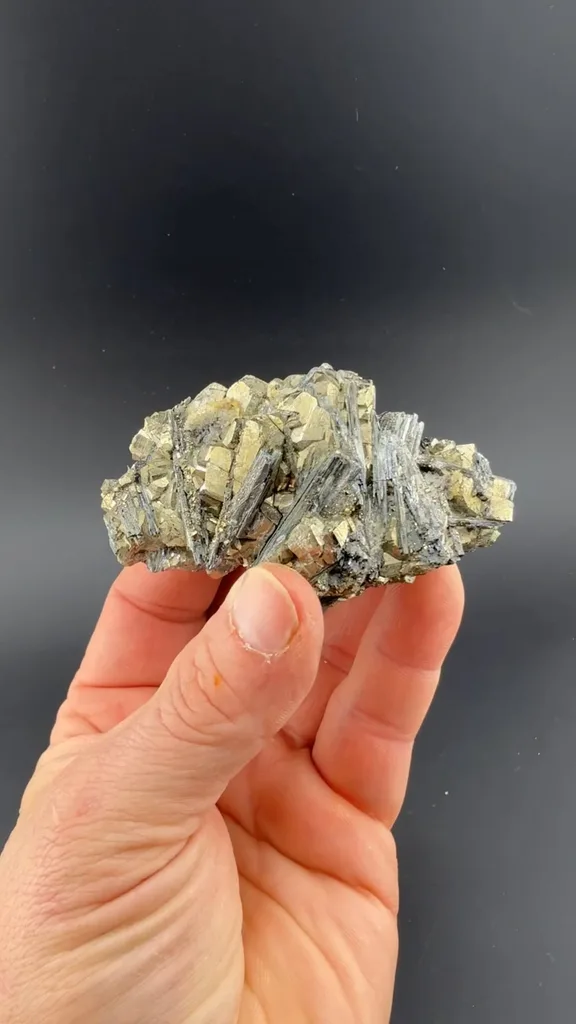
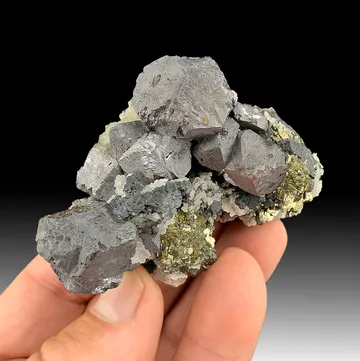
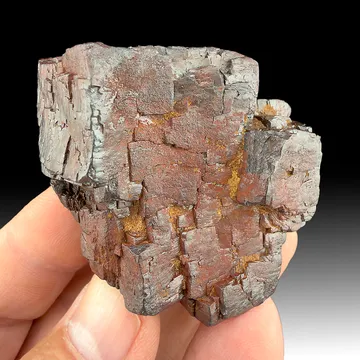
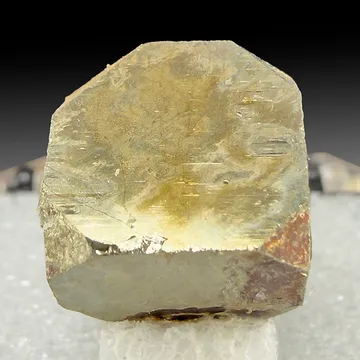
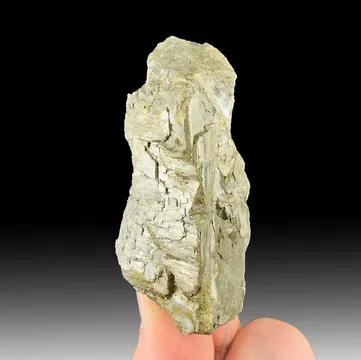
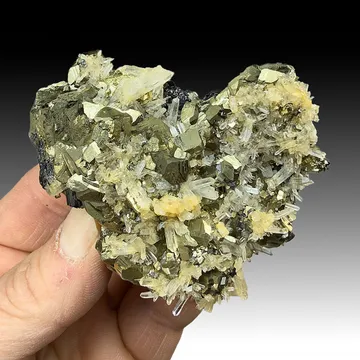
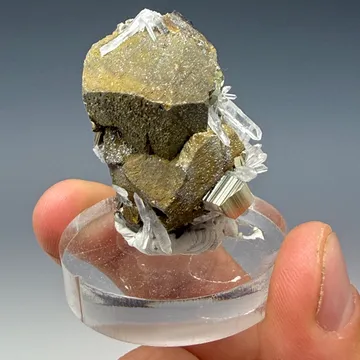
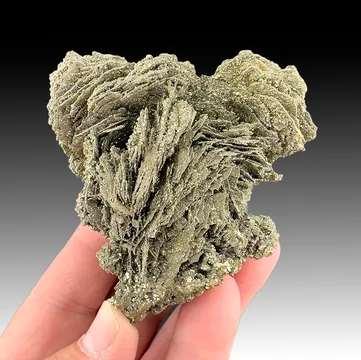
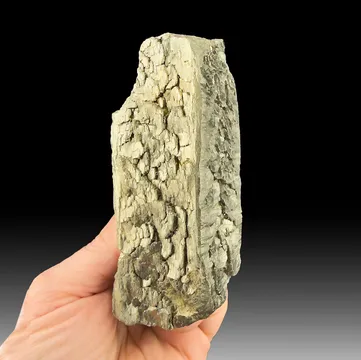
Classic Mexican specimen with metallic thick prismatic crystals of jamesonite measuring to almost 3.0 cm in size on a crystallized pyrite matrix. Typical of these slight damage present, this one still in very good condition. Excellent for the species.The Sombrerete Mine, also known as the San Jose Mine, is located in the Sombrerete District of Zacatecas, Mexico, and represents a significant epithermal vein system. Geologically, the deposit consists of silver-rich polymetallic veins hosted within Cretaceous sedimentary rocks, including the Caracol and Indidura Formations, which were subsequently intruded by Tertiary volcanic rocks. The locality is well-known for its association of jamesonite and pyrite, where the jamesonite typically appears as lead-gray, metallic, needle-like acicular crystals often found as felt-like mats or "feather ore" nestled among brassy, lustrous cubic or pyritohedral pyrite crystals. Historically, mining and quarrying in the district date back to the mid-1500s following the Spanish conquest, making it one of the oldest and most productive silver districts in Mexico. While the most intense periods of historical production occurred during the colonial era and the 19th century, various operations have continued through the 20th century and remain a point of geological interest through 2026. The mine remains a classic locality for collectors of Mexican sulfosalts and complex sulfide assemblages.


 Ships from USA
Comments