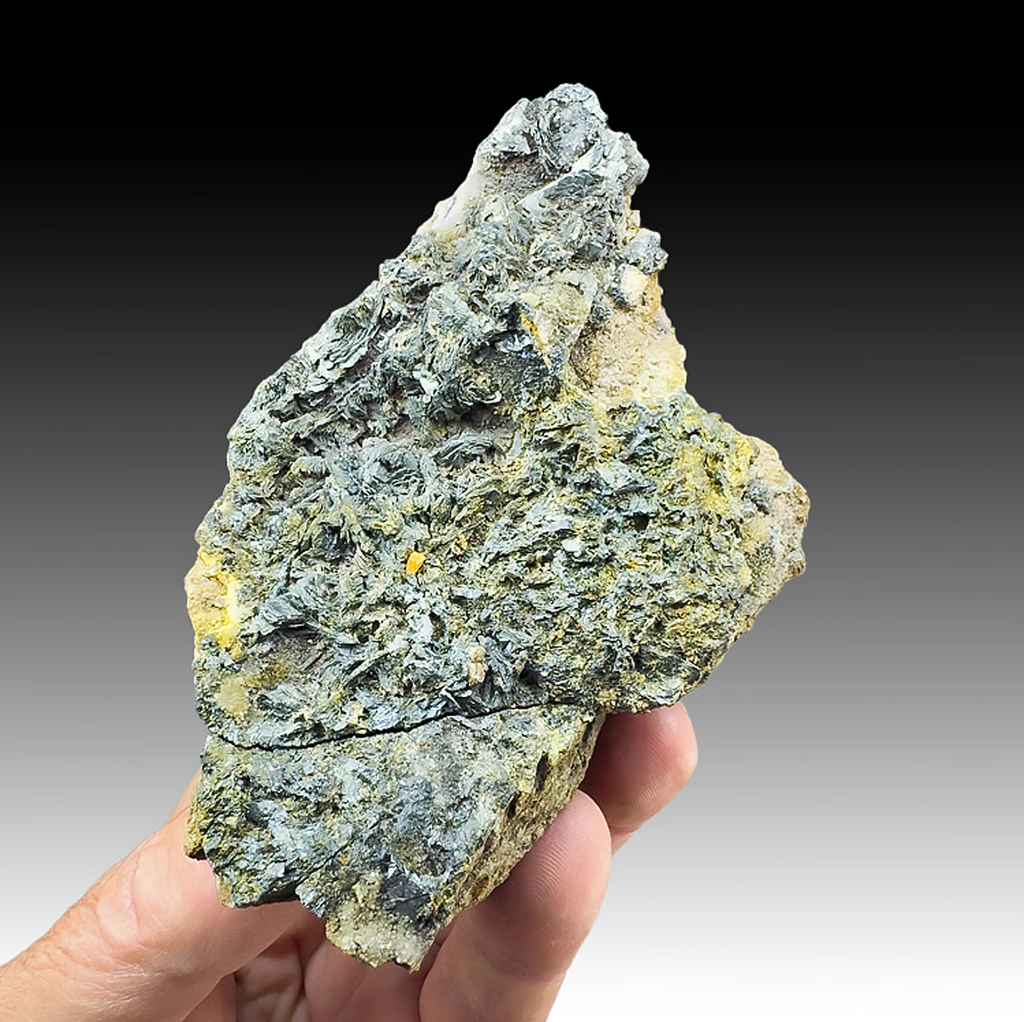
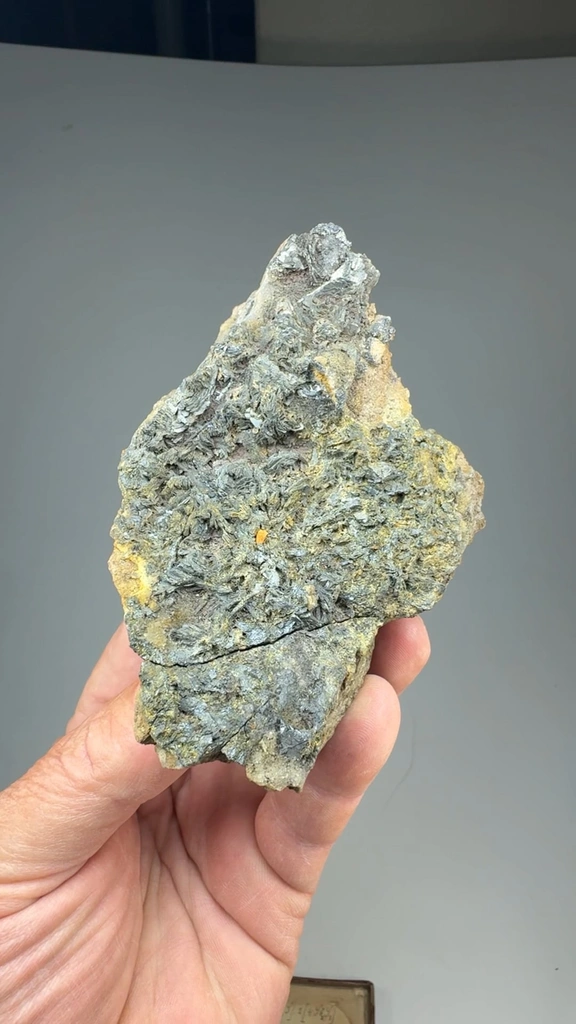
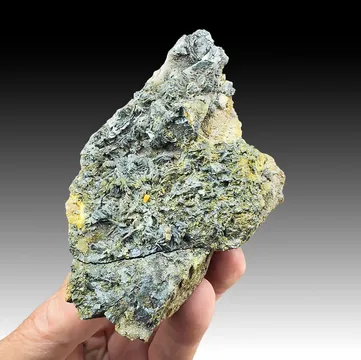
Thin platy crystals of fizelyite very rich across one side of matrix with semseyite. Historically, this is a very interesting specimen. The species was not officially described until 1923. The specimen comes with a previous antique label that gives an acquisition date of 1913. It is even noted on the label that this was a new find in 1913. Very richly crystallized. Quite good for this rare mineral.
Kisbanya, historically known by its Hungarian name and now officially called Chiuzbaia in Maramures County, Romania, is a significant mining locality situated within the Gutai Mountains and is recognized as the site of the modern day Herja mine. Geologically, the area is part of a Neogene volcanic arc where hydrothermal mineralization formed complex polymetallic veins containing lead, zinc, antimony, and silver ores hosted in andesitic and rhyolitic rocks. The site is particularly famous for its high density of rare sulfosalt minerals and exceptional crystallized specimens found in the oxidized zones of these epithermal deposits. Historically, mining and quarrying activities at this location date back several centuries, with the most intensive and systematic extraction occurring during the late nineteenth and early twentieth centuries under Austro-Hungarian and later Romanian state administration. While industrial-scale operations eventually declined and largely ceased by the late 1900s, the locality remains a premier destination for mineralogical research due to its status as a type locality for several rare species through 2026.
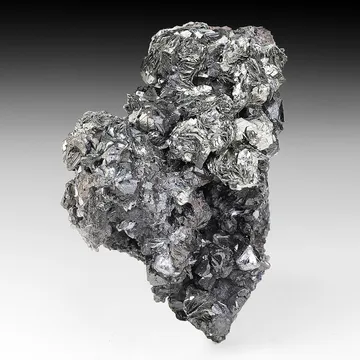
Fizelyite is a rare lead-silver-antimony sulfosalt mineral that was formally described as a new species in 1923, having been discovered at the Herja mine. Geologically, it occurs as a primary mineral in hydrothermal veins, typically forming dark lead-grey to black metallic crystals that are often deeply striated or found in acicular and columnar habits. The mineral is chemically complex, belonging to the lillianite homologous series, and is frequently found in association with other sulfosalts like semseyite, zinkenite, and galena. Named after the Hungarian mining engineer Sandor Fizely, it remains a highly sought-after species for mineralogists and collectors due to its rarity and specific crystallographic properties. Through 2026, the study of fizelyite specimens from the Baia Mare region continues to provide insights into the complex cooling and crystallization histories of polymetallic ore bodies.
Comments