
1
Aikinite with Quartz
1
Unknown Owner
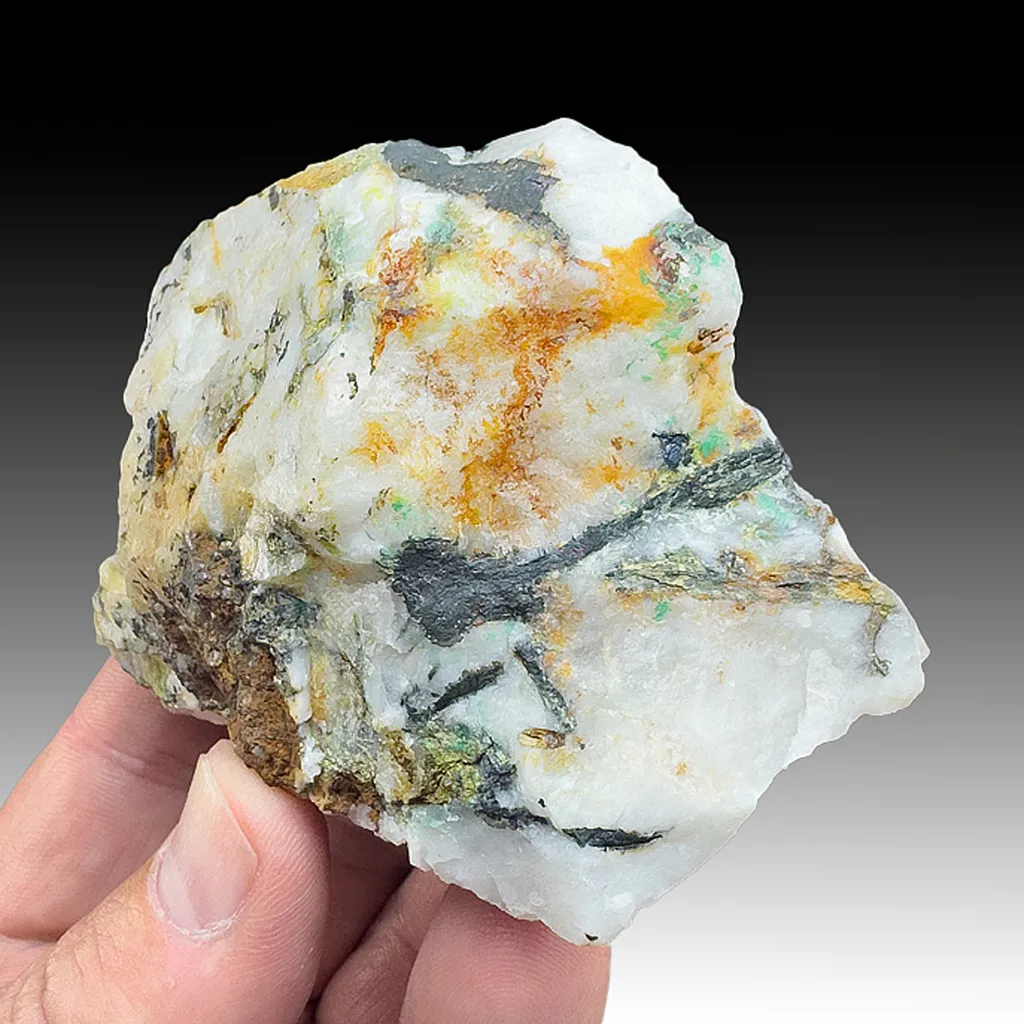
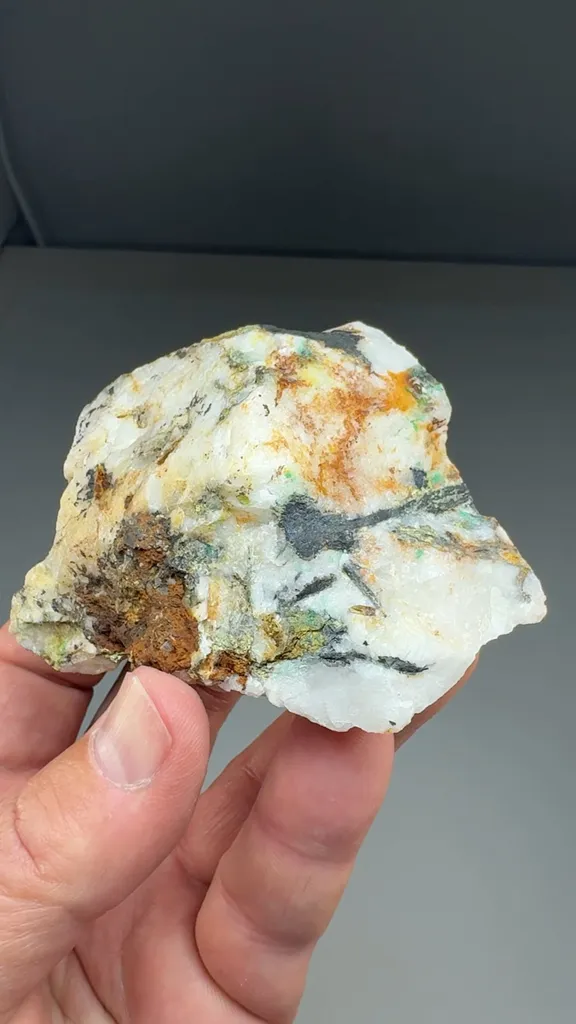
From the type locality for the species, this shows metallic masses throughout a quartz matrix. This is quite nice for this old Russian locality. The specimen comes with an antique label as shown at the end of the video and dates to the late 19th century or early 20th century.The Berezovskoe deposit, located in the Sverdlovsk Oblast of the Ural Mountains, Russia, is a historic gold mining district recognized as the birthplace of Russian gold mining. Geologically, it is the type locality for a specific style of mineralization known as "beresite," where gold-bearing quartz veins occur within hydrothermally altered granitic dikes that intrude into Paleozoic metamorphic rocks. These veins contain a diverse suite of minerals, including native gold, pyrite, and various lead-antimony sulfides. Historically, the deposit was discovered by Yerofey Markov in 1745, and the first mine, the Sharkashinskaya, began operations shortly thereafter. Industrial-scale extraction was established by the late 1740s and has continued through various political eras for over 280 years. While many of the original shafts are now closed, the Berezovskoe Mine remains one of the oldest continuously operating gold mines in the world, serving as a foundational site for both Russian industrial history and the science of mineralogy.Aikinite is a rare lead-copper-bismuth sulfide mineral that was first discovered and described from the Berezovskoe Mine in 1843. It typically forms as dark steel-grey to black metallic crystals, often appearing as long, slender needles or acicular sprays embedded within quartz matrix. Geologically, it occurs as a primary hydrothermal mineral in gold-quartz veins, frequently associated with other sulfide minerals and native gold. Collectors prize aikinite specimens from this locality for their historical significance and the sharp, well-defined morphology of the crystals. Because Berezovskoe is the type locality for this species, it remains the international standard for the mineral, representing a unique chemical intersection of lead and bismuth within the complex hydrothermal systems of the Ural Mountains.
Product details
Species
SizeSmall Cabinet
Dimensions9.0 x 7.0 x 5.5 cm
Added on04/26/2026
Locality
Known provenance
| Date | Collector | Acquisition price |
|---|---|---|
| 05/2026 | Unknown Owner | $750.00 |
| — | Weinrich Minerals | Not disclosed |
Comments