Photography Tips
Photos do the selling on EarthWonders — collectors decide in the first second whether to stop scrolling. None of this requires expensive gear, just light and patience.
Last updated
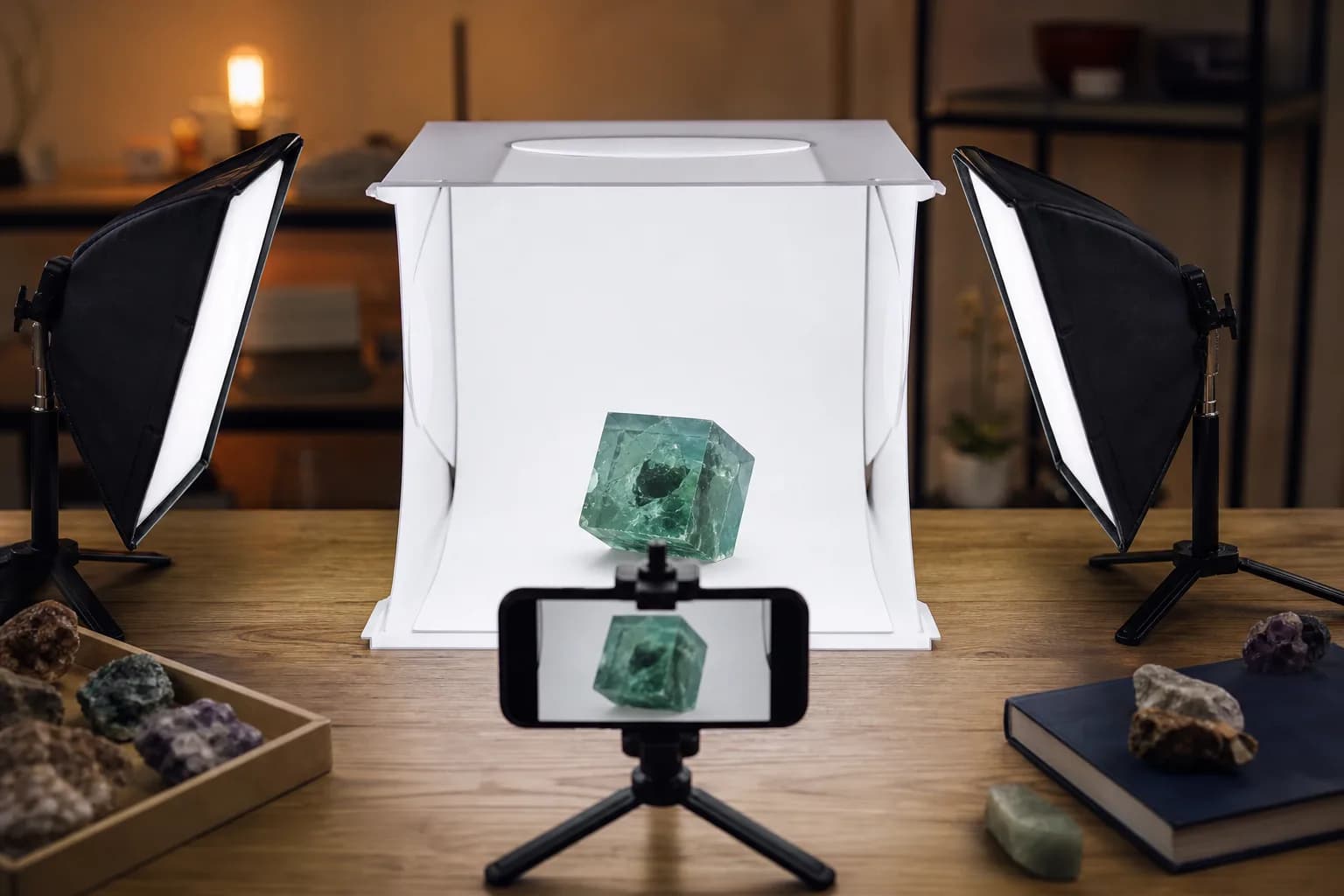
Two setups, both fine
Smartphone setup
$50–100- Any recent phone with a clean lens
- Bright, indirect light near a window
- White poster board as a seamless background
- A stack of books or a mini tripod for stability
This is enough. Most great listings on EarthWonders are shot on phones.
Professional setup
$300–800- DSLR or mirrorless camera with a macro lens
- Light tent or softbox kit
- Color-balanced LED lights (5600K)
- Sturdy tripod and acrylic risers
Worth it once you're selling regularly or listing high-value pieces.
The four shots every listing needs
Upload 1–10 photos per specimen. Whatever else you include, these four earn the buyer's trust.
The hero shot
The specimen from its most impressive angle, filling 70–85% of the frame. This is what stops a collector mid-scroll.
All sides
Front, back, top, and base. Single-angle listings don't give collectors confidence — show there's nothing to hide.
The honest close-up
Any damage, repair, or contact point, in focus. Disclosing flaws in photos builds more trust than perfect words.
Scale
Next to a ruler, a coin, or in your hand. Size disappointment is the most avoidable cause of returns.
Bonus: a short video
Ten seconds of the specimen turning in your hand communicates luster, transparency, and scale better than any photo. Listings with video consistently get more messages.
Technique, briefly
- Light
- Diffuse it and double it: two sources at 45° angles kill harsh shadows, a small fill light opens up cavities and vugs. Keep color temperature consistent between shots.
- Background
- Pure white or neutral gray, nothing textured. The specimen is the only thing in the photo with personality.
- Focus
- Aperture f/8–f/11 keeps the whole crystal sharp. For deep specimens, use focus stacking. Shoot RAW if your camera allows — it saves imperfect exposures.
- Color honesty
- Edit toward what your eyes see, never past it. A buyer comparing the delivered specimen to your photos should find them identical.
Do's and don'ts
Do
- Fill 70–85% of the frame with the specimen
- Shoot near a window with indirect light
- Keep framing consistent between shots
- Photograph damage as carefully as beauty
Don't
- Use direct flash or harsh overhead light
- Shoot on busy or textured backgrounds
- Over-saturate colors in editing
- Crop out flaws and hope nobody notices
Common questions
What equipment do I need to photograph mineral specimens?
Budget setup ($50-100): smartphone with clean lens, bright indirect natural light, white poster board background, books or tripod for stability. Professional setup ($300-800): DSLR or mirrorless with macro lens, light tent or softbox, color-balanced 5600K LEDs, sturdy tripod with adjustable height.
How should I light mineral specimens for photography?
Use diffused lighting at 45-degree angles to minimize harsh shadows, add fill light to illuminate cavities and crevices, maintain consistent color temperature across all shots, and avoid direct overhead light. Light tents and softboxes produce the most professional results.
How many photos should I take of each specimen?
Multiple angles are essential — single-angle photos don't give collectors confidence. Show the most impressive angle first, document any damage or repairs, include scale references when helpful, and maintain consistent framing between shots so buyers can compare details.
What camera settings work best for mineral photography?
Shoot in RAW format for editing flexibility, use manual focus for precision, employ focus stacking for specimens with varying depths, and use aperture f/8-f/11 for sharp focus throughout the entire specimen.