






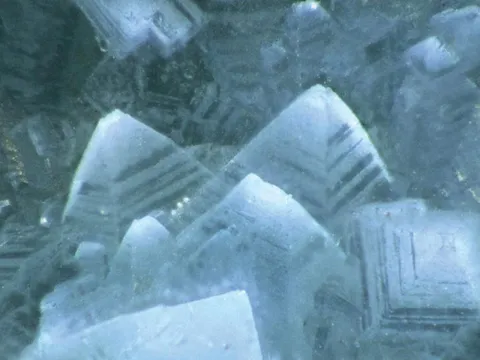
Wardite — striking pseudo-hexagonal dipyramidal crystals, colorless to pale mint-yellow, with vitreous luster; a collectible benchmark for form and rarity.
Key facts
Wardite is a sodium–aluminum phosphate hydrate that forms striking pseudo-hexagonal dipyramidal crystals. Best known from the phosphate-rich iron formation of Rapid Creek and Big Fish River (Yukon, Canada), it also occurs in late-stage pockets of granitic pegmatites (notably in Brazil and Germany) and in phosphate nodules in Utah. Colors range from colorless and milky white to pale mint-green, bluish, or straw-yellow; luster is vitreous and crystals may be transparent to translucent. The classic habit—sharp, geometric bipyramids often perched on contrasting matrix—makes wardite a favorite in phosphate suites and micromount collections.
Most specimens are small, but a handful of localities produce crystals to several centimeters with fine form and pigeon-clean faces. Associations are part of the appeal: lazulite, augelite, siderite, gormanite/wardite-group phosphates in Yukon; variscite, crandallite-supergroup members, and millisite in Utah nodules; and diverse pegmatite phosphates in Brazil and Germany. Well-composed pieces with bright luster and undamaged tips are surprisingly scarce and highly desirable.
Among phosphate collectors, wardite is a benchmark species: easily recognized by its crisp dipyramids yet challenging to find in top quality. The Yukon discoveries propelled wardite into prominence—producing textbook crystals that define the species’ ideal habit. Micromounters value the species for the sharpness of its forms and for the rich paragenesis it shares with other phosphates. Cabinet specimens with aesthetic matrix and crystals exceeding 1–2 cm are uncommon and keenly pursued.
Pegmatite finds in Brazil and Germany broadened its appeal, providing contrasting habits and associations. In the U.S., the Clay Canyon variscite nodules made beautifully contextual “geologic story” pieces popular with educational and systematic collections. Overall, wardite straddles the line between connoisseur rarity and accessible species: small, affordable examples are plentiful, but truly fine, undamaged, display-grade pieces are scarce and command strong prices.
While wardite occurs in several countries, a few districts set the standard for form, aesthetics, and associations.
The famous Fairfield variscite nodules of the Clay Canyon Mine produced classic wardite in a very different setting: tiny, crisp crystals and rosettes lining seams within phosphate nodules. Colors tend toward white to pale green, with lustrous faces. Wardite is accompanied by variscite, crandallite-supergroup species, and the related wardite-group mineral millisite—making these nodules excellent “paragenesis snapshots.” Although typically small, the best slices and cavity exposures show textbook crystal form and lovely contrasts within the nodules.
Crystal form and completeness:
Luster and clarity:
Color:
Matrix and associations:
Size:
Provenance:
Repairs:
Treatments:
Assemblies:
Handling:
Light and temperature:
Cleaning:
Storage:
With attention to sharp form, clean luster, and classic associations—especially from the Yukon, Utah, and phosphate-rich pegmatites—wardite can anchor any phosphate suite and reward the collector with refined geometry and subtle beauty.