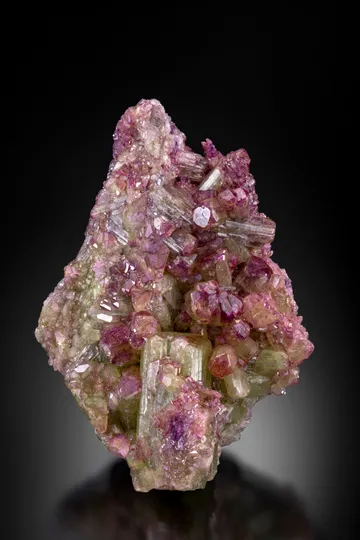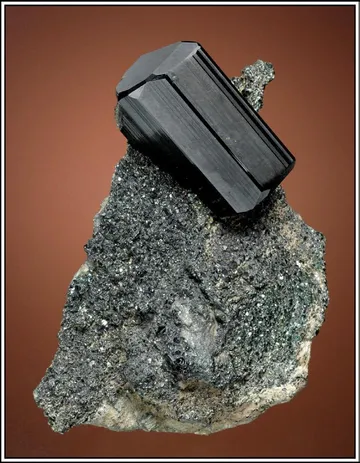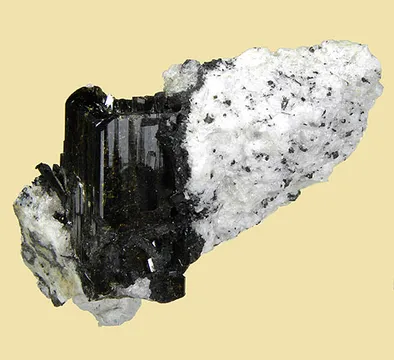
Vesuvianite - crisp prismatic crystals in vivid colors, from chrome-green to rare sky-blue cyprine; formed in contact metamorphism, prized for termination.
Key facts
Vesuvianite (historically “idocrase”) is a tetragonal calcium aluminum silicate most famous for forming in contact metamorphosed limestones and skarns. For collectors, it shines through crisp prismatic crystals with a square cross-section, often showing vertical striations and flat or complex terminations. Color is wonderfully variable—vivid chrome-green, honey to cognac brown, yellow, olive, pistachio, purple-manganese hues, and even rare sky-blue “cyprine” from copper-bearing material. The best examples are sharply terminated, lustrous, and transparent to gemmy, frequently associated with white calcite, pale diopside, grossular, and wollastonite for striking color contrast. Jeffrey Mine in Québec set the world standard for color variety and crystal perfection; Italian Alpine localities deliver classic crystals on aesthetic matrix; and the type area at Somma-Vesuvius provides historic significance. Massive aggregates (“californite”) can be carved or polished, but for specimen collectors, lustrous well-terminated crystals on contrasting matrix are the prize.
Vesuvianite is a collector’s favorite because it bridges several appeals at once: strong form, broad color range, and classic localities spanning Italy, Austria, Switzerland, Canada, and Norway. Jeffrey Mine discoveries (1960s–1990s) produced unparalleled diversity—from neon chrome-green prisms to rare purple and zoned pieces—fueling decades of high-end collecting and museum acquisitions. Alpine classics from Aosta and Piedmont are deeply rooted in European mineral history, valued for their elegant, textbook crystal habits. Meanwhile, variety “cyprine” from Norway introduced a unique sky-blue tone treasured by connoisseurs. Prices scale with color saturation, crystal size, luster, and matrix aesthetics. Small but perfect Jeffrey Mine crystals remain accessible, while top matrix pieces are scarce and highly competitive. With new significant finds infrequent, fine vesuvianite has become a “hold” species—quality examples keep their audience and tend to remain in strong hands.
While vesuvianite occurs globally, a handful of classic localities define the species’ benchmarks for color, form, and historical importance.
The Jeffrey Mine (Asbestos, Québec) produced the world’s finest and most diverse vesuvianite crystals. Colors range from electric chrome-green to golden, honey-brown, olive, lemon-yellow, purple/manganese tones, and complex multicolor zoning. Crystals can be slender to stout, with glassy luster and razor-sharp terminations, often on pale diopside, grossular, and calcite matrix for dramatic contrast.
Collectors prize Jeffrey material for its combination of vibrant color, transparency, and impeccable form—many crystals look naturally faceted. Classic “chrome vesuvianite” (Cr-bearing) glows an intense green, while the rarer purple/manganese pieces are iconic. Most pockets were small and many pieces required careful extraction, so pristine, unrepaired matrix specimens command a premium today.
Bellecombe is a classic Alpine skarn locality known for elegant brown to olive-green vesuvianite crystals, often with diopside, grossular, and calcite. Crystals are typically prismatic with bright luster and well-formed terminations, displaying the clean, architectural lines Alpine collectors love.
These pieces emphasize subtle beauty—chestnut to honey tones, excellent luster, and balanced compositions on pale matrix. Though not as flamboyantly colored as Jeffrey material, top Bellecombe specimens have superb form, historic pedigree, and that unmistakable Alpine character which keeps them in steady demand.
Named after Vesuvius, vesuvianite’s type locality yields modest but historically important crystals and grains from contact-metamorphosed ejecta and skarn fragments. Specimens are usually small, but their provenance is unmatched—an essential locality for species-focused collectors.
Expect micro to small-size crystals and sections in varied shades of brown, green, or yellow. While not competition for Jeffrey or Alpine showpieces, these are prized as “heritage” pieces that connect the species back to its origin and to the long tradition of Neapolitan mineralogy.
Vesuvianite is reasonably durable (Mohs ~6.5), but crystals can be brittle and many occur on soft or reactive matrix (calcite, diopside).
By focusing on strong color, sharp crystal form, high luster, and clean condition—ideally on contrasting matrix—you can assemble a vesuvianite suite that ranges from historic type-local pieces to world-class showpieces.