Tetrahedrite Collectors Guide
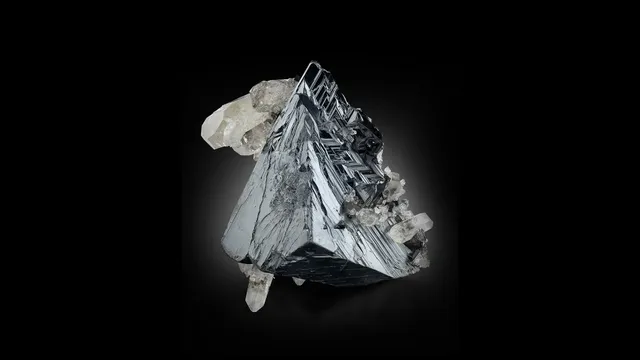
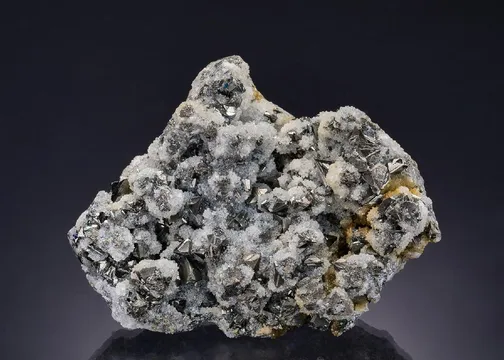
Tetrahedrite is a classic copper–antimony sulfosalt (ideal formula Cu12Sb4S13) and the Sb-rich half of the tennantite–tetrahedrite series. It is among the most recognizable metallic collector species thanks to its geometry: sharp, equant crystals commonly express pseudo-tetrahedral forms (often tetrahedra heavily modified by faces), from microcrystals to several-centimeter individuals. Color is dark steel-gray to black with a bright metallic to submetallic luster; natural patinas can range from gunmetal sheen to colorful iridescence. Tetrahedrite typically forms in medium- to low-temperature hydrothermal veins and skarns, where it occurs with quartz, calcite, dolomite, pyrite, sphalerite, galena, chalcopyrite, fluorite, and an array of sulfosalts.
For collectors, the appeal lies in the crisp geometry, mirror-bright faces, and strong contrast against white carbonates or clear quartz. While abundant worldwide, truly sharp, damage-free tetrahedra on attractive matrix remain desirable. The species also intersects with mining history: argentiferous tetrahedrite (Ag-rich members sometimes called freibergite) was an important historical silver ore, tying fine specimens to great European districts as well as Peru, Mexico, and Namibia. Prices are generally approachable for singles and small clusters, while top-tier matrix pieces from classic localities can command serious competition.
Tetrahedrite is a staple in sulfide/sulfosalt suites and a favorite “geometry piece” even for broad collections. Its popularity stems from:
- Distinctive form: textbook tetrahedra and modified tetrahedra that read clearly even to non-specialists.
- Ubiquity with highlights: found worldwide, but each classic district shows its own “look,” making locality collecting rewarding.
- Strong combinations: gleaming metallic crystals on snowy calcite, pearly dolomite, or water-clear quartz have perennial aesthetic appeal.
- History: iconic European districts (Freiberg, Cavnic, Baia Sprie) and great Peruvian, Mexican, and Namibian mines cemented tetrahedrite’s stature.
Although many examples are affordable, the finest pieces—sharp, lustrous, undamaged tetrahedra on clean, contrasting matrix—are far scarcer than the species’ abundance suggests and are keenly pursued.
Below are renowned sources with characteristic tetrahedrite aesthetics and strong track records of collectible material.
Cavnic is a classic European source for tetrahedrite, producing sharp, jet-black to steel-gray tetrahedra with a brilliant metallic luster. Crystals range from discreet, gem-like microtetrahedra to chunky 2–4 cm individuals, often perched on snow-white calcite or dolomite, or associated with quartz and sphalerite. The combination of crisp form, reflective faces, and strong contrast makes Cavnic pieces particularly aesthetic. Many consider Cavnic a benchmark for “textbook” tetrahedrite form.
Huanzala is renowned for bright, razor-sharp sulfides. Tetrahedrite here forms lustrous crystals and composite clusters among pyrite, sphalerite, and quartz. The best pieces display mirror-bright faces and crisp edges, often with strong contrast on white calcite. While crystals are commonly 1–2 cm, occasional larger individuals are known; clean, undamaged clusters are prized and can be surprisingly scarce given the mine’s overall production volume.
- Crystal form and sharpness: The primary criterion. Seek well-developed tetrahedra (or clearly modified tetrahedral forms) with crisp, undamaged corners and edges. Rounded or corroded faces reduce impact unless compensated by size or exceptional associations.
- Luster: High metallic luster is a hallmark. The best tetrahedrite has mirror-bright, reflective faces. Dullness can stem from natural patina or etching; light, even patina can add character, but uneven, blotchy surfaces generally detract.
- Size and proportion: Single tetrahedra from 1–3 cm are common at classic localities; larger crystals are significantly scarcer and command premiums when sharp and undamaged. In clusters, pleasing spacing and graduated sizes enhance balance.
- Matrix and contrast: White calcite/dolomite and water-clear quartz make perfect backdrops, amplifying the metallic shine. Fluorite, sphalerite, galena, or pyrite associations can add interest. Prefer pieces where the matrix is fresh, clean, and not overcrowded.
- Condition: Tetrahedrite is brittle (Mohs ~3–4) with conchoidal fracture; edge nicks and corner dings are common and very visible. Inspect all edges and faces under good light. A pristine main crystal tip and undamaged display edges have outsized impact on value.
- Aesthetics: Overall composition matters—orientation of crystals, interplay of luster vs. matrix, and the “stance” of the piece on a base. A single, standout tetrahedron on clean quartz can be more compelling than a jumbled mass of dull crystals.
Notes on identification and labeling:
- The tennantite–tetrahedrite solid solution is extensive; visual distinctions are unreliable. Locality knowledge and analytical data drive species assignments. Historic labels (e.g., “freibergite”) reflect Ag-rich compositions. For display, focus on aesthetics and provenance; for scientific accuracy, accept that many older pieces were not analyzed.
- Repairs/reattachments: Common for sulfide-on-matrix pieces. Check for straight, planar glue lines, slight misalignment of striations, or glossy seams along break edges and crystal–matrix junctions. A 10x loupe and longwave UV (some epoxies fluoresce) help.
- Surface enhancements: Light oiling or wax may be used to deepen luster; acetone can reveal such treatments (test a tiny area off-display). Avoid harsh solvents on delicate matrices.
- Acid cleaning: Some specimens are acid-cleaned to remove carbonate matrix; this is routine but can etch tetrahedrite if overdone, producing matte patches or pitting. Uneven luster or etched borders around crystal–matrix contacts may be telltales.
- Polishing: Rare but possible on broken faces to mimic natural flats. Perfectly glassy, featureless “faces” without growth texture can indicate polish; natural faces typically show micro-growth features or subtle texture.
Tetrahedrite is relatively soft and brittle for a metallic species and may contain Sb (and sometimes As in series members). Handle and store thoughtfully.
- Handling:
- Support matrix pieces with two hands; avoid pressure on crystal edges and corners.
- Wash hands after handling rough, powdery, or altered surfaces; avoid generating dust. Do not grind or saw without proper PPE.
- Cleaning:
- Start with gentle methods: soft brush, air bulb, or lukewarm water with a drop of mild dish soap. Rinse and dry thoroughly.
- Avoid acids (HCl, HNO3) on tetrahedrite or its carbonate matrix; acids can etch and dull the metallic luster and destroy matrix.
- Do not use ultrasonic or steam cleaners; vibration and thermal shock can crack crystals or open repaired joins.
- To remove light oils or grime, a brief acetone rinse can help; test first and keep away from glued repairs.
- Environment:
- Store in a dry, stable environment away from prolonged humidity and corrosive fumes (chlorine bleach, sulfur dioxide sources).
- Normal display lighting is fine; avoid excessive heat. LEDs are preferred. Prolonged sun exposure isn’t necessary and can heat the specimen/matrix.
- Storage and display:
- Pad specimens individually; tetrahedrite can scratch softer neighbors and be scratched by harder species.
- Secure in earthquake or vibration-prone settings with discrete mineral tack or a stand.
- If a specimen shows active alteration (rare but possible with sulfides), isolate it and consider a drier microclimate with desiccant.
With sharp form, mirror luster, and strong contrasts, a fine tetrahedrite is both a quintessential sulfosalt and a showy cabinet piece—equally at home in a themed European suite or a broad display of metallic minerals.