






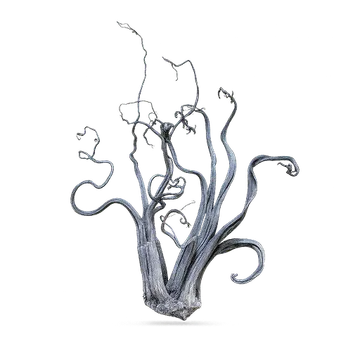
Kongsberg-Silber, Norwegen — skulpturales reines Silber mit Draht-/Federformen aus hydrothermalischen Adern; eine historische Fundstelle, die von Sammlern wegen alter Stücke und… geschätzt wird
Key facts
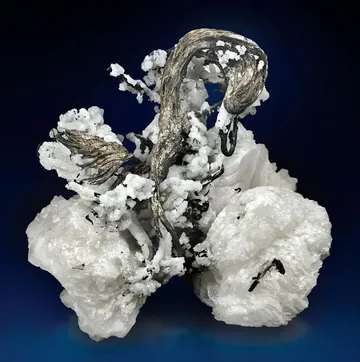
Kongsberg-Silber ist der Maßstab, an dem Drahtsilber gemessen wird. Die besten Exemplare sind nicht nur metallisch; sie sind skulptural: dicke Seile aus reinstem Silber, gefiederte Herringbone-Sprays, eingerollte Ranken, schwere baumartige Massen und feine Nestformen, die aus weißem Calcit hervorsprießen. In den feinsten Beispielen hat das Silber den weichen Glanz alter Metalle statt eines harten polierten Glanzes, und die Formen wirken fast von Hand gearbeitet — Schleifen, Bänder, Äste und Schnüre — obwohl sie vollkommen natürliche Wachstumsformen aus den Adern sind.

Foto: Wikimedia Commons
Mineralogisch gehört Kongsberg zur klassischen Fünf-Elemente-Familie hydrothermaler Adernvorkommen, die Co-Ni-As-Ag-Bi-Assoziation, die durch europäische Silberbezirke berühmt geworden ist. Der Erzgang kommt vor allem in kalkitführenden Adern vor, mit reinstem Silber als dominierender Sammelart und mit Acanthit, Silber-Sulfosalaten, Kobalt-Nickel-Arseniden und Sulfarseniden, Quarz, Fluorit, Baryt, Pyrit, Sphalerit, Galena, Chalkopyrit und Pyrrhotin im weiteren Ensemble. Moderne Arbeiten zum Bezirk haben dieses Bild verfeinert: Das Kongsberg-Silber ist kein einzelnes Ereignis, sondern eine paragenetische Geschichte, bei der frühsilberhaltige Phasen zerfallen, später Silber-reiche Fluide das Metall remobilisieren und lokale Ag-Hg- und Ag-Sb-Solidlösungen quecksilber- bzw. Antimonhaltiges reinstes Silber hervorbringen.

Foto: Wikimedia Commons
Historisch gesehen ist der Bezirk einer der großen Namen des Mineralensammelns. Silber wurde 1623 entdeckt; die Stadt Kongsberg wurde 1624 gegründet; und die Minen wurden mit Unterbrechungen und wechselndem Schicksal bis 1958 betrieben. Über mehr als drei Jahrhunderte produzierte das Gebiet rund 1.350 Tonnen Silber aus ca. 130 Minen, und seine Exemplare wurden von den ersten Bergbaujahren an ausgewählt, gewogen, verkauft und an königliche und private Sammlungen geschickt. Diese lange Tradition erklärt, warum alte Kongsberg-Stücke Schwedische, Dänische, Deutsche, Französische, Britische, Amerikanische und Museumslabel tragen: Feine Exemplare reisen seit dem siebzehnten Jahrhundert.

*Foto: Wikimedia Commons*Für Sammler verbindet das begehrenswerteste Kongsberg-Silber eine unverwechselbare Form mit glaubwürdiger Geschichte. Dicke seilartige Drähte in Kalkspat, silberne Fäden, die durch oder um Kalkspatkristalle hindurchlaufen, kompakte Heringsbein-Verbände und Stücke aus früherer Zeit mit ungestörter Patina ziehen alle Aufmerksamkeit auf sich. Die Matrix zählt: Ein Stück, das das Silber aus dem Kalkspat- oder Gangmaterial hervortreten zeigt, ist oft leichter als Kongsberg zu lesen als eine isolierte Drahtmasse, und die Matrix liefert sowohl visuelle Kontrastwirkung als auch Provenienz-Sicherheit. Beschriftungen sind ebenfalls wichtig. Da das Bezirk abgegrenzt, geschützt ist und in der modernen Spezimenmarkt-Konjunktur keinen frischen legalen Sammelbergbau hervorgebracht hat, sind die besten Stücke im Wesentlichen historische Artefakte ebenso wie Mineralproben.## Vorge stellte Exponate
Specimente suchen: Alle Silberproben aus dem Kongsberg-Silberbergbaurevier, Norwegen anzeigen
Das Kongsberg-Silberbergbaugebiet liegt rund um Kongsberg in Buskerud, im südlichen Norwegen, mit Stilllegungen, die sich sowohl in Kongsberg als auch in Flesberg erstrecken. Das Distrikt ist ein aufgegebenes Bergbaurevier statt eines einzelnen Bergwerks. Innerhalb des Gebiets kennzeichnen die klassischen Minenamen—Kongens gruve, Mildigkeit Gottes, Gottes Hülfe in der Noth, Segen Gottes, Juel’s Mine und viele andere—eine dichte historische Landschaft aus Schächten, Stollen, Abraumhalden, Dämmen, Wasserläufen, Förderwegen und Bergbaubauten.
Die Lagerstätte ist ein hydrothermaler, native-Silber-Adernsystem des Kongsberg- bzw. Fünf-Element-Typs. Die oreführenden Adern sind schmal und strukturell kontrolliert, und die klassische Probenumgebung ist kalkreich: Hohlräume in Kalkachsen allowing native Silber, um Drähte, Kristalle, Platten und verzweigte Massen zu wachsen, statt nur als Erzblenden. Moderne mineralogische Arbeiten begrenzen die Silbermineralisierung auf niedrig- bis mäßigtemperierte hydrothermale Bedingungen, grob 180–250 °C. Die breitere Distriktchemie umfasst Silber, Quecksilber, Antimon, Kobalt, Nickel, Arsenik, Bismut, Schwefel, Blei, Zink, Kupfer und Eisen in verschiedenen Mineralien, doch die identitätsstiftende Mineralogie des Distrikts bleibt natives Silber in Kalkstein.
Die Bergbaugeschichte von Kongsberg beginnt mit der Entdeckung von Silber im Jahr 1623 und der Gründung der Stadt im Jahr 1624 unter König Christian IV. von Dänemark-Norwegen. Deutsche Bergleute und Bergbauspezialisten wurden herangezogen, und der kulturelle Einfluss deutscher Bergbaupraxis blieb sichtbar in Minennamen, technischem Vokabular und Verwaltung. Der Betrieb wuchs zum wichtigsten vorindustriellen Bergbaukomplex Norwegens. In seinem Achzehnteljahrhundert-Peak, um die 1770er Jahre, wurden Tausende von Arbeitskräften beschäftigt, und die Silberwerke wurden zu einer der wichtigsten wirtschaftlichen Antriebsfaktoren des dänisch-norwegischen Staates.
Die König Mine, Kongens gruve, wurde zur größten und ertragreichsten Mine im Bezirk und ist heute der Mittelpunkt der öffentlichen Minenerfahrung, die vom Norwegischen Bergbau-Museum betrieben wird. Die Besucherroute des Museums beginnt in Saggrenda, etwa 8 km außerhalb von Kongsberg. Der Minenzug führt Besucher etwa 2.300 m in den Berg hinein und zu einer Ebene 342 m unter der Oberfläche; die geführte Route setzt sich zu Fuß durch eine kalte, feuchte unterirdische Umgebung fort, in der der Mangel an Tageslicht eine der stärksten Eindrücke bleibt. Das Museum beherbergt außerdem die große Silber- und Mineralienausstellung des Distrikts in der alten Schmiede, einschließlich Hunderten nativen Silberproben und massiver Silberstücke mit Gewichten von bis zu ca. 50 kg.Sammelzugang ist nicht leger und sollte nicht als Gelegenheit zum Feldsammeln behandelt werden. Die meisten historischen Kongsberg-Silberminen sind geschützte Kulturgüter, und das Sammeln ist auf geschützten Abraumhalden oder innerhalb der geschützten Minearbeiten nicht gestattet. Unterirdischer Zugang gehört zu organisierten Museumsführungen oder speziell organisierten Begleitprogrammen. Ernsthafte Sammler sollten Kongsberg-Material als historisches Probenmaterial betrachten, das durch etablierte Sammlungen, renommierte Händler, dokumentierte Auktionen oder Museums-Austausche erworben wurde – nicht als eine moderne Sammelstelle.
Die Produktions- und Probenhistorie des Bezirks ist untrennbar verbunden. Feine Silberstücke wurden aus dem Erzstrom der ersten Bergbaujahre ausgewählt, im Schmelzofen beiseitegelegt, auf Silbergehalt geprüft und verkauft oder verschenkt. Unmengen wurden dokumentiert: Ein Silberguss aus der Segen Gottes Mine, der 1630 gefunden wurde, wurde in einem zeitgenössischen Gemälde dargestellt und wog 95,6 kg; ein weiteres Exemplar aus Juels Mine im Jahr 1695 enthielt 41,5 kg reines Silber; und 1769 wurde ein berühmt gewordenes 25 cm Silberdraht-Exemplar in Form eines gekrönten „C“ zu Ehren von König Christian VII. gesendet. Dies sind nicht bloße Bergbau-Anekdoten – sie zeigen, dass Kongbergs Probenkultur bereits Jahrhunderte vor der Entstehung des modernen Hobbys des Mineral-Sammelns reif war.## Eigenschaften von Silber aus dem Kongsberg-Silberbergbaugebiet, Norwegen
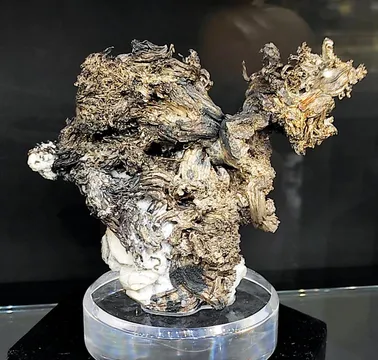
Die bekannteste Form ist Drahtsilber: verdrehte, seilartige, gebogene, geschlungene, aufgewickelte, gefiederte oder heringbone-ähnliche Aggregate von nativen Silbers. Kongsberg-Drahtstücke können haardünn und zart sein, doch der Ruf des Fundortes beruht auf den dicken, muskelartigen Exemplaren — Silberkolben, die sich wie Wurzeln oder Sehnen biegen, mit feiner kristalliner Textur entlang der Oberfläche. Einige Stücke zeigen gestapelte, zwillingsartige Wachstumsformen, die dem Draht ein geflochtenes oder geripptes Aussehen geben. Andere bilden baumartige Massen, Platten, blattähnliche Aggregate, hackige Klumpen oder kristallines Silber, das in Calcit eingebettet ist.
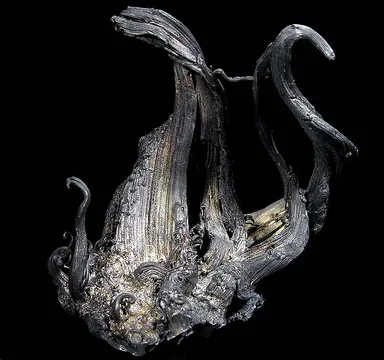
Die Farbe reicht von hell-silberweiß auf frischen oder gereinigten Oberflächen bis zu weichem Grau, Anthrazit, bräunlichgrau und lokal irisierender Patina an älteren Stücken. Eine alte, gleichmäßige Patina ist oft eine Tugend statt ein Makel. Sie verleiht dem Silber Tiefe, reduziert Glanzlicht und unterstützt den „altes Kongsberg“-Look, den viele Sammler bevorzugen. Helle Exemplare können ebenfalls attraktiv sein, besonders dort, wo frisches Silber deutlich mit weißem Calcit kontrastiert, doch unnatürlich weiß, aggressiv gereinigt oder verdächtig gleichmäßige Oberflächen verdienen eine genauere Prüfung.
Die klassische Matrix ist Calcit. Feine Kongsberg-Exemplare zeigen oft Silbereisen, die Calcitkristalle durchdringen, aus einer Calcitadernmasse hervortreten oder Calcit um Calcit gewickelt sind, wobei natürliche Wachstumsweisen sichtbar werden. Acanthit ist eine weitere wichtige Begleitmineralien, und erscheint gewöhnlich als dunkelgraues bis schwarzes Material mit Silber. Fluorit, Quarz, Pyrit, Sphalerit, Bleiglanz, Chalkopyrit, Pyrrhotin, Baryt und Silbersulfosalze kommen im Bezirk vor, wobei jedoch nicht jedes Begleitmineral auf eindrucksvollen native-Silber-Stücken häufig vorkommt. Im mikro- und Erzlithologiekontext kann Silber aus Kongsberg auch mit Nickel-Kobalt-Eisen-Sulfarseniden, Niccolit, safflorit-dominierenden Überzügen, quecksilberhaltigem Silber, antimonhaltigem Silber, Dyskrasit, Allargentum, Pyrargyrit, Tetrahedrit/Freibergit und Polybasit assoziiert sein.
Typische Sammlerstücke reichen von winzigen Daumennagel-Drähten bis hin zu Miniaturen und kleinen Vitrinenstücken. Die am häufigsten erhältlichen Marktexemplare sind kleine Drähte, abgetrennte Locken, kleine Matrixstücke oder alte Daumennägel. Miniaturen mit skulpturaler Form sind deutlich seltener. Silber-Calcit-Kombinationen in Vitrinen-Größe mit dicken Drähten, starker dreidimensionaler Architektur und alter Provenienz sind größere Stücke. Große historische Massen und silberne Drahtmassen in Museumsgröße sind effektiv institutionelle oder Trophäen-Stücke.Qualität wird zuerst nach Form bewertet. Reines Kongsberg-Silber sollte Bewegung zeigen: eine Kurve, Schlaufe, Verzweigung, Kurve, Feder oder eine seilartige Aufwärtsbewegung, die das Stück auf einen Blick erkennbar macht. Dicke und Festigkeit des Silbers sind wichtig, aber Dicke allein reicht nicht aus; die besten Beispiele vereinen Masse und Anmut. Matrixkontrast ist ein wesentlicher Pluspunkt, besonders sauberes weißes Calcit mit Silber, das natürlich daraus emporragt. Der Zustand ist von großer Bedeutung, weil Silber weich ist: zerdrückte Drahtspitzen, abgeflachte Schlaufen, gebogene Verzweigungen, gelöste wieder eingebrachte Drähte und Abrieb mindern die Begehrlichkeit deutlich. Alte Etiketten, insbesondere solche, die ein Stück mit einer benannten Mine oder einer historischen europäischen Sammlung verbinden, können erhebliche wissenschaftliche, historische und marktwirtschaftliche Werte hinzufügen.## Collector Notes
Kongsberg-Silber nimmt eine privilegierte Marktposition ein: Es ist eine klassische, endliche und sofort erkennbare Fundstelle. Da der Bergbau 1958 endete und der größte Teil des Bezirks geschützt ist, besteht das Angebot largely aus altem Sammlungsmaterial. Kleine Stücke erscheinen regelmäßig, aber feine Exemplare sind nie häufig. Die besten Exemplare wandern tendenziell durch spezialisierte Händler, Auktionshäuser, langjährige Sammlungen oder private Transaktionen, und der Herkunftsnachweis kann beinahe so wichtig sein wie die Ästhetik.
Authentizitätsbedenken fallen in zwei Kategorien: ob das Material wirklich natives Silber ist und ob die Fundstelle tatsächlich Kongsberg ist. Natives Silber selbst ist dicht, weich, metallisch und nicht magnetisch, aber visuelle Tests allein reichen für hochwertige Stücke nicht aus. Das subtilere Problem ist die Ortsinflation. Da Kongsberg einen Aufpreis trägt, kann unattribuiertes oder schwach dokumentiertes Drahtsilber aus anderen Bezirken als Kongsberg verkauft werden. isolierte Drahtmassen ohne Calcit oder ohne ein altes Etikett erfordern Vorsicht. Einige Kongsberg-Formen sind hochgradig unverwechselbar, aber nicht jedes faserige Drahtstück ist norwegisch.
Dokumentierte Sammlerbedenken bestehen auch rund um Etikettentausch und Etikettendiebstahl. Alte Kongsberg-Etiketten können eigenständig wertvoll sein, und erfahrene Sammler haben davor gewarnt, dass minderwertige oder unsichere Exemplare durch vertauschte Etiketten stärker identifiziert werden können. Bei wichtigen Käufen vergleichen Sie das Exemplar mit allen alten Etikettendimensionen, handschriftlichen Notizen, Fotografien, Registrierungsnummern und Beschreibungen früherer Händler. Eine starke Verwahrungskette ist besonders wertvoll, wenn ein Stück kein Matrix hat.
Allgemeine Silberfälschungen und Behandlungen sollten ebenfalls beachtet werden. Synthetische Magnesiumkristall-Clustern können online als „ natives Silber“ an ahnungslose Käufer verkauft werden, und elektrolytische Silberkristalle oder Drähte können oberflächlich natürliches Silber imitieren. Künstliche Silberdrähte, die an Calcite befestigt sind, sind weniger häufig, aber möglich. Natürliches Kongsberg-Silber kann säuregereinigt worden sein, um Calcite zu entfernen oder Oberflächen aufzuhellen, und einige alte Stücke haben Calcite teilweise geschliffen, um das Metall freizulegen. Reinigung führt nicht automatisch zur Disqualifikation, aber Überreinigung kann ein rohes, unnatürliches Aussehen erzeugen und die subtile Patina, die Sammler schätzen, entfernen.
Zustandsprobleme sind häufig, da natives Silber eine Mohshärte von ca. 2,5–3 hat und formbar ist. Drähte biegen sich. Schlaufen flachen ab. Feine Spitzen bleiben an der Verpackung hängen. Calcite spaltet sich und prellt. Ein Exemplar, das robust aussieht, kann dennoch verwundbare Fortsätze haben. Handhaben Sie Kongsberg-Silber am Matrix- oder Boden, nicht an den Drähten, und lagern Sie es so, dass das Silber nicht gegen Schaumstoff, Baumwolle, Glas oder benachbarte Exemplare reibt. Nicht polieren wie Barren; Mineralienexemplare werden aufgrund ihrer natürlichen Form und Oberfläche geschätzt, nicht für eine Spiegeloberfläche.## Stories & Field Notes
Die Gründungsgeschichte von Kongsberg beginnt nicht im Minebüro, sondern am Gruveåsen, wo zwei Kinder, Helga und Jacob, im Sommer 1623 Vieh hüteten. Die Geschichte wurde oft genug nacherzählt, um eine polierte Folklore-Schicht zu erhalten, doch ihre Details bleiben erinnerungswürdig: Ein Ochse rieb sich am Berg den Körper wund, etwas Helles zeigte sich im Fels, und die Kinder brachten das schimmernde Material nach Hause. Einer der Väter erkannte es als Silber, schmolz es und versuchte, es zu verkaufen. Das war der Fehler. Behörden fanden das billige Silber verdächtig, verhafteten ihn und forderten eine Entscheidung: Erkläre, wo das Metall herkam, oder werde als Dieb behandelt. Der Fundort wurde offengelegt, und die Entdeckung, die lokal geblieben wäre, wurde zu einer königlichen Bergbauunternehmung.
Von den ersten Jahren an war Kongsbergs Silber nicht nur Erz – es war Spektakel. Wunderschöne Exemplare wurden im Schmelzwerk voneinander getrennt, gewogen, auf ihren Silbergehalt geprüft und Besuchern verkauft oder als Geschenke verschickt. Das war kein beiläufiges Nebengeschäft. Die Kontobücher vermerkten Namen der Käufer, Anzahl der Exemplare, geschätzten reinen Silbergehalt und Preise. In einem normalen Jahr im siebzehnten und achtzehnten Jahrhundert lag das durchschnittliche Silbergewicht der Exemplare bei etwa 9,5 kg reines Silber, weniger als 0,3 Prozent der gesamten Silbergeproduktion, doch seine kulturelle Bedeutung war wesentlich größer als der Prozentsatz vermuten lässt. Kongsberg nährte Europas Wunderkammern bereits.
Der königliche Appetit dominierte den frühesten Handel. Christian IV. besuchte seine neuen Minen im Jahr 1624, und später erhielten dänisch-norwegische Könige die größten Mengen an Silbersammlungen. Die Sammlung von Frederik III. Kongsbergs Silber lässt sich mindestens bis 1648 zurückverfolgen, als er Norwegen besuchte und 99 reiche Silbersammlungstücke zusammen mit Silbererz enthaltendem Pyrargyrit erhielt. Nachdem der Kronprinz 1661 die Silberminen übernommen hatte, wurde die Verteilung der Exemplare noch königlicher. In jenem Jahr wurden 70 kg reines Silber in Exemplaren verkauft, der Großteil davon als Lieferungen an den König und den Kronprinzen identifizierbar. 1665 wurden nicht weniger als 1.210 Exemplare an den König gesandt.
Einige Stücke waren so groß, dass sie Bilder wurden, bevor sie Geschichte schrieben. Ein Silbergussstück, das 1630 in der Mine „Gottes Segen“ – Segen Gottes – gefunden wurde, wog 409 Mark, oder 95,6 kg. Der holländische Maler Adam van Breen malte es und bewahrte die Masse als kulturelles Objekt ebenso wie als Mineraleinzelstück. Ein weiteres großartiges Exemplar, gefunden in Juels Mine im Jahr 1695, enthielt 41,5 kg reines Silber und wurde mit der Stadt Kongsberg und der dahinterliegenden Bergbaulandschaft dargestellt: Pferde-Launen, Dämme, Aquädukte, Wasserräder und Holzdraht-Stromleitungen. Diese Gemälde haben Bedeutung, weil sie Kongsbergs Silber als öffentliches Wunder zeigen, nicht lediglich als metallurgisches Produkt.Der theatrale königliche Spitzenreiter war der „große C“ von 1769. Er war 25 cm hoch und nahm die Form eines großen Buchstaben C an – dem Anfangsbuchstaben von König Christian VII – der oben gekrönt war. Gefunden in Gottes Hülfe in der Noth, „Gottes Hilfe in der Not“, wurde er zu einem der großen Schätze des Geologischen Museums in Kopenhagen. Das Stück ist reines Kongsberg-Theater: natürlicher Drahtsilber, durch Monarchie interpretiert, Geologie in Emblem verwandelt, ein Exemplar, dessen Form fast zu passend schien, um zufällig zu sein.
Sammler beschränkten sich nicht auf Könige. Die frühen Verkaufslistsen lesen sich wie eine Sozialkarte des nordischen Europas des siebzehnten Jahrhunderts. Christoffer Urne, Vizegraf von Norwegen, kaufte mehr als 92 Exemplare mit insgesamt 102,4 kg reinen Silbers. Hans Nilsen, Schatzmeister und Hauptbuchhalter der Bergbaugesellschaft, war in Listen mit mehr als 278 Exemplaren verzeichnet, insgesamt 4,7 kg reines Silber. Proberferigten, Schmelzbeamte, Kaufleute, Bergbau-Direktoren, deutsche Besucher, ein Kaufmann aus Lübeck, ein Mann aus Edinburgh, ein französischer Besucher und möglicherweise sogar ein Besucher aus Genf erscheinen in den Listen. Lange bevor „alte Sammlungs provenance“ zum Händlerjargon wurde, zogen Kongberg-Exemplare vom Bergwerk ins Kabinett durch ein dokumentiertes soziales Netzwerk.
Nicht alle Kongsberg-Sammelgeschichten sind edel. 1727 entdeckten Inspektoren Kupfer, das aus dem Lagerraum der Königlichen Norwegischen Münze fehlte. Die Untersuchung ergab, dass Münzen mit zu wenig Silber geprägt worden waren, Kupfer wurde ersetzt, und Münzmeister Henrick Christoffer Meyer hatte das Silber behalten. Er wurde zu „Verlust von Ehre, Leben und Eigentum“ verurteilt, doch der König milderte die Todesstrafe. Um 14:00 Uhr am 16. Februar 1729 wurde Meyer auf dem Markt von Kongsberg 27 Rasern ausgesetzt und ein Diebssignet auf seine Stirn verbrannt. Zwei Monate später starb er in seiner Zelle. Als sein Besitz versteigert wurde, gehörte eine Mineraliensammlung im Wert von 100 Reichstaler dazu, die für 135 Reichstaler und 24 Skilling verkauft wurde. Selbst Schande in Kongsberg konnte ein Mineralienkabinet hinterlassen.
Kongsberg half auch beim Aufbau der wissenschaftlichen Mineralsammlungen Norwegens. Die Königlich-Norwegische Bergbauakademie wurde dort 1757 gegründet, hatte jedoch zu Beginn kein geeignetes Budget für Exemplare. Dozenten nutzten eigene Sammlungen oder erwarben, was sie konnten. Professor Peter Thorstensen besaß eine Sammlung von etwa 3.000 Nummern, die 1777 durch Feuer zerstört wurde. Jørgen Hiort, Direktor der Silberbergwerke von 1775 bis 1791, schenkte der Akademie eine Sammlung von mehr als 3.550 Nummern, darunter Hunderte von Proben norwegischer Minen und viele Kongberg-Silberexemplare. Sein Geschenk wurde als Beweis für Begeisterung für sein Land, Ergebenheit dem König gegenüber und Liebe zum Bergbauberuf beschrieben.Der achtzehntes Jahrhundert-Kongsberg-Abbauelite sammelte international, weil sie auch international reisten. Hiorts Grand Tour dauerte mehr als drei Jahre, von Juli 1763 bis September 1766, durch Dänemark, Sachsen, Tschechien, Slowakei, Rumänien, Ungarn und Österreich. Morten Thrane Brünnich reiste von Juli 1765 bis Oktober 1769 – vier Jahre und drei Monate – durch die Niederlande, England, Frankreich, Italien, Slowenien, Österreich, Ungarn, Tschechien, Slowakei, Rumänien, Sachsen und den Harz. Jens Esmark, später Norwegens erster Professor der Geowissenschaften an der Universität Christiania, reiste von 1791 bis 1797 und verbrachte lange Zeit in Freiberg, wo er Abraham Gottlob Werner bewunderte. Ihre Sammlungen waren keine Haufen lokaler Erze; sie waren mineralogische Reisepässe.
Im Jahr 1811 war Norwegens erste Universität kurzzeitig für Kongsberg geplant, weil die Bergakademie dort bereits ansässig war. Die Entscheidung wurde im Januar 1812 revidiert, und die Universität zog nach Christiania, dem heutigen Oslo. Als die Bergakademie 1814 aufgegeben wurde, gingen deren mineralische Sammlungen und Kataloge mit ihr. Die in Kongsberg verwurzelten Sammlungen wurden Teil des zentralen Nucleus der heutigen Sammlungen des Geological Museum in Oslo. In diesem Sinne half das Kongsberg-Silber nicht nur einer Bergbaustadt, sondern einer nationalen wissenschaftlichen Tradition.
Nachdem die Sammlungen der Akademie aus der Stadt wegzogen waren, wollten die Bergbaubeamten von Kongsberg eigene Exemplare und wissenschaftliche Bücher. Reiche Silberfunde um 1830 verbesserten die Finanzen, und ein königlicher Beschluss vom 15. März 1841 genehmigte die Einrichtung von Mineral- und Buchsammlungen im Silberwerk. Unter Direktor Karl Friedrich Böbert und seinen Nachfolgern wuchsen die Kongsberg-Sammlungen durch Schenkungen, Tausch, Käufe und Sammeln. Das Silberwerk sandte sein spektakuläres eigenes Silber zu Ausstellungen, einschließlich der ersten Weltausstellung im Crystal Palace in London im Jahr 1851. Gegen etwa 1880 wurden die Sammlungen der Öffentlichkeit in regelmäßigen Abständen im Silberschmelzwerk zugänglich gemacht.
Die Museumsgeschichte setzte sich fort, nachdem das Bergwerk stillgelegt war. Als die Bergwerke 1958 schlossen, war die mineralische Sammlung der Kongsberger Silberminen zu einer fokussierten, fast monographischen Sammlung geworden: natives Silber, gebildet durch einen geologischen Prozess in einem eingeschränkten Bezirk, bewahrt in Drähten, Kristallen, Platten, baumförmigen Massen und großen Taschenproben. Heute bleibt das Norske Bergbaumuseum der wesentliche Hüter dieses Erbes. Für den Sammler, der vor einem kleinen Drahtsilberschwarzbildschirm steht, ist die größere Geschichte immer dahinter zu finden: Kinder und ein Ochse, Könige und Kontobücher, königliche Geschenke, gestohlenes Silber, Bergakademien, Weltausstellungen und drei Jahrhunderte menschlicher Entscheidungen darüber, welche Stücke zu schön zum Einschmelzen waren.## Mineralogische Aufzeichnungen & Veröffentlichungen- Jensen, E. (1939). “Sølvet på Kongsberg — Om de kjemiske prosesser ved dets utfelling og om trådsølvdannelsen.” Norsk Geologisk Tidsskrift, 19(1), 1–106. Eine grundlegende norwegische Studie über die chemischen Prozesse der Silberfällung und der Drahtsilberbildung bei Kongsberg, aufgeführt im Mindat-Standortbibliographie.
Neumann, H. (1944). “Silver deposits at Kongsberg: The mineral assemblage of a native silver-cobalt-nickel ore type.” Norges Geologiske Undersøkelse 162. Klassische NGU-Monographie zur dem Kongsberg-Nativsilber-Kobalt-Nickel-Erzgefüge.
Johnsen, O. (1986). “Famous Mineral Localities: The Kongsberg Silver Mines, Norway.” The Mineralogical Record, 17(1), 19–36. Die klassische englischsprachige behandlung des Standorts durch Sammler-Minerekologie, die in späteren Kongsberg-Literaturen häufig zitiert wird.
Johnsen, O. (1987). Silver from Kongsberg: Mining-History and Mineral-Treasures. Bode Verlag. Bedeutende, illustriert buchlange Behandlung der Bergbaugeschichte und des Fundstückreichtums des Bezirks.
Bancroft, P., Nordrum, F. S., & Lyckberg, P. (2001). “Kongsberg [Norway] Revisited.” The Mineralogical Record, 32(3), 181–205. Eine bedeutende sammlerorientierte Aktualisierung des Bezirks und post-Abbruch-Funde.
Berg, B. I., & Nordrum, F. S. (2004). “The distribution of silver specimens from the Kongsberg Silver Mines, Norway, 17th and 18th centuries.” Scripta Geologica Special Issue, 4, 14–19. Wesentliches Papier, das frühe Exemplarverkäufe, königliche Geschenke, Käufer, Gewicht der Proben und die internationale Verbreitung von Kongsberg-Silber dokumentiert.
Nordrum, F. S., & Berg, B. I. (2004). “Historical mineral collections in the silver mining town of Kongsberg, Norway.” Scripta Geologica Special Issue, 4, 229–235. Ausführliche Geschichte der Mineralienkollektionen in Kongsberg, der Mining Academy und der silberenen Bestände des Norsk Mining Museum.
Kotková, J., Kullerud, K., Šrein, V., Drábek, M., & Škoda, R. (2018). “The Kongsberg silver deposits, Norway: Ag-Hg-Sb mineralization and constraints for the formation of the deposits.” Mineralium Deposita, 53, 531–545. Modernes Mikrosonden- und Paragenese-Studie der Ag-Hg-Sb Mineralisation und der Bildungsbedingungen der Depots.
Kullerud, K., Kotková, J., & Škoda, R. (2016). “Ag-Sb bearing minerals from the Kongsberg Silver Deposit, Norway.” , 53–59. Vortragsbeitrag zum Antimon-haltigen Silberspfalz des Bezirks.
[Kullerud, K., Kotková, J., Šrein, V., & Berg, B. I. (2018). “Electrum from the Kongsberg silver district, Norway.” Abstracts of the 22nd IMA Meeting], Melbourne, p. 79.](https://www.mindat.org/locentry-213666.html) Kurzer IMA-Abstract zur Elektrum aus dem Bezirk.
Australian Museum Exemplar D.50716, „Silber mit Acanthit“, Kongsberg, Norwegen. Bemerkenswertes Museumsstück aus der Albert Chapman Sammlung, 9 x 4,5 x 0,85 cm, durch Tausch mit der Universität Paris im Jahr 1976 erworben.
Norwegisches Bergbaumuseum Silber- und Mineralsammlungsausstellung. Die zentrale institutionelle Sammlung für Kongsbergs natives Silber, mit Hunderten von Silber- und Mineralsammlungen zur Schau und massiven Silberskulpturen bis ca. 50 kg.## Videos & Medien
„Kongsberg Sølvverk 1623–1958“ — Norsk Bergverksmuseum — Museumsprojekt Kurzdokumentation über die Geschichte der Kongsberg-Silberwerke, angekündigt für Kinopremiere und Museum/YouTube-Präsentation.
Silvermines — Norwegian Mining Museum — Offizielle Besucher-Medienseite für die King’s Mine-Tour, einschließlich praktischer Details zur Untergrundführung und historischen Kontext.
Native silver from Kongsberg, Norway — Wikimedia Commons category — Offene Bildergalerie von Kongsberg-Nativesilberproben, nützlich zum Vergleichen von Draht, Anlaufformen und Matrixstilen.
Mindat photo gallery for native silver from the Kongsberg Silver Mining District — Großes Archiv von Probenfotos, das das Spektrum von Draht-, arboreszentem-, kalzitassoziiertem und angelaufenen Kongsberg-Material zeigt.## Weiteres Lesen & Externe Links- Mindat: Kongsberg silver mining district, Buskerud, Norway — Beste Lokality-Datenbankeintrag für Mineralienliste, Untermine, Referenzen und Fotolinks.
Mindat: Native Silver from Kongsberg silver mining district — Art-spezifische Fundstelle für Native Silver, mit zugehörigen Mineralien und umfangreichen Fotodaten.
Norwegian Mining Museum: Museum exhibition — Offizielle Museumsseite zur Kongsberg-Silber- und Mineral-Ausstellung.
Norwegian Mining Museum: Silvermines — Offizielle Seite zum Besuch der Königsmine in Saggrenda.
ScienceNorway: “The Kongsberg mines are famous for their beautiful native silver…” — Zugänglicher Artikel über Kongsberg-Silber, Museumssammlungen und erneertes Forschungsinteresse an Gold/Elektrum.
Geoforskning.no: “Sølv: Kongsberg” — Norwegischsprachige Übersicht über die Kongsberg-Silberablagerungen und ihre historische Bedeutung.
Naturalis Repository: Berg & Nordrum (2004), distribution of Kongsberg silver specimens — Repository-Landingpage für das Papier über Verkäufe und Geschenke von Exemplaren aus dem siebzehnten und achtzehnten Jahrhundert.
Naturalis PDF: Berg & Nordrum (2004) — Direktes PDF des essenziellen Artikels zur historischen Verteilung von Exemplaren.
Naturalis PDF: Nordrum & Berg (2004), historical mineral collections in Kongsberg — Direktes PDF über Kongsberg-Sammlungen, die Bergbauakademie und Museumsbestände.
Mineralium Deposita DOI: Kotková et al. (2018) — Moderne peer-reviewte Studie zur Ag-Hg-Sb-Vererzung von Kongsberg.
Wikimedia Commons: Silver-Calcite-158648.jpg — Offene Bildseite für eine klassische Drahtsilber- und Calcit-Präparation aus Kongsberg.
Wikimedia Commons: Silver (Kongsberg, Norway) 1 — Offene Bildseite für eine leuchtende Native-Silver-Präparation aus der Sammlung des Cranbrook Institute of Science.
Wikimedia Commons: Tarnished silver (Kongsberg, Norway) 2 — Offene Bildseite, die natürliche Patina auf Kongsberg Native Silver zeigt.
Mindat discussion: “King Kong(sberg)” — Sammler-Diskussion, die Lokalitäts-Authentizitäts-Hinweise dokumentiert, einschließlich dubioser Kongsberg-Zuordnungen und Label-Bedenken.
Mindat: Best Minerals — Silverps://www.mindat.org/a/best_silver) — Vergleichender Sammlerüberblick, der Kongsberg unter den weltbesten Silber-Lokalitäten platziert.

_1_(17090660918).jpg)
_2_(17268647926).jpg)