Luc Yen Sapphire - pink to purple corundum from marble-hosted deposits in northern Vietnam, prized for hexagonal crystals, translucency, and gem rush.
Key facts
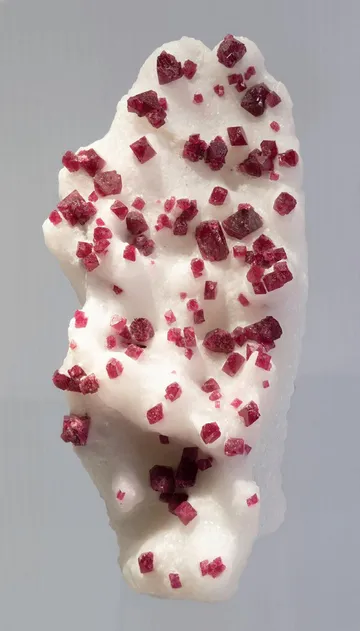
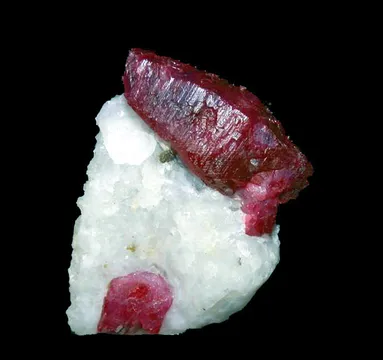
Sapphire from the Luc Yen Mine belongs to one of the most admired marble-hosted corundum districts in Southeast Asia: a landscape of white marble, steep karst hills, paddy valleys, and small-scale gem workings in Yên Bái Province, northern Vietnam. For collectors, Luc Yen sapphire is not primarily a “big blue faceting rough” locality in the basaltic-sapphire sense. Its personality is more intimate and more mineralogical: pink to purple corundum, orange-pink and rose-pink sapphire crystals, occasional blue and colorless sapphire, and specimens whose appeal lies in sharp hexagonal form, silky translucency, marble associations, and a distinctly metamorphic suite of inclusions and companion minerals.

Photo: Wikimedia Commons
The Luc Yen district is best known internationally for ruby and spinel, but sapphire is part of the same corundum story. Here, the corundum occurs in and around moderate- to high-temperature recrystallized marble within the Lo Gam tectonic zone, on the eastern side of the Red River shear-zone system. That setting gives the material a markedly different flavor from the iron-rich blue, green, and yellow basalt-related sapphires of southern Vietnam. Luc Yen’s fancy sapphires are generally tied to the ruby-bearing marble environment: chromium-bearing pinks and purples, color zoning, blue patches within pink or red stones, and the low-iron fluorescence and “Burmese-like” visual character noted by early gemological studies of Vietnamese ruby and fancy sapphire.

Photo: Wikimedia Commons
The locality’s historical importance is considerable. The modern Vietnamese gem rush began after high-quality corundum was discovered in the Luc Yen district in 1987. By the early 1990s, Luc Yen had become a name known to dealers in Bangkok, Hanoi, Ho Chi Minh City, and the wider colored-stone trade. Early production from the district included ruby and fancy sapphire from placers and marble-related deposits, with spinel, garnet, tourmaline, humite, pargasite, and feldspar forming the broader gem suite. Today the district remains a classic source for collectors who appreciate corundum specimens as natural crystals rather than only as cut gems.
Collectors look for three different kinds of Luc Yen sapphire material. The first is specimen-grade sapphire: well-formed hexagonal crystals, often pink or orange-pink, sometimes translucent to gemmy, with striated faces and a lively waxy to vitreous luster. The second is cabochon and carving-grade material with attractive silk, color zoning, or star potential. The third is facetable fancy sapphire, usually in modest sizes, where the best stones show strong pink, purple, or purplish-pink color, acceptable transparency, and credible documentation of Vietnamese origin and treatment status.
Search for specimens: View all sapphire specimens from Luc Yen Mine, Vietnam
The Luc Yen Mine is recorded as a sapphire occurrence in Lục Yên District, Yên Bái Province, Vietnam, with sapphire listed as a pink variety of corundum, Al2O3. In the collector’s world, “Luc Yen” often functions as both a specific mine name and a district name, because gem material is mined and traded through a network of nearby deposits and villages. For serious labeling, a specimen tied specifically to Luc Yen Mine should not be expanded casually to An Phú, Khoan Thong, Minh Tien, Bai Chuoi, or other nearby occurrences unless the old label, mine note, or reliable dealer history supports that refinement.
Geologically, the district is part of a metamorphic belt associated with large-scale shear zones. The Luc Yen corundum-bearing rocks lie in the Lo Gam tectonic zone, east of the Red River shear zone, in a sequence that includes marble and overlying sillimanite-biotite-garnet schist. The principal corundum setting is marble-hosted: ruby and fancy sapphire occur in recrystallized carbonate rocks of Upper Proterozoic to Lower Cambrian age, and the secondary deposits are formed where weathering concentrates durable corundum crystals in karst pockets, alluvial fans, narrow valleys, paddy fields, and stream gravels.
Two deposit styles matter to collectors. Primary corundum occurs in marble, commonly with phlogopite, dravite, margarite, pyrite, rutile, spinel, edenite, graphite, and calcite-bearing assemblages. Secondary deposits consist of heavy-mineral concentrations in gravel, karst depressions, and alluvial pockets. These secondary deposits can mingle ruby, pink and purple sapphire, blue or colorless sapphire, spinel, garnet, and tourmaline in the same small working area. The landscape is ideally suited to pockety artisanal mining and poorly suited to uniform industrial extraction, which helps explain the district’s long history of small local workings.
Modern mining history began rapidly. High-quality corundum was discovered in the Luc Yen district in 1987 after local farmers recovered stones from placers. In 1988 the Vietnamese government established VINAGEMCO, a state-owned company for exploration, mining, processing, and trade. In September 1989, a joint venture between VINAGEMCO and B. H. Mining Company of Thailand began work at Khoan Thong, one of the classic Luc Yen-area placer deposits. From November 1989 through March 1990, that operation recovered about 244 kg of gem-quality ruby and sapphire, much of which entered cutting and trading channels through Bangkok.
From 1990 to 1994, thousands of independent miners moved through the Luc Yen district as new primary and secondary gem occurrences were found. In 1995, mine management shifted to the Vietnam National Gems and Gold Corporation, later absorbed into VIMICO after a 2003 merger. Large-scale mining did not prove especially effective in Luc Yen because the gems occur irregularly in karst pockets, caves, narrow valleys, and ground left between marble pinnacles. Since 2000, the area has largely returned to small-scale artisanal work by local farmers and miners, with production moving through local traders, small cutting shops, and the Yen The gem market.
Collecting access is best understood as market access, not casual mine access. The active workings are local, small-scale, and often on farmland, steep karst slopes, or marble terrain where access depends on permissions, guides, seasonal conditions, and local relationships. The collector specimens that reach the international market typically come through dealers who buy from miners, families, and traders rather than through public fee-digging. The daily morning market in Yen The, commonly called Luc Yen town, remains a key point of first appearance for small rough, cabochon material, sapphire parcels, spinel, ruby, and locally cut stones.
Notable finds from the broader district include well-formed pink sapphire crystals, bipyramidal corundum, ruby and sapphire crystals suitable for cabochons, and small facetable fancy sapphires. The best specimen pieces are treasured because much Luc Yen corundum is either worn from placer transport, fractured, opaque, or cut before it ever reaches mineral collectors. A sharp, undamaged sapphire crystal from this locality—especially with a clean hexagonal outline, saturated pink to orange-pink color, and good luster—is far scarcer than the number of “Luc Yen sapphire” commercial gem listings might suggest.
Luc Yen sapphire is corundum, Al2O3, and its best-known collector color is pink. The color range of Luc Yen-area corundum includes pink, purple, purplish pink, pinkish purple, blue, colorless, gray, brown, and transitional ruby-to-sapphire tones. The distinction between ruby and pink sapphire is not only mineralogical but commercial and jurisdictional: both are corundum colored largely by chromium, but the redder material is traded as ruby, while lighter, more purple, or non-red material is treated as sapphire. Luc Yen sits directly on that boundary, which is why older literature often discusses “rubies and fancy sapphires” together.
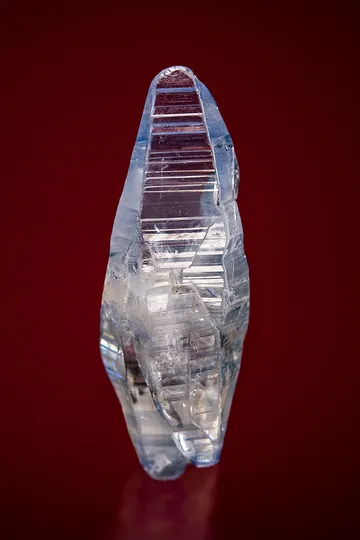
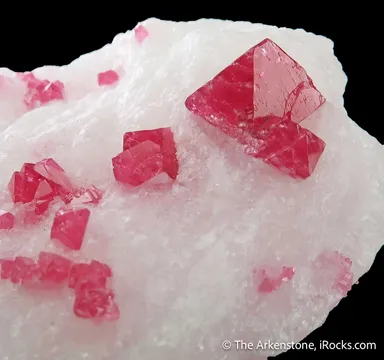
Crystal habit is one of the locality’s chief specimen attractions. Luc Yen sapphire can occur as hexagonal prismatic crystals, bipyramidal crystals, and stacked or intergrown clusters. Good specimens may show sharp faces, horizontal striations, translucent to gemmy zones, and a waxy-to-bright luster on crystal faces. Placer pieces may be rounded or moderately worn, but some crystals retain unusually sharp faces, suggesting limited transport from marble source rocks. Reported and photographed specimen sizes include crystals in the centimeter range, with notable examples around 4–6 cm as mineral specimens rather than faceting rough.
The typical gem rough is much smaller. Early GIA work on Luc Yen and Quy Chau material reported most Luc Yen gem-quality rough in the 2–6 mm range, while larger pieces were rare and rough over 20 ct was known but exceptional. Faceted research stones in the classic 1991 study ranged from 0.17 to 1.94 ct, a realistic scale for much of the finer cut material. For collectors, this size pattern matters: a 1 ct faceted Vietnamese pink sapphire may be ordinary in scale but excellent in locality significance, while a sharp multi-centimeter sapphire crystal is a much scarcer mineral specimen.
Internal features are a major part of the locality’s identity. Vietnamese pink-to-purple sapphire and ruby from the Luc Yen and related northern deposits are known for distinct blue color zones, red and pink zoning, near-colorless zones, “treacle” or roiled growth features, laminated twinning planes, clouds of minute particles, and orange-stained fractures. Calcite is an especially important inclusion mineral, occurring as irregular transparent grains and, in some stones, unusual rod-like crystals. Apatite, pyrrhotite, rutile, phlogopite, and nordstrandite have also been documented in the Vietnamese corundum suite studied by GIA.
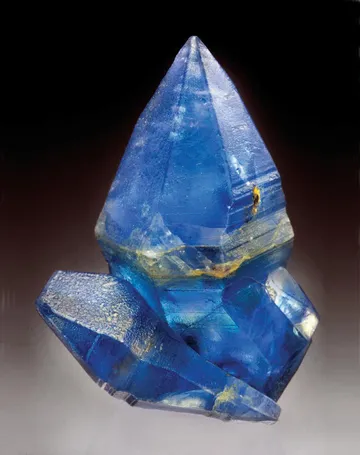
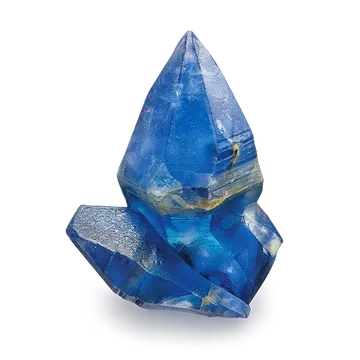
The most desirable colors for sapphire collectors are saturated pink, purplish pink, violet-pink, and attractive orange-pink. Blue sapphire does occur in the Luc Yen district, but the district’s blue stones should not be confused with the more abundant basalt-related blue sapphires of southern Vietnam. Luc Yen blue sapphire is better viewed as part of the metamorphic marble-hosted corundum association: sometimes blue zones within pink or ruby material, sometimes discrete blue or grayish-blue sapphire, and often in smaller or less transparent pieces.
Associated minerals can be as important as the sapphire itself. In the primary marble environment, look for calcite marble, phlogopite mica, dravite, margarite, pyrite, rutile, spinel, edenite, graphite, pargasite, and humite. In the secondary deposits, sapphire may be associated in the heavy-mineral suite with ruby, red to pink spinel, pale blue spinel, garnet, and multicolored tourmaline. A Luc Yen sapphire with undisturbed marble matrix, visible mica, or contrasting calcite can be more locality-expressive than a loose crystal of better color but no context.
Quality is judged differently for specimens and gems. For mineral specimens, form, completeness, surface luster, color saturation, translucency, and matrix contrast are paramount. A sharp, lustrous pink sapphire crystal with minimal chipping can outrank a more gemmy but broken fragment. For cut stones, the deciding factors are color, transparency, zoning, silk, fractures, and treatment status. Much Luc Yen material is included, and historically only a small portion of examined rough has been suitable for faceting; cabochon and carving grades are much more common. Fine transparent, evenly colored, untreated pink to purple Luc Yen sapphire is therefore genuinely selective material.
The first authenticity issue is locality precision. “Luc Yen” is widely used in the gem trade for material from the broader district, and sometimes even for stones that merely passed through the Yen The market. A specimen labeled “Luc Yen Mine” should ideally have a reliable old label, dealer provenance, or locality record. Without that, a broader label such as “Luc Yen district, Yên Bái Province, Vietnam” may be more honest than an overly specific mine attribution.
The second issue is species confusion in mixed parcels. Luc Yen produces corundum, spinel, garnet, and other gem minerals together, and historical GIA testing of Vietnamese ruby and fancy sapphire parcels found natural spinel and almandite garnet among stones represented for study as ruby or sapphire. This is not surprising in a district where red, pink, purple, and orange gem minerals are traded side by side in small parcels. For valuable stones, confirm corundum by refractive index, spectrum, specific gravity, microscopy, or laboratory testing rather than trusting color alone.
Synthetic corundum is also a documented concern in Vietnamese gem trading contexts. GIA’s early study of Vietnamese ruby and fancy sapphire found a flame-fusion synthetic ruby among submitted samples, and the authors noted that they had seen synthetic ruby represented as natural Vietnamese material before. Later reporting on Luc Yen’s markets also notes that synthetic gems can be present among natural local stones. For collectors, this matters most with inexpensive faceted pink or purple “Vietnam sapphire” parcels, where the cost of testing may exceed the price of individual stones but not the importance of disclosure.
Treatments are another important point. Early GIA examination of Vietnamese ruby and fancy sapphire found that most studied stones showed no physical evidence of heat treatment, but reports of heat-treated Vietnamese corundum were already present by 1991, and the authors reasonably expected that much material would eventually be heated before reaching jewelers. Today, any gem-quality Luc Yen sapphire offered as unheated should be treated as a claim requiring evidence. For higher-value cut stones, insist on a report from a reputable gem laboratory that addresses natural origin, treatment, and, when possible, geographic origin.
Condition issues are common in mineral specimens. Luc Yen corundum commonly shows fractures, iron-oxide staining, etching, worn edges from placer transport, cleaves or breaks along damaged zones, and contact marks where crystals were removed from marble. Matrix specimens may be trimmed or carved locally to expose corundum in marble, and some decorative pieces from the district are intentionally shaped for the domestic phong thuy market. Such carving is not “damage” if sold as a carving, but it should not be confused with a natural unmodified mineral specimen.
One particularly vivid warning from the early GIA study is that a faceted Vietnamese corundum sample had been repaired: the bottom half of the pavilion had separated along a fracture and was glued back on, with a visible glue layer and slight misalignment. That example is a reminder to inspect Luc Yen cut stones and crystals for repairs, especially along major fractures, terminations, and matrix contacts. In specimens, check whether crystals have been reattached, whether broken bases are concealed in putty or glue, and whether matrix has been artificially added.
Market availability is steady but uneven. Small cabochons, beads, included faceted stones, silky pink to purple sapphires, and mixed ruby-sapphire parcels appear regularly. Good crystal specimens are less common, and sharp, lustrous, undamaged pink sapphire crystals from old Luc Yen finds are increasingly treated as classic Vietnamese mineral specimens. The best buys for collectors are often not the largest pieces, but the most honest ones: well-labeled, clearly natural corundum, with visible crystal form, attractive color, and no overstatement about “royal blue,” “padparadscha,” “unheated,” or exact mine origin unless documents support the claim.
Luc Yen’s sapphire story begins in a landscape that looks deceptively gentle from the valley floor: paddy fields, villages, and green hills. Step closer and the hills become karst—steep limestone towers, caves, sinkholes, knife-edged marble, and narrow depressions where heavy minerals gather. That topography shaped the entire history of the district. Industrial equipment could strip the easy ground, but it could not efficiently chase every pocket between marble pinnacles, every cave fill, or every narrow valley gravel. Those leftovers became the world of the local miner: shovels, buckets, hoses, rattan baskets, and hand sorting.
The first rush had the speed of rumor. After farmers recovered high-quality corundum from placers in 1987, the district moved from agricultural obscurity into gem-trade consciousness almost overnight. VINAGEMCO was established in 1988, and by November 1989 the joint venture at Khoan Thong had opened Vietnam’s first commercial gem-mining operation. In only five months, from November 1989 through March 1990, Khoan Thong yielded about 244 kg of gem-quality ruby and sapphire. At its peak, that operation had about 70 workers and enough organization to use water cannons, sluices, and a jig to separate corundum from gravel by density.
Then came the independent miners. During the early 1990s, thousands of people worked the Luc Yen area outside formal structures, following gravels, buying and selling rough, and feeding a market that was still learning how to value Vietnamese ruby and sapphire. Some stones went to Hanoi and Ho Chi Minh City; many moved toward Bangkok, then the world’s most important colored-stone trading and cutting center. The district’s production was never simply a mine-to-office story. It was farmers, government corporations, Thai buyers, Vietnamese cutters, local women selling parcels in the morning market, and small family workshops adapting as the material changed.
In Luc Yen, the market became as important as the mine. During the 1990s, the gem market spread across more than 1,000 square meters, with hundreds of local farmers selling stones between about 5:30 and 7:30 each morning. When the market ended, sellers returned to the mountains. The modern market is smaller—GIA reported it at roughly a tenth of its former size by 2013—but the rhythm remains memorable: low tables, parcels of rough and cut stones, women sellers, dealers with phones, and buyers who know that the best stones may never sit in public view for long.
The 2014 GIA field expedition captured the physical cost of the place. Luc Yen lies about 250 km northwest of Hanoi, a four- to five-hour drive in ordinary travel terms, but the mines themselves are not ordinary destinations. Vincent Pardieu and the GIA field gemology team climbed into limestone mountains where the heat and humidity were strong enough to stop work. Pardieu’s line from the field is blunt and memorable: “It’s just superhot…people are not working…” The trip was not tourism; it was reference-sample work, the slow business of buying from small-scale miners and documenting stones so laboratories could recognize old, new, and future production.
Another Luc Yen detail belongs in every collector’s memory because it explains the district’s specimen economy. At May Thuong, miners working ruby in marble lived in a canvas-covered shack halfway up the mountain, using a generator, drills, and crowbars to open the quarry. When marble blocks were ready to come down, local Man or Tay carriers could be paid 2,000 to 3,000 Vietnamese dong per kilogram—only about ten to fifteen U.S. cents at the time reported—to carry 50–80 kg on their shoulders through difficult terrain. A crystal in marble on a collector’s shelf may have passed through that chain of labor before it ever reached a dealer tray.
The small stones have their own afterlife. Luc Yen’s gem paintings use ruby, sapphire, spinel, garnet, peridot, pargasite, chalcedony, fluorite, amethyst, rose quartz, and calcite powder as color. In the workshops, a white acrylic sheet is painted with a pattern, covered with calcite powder, and then filled with intact or crushed gem grains held by glue. One worker can complete a 40 × 60 cm picture in a day. For collectors of fine crystals, it is slightly painful to imagine sapphire reduced to blue pigment; for the local economy, those low-grade grains are what keep miners working between the occasional fine discovery.
Robert E. Kane, Shane F. McClure, Robert C. Kammerling, Nguyen Dang Khoa, Carlo Mora, Saverio Repetto, Nguyen Duc Khai & John I. Koivula, “Rubies and Fancy Sapphires from Vietnam,” Gems & Gemology, Vol. 27, No. 3, 1991, pp. 136–155 — The foundational gemological paper on early Vietnamese ruby and fancy sapphire, including Luc Yen material, internal features, inclusions, color zoning, and authenticity concerns.
Robert C. Kammerling, Alice S. Keller, Kenneth V. Scarratt & Saverio Repetto, “Update on Mining Rubies and Fancy Sapphires in Northern Vietnam,” Gems & Gemology, Vol. 30, No. 2, 1994 — A field update on mining activity at Luc Yen and Quy Chau during the early years of northern Vietnam’s modern corundum production.
Pham Van Long, Vincent Pardieu & Gaston Giuliani, “Update on Gemstone Mining in Luc Yen, Vietnam,” Gems & Gemology, Winter 2013, Vol. 49, No. 4 — The best modern overview of Luc Yen’s geology, mining history, primary and secondary deposits, market activity, and associated gem minerals.
Pham Van Long, Gaston Giuliani, Virginie Garnier & Daniel Ohnenstetter, “Gemstones in Vietnam,” Australian Gemmologist, Vol. 22, No. 4, 2004 — A broader review of Vietnamese gemstone deposits, including northern marble-hosted ruby and sapphire and southern basalt-related sapphire.
Pham Van Long, Hoang Quang Vinh, Virginie Garnier, Gaston Giuliani, Daniel Ohnenstetter et al., “Gem corundum deposits in Vietnam,” Journal of Gemmology, Vol. 29, No. 3, 2004, pp. 129–147 — A technical review of Vietnamese corundum deposits, useful for separating northern marble-hosted ruby/fancy sapphire from southern basalt-related sapphire.
Virginie Garnier, Gaston Giuliani, Henri Maluski, Daniel Ohnenstetter et al., “Ar–Ar ages in phlogopites from marble-hosted ruby deposits in northern Vietnam: evidence for Cenozoic ruby formation,” Chemical Geology, Vol. 188, 2002, pp. 33–49 — A geochronological study relevant to the timing of marble-hosted corundum formation in northern Vietnam.
Gaston Giuliani, Jean Dubessy, David Banks, Hoàng Quang Vinh, Thérèse Lhomme, Jacques Pironon, Virginie Garnier, Phan Trong Trinh, Pham Van Long, Daniel Ohnenstetter & Dietmar Schwarz, “CO2–H2S–COS–S8–AlO(OH)-bearing fluid inclusions in ruby from marble-hosted deposits in Luc Yen area, North Vietnam,” Chemical Geology, Vol. 194, 2003, pp. 167–185 — A specialized study of fluid inclusions in Luc Yen-area marble-hosted corundum.
Mindat occurrence record: Sapphire from Luc Yen Mine, Lục Yên District, Yên Bái Province, Vietnam — Mineral occurrence record listing sapphire from Luc Yen Mine and linking to locality and photo data.
Wikimedia Commons: “Corundum-182999.jpg” — Rob Lavinsky photograph of a 5.7 × 3.7 × 3.3 cm pink sapphire crystal cluster from Luc Yen.
Wikimedia Commons: “Corundum-246316.jpg” — Rob Lavinsky photograph of a 4.3 × 2.2 × 2.0 cm orange-pink hexagonal sapphire crystal from Luc Yen.
“GIA Field Gemologists Seek Gems in Luc Yen, Vietnam” — GIA Staff — Field expedition video following Vincent Pardieu and the GIA team through Luc Yen’s gem market, karst mines, and local gemstone-painting workshops.
“Seek the World’s Most Vivid Blue Spinel with GIA Field Gemologists” — GIA Staff — Although focused on blue spinel, this GIA field video gives valuable visual context for Luc Yen’s limestone terrain, artisanal mining access, and gem-market culture.
GIA: Update on Gemstone Mining in Luc Yen, Vietnam — Essential modern field and geology report for Luc Yen’s corundum, spinel, tourmaline, feldspar, pargasite, and humite.
GIA: Rubies and Fancy Sapphires from Vietnam — Classic gemological study of Vietnamese ruby and pink-to-purple sapphire, with detailed inclusion and treatment observations.
GIA: Update on Mining Rubies and Fancy Sapphires in Northern Vietnam — Early-1990s field update on Luc Yen and Quy Chau mining.
Mindat: Sapphire from Luc Yen Mine — Locality record for sapphire at Luc Yen Mine.
Gemdat: Lục Yên District, Yên Bái Province, Vietnam — Concise gem-locality overview for the broader Luc Yen district.
Pala International: Gemstones in Vietnam — Reprint of a useful Australian Gemmologist review by Pham Van Long, Gaston Giuliani, Virginie Garnier, and Daniel Ohnenstetter.
ePrints Glasgow: Gem corundum deposits in Vietnam — Bibliographic page for the Journal of Gemmology paper on Vietnamese corundum deposits.
Wikimedia Commons: Pink sapphire cluster from Luc Yen — Source page for the Rob Lavinsky pink sapphire specimen photograph used above.
Wikimedia Commons: Orange-pink sapphire crystal from Luc Yen — Source page for the Rob Lavinsky orange-pink sapphire specimen photograph used above.