Rutile Collectors Guide
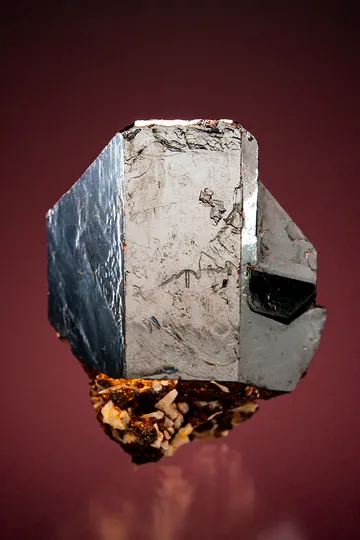
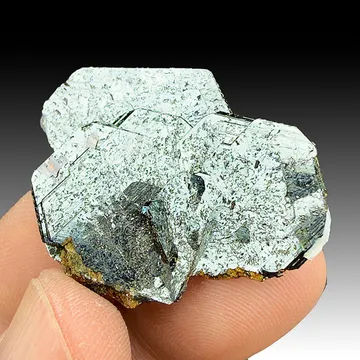
Rutile (TiO2) is the high-temperature, tetragonal polymorph of titanium dioxide and one of the most charismatic oxide species in mineral collecting. It forms with striking variety: stout, sharply striated prisms with mirror-bright luster; elegant knee-twins at ~60°; cyclic “star” twins; and delicate reticulated networks known as sagenite. Colors span deep red to bronze-gold, brown, and opaque black (nigrine), often with metallic to adamantine sheen. Rutile also famously occurs as hair-like golden needles included in quartz—rutilated quartz—creating dramatic sprays and “sunbursts” prized for display and gem cutting alike. On matrix, rutile shines in combinations: epitaxial crystals decorating Alpine hematite “iron roses,” bold red-black prisms perched on kyanite from Graves Mountain, or golden clusters frozen inside rock crystal from Bahia, Brazil.
Collectors value rutile for its sculptural geometry, twinning, luster, and powerful contrasts. Fine single crystals and aesthetically composed matrix pieces stand as centerpieces in both micromount and cabinet-scale collections, while beautifully patterned rutilated quartz bridges the worlds of mineral and gemstone collecting.
Rutile has been collected since classic European Alpine cleft discoveries in the 18th–19th centuries and historically from Elba Island’s iron mines. In the modern era, two veins of popularity run in parallel:
- Standalone crystals and twinned forms from iconic localities like Graves Mountain (USA), Alpine clefts (Switzerland/Italy), and Magnet Cove (USA).
- Rutilated quartz, whose vivid golden needles from Bahia, Brazil (especially Novo Horizonte/Urucum) captivated both collectors and designers; many crystals were cut into gems, adding rarity to pristine natural specimens.
Because rutile occurs across a range of geologic settings, it offers both accessible entry points (micromount twins, small rutilated quartz) and world-class showpieces (large twinned prisms, dramatic iron-rose associations). This dual appeal keeps interest high across experience levels.
Below are renowned rutile sources with distinctive, collectible habits. Each locality listed has a verified ID for mapping and gallery browsing.
A U.S. classic, Graves Mountain is unequaled for bold, sharply formed rutile crystals—often deeply striated, metallic to submetallic, and sometimes exhibiting knee or cyclic twinning. Crystals can reach large sizes and show strong red-brown internal reflections in thin edges despite black body color. Association with kyanite, lazulite, pyrophyllite, and quartz adds context and contrast. Many crystals are single or loosely on iron oxide/altered rock; true aesthetic matrix pieces are rarer and command a premium. Iconic for collectors seeking a textbook rutile with mass, luster, and history.
A legendary Alpine cleft locality, Cavradi produces elegant rutile crystals—often red to bronze—on or with tabular hematite “iron roses,” quartz, and albite. Epitaxial growths are common: fine rutile needles radiating from hematite plates or adorning their rims, creating superb contrast and geometry. Many crystals are thin but ultra-sharp, with that coveted Alpine sheen. Specimens from Cavradi embody classic Alpine aesthetics—balanced compositions, subtle color play, and refined crystal form—and remain cornerstones of advanced European suites.
When judging rutile, consider color and luster, twinning and habit, association/matrix, clarity (for included quartz), and condition.
-
Color and Luster:
- Fine rutile has a metallic to adamantine sheen with rich color: bronze-gold to red-brown. Thin crystals may transmit ruby-red light at edges; thicker crystals appear dark to black (nigrine).
- Bright, mirrorlike faces with strong striations are a hallmark of top pieces. Dull, etched, or heavily pitted surfaces detract unless the overall composition is exceptional.
-
Habit and Twinning:
- Highly sought habits include: sharp single prisms, knee (elbow) twins at ~60° (contact twinning on 101), and cyclic twins forming star-like aggregates. Reticulated “sagenite” networks—either free-standing or included in quartz—are prized for geometry.
- Alpine epitaxy on hematite “iron roses” is especially desirable; radiating rutile from hematite plates creates dramatic, sculptural contrast.
-
Matrix and Associations:
- Strong matrix adds value: hematite roses (Alps), kyanite/lazulite assemblages (Graves Mountain), or pristine rock crystal hosts (Bahia). Balanced compositions with clear focal points and good contrast are ideal.
- Rutilated quartz: assess quartz clarity, termination quality, and inclusion aesthetics. Needles arranged as well-defined sprays, stars, or grids that read clearly from arm’s length are most appealing.
-
Size and Proportion:
- Large, undamaged twinned crystals or sizeable matrix groupings are rare and command premiums. However, elegant small Alpine pieces with superb form and luster can be just as desirable.
-
Condition:
- Inspect for chips on terminations and along edges; rutile can be brittle and shows damage readily as light-catching nicks. On hematite roses, check that the hematite plates are intact and that attached rutile is not re-glued.
- For rutilated quartz, look for cracks, internal stress fractures, or polished repairs. Natural terminations and consistent surface textures are preferable.
-
Provenance:
- Historic labels (Elba, classic Alpine clefts) or renowned U.S. sites (Graves Mountain, Magnet Cove) enhance desirability and resale confidence.
-
Repairs:
- Reattached crystals are common in pocket-fresh rutile/hematite pieces. Use a 10x loupe to look for straight glue lines, slight misalignments in striations, or resin “bleed” at joints. Longwave UV can sometimes reveal fluorescing epoxy.
- Hematite roses are especially susceptible to assembled composites; examine the contact between rose plates and the host rock, and between rutile and hematite.
-
Polishing and Alterations:
- Rutilated quartz may have polished faces or re-polished terminations to improve clarity/finish—look for unnatural “glass-smooth” luster where surrounding natural faces show minute growth features. Such work should be disclosed.
- Dyeing the quartz host is rare but possible; look for color concentrations along fractures. Heat/irradiation treatments are generally a gem-market issue rather than for display specimens, but be cautious with unusually vivid colors in otherwise common material.
In all cases, buy from reputable sources and request disclosure of any repairs or enhancements.
Rutile is relatively hard (Mohs ~6–6.5) but brittle; its hosts (hematite, quartz, kyanite, mica) each have their own sensitivities. Handle conservatively.
-
Handling:
- Support matrix pieces from the base with two hands; avoid pinching hematite roses or pressing on delicate knee-twinned terminations. For rutilated quartz, avoid torqueing the crystal—internal needles and healed fractures can concentrate stress.
-
Light and Temperature:
- Colors are stable in normal display lighting. Avoid prolonged direct, hot sunlight or temperature shocks that can induce fractures in quartz hosts or stress delicate joints.
-
Cleaning:
- Dust gently with a soft brush or air bulb. For general grime, use lukewarm water with a drop of mild dish soap; rinse and air-dry.
- Avoid ultrasonic or steam cleaners—risk of cracking quartz, loosening repairs, or delaminating hematite roses.
- Chemical cleaners: Rutile and quartz tolerate most mild reagents, but matrix may not. Avoid acids on hematite (could alter patina) and avoid strong oxidizers that might affect micas/kyanite. If removing iron staining from quartz matrix, a cautious sodium dithionite (“Iron Out”) soak can work—keep solutions off hematite roses and test first.
-
Storage and Display:
- Provide padded, compartmentalized storage to prevent contact with harder/heavier pieces. Secure displayed specimens with mineral tack or custom stands—especially in vibration-prone settings.
- Label thoroughly; provenance and locality add significant value, particularly for classic Alpine, Elba, and historic U.S. material.
With thoughtful selection and care, rutile offers a lifetime of aesthetic and scientific interest—its geometry, twinning, and dramatic associations make it a cornerstone species in any serious mineral collection.