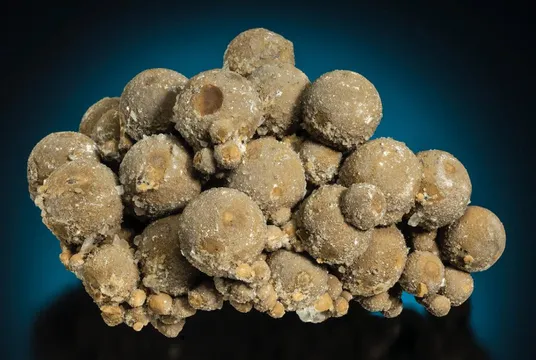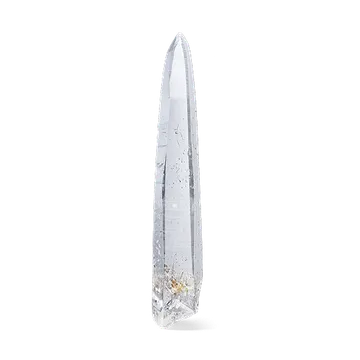
Quartz from Dalnegorsk, Russia: pale lavender amethyst and clear prisms in skarn, with fluorite and sulfides; prized for locality character and dramatic beauty.
Key facts
Dalnegorsk quartz is not famous because it is abundant quartz from a famous district; it is famous because it behaves like a visual signature threaded through several of the great skarn and polymetallic assemblages of Russia’s Far East. From the Bor Pit, pale lavender amethyst and milky-to-clear crystals occur in the borosilicate skarn environment that also produced datolite, danburite, axinite, hedenbergite, and ilvaite. From Nikolaevskiy and the Sovietsky mines, quartz is more often a structural and aesthetic partner to fluorite, galena, sphalerite, pyrrhotite, calcite, and siderite: sharp white sprays, clear-to-smoky prisms, “starburst” groups, iron-stained red quartz, and matrices that make the district’s celebrated sulfides and fluorites display like miniature architectural models.

Photo: Wikimedia Commons
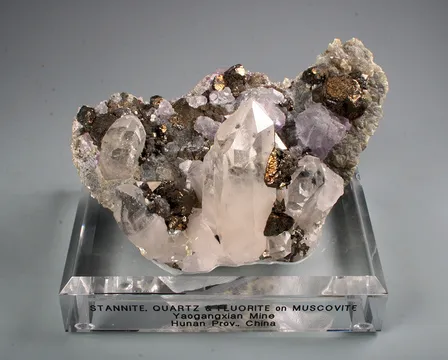
For collectors, the attraction is locality character. Dalnegorsk quartz rarely competes with the world’s great alpine or pegmatite quartz localities for water-clear perfection, but the best specimens have a skarn-born drama that is difficult to mistake: sprays of narrow white crystals radiating across matrix, quartz spears penetrating or framing fluorite, and delicate amethyst from a locality where lavender quartz was unexpected enough to become a talking point. The mineralogical setting gives the specimens their importance. Dalnegorsk is a district of calcic skarns, borosilicate mineralization, and base-metal skarn ores developed around limestone, Mesozoic igneous activity, and hydrothermal systems; quartz records several of those stages rather than a single simple vein event.

Photo: Wikimedia Commons
The locality’s broader collecting history matters. Dalnegorsk was introduced to the Western mineral market as one of the great post-Soviet Russian specimen districts, especially through fluorite, calcite, galena, sphalerite, pyrrhotite, datolite, danburite, and ilvaite. Quartz appears both as a primary collectible species and as the mineral that makes many of those associations visually coherent. A Dalnegorsk quartz specimen is strongest when it says more than “quartz”: when it says Bor Pit amethyst, Nikolaevskiy starburst, Second Sovetskii red quartz, fluorite-on-quartz, or ilvaite-and-quartz skarn.
Search for specimens: View all quartz specimens from Dalnegorsk, Russia
Dalnegorsk lies in Primorsky Krai in the Russian Far East, in a mineral district historically known in specimen labels under several spellings: Dal’negorsk, Dalnegorsk, Tetyukhe, Tjetjuche, and Tetjuche. Quartz is recorded at the district level and from a number of sublocalities, including the Bor Pit of the Dal’negorsk B deposit, Nikolaevskiy Mine, 1st and 2nd Sovetskii mines, Danburitovyi Mine, Partizanskoe Pb-Zn deposit, Pavlovka Mine, and other nearby occurrences. This spread is important for collectors: “Dalnegorsk quartz” is not one homogeneous product, and old labels should be read carefully to determine whether a specimen is borosilicate-skarn Bor Pit material, base-metal skarn material, or a broader district specimen.
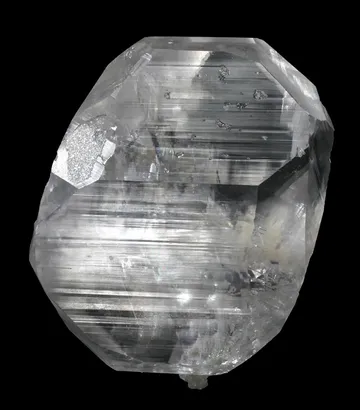
The Bor Pit, also known as the Boron Pit or Bor Quarry, is part of the Dal’negorsk B deposit. Its commodity association is boron, and its mineralogy reflects a calcic borosilicate skarn system. The Russian name “Bor” translates as “boron,” and the locality has produced quartz together with boron-bearing and calc-silicate minerals such as datolite, danburite, axinite, hedenbergite, and garnet-group minerals, as well as calcite, fluorite, galena, sphalerite, pyrite, pyrrhotite, and other species. The Bor Pit is especially important for quartz collectors because it is the source of the documented pale amethyst and smoky-to-clear quartz specimens that contrast sharply with the district’s more familiar white quartz and sulfide combinations.
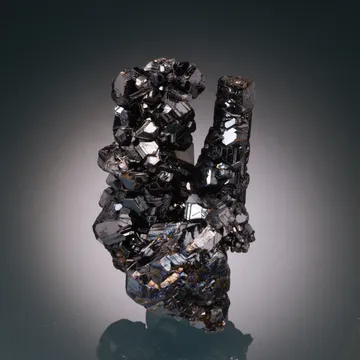
Nikolaevskiy Mine belongs to the polymetallic side of the district’s specimen story. Its rock and ore setting includes skarn, limestone, breccia, and igneous rocks such as gabbrodiorite, granite, rhyodacite, and rhyolite recorded in locality data. Quartz there is associated with the classic Dalnegorsk suite: fluorite, galena, sphalerite, pyrrhotite, pyrite, ilvaite, hedenbergite, siderite, calcite, chalcopyrite, arsenopyrite, hematite, and related skarn and ore minerals. The locality is famous beyond quartz for superb pyrrhotite, high-iron sphalerite, fluorite, and galena, but quartz is a critical partner in many of the most recognizable display pieces.
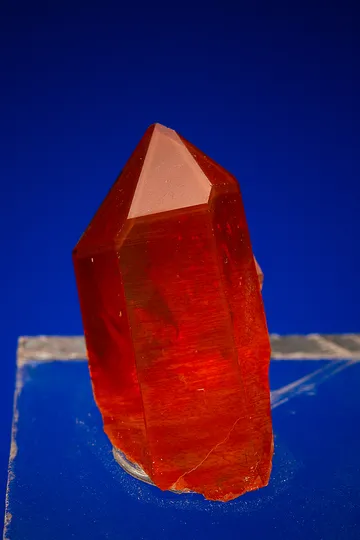
The 2nd Sovetskii Mine, part of the Partizanskoe Pb-Zn deposit, is another key quartz locality. Quartz there appears with calcite, manganese-bearing calcite, fluorite, galena, sphalerite, pyrite, pyrrhotite, chalcopyrite, datolite, hematite, hedenbergite, ilvaite, and dolomite. Modern locality photos show the mine entrance and mining equipment near the entrance in 2022, confirming that this is not merely a historical name surviving on old labels. For the collector, the 2nd Sovetskii name is particularly relevant to quartz because of late-1990s red quartz specimens from a specific underground level, described in dealer records as elongated, partly doubly terminated, sculptural crystals that were later partly covered by a second generation of white quartz.
Mining in the district began in the late 19th century with lead-zinc ores and expanded during the Soviet period into a major mining center. Scientific literature describes the base-metal skarn deposits of the Dalnegorsk ore district as known since the 19th century and still economically significant in the early 21st century. The borosilicate deposit has been treated in the geological literature as a large economic calcic-skarn boron deposit, with mineralization in skarnized limestones of the Upper Triassic Tetyukha Formation and a skarn zone measured in kilometers. The same broader ore knot includes Nikolaevskoe, historically Tetyukhe, a large Pb-Zn deposit operated from the 1970s.
Collecting access should be treated as industrial-mine access, not casual rockhounding. These are mines, pits, and deposits with ownership, safety, and access-control issues. Serious collectors should rely on established dealer provenance, old collections, or documented mine-source material rather than attempting independent entry. For older specimens, label precision matters: “Dalnegorsk” alone is acceptable for some older market pieces, but Bor Pit, Nikolaevskiy Mine, and 2nd Sovetskii Mine all imply different geological and aesthetic contexts.
Dalnegorsk quartz occurs as ordinary low-temperature quartz in chemistry, SiO2, but not in presentation. The most distinctive habits include terminated prisms, terminated crystals with little or no prism development, Japan-law twins, radiating “starburst” aggregates, intergrown sprays, slender elongated red crystals, doubly terminated crystals in sculptural groups, and quartz intergrown with fluorite, ilvaite, hedenbergite, pyrrhotite, galena, sphalerite, calcite, siderite, and datolite. Specimens may range from thumbnail and miniature single crystals to cabinet-size plates and groups.
Color is one of the best clues to sublocality and desirability. Clear and white quartz are commonest. Smoky quartz and pale amethyst are documented from the district, while Bor Pit amethyst is especially prized because it is unusual for the locality rather than because it rivals classic amethyst districts. Nikolaevskiy material includes white quartz sprays and colorless-to-lightly included crystals with sulfides and fluorite. Red quartz from the 2nd Sovetskii Mine is a niche but memorable habit: elongated reddish crystals, some doubly terminated, partly coated by later white quartz. “Prase quartz” is also reported in association with Nikolaevskiy fluorite, giving greenish quartz specimens a place in the district’s color range.
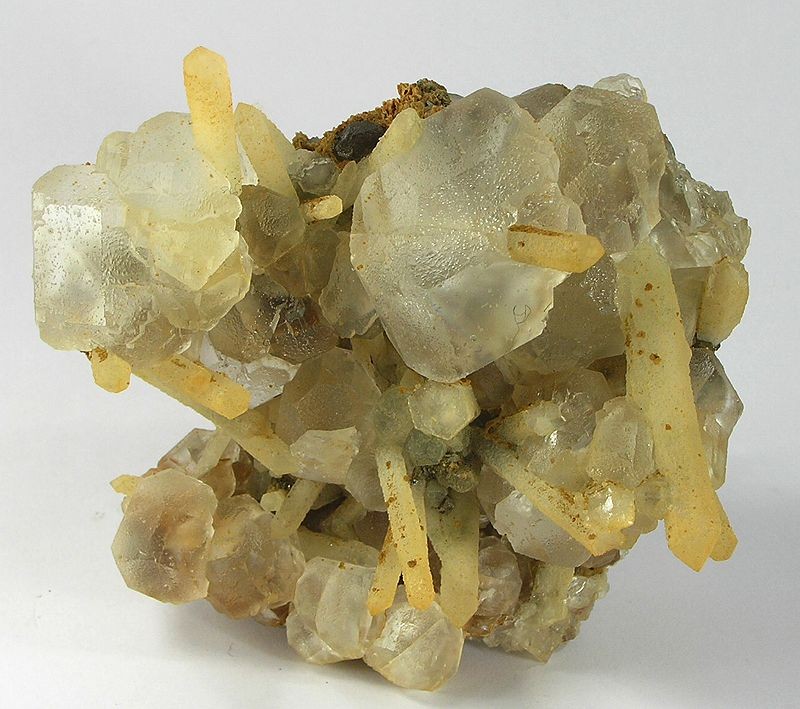
Photo: Wikimedia Commons
The best Dalnegorsk quartz is judged less by gem transparency than by architecture. A fine specimen should have strong crystal definition, balanced association, and a surface that has not been overly cleaned, abraded, or acid-dulled. In starburst pieces, the radial habit should read clearly from several angles, and the terminations should be intact enough that the spray retains its sharpness. In fluorite-quartz pieces, collectors look for the quartz to be genuinely intergrown, not just sprinkled on the matrix: quartz crystals passing between or through fluorite, or cleanly framing the fluorite without visual clutter, give the strongest locality feel. In sulfide pieces, quartz is often the light-toned counterpoint to dark sphalerite, bronze pyrrhotite, or bright galena; the best examples have contrast rather than a chaotic ore mass.
Typical size ranges vary by style. Bor Pit amethyst specimens documented in public photo records include a single crystal around 5.6 x 4 x 2.1 cm and a small-cabinet group around 8 x 5.5 x 5.5 cm. A documented Nikolaevskiy “starburst” quartz specimen measures 16.9 x 11.4 x 7.9 cm, large enough to show the radiating habit as the main subject rather than a matrix coating. Dealer records for Second Sovetskii red quartz include a specimen 15.5 x 11.4 x 6.4 cm with individual red crystals to about 3.4 cm long, and another 8.4 x 8.2 x 8.3 cm specimen with red quartz crystals to about 4.2 cm.
Associated minerals are a major part of the appeal. Mindat photo-association data for district-level Dalnegorsk quartz emphasizes calcite, fluorite, pyrrhotite, galena, sphalerite, ilvaite, datolite, siderite, hedenbergite, chalcopyrite, pyrite, hematite, and andradite among the most common visual partners. Bor Pit pieces bring in datolite, danburite, axinite, and borosilicate skarn context. Nikolaevskiy and 2nd Sovetskii pieces lean toward the base-metal suite: fluorite, galena, sphalerite, pyrrhotite, pyrite, calcite, siderite, and chalcopyrite. A collector who learns these associations can often spot a well-labeled Dalnegorsk specimen before reading the tag.
The most important authenticity issue is not usually fake quartz itself, but locality precision. Quartz is common, and many white or clear quartz clusters from other places could be casually sold as “Russia” or “Dalnegorsk” if the association and label history are weak. Strong Dalnegorsk attribution is most convincing when the specimen carries a characteristic association: Bor Pit amethyst or datolite-quartz; Nikolaevskiy quartz with water-clear fluorite, pyrrhotite, galena, sphalerite, ilvaite, or siderite; or 2nd Sovetskii quartz with documented red habit, galena-sphalerite-calcite assemblages, or fluorite-calcite combinations.
No widely documented, locality-specific industry of fabricated Dalnegorsk quartz specimens appears in the available mineralogical sources. That said, ordinary quartz-market problems still apply. Avoid brightly dyed “amethyst,” unnatural aura coatings, glassy simulants, and specimens where loose crystals appear glued onto an unrelated matrix. Pale Dalnegorsk amethyst should be subtle lavender, not saturated neon purple. Red quartz from 2nd Sovetskii should be assessed carefully: the color should relate to natural inclusions or surface iron staining in the crystal assemblage, not dye concentrated in cracks. If a specimen is sold as prase quartz, check that the color is consistent with natural inclusions and locality association rather than a generic green-coated quartz.
Condition issues are more specific. White sprays and starburst quartz are vulnerable to broken tips; even a few missing terminations can flatten the visual impact. Bor Pit amethyst may have natural contacts where crystals grew against other crystals or cavity walls, and those contacts should not automatically be mistaken for damage. Fluorite-quartz pieces are particularly prone to mixed condition: quartz may be sharp while fluorite edges are contacted, cleaved, or chipped, or vice versa. Sulfide-associated specimens can carry pyrite or marcasite-group minerals, so storage in a stable, dry environment is prudent. Pyrrhotite-bearing pieces should also be kept away from prolonged dampness.
Rarity depends heavily on style. Plain white quartz from Dalnegorsk is available from time to time, usually as a matrix mineral or secondary species in mixed specimens. Large, elegant starburst quartz, well-composed fluorite-with-quartz, and old-label sulfide-and-quartz combinations are much more selective. Bor Pit amethyst is genuinely uncommon as a locality variety, and the documented 2006 find was small. Red quartz from 2nd Sovetskii is also a narrow collecting category, with dealer records describing the find as ephemeral.
Current market availability is uneven. Dalnegorsk fluorite, calcite, galena, sphalerite, and pyrrhotite pieces remain visible in dealer inventories and auction archives, often with quartz as a supporting mineral. Quartz-dominant Dalnegorsk specimens appear less consistently, and the best ones tend to be older pieces from 1990s and early-2000s circulation. For serious collectors, the ideal purchase is a specimen with an old dealer label, a precise sublocality, and a visual association that matches that sublocality’s known style.
The little Bor Pit amethyst story is one collectors remember because it runs against expectation. Dalnegorsk is a district of borosilicate skarns, metallic sulfides, clear fluorite, datolite, danburite, calcite, and pyrrhotite; it is not the first name that comes to mind for amethyst. Yet a small find in 2006 produced pale lavender quartz crystals from the Bor Pit. One documented crystal measured 5.6 x 4 x 2.1 cm: a single, complete crystal with good transparency, glassy luster, and a delicate lavender tone. The published description did not try to exaggerate it into a world-class amethyst; the point was the locality. For a Dalnegorsk specialist, the surprise was the specimen.
Another Bor Pit amethyst group, 8 x 5.5 x 5.5 cm, carried the same understated drama. The description noted that the asymmetry was largely natural contact where crystals had pressed against neighbors that were no longer present, with only one shallow damaged area on the lower front. That distinction matters to serious collectors: in skarn pockets and crowded cavities, natural contacts tell the story of growth. On this piece the value was not a textbook amethyst silhouette but the evidence of a small and unusual pocket in a locality better known for quite different minerals.
At Nikolaevskiy, the quartz story becomes explosive rather than delicate. One documented specimen, 16.9 x 11.4 x 7.9 cm, was described as “starburst” quartz, named for radial bursts of crystals that look like fireworks. The piece is not just a cluster; it is a field of pale sprays, with a bonus euhedral pyrrhotite crystal set off to one side. That single dark metallic crystal changes the whole composition, anchoring the white radial quartz and reminding the viewer that this is a base-metal skarn mine, not an alpine cleft.
The 2nd Sovetskii red quartz find has a different rhythm again. Dealer records place one group at the 230 level around 1998 and describe elongated red quartz crystals, many doubly terminated, intergrown into sculptural groups. A later generation of white quartz partly coats the red crystals. That two-generation look is what makes the material memorable: first the lean red crystals, then the pale overgrowth that softens parts of the piece without erasing the earlier architecture. The find was described as ephemeral, appearing and disappearing quickly, which is exactly the kind of short-lived underground episode that later becomes a sublocality specialty.