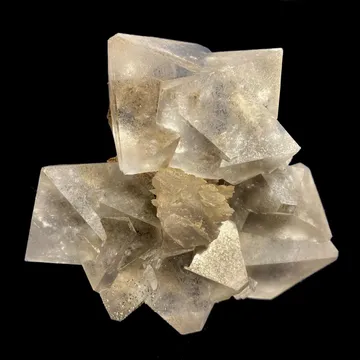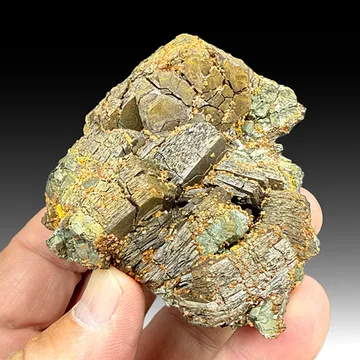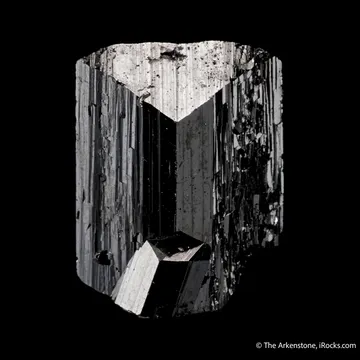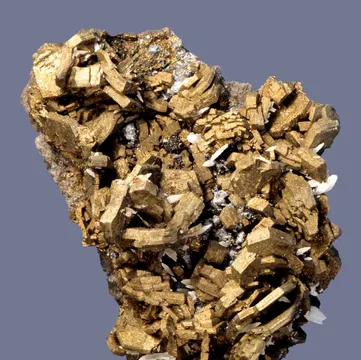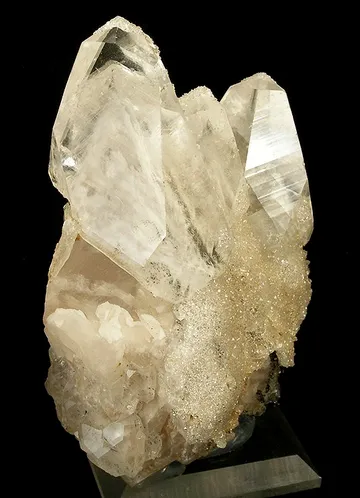
Pyrrhotin aus der Nikolaevskiy-Mine, Dal’negorsk, Russland — messingfarbiger Glanz mit scharfen Pseudohex-Platten, bemerkenswerte Dal’negorsk-Exemplare, Kristalle in Sammlergröße.
Key facts
Das Pyrrhotit-Bergwerk Nikolaevskiy ist eines der charakteristischen Sulfid-Exponate von Dal’negorsk: bräunlich bis bronzefarben, scharf gestuft und in pseudohexagonalen Platten, Fächern, Türmen und „Bändern“ aufgebaut, die fast architektonisch wirken, wenn sie aus Quarz hervortreten. Die besten Stücke besitzen das Drama, das Sammler sich von kristallinem Sulfid wünschen – spiegelglänzende metallische Flächen, klare geometrische Konturen und echte skulpturale Präsenz – und dennoch tragen sie den charakteristischen Dal’negorsk-Look: milchige bis glasige Quarz-Sprenkel, Bleiglanzwürfel, Calcit-Dreiecke, dunkler Sphalerit, Siderit und gelegentlich Fluorit oder Chalkopyrit im selben Skarn-Kavitäten-Ensemble.

Foto: Wikimedia Commons
Was Nikolaevskiy besonders macht, ist nicht nur, dass dort Pyrrhotit vorkommt, sondern dass er in sammlerkonformen Kristallen ungewöhnlicher Schärfe auftritt. Mindat betrachtet das Vorkommen als weltklasse und notiert hexagonale Platten und Türme von mehreren Zentimetern; der Marktplatz-Rekord unterstützt dieses Ansehen mit Cabinet-Stücken, die einzelne Kristalle oder zusammengesetzte Kristallengruppen von mehreren Zentimetern Durchmesser tragen, darunter selten große Stücke mit Pyrrhotit als dominierendes visuelles Motiv statt als Nebensulfid.
Geologisch gehören diese Exemplare zum Dal’negorsk-Polymetall-Skarn-System im Fernen Osten Russlands, ein Bezirk, der berühmt ist für Bleisilber-Zink-Erze und für Mineralien, die besonders stark in internationale Sammlungen Eingang fanden, vor allem aus der späten Sowjetzeit und der postsowjetischen Ära. Nikolaevskiy ist eine Pb-Zn-Ag-Skarn-Lagerstätte, entwickelt in großen Kalksteinblöcken innerhalb eines komplexen akkretionären und vulkanischen Umfelds. In Sammlerbegriffen bedeutet das Kavitäten in Karbonat- und Skarn-Gesteinen, die großen Sulfid- und Gangue-Kristallen Raum geben, frei zu wachsen, statt als Massenerz.

Foto: Wikimedia Commons
Sammler suchen in der Regel nach vier Eigenschaften: klare pseudohexagonale Konturen, lebhaften bräunlich-bronzefarbenen Glanz, unbeschädigten freiliegenden Kanten und einer Zusammensetzung, die Pyrrhotit gegen Quarz oder andere Dal’negorsk-Assoziationen balanciert. Ein kompakter isolierter Kristall auf Quarz kann genauso begehrt sein wie eine größere Cluster, wenn die Geometrie scharf ist und der Kristall vollständig sichtbar bleibt. Größere Cabinet-Stücke sind deutlich seltener, insbesondere wenn der Pyrrhotit nicht im Erzmatrix vergraben oder durch starke Ver Alterung stumpf geworden ist.## Vorgestellte Exemplare
Suche nach Proben: Alle Pyrrhotit-Proben aus dem Nikolaevskiy-Minengebiet, Dal’negorsk, Russland anzeigen
Die Nikolaevskiy-Mine arbeitet das Nikolayevskoye- deposit in Dal’negorsk, Primorsky Krai, Russland. Sie gehört zum Dalnegorsk-Polymetall-Erzfeld, einem Blei-Zink-Silber-Distrikt im südlichen Teil des ost-sikhote-Alin-Vulkanbandes. Die Minenlokalität wird allgemein nahe 44°35′ N, 135°40′ E angegeben und ist eine der bedeutenden unterirdischen Betriebseinrichtungen, historisch verbunden mit der Rohstoffbasis von Dalpolimetall.
Das Lager ist ein Pb-Zn-Skarn, kein einfacher Gangfund. Die Erzvorkommen bildeten sich in großen Block- und Platten aus Trias-Kalkstein, eingebettet in ein frühkreidezeitliches Akkresions-Faltungs-Komplex und späteren vulkanischen Überzug. Skarn- und Sulfidmineralisierung konzentriert sich an Kontakten zwischen Kalkstein und umgebendem Siltstein, Sandstein, Sedimentbreccie und felsischen vulkanischen Gesteinen. Die Haupt-Erzmineralien sind Galenit und Sphalerit, mit Pyrrhotin, Pyrit, Chalkopyrit, Arsenopyrit, Fluorit und Silber-Sulfosalze als unterordnete, aber wichtige Mineralien.
Die Geometrie ist für Sammler bedeutsam, weil die Nikolaevskiy-Pyrrhotite Kaverneminerale aus einem Erz-system stammen, das sowohl massiven Ersatzzonen als auch offenen Räumen hatte. Offizielle Bergbaubeschreibungen vermerken, dass das Nikolayevskoye-Lager keine Oberflächen-Erz-Ausbisse aufweist, sondern die Vererzung in der Tiefe liegt; Kalksteinplatten im Vostok-1-Erzgang werden mit ca. 1800 m × 700 m × 280 m angegeben, und Erzvorkommen treten an oberen und unteren Kontaktflächen des Kalksteins auf. Das Erz ist diskontinuierlich und kegel- bzw. nierenförmig, mit Vorkommen berichtigt bis zu 80 m Dicke und bis 220 m in Längsrichtung. Bohrarbeiten haben die Vererzung bis in tiefe Ebenen verfolgt, und das Lager ist nach wie vor als eine der Hauptuntergrundleitungen des Unternehmens bekannt.
Die Bergbaugeschichte ist gestaffelt. Regionaler Bergbau in Dal’negorsk begann im späten 19. Jahrhundert unter dem älteren Distrikt-Namen Tetyukhe, wurde durch sowjetische Entwicklung erweitert und gewann weltweit an Bedeutung für Mineralien-Sammler, als Proben in größerer Menge von den späten 1980er bis in die 1990er Jahre auf westliche Märkte gelangten. Das Nikolaevskiy-Minengebiet selbst wird von Sammlerliteratur und Händlereinträgen als moderner Mine, eröffnet 1982, beschrieben, während umfassendere Lagerberichts-sammlungen den Abbau von Nikolayevskoye ab den 1970er Jahren verzeichnen. Der scheinbare Unterschied spiegelt die Unterscheidung zwischen der Entwicklungsgeschichte des Deposits und dem den Sammlern bekannten Minenbetrieb wider.
Sammelzugang sollte realistisch behandelt werden: Nikolaevskiy ist eine industrielle Untertage-Mine, kein öffentlicher Sammelort. Feine Pyrrhotit-Proben auf dem Markt stammen überwiegend aus abgebauten Stücken, die durch lokale Bergleute, russische Händler, alte Sammlungen oder etablierte internationale Händler weitergegeben wurden. Moderner Zugang wird von den Bergbaubetrieben kontrolliert, und ein ungeprüfter Feldzugang sollte nicht als möglich vorausgesetzt werden.Bemerkenswerte Funde umfassen klassische bräunlich-lackierte pseudohexagonale Pyrrhotitplatten und -bänder auf Quarz, große tabulare Kristalle mit Calcit und Galenit, Pyrrhotit mit Sphalerit und Quarz sowie Pyrit-Pseudomorphosen, die das frühere hexagonal-schalige Habitus von Pyrrhotit bewahren. Die besten Pyrrhotite aus Nikolaevskiy gehören zum weiter gefassten Dal’negorsk-Pantheon, das auch außergewöhnliche Galenit-, Sphalerit-, Calcit-, Fluorit-, Quarz-, Ilvait-, Datolith- sowie seltene bor- und sulfidsassoziierte Arten umfasst.## Eigenschaften von Pyrrhotin aus dem Nikolaevskiy-Mine, Dal’negorsk, Russland
Der Nikolaevskiy-Pyrrhotin tritt typischerweise als pseudohexagonale Platten, gestapelte Platten-Gruppen, fächerförmige Rippen, Türmchen, Bänder und zusammengesetzte tabulare Kristalle auf. Flächen können starke parallele Wachstumslinien und gestufte Oberflächen zeigen. Der optische Eindruck ist oft skulpturaler als rein kristallin: Ein einzelnes Exemplar kann wie ein vertikaler Finnenflügel, eine kettenartige Kette aus Platten oder eine gestaffelte metallische Erhebung wirken, die aus vielen miteinander verwachsenen Hexagonen zusammengesetzt ist.
Die Farbe reicht von gelblich-braun über messinggelb, Bronze bis hin zu dunklerem bräunlichem Bronze. Frische oder gut erhaltene Flächen können hell und metallisch wirken, während ältere Stücke attraktiven Patina, subtilem Irideszenz oder dunkleren oxidierten Beschichtungen zeigen können. Die feinsten Exemplare behalten scharfe reflektierende Flächen bei, ohne die matte, körnige Oberfläche, die Pyrrhotin wie gewöhnliches Erz wirken lassen könnte.
Dokumentierte Größen decken eine breite Spanne ab. Miniaturen um 4–6 cm sind im Sammlungshandel üblich, oft mit Pyrrhotin auf Quarz oder Calcit. Kleine Kabinett-Exemplare im Bereich von 8–10 cm können einzelne Kristalle von ca. 2,5–4 cm Durchmesser tragen. Kabinett- und Großkabinettsstücke sind deutlich rarer, aber dokumentiert: Ein Nikolaevskiy-Exemplar wurde mit tabularen Pyrrhotin-Kristallen bis zu 4,7 cm auf einer Matrix aus Calcit, Quarz, Bleiglanz und Chalkopyrit beschrieben; ein weiteres altes Marktbeispiel trug einen 9,0 cm großen zusammengesetzten Pyrrhotin-Kristall auf Quarz; und ein großes, auf Wikimedia dokumentiertes Kabinetts-Stück misst 13,7 x 13,0 x 5,7 cm.

Foto: Wikimedia Commons
Die typischste und begehrteste Begleitung ist Pyrrhotin auf Quarz. Quarz kann eine Drusy-Bettung, strahlende Nadeln oder schärfere, transparente bis milchige Kristalle um das Sulfid-Mineral herum bilden. Bleiglanz ist ebenfalls ein bedeutender Begleiter und kann als metallische Würfel oder modifizierte Kristalle auftreten. Sphalerit sorgt für dunklen Kontrast, Calcit fügt helle Rhomben und gelegentliche Fluoreszenz hinzu, und Siderit erscheint bei einigen Exemplaren als bräunlich-tanfarbene bis orange-braune linsenförmige Kristalle. Fluorit, Chalkopyrit, Dolomit, Arsenopyrit und Pyrit sind ebenfalls bestätigte Begleiter.Qualitätsbewertung ist stark visuell. Spitzenstücke aus Nikolaevskiy weisen ein oder mehrere gut isolierte Pyrrhotit-Kristalle mit vollständigen Kanten, starkem Glanz, sauberer Geometrie und einer unauffälligen Matrix auf. Beschädigungen treten häufig an freiliegenden Kristallkanten und entlang empfindlicher Quarz-Sprays auf, daher verdient ein Exemplar mit makellosen Pyrrhotit-Termini und nur geringem Matrixverschleiß eine Prämie. Dunkle Verfärbungen sind kein automatisch Fehler, wenn die Form stark ist, aber matte braune, körnige oder stark oxidierte Oberflächen verringern die Begehrlichkeit. Die begehrtesten Stücke zeigen einen hell brünierten Kristall, der sich deutlich von der Quarz- oder Sulfidmatrix abhebt, mit ausreichender Plastizität, um als Display-Kristall über den Vitrinenrand hinweg gelesen zu werden.## Collector Notes
Nikolaevskiy Pyrrhotit ist ein anerkannter Klassiker, doch es ist kein Fundort, an dem jedes Exemplar gleich wäre. Viele Stücke im Umlauf sind attraktiv, aber bescheidene Kombinationen; die wirklich wichtigen Exemplare weisen große, scharfe, freiliegende pseudohexagonale Kristalle und eine gute dreidimensionale Balance auf. Eine Miniatur mit einem einzigen perfekten Kristall auf Quarz kann eine größere, fade wirkende Gruppe übertreffen.
Aus den verfügbaren mineralogischen und sammlerischen Quellen ist kein gut dokumentierter, standortspezifischer Behandlungssektor oder systematischer Fake-Markt für Nikolaevskiy-Pyrrhotin ersichtlich. Das praktischere Authentizitätsproblem ist die Kennzeichnung. Ältere Etiketten können Dal’negorsk, Dalnegorsk, Dal’negorsk, Tetyukhe, Nikolaevsky, Nikolaevskiy, Nikolayevskoye, Primorskiy Kray oder Ferner Osten Region lesen. Einige Exemplare werden einfach als „Dalnegorsk-Pyrrhotin“ verkauft, und da auch andere nahe Dal’negorsk-Minen Pyrrhotin produzierten, wird eine zuverlässige Nikolaevskiy-Zuordnung am besten durch ein alter Händleretikett, eine Mindat-minID, eine Museums- oder Sammlungsherkunft oder einen Händlernachweis gestützt, der explizit die Nikolaevskiy-Mine nennt.
Eine weitere Authentizitätskomplikation ist das Erscheinungsbild der Art. Pyrit-Pseudomorphosen nach Pyrrhotin sind aus Nikolaevskiy dokumentiert, und einige bewahren die hexagonal-klingenförmige Form so gut, dass ein flüchtiger Blick den Käufer irreführen kann. Diese Stücke sind eigenständig sammelwürdig, sollten aber als Pyrit nach Pyrrhotin verkauft werden, nicht als frisches Pyrrhotin. Eine sorgfältige Beobachtung von Farbe, Kristalloberfläche, Dichte des Pyrit-Überwuchses und der Etikettengeschichte ist wichtig.
Der Zustand ist das zentrale Kaufkriterium. Pyrrhotin-Kanten neigen zu Kratzern, und die besten Nikolaevskiy-Kristalle stehen oft vom Quarz ab, was sie am Rand verwundbar macht. Prüfen Sie auf Reibungen an den breiten metallischen Flächen, gebrochene Quarz-Nadeln, berührte Rückseiten und altklebstes oder Basenreste. Geringer péripherer Quarzverlust ist üblich und oft akzeptabel; abgeschlagene Pyrrhotin-Kanten sind ernster, weil die klare hexagonale Umrissform der ganze Sinn des Exemplars ist.
Auch die Stabilität sollte bedacht werden. Pyrrhotin kann sich bei schlechter Lagerung, besonders in feuchten Umgebungen, oxidieren. Nikolaevskiy-Stücke sind in der Regel stabil, wenn sie trocken gelagert werden, aber Sammler sollten hohe Luftfeuchtigkeit, schnelle Temperaturschwankungen und versiegelte feuchte Boxen vermeiden. Ein schwefelhaltiger Geruch, staubige Veränderungen oder frische Verfärbungen um das Exemplar herum erfordern Vorsicht.
Marktverfügbarkeit ist besser als bei vielen klassischen Sulfid-Fundorten, aber die meisten feinen Stücke sind Altbestände oder Umlauf in Sammlungen. Händler- und Auktionsberichte zeigen Miniaturen und Kleine-Kabinett-Stücke in der Mehrhundert-Dollar-Spanne, während schärfere oder größere Kabinettexemplare in vierstelligen Bereich gehen können. Jüngste Auktions- und Händlerlisten zeigen, dass der Fundort noch am Markt erscheint, aber Topgroße Kristalle aus den 1990er-Funden sind nicht mehr so leicht zu ersetzen.## Geschichten & Feldnotizen
Eine der aussagekräftigsten Spezimenengeschichten hängt an einem Pyrrhotit-Quartz-Mezzospannungsstück, das 2010 über den Sammlermarkt kam. Das Stück maß 17,5 x 9,8 x 6,5 cm und trug einen auffälligen 9,0 cm großen zusammengesetzten Pyrrhotit-Kristall, der unter radiierenden milchigen Quarznadeln zu liegen schien. Sein russisches Händleretikett besagte, dass es 1992 abgebaut worden sei — genau in der Phase, als Dal’negorsk-Material international an Sammler im Strength-Bereich heranreichte. Dieses Datum ist bedeutsam: Es platziert das Exemplar zur Hochphase der Zuwanderung von Nikolaevskiy- und weiterem Dal’negorsk-Material in den Western Markt, bevor der klassische Bestand in private Sammlungen zerstreut wurde.
Ein kleineres, aber sehr aufschlussreiches Nikolaevskiy-Stück erzählt eine andere Geschichte: Ersatz statt Wachstum. Ein Mindat-dokumentiertes Miniaturstück aus der Ken Roberts-Sammlung bewahrt zwei Kanten einer ursprünglichen hexagonalen Pyrrhotit-Klinge, doch das Mineral ist nun Pyrit. Der Pyrit variiert von euhedral bis freier Formgebung und trägt eine farbenfrohe Patina. Es erinnert daran, dass Nikolaevskiy nicht nur eine Quelle frischer Bronze-Pyrrhotit-Kristalle ist; es zeichnet auch spätere chemische Überprägungen im selben sulfidreichen System auf, wobei manchmal die alte Pyrrhotit-Form als Geist in Pyrit erhalten bleibt.
Die besten großen Pyrrhotit-Cluster aus Nikolaevskiy besitzen die Art von physischer Präsenz, an die Sammler sich erinnern. Ein dokumentiertes Kabinett-Stück misst 13,7 x 13,0 x 5,7 cm und wurde als nahezu schwebender Cluster aus brilliant bronzegelblichem Pyrrhotit mit außergewöhnlich großen Kristallen beschrieben, der nur auf der Rückseite befestigt war. Dieser „Nahe-Schwebe“-Charakter ist ungewöhnlich für Pyrrhotit, ein Mineral, das häufiger als schwerer Erzgang oder eingebettete Kristalle gesammelt wird. Nikolaevskiys besonderes Reiz liegt darin, dass es Pyrrhotit manchmal wie ein Ausstellungsmineral auftreten lässt: exponiert, dimensioniert und kühn kristallisiert.## Mineralogische Aufzeichnungen & Publikationen
Raymond W. Grant und Wendell E. Wilson, “Famous Mineral Localities: Dal’negorsk, Primorskiy Kray, Russia,” The Mineralogical Record, 32(1), 3–30, 2001 — Der schlüsselorientierte Lokality-Artikel für Dal’negorsk, wiederholt zitiert für Nikolaevskiy-Mineralvorkommen.
M. G. Dobrovol’skaya, V. A. Baskina, S. P. Balashova, A. M. Kenisarin, M. M. Arakelyants, L. A. Klimachev, und G. N. Muravitskaya, “Order of Formation of the Ores and Mafic Dikes of the Nikolayevsk Deposit (Southern Primor’ye),” International Geology Review, 32(4), 391–403, 1990 — Eine geologische Studie zu Entstehungsreihen von Erzen und mafischen Gängen am Nikolayevsk-Abbau.
L. I. Rogulina und O. L. Sveshnikova, “The Nikolaevsky Base-Metal Skarn Deposit, Primorye, Russia,” Geology of Ore Deposits, 50(1), 60–74, 2008 — Ein fokussiertes technisches Papier über das Nikolaevsky-Basis-Metall-Skarn-Vorkommen.
V. N. Kolesnikov, “Geology and Mineralogy of Pb-Zn Deposits of the Northern Primorye, Russian Far East,” Society for Mining, Metallurgy & Exploration, 1998 — Nützlicher regionaler Kontext zu Dal’negorsk Pb-Zn-Skarn-Vorkommen und ihren Haupt-Erzmineralien.
U.S. Geological Survey Open-File Report 96-513-B, Significant Lode Deposits of Russian Far East, Alaska, and Canadian Cordillera — Enthält einen knapp gehaltenen Depots-Eintrag für Nikolaevskoe als Pb-Zn-Skarn mit Alter, Wirtsgestein, Erzmineral, Grade und Bergbaunotes.
Wikimedia Commons: File:Pyrrhotite-Quartz-169976.jpg — Ein dokumentiertes Pyrrhotit-Quarz-Präparat von 8,2 × 6 × 6 cm aus dem Nikolaevskiy-Minen, fotografiert von Robert M. Lavinsky.
Wikimedia Commons: File:Pyrrhotite-Sphalerite-Quartz-195225.jpg — Ein dokumentiertes Pyrrhotit-Sphalerit-Quarz-Präparat aus der Nikolaevskiy-Mine, nützlich als Referenz zu Begleitmineralien und Ausstellungsstil.
Wikimedia Commons: File:Pyrrhotite-t07-117a.jpg — Ein dokumentiertes 13,7 × 13,0 × 5,7 cm Kabinett-Pyrrhotit-Präparat aus der Nikolaevskiy-Mine.## Weiterführende Lektüre & Externe Links
Mindat: Pyrrhotin aus der Nikolaevskiy-Mine — Der nützlichste standortbezogene Eintrag zu einer Spezies, mit Habit, Farbe, Assoziationen und Fotodaten.
Mindat: Lokationsseite der Nikolaevskiy-Mine — Die Hauptlokalitätsseite mit der vollständigen Mineralliste, Referenzen, Karten und Links zu Bildmaterial.
Mindat: Pyrit aus der Nikolaevskiy-Mine — Wichtig zur Erkennung dokumentierter Pyrit-Pseudomorphosen nach hexagonalem Pyrrhotin aus derselben Mine.
Wikimedia Commons: Nikolaevskiy-Mine Kategorie — Ein breites visuelles Archiv von Nikolaevskiy-Exemplaren, einschließlich Pyrrhotin, Galenit, Quarz, Fluorit, Calcit und anderer zugehöriger Mineralien.
Dalpolimetall: Rohstoffbasis — Unternehmensbeschreibung des Nikolajewskoye-Vorkommens, Untertagebergbau, Geometrie der Erzlagerstätte und Reserven-Kontext.
USGS Open-File Report 96-513-B — Regionale Lagerstätten-Datenbankeinheit mit knappen geologischen Daten zu Nikolaevskoe.
The Assay House: „Dalnegorsk: Crystal Perfection from the Russian East“ — Anschauliche Übersicht über die sammler-mineralische Bedeutung von Dal’negorsk und seine Großminen.
Mineral Auctions: Pyrrhotin, Nikolaevskiy Mine, 2026 geschlossener Auktionstext — Jüngstes Marktbeispiel mit Größe, Zustand, Assoziationen und realisiertem Preis.
Mineral Auctions: Pyrrhotin mit Calcit, Nikolaevskiy-Mine — Nützlich archiviertes Großkammer-Beispiel, das 4,7 cm große tabulare Kristalle mit Calcit, Quarz, Galenit und Chalkopyrit dokumentiert.
Mineral Auctions: Pyrrhotin auf Quarz, Nikolaevskiy-Mine — Archiviertes Großkammer-Exemplar mit Mining-Datum 1992 auf dem russischen Händleretikett.
Minfind: Pyrrhotin + Quarz, Nikolaevskiy-Mine — Marktschnappschuss, der Verfügbarkeit im Stil aktueller Händler, Größe und Preisumständen zeigt.
Minfind: Pyrrhotin, Quarz, Nikolaevskiy-Mine — Verkauftes Händlerbeispiel mit rosettenförmig scharfkantigem Pyrrhotin auf Quarz mit Siderit.