Pyrrhotite Collectors Guide
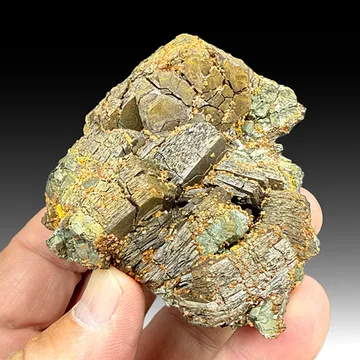
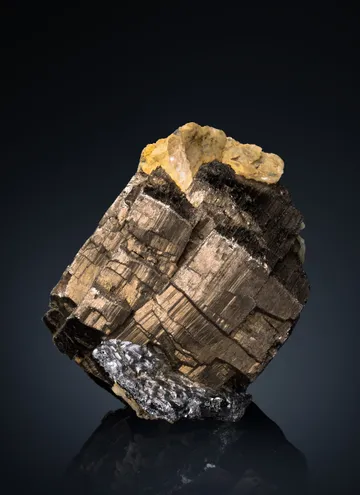
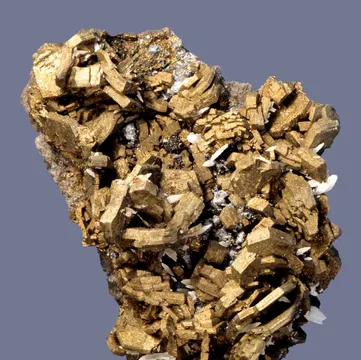
Pyrrhotite is an iron sulfide, Fe(1–x)S, famed among collectors for its bronze to coppery metallic luster, pseudo-hexagonal tabular crystals, and unusual magnetism. Because its composition accommodates iron vacancies, different structural variants occur; some are weakly to strongly magnetic, while the end-member troilite (FeS) is not. For the cabinet, pyrrhotite’s best pieces show sharp, mirror-bright hexagonal plates or rosettes, sometimes stacked like coins or festooned with “cogwheel” growth textures along the edges. Contrasts with white calcite, glassy quartz, mint-green fluorite, or snow-white feldspar can be striking.
A classic associate of skarns and high-temperature hydrothermal veins, pyrrhotite occurs with sphalerite, galena, pyrite, arsenopyrite, chalcopyrite, quartz, calcite, and fluorite. Modern finds from China (Huanggang) and classics from Dal’negorsk (Russia), Trepča (Kosovo), and Peru (Huanzala) set the benchmark. While it is less durable than quartz species and can tarnish or oxidize in poor conditions, careful storage keeps good specimens stable for decades. In return, collectors get strong aesthetics, intriguing magnetism, and excellent value relative to equally dramatic sulfides.
Pyrrhotite occupies a sweet spot: spectacular examples exist, yet prices are generally more approachable than the very top-tier sulfides. The 1980s–1990s Dal’negorsk era drew attention to mirror-lustrous hex plates on quartz, and the 2010s Huanggang discoveries reignited demand with oversized, razor-sharp plates on fluorite and arsenopyrite. Peruvian mines like Huanzala produced attractive, sturdy combinations that remain staples.
Collectors value pyrrhotite for:
- Aesthetics: bronze sheen, sharp hexagonal plates, and dramatic associations.
- Science and novelty: visible pseudo-hex symmetry and magnetism varying by composition.
- Range: from affordable thumbnails to centerpiece cabinets with strong contrast.
Interest is tempered by care needs—humidity control and gentle handling—but its display impact ensures pyrrhotite maintains a loyal following and steady demand.
Dal’negorsk’s Nikolaevskiy Mine built pyrrhotite’s modern reputation. Classic specimens show thick, lustrous bronze plates—sometimes with subtle “cogwheel” edges—perched on snow-white quartz clusters. A good Dal’negorsk piece balances plate size, reflectivity, and placement, often with accessory galena or sphalerite. Many of the finest “textbook” pyrrhotites in major collections trace to this mine.
Expect superb luster and well-defined pseudo-hexagonal shapes. Matrix examples have added impact, and long-term survivors with little to no tarnish are particularly desirable.
Trepča has long produced attractive sulfide suites. Pyrrhotite occurs as bronze plates and rosettes with sphalerite, galena, calcite, and quartz. The best pieces feature clean, reflective faces and layered growth forming multi-plate clusters. A classic European source, Trepča pyrrhotites are admired for their balanced compositions and historic cachet.
Look for contrast—white calcite, black sphalerite, or bright quartz make the bronze plates pop. Intact, undamaged stacks and crisp edges command premiums.
Huanzala is famous for pyrite and sphalerite, but it also yields excellent pyrrhotite: lustrous bronze plates and stacked aggregates with quartz and sphalerite. These typically show robust forms and an elegant, uncluttered look—attractive cabinet pieces that are often more stable than expected when kept dry.
Desirable traits include even bronze color, minimal oxidation, and smart compositions that frame the main plates rather than hide them among sulfide masses.
- Color and Luster:
- Aim for an even, bright bronze to coppery metallic luster. Dull, patchy, or blackened areas reduce impact.
- Mirror-like faces that reflect cleanly are ideal; avoid specimens with pervasive tarnish or matte surfaces.
- Crystal Form:
- Sharp pseudo-hexagonal plates, rosettes, or neatly stacked “coin” groups are most prized.
- Clean edges (no chipping), clear symmetry, and distinct bevels step up desirability.
- “Cogwheel” edge growth can add character when crisp and not ragged.
- Associations and Matrix:
- High-contrast partners such as white calcite, clear quartz, or mint-green fluorite amplify display value.
- Balanced compositions—one or a few dominant plates framed by matrix—usually outperform jumbled masses.
- Condition and Stability:
- Inspect for oxidation: iridescent tarnish can be attractive, but powdery rust or flaking is a red flag.
- Check for hairline cracks across plates—these can develop from stress or past temperature swings.
- Favor pieces with minimal or well-hidden contacts; avoid “face-side” dings that catch the light.
- Size and Rarity:
- Larger, intact plates with top luster from benchmark localities (Huanggang, Dal’negorsk) command strong premiums.
- Smaller but perfect plates can outclass bigger, dull examples—choose quality over size when in doubt.
- Magnetism:
- Light magnetism is a fun bonus and a talking point; however, it doesn’t by itself confer higher value.
- Make sure magnet testing is gentle—don’t let a heavy magnet snap against a thin plate.
- Common Repairs:
- Plate reattachments to matrix are not uncommon. Examine where plates meet matrix for faint glue lines or mismatched textures.
- Look for perfectly straight seams across a plate or subtle misalignment in fine growth lines—possible re-glues.
- Under longwave UV, some epoxies fluoresce; a fine blue/green line can betray a repair.
- Consolidants and Coatings:
- Light consolidants (e.g., Paraloid B-72) may be used to stabilize micro-fractures or edges. Skilled, minimal use is acceptable if disclosed.
- Over-coating to “shine up” faces leaves a plastic-like glare and is undesirable; compare luster across faces for consistency.
- Polishing:
- Polishing is rare for pyrrhotite but not impossible. A surface that looks unnaturally glassy or shows tiny drag lines under magnification may have been altered.
- Identity Checks:
- A small rare-earth magnet will often show attraction (do not slam a magnet onto the crystal).
- Distinguish from brassy pyrite/marcasite: pyrrhotite’s bronze is usually warmer and less “brassy,” and the pseudo-hex plates are a giveaway.
Pyrrhotite is more reactive than quartz-family minerals and can tarnish or oxidize if neglected. With proper care, specimens remain stable and beautiful for decades.
- Environment:
- Keep humidity low and stable (ideally below ~40–45% RH). Use sealed cases with fresh silica gel or molecular sieves; monitor with a hygrometer.
- Avoid temperature extremes and rapid swings; thermal shock can open micro-cracks that invite oxidation.
- Light and Heat:
- Room lighting is fine; avoid hot display lights focused at close range.
- Do not place specimens in direct sunlight for prolonged periods—heat gradients can stress plates and accelerate tarnish.
- Handling:
- Plates can be thin and brittle. Support matrix with two hands and avoid squeezing or levering plates.
- Keep strong magnets away from specimens on open shelves—an accidental “snap” can cause damage.
- Cleaning:
- Dust gently with a soft blower or brush. Avoid soaking or extended water exposure.
- Never use acids, oxidizing cleaners, or ultrasonic/steam devices—these can trigger rapid degradation or loosen repairs.
- If light grime must be removed, use barely dampened swabs on an inconspicuous spot, then dry immediately in low humidity.
- Storage and Display:
- Display in enclosed cases with desiccant; rotate or recharge desiccant regularly.
- For sensitive or historic pieces, archival microclimate boxes are ideal.
- If you notice fresh rust, move the piece to a drier environment immediately; consult a conservator if oxidation progresses.
- Long-Term Stability:
- Many pyrrhotites (particularly from Huanggang and Dal’negorsk) are stable when kept dry. Preventive care is far better than remediation.
- If stabilization is needed, seek professional advice—improper consolidants or coatings can reduce value and harm the specimen.
With thoughtful selection and appropriate care, pyrrhotite can be a standout in any sulfide suite: architectural, shimmering bronze crystals that combine geologic interest with powerful display aesthetics.