ExploreMarketCollectors

Earthwonders

The global marketplace for authentic geological specimens. Connecting passionate collectors with trusted dealers worldwide.

Get on the list for the latest from EarthWonders
Privacy Policy
Join Our Community
InstagramLinkedInFacebookYouTube
Discover

Browse Market

Browse specimens

Collector Profiles

Learn

Guides

All Policies

Blog

Newsletter

Company

About Us

Our Story

Contribute

Careers

© 2026 earthwonders
    GuidesEventsBlog
    AllFeaturedJust droppedUnder $500Statement piecesGreenBluePurpleAmethystQuartzFluoriteTourmalineMalachiteAzuriteRhodochrosite🇳🇦Tsumeb🇲🇽Mexico🇧🇷Brazil🇮🇳India
    0 views
    Login to Edit Guide
    Translated from English—See original

    Pyromorphite from Roughton Gill Mine, England

    Overview

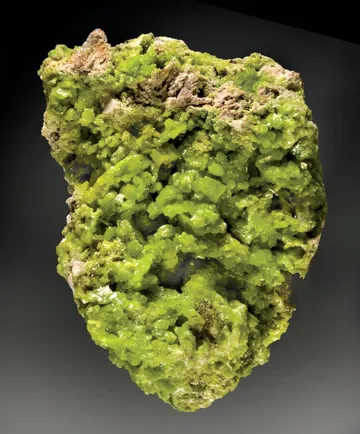
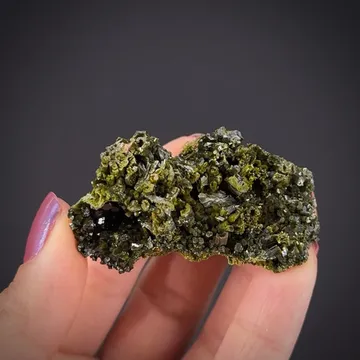
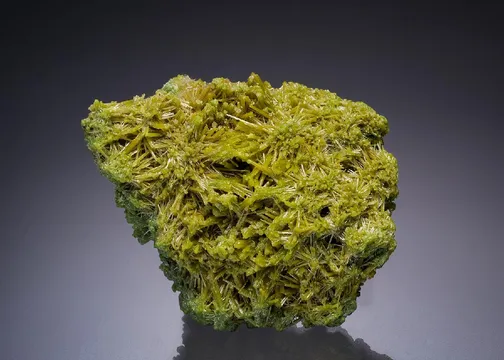
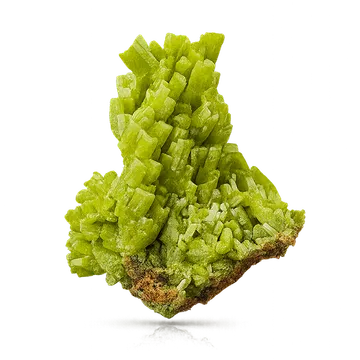
    Roughton Gill Mine is one of the great English pyromorphite localities: a northern Lake District classic where lead-ore mining, severe fellside weathering, and an unusually phosphate-favorable host-rock setting combined to produce specimens that still feel unmistakably nineteenth-century. The best pieces have a dense, heavy, old-cabinet presence: yellow-green to oil-green pyromorphite in rounded barrels, globular aggregates, hexagonal prisms, crusts, and occasional acicular or stalactitic forms, commonly on hackly quartz or altered rock. Many are not “neon” in the modern Chinese sense; their attraction is subtler and more historic—resinous luster, complex surface texture, and a palette that runs from grass green through golden yellow, brown, orange, grey, and rare near-colourless material.

    green pyromorphite crystals from Iron Crag, Roughton Gill Mine — credit: Lake District Minerals

    Photo: Lake District Minerals

    Mineralogically, Roughton Gill is more than a pyromorphite mine. It is a classic supergene lead-copper-zinc locality in the Caldbeck Fells, with primary galena, chalcopyrite, and sphalerite in quartz-carbonate gangue, later overprinted by extensive oxidation. Pyromorphite, cerussite, and malachite occurred in quantities sufficient to be treated as ores, while collectors prize the same oxidation zone for pyromorphite, blue plumbogummite, blue mammillary hemimorphite, rosasite, brochantite, cerussite, and a suite of rarer secondary species.

    The most celebrated Roughton Gill specimens are historically intertwined with plumbogummite. Blue to cobalt-blue plumbogummite may encrust or pseudomorph earlier pyromorphite, and old pieces showing green or yellow pyromorphite against blue plumbogummite remain among the most desirable British secondary-lead specimens. Even straightforward pyromorphite-only examples can be highly collectible when they show strong green or yellow colour, lustrous rounded crystals, undamaged terminations, and old provenance.

    Roughton Gill also matters because it sits in a locality cluster where labels can be deceptively simple. “Roughton Gill” has long been used loosely for material from the mine proper, Iron Crag, Higher Roughton Gill, Barstow’s Trench, Mexico Mine, and other nearby workings on related veins. For collectors, a fine old “Roughton Gill” label is important, but a precise, credible pedigree is better still.

    Featured Specimens

    Locality Information

    Search for specimens: View all pyromorphite specimens from Roughton Gill Mine, England

    Roughton Gill Mine lies high in the Dale Beck valley of the Caldbeck Fells, north of the central Lake District, in Cumbria. The mine worked veins in and around the north face of Iron Crag, especially the Roughton Gill South Vein, which was the dominant ore structure. The workings are usually described in relation to the 30-, 60-, and 90-fathom levels, with the 90-fathom level dumps on the valley floor historically the most important surviving dump material.

    Geologically, the mine belongs to the complex Caldbeck Fells metalliferous field. The Roughton Gill veins occur near the boundary between Ordovician Eycott Volcanic Group rocks and intrusive rocks of the Carrock Fell Complex. The Carrock Fell Complex includes gabbroic and microgranitic intrusions, and an apatite-rich ferrodiorite in the district is a plausible local phosphate source for the exceptional pyromorphite development. In practical specimen terms, galena oxidized in a phosphate-bearing environment, while carbonate-rich gangue helped buffer the system. That buffering encouraged abundant cerussite, malachite, and pyromorphite and helps explain why some low-pH secondary lead minerals are less important at Roughton Gill than at certain neighbouring Caldbeck localities.

    The mine was one of the largest and richest in the Caldbeck Fells. Early workings are obscure, and some levels in the gill have Elizabethan associations, but the documented nineteenth-century history is the heart of the specimen story. The 30-fathom crosscut onto the South Vein was probably driven in the eighteenth century and was nearly worked out by 1832. Work then moved to the 60-fathom level. Between 1832 and 1845, recorded production amounted to 3,229 tons of lead ore and 150 tons of copper ore. After a brief abandonment when leases expired in 1845, the Roughtongill Silver Lead and Copper Mining Company took the lease in 1849, and by 1852 the 90-fathom level had become the main source of ore.

    The great orebody of the mine was the “Great Bunch,” between the 60- and 90-fathom levels. The vein there reached a reported width of 9 m and extended for 70 fathoms in length, from the 60-fathom horizon down to the 90-fathom workings. It consisted of gossan, friable quartz, and calcite, with pyromorphite and cerussite around the fringes and silver-rich galena deeper within the orebody. That setting is exactly what a collector would expect for major pyromorphite: abundant oxidized lead ore, open and broken quartz-carbonate ground, and enough phosphate in circulation to stabilize Pb5(PO4)3Cl.

    Mining declined sharply after mid-century. Lainton’s Shaft was sunk in 1866 to reach ore below the 90-fathom level, but water ingress and poor management culminated in bankruptcy in 1878. The mine did not resume meaningful metalliferous production. In 1913, Carlisle Urban District Council purchased the mine to pump water from the 90-fathom level into the public supply, a striking afterlife for one of England’s great specimen mines.

    Collecting today must be treated as restricted. The Caldbeck Fells include sensitive archaeology, mineralogical sites, and protected land. The Lake District National Park Authority adopted a mineral collecting policy for Caldbeck and Uldale Commons, with red, amber, and green zones and permit requirements where collecting is allowed. Roughton Gill and Silver Gill are also described in geological guide material as protected, with mineral collecting illegal in the sensitive valley area. Serious collectors should assume that field collecting at Roughton Gill Mine is not a casual option and should seek specimens through old collections, reputable dealers, documented deaccessions, or material with pre-restriction provenance.

    Characteristics of Pyromorphite from Roughton Gill Mine, England

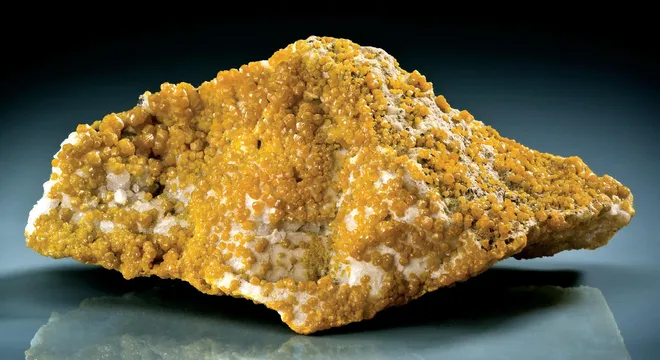
    Roughton Gill pyromorphite is visually broad. Confirmed habits include prismatic crystals, tabular crystals, botryoidal encrustations, stalactites, acicular crystals, globular to barrel-shaped crystals, and crusts of minute hexagonal crystals. The most familiar collector look is a dense encrustation of rounded green to yellow-green crystals on quartz-rich matrix, sometimes with a “seeded” or granular surface and resinous to greasy luster. Good specimens can be much more sculptural, with grouped rounded barrels, hill-and-valley relief, and strong contrast against white, grey, tan, or iron-stained matrix.

    Colour ranges are one of the locality’s pleasures. Roughton Gill material has been described as white, grey, yellow, oil-green to emerald-green, brown, orange, and bicolour green-orange or green-yellow. Later analytical work on Roughton Gill pyromorphite-mimetite material showed that crystals may be near end-member pyromorphite, arsenate-rich pyromorphite, or rarer near end-member mimetite, and the different compositions can be visually indistinguishable. For the collector, this means that a specimen sold as “pyromorphite” from the locality may require analysis if exact phosphate-versus-arsenate dominance matters.

    Crystal size is respectable for a British classic locality. Modern study of collected material recorded common globular to barrel-shaped crystals up to 10 mm on the longest dimension, hexagonal crystals up to 5 mm, and minute hexagonal crystals forming crusts. Lake District Minerals also notes that crystals exceeding 10 mm could still be found with diligence at Roughton Gill and the adjoining Mexico Mine before present collecting restrictions. Old nineteenth-century cabinet specimens can be larger and more impressive overall, not necessarily because every individual crystal is enormous, but because the coverage, mass, colour, and age-provenance combine to create a major display specimen.

    Matrix is most often quartz-rich. Quartz is by far the main gangue remaining on the dumps, commonly as large hackly blocks, brecciated material cemented by later quartz, or quartz partly coated by goethite, malachite, and pyromorphite. Some pieces occur on metasomatized rock. The hackly quartz texture is a useful locality clue, though not diagnostic by itself.

    Important associates include cerussite, malachite, plumbogummite, hemimorphite, rosasite, brochantite, baryte, galena, and the copper-rich silica gel commonly called “chrysocolla” in older and collector usage. Cerussite may occur with minor pyromorphite in malachite-lined cavities. “Chrysocolla” can form blue to blue-green waxy masses with desiccation cracks and may be associated with pyromorphite or even form epimorphs after it. Plumbogummite is the prestige association: pale blue through lavender to deep cobalt-blue, sometimes drusy or minutely botryoidal, and sometimes forming epimorphs after small pyromorphite prisms.

    Quality factors for Roughton Gill pyromorphite are locality-specific. The best pieces show a classic old English colour—rich yellow-green, oil-green, or lively grass-green—with bright resinous luster and strong, even crystal coverage. Rounded barrel or globular crystals should be crisp rather than abraded; hexagonal crystals should show clean terminations; and crusts should have continuous, sparkling texture rather than flat dull patches. Association with blue plumbogummite, especially where colour contrast is strong and the pyromorphite is not merely a dusting, greatly improves desirability. Old labels from nineteenth- or early twentieth-century collections, or documented institutional provenance, can be as important as aesthetics.

    Collector Notes

    Roughton Gill pyromorphite is a classic, but it is also a locality where provenance deserves unusual scrutiny. The mine was dominant in the Caldbeck Fells and became famous early, so specimens from neighbouring places were sometimes attributed to Roughton Gill. Material labelled simply “Roughton Gill” may represent the mine proper, Iron Crag, Higher Roughton Gill, Barstow’s Trench, Mexico Mine, or other nearby workings on the same broader vein system. This does not necessarily make a specimen unattractive or undesirable, but it matters if the claim is specifically “Roughton Gill Mine.”

    The pyromorphite-mimetite boundary is another authenticity issue. Some specimens historically called mimetite from Roughton Gill have proved to be arsenate-rich pyromorphite rather than arsenic-dominant mimetite. Other material contains both near end-member pyromorphite and arsenate-rich pyromorphite. Since colour and habit do not reliably separate them at this locality, advanced analysis is needed for certainty. A cautious label such as “pyromorphite-mimetite series” or “arsenate-rich pyromorphite” may be preferable for analytically ambiguous material.

    Documented fraud and doubtful locality claims in the wider Roughton Gill mineral list do exist, but not as a general indictment of pyromorphite from the mine. The most clearly problematic Roughton Gill species claims involve gold and parahopeite, with azurite considered probably fraudulent or at least highly doubtful in some studies. For pyromorphite itself, the issue is not whether the species occurs—it unquestionably does—but whether an individual specimen’s precise mine label is supportable.

    Condition issues are typical of old pyromorphite but worth inspecting carefully. Rounded barrels and globular aggregates can hide bruising along high points; hexagonal prisms may show chipped terminations as pale or dull spots; and old cabinet pieces may have edge wear from historic handling. Matrix can be friable, especially where quartz, gossan, carbonate, and decomposed ore are intergrown. Stalactitic or projecting forms should be checked for old repairs or reattachments. Strong old specimens are often dense and heavy, but weight alone does not prove quality.

    Cleaning history should be considered. Pyromorphite is comparatively stable and insoluble under many near-surface conditions, but aggressive chemical cleaning can dull luster, expose weak matrix, or alter associated carbonates and copper minerals. Specimens with plumbogummite, cerussite, hemimorphite, rosasite, or “chrysocolla” should not be treated as simple pyromorphite-only pieces when evaluating cleaning risk.

    Fine Roughton Gill pyromorphite is not common on the open market. Modest fragments and small miniatures appear from time to time, but old, richly crystallized, well-provenanced examples—especially those with strong green colour, plumbogummite association, or nineteenth-century pedigree—are much scarcer. Many of the best pieces are in museum collections or long-held private cabinets. When a strong example appears, collectors are buying both mineral quality and English mineral history.

    Stories & Field Notes

    The most vivid Roughton Gill story is the “Great Bunch.” Between the 60- and 90-fathom levels, miners opened an orebody whose vein width reached 9 m and whose length ran for 70 fathoms. It was not a neat, crystalline pocket in the modern specimen-mining sense; it was a massive, oxidized body of gossan, friable quartz, and calcite. Pyromorphite and cerussite formed around the fringes, while silver-rich galena lay farther in. For the mine owner it was ore; for later collectors it was the geochemical furnace that gave Roughton Gill its reputation.

    The production figures from the same period give the locality its scale. From 1832 to 1845, the mine raised 3,229 tons of lead ore and 150 tons of copper ore. Those are not abstract statistics when viewed from the valley: the 90-fathom dumps, the levels in the steep gill, the ore-dressing remains, and the quartz-rich spoil all speak to a mine that was not merely a quaint Lake District trial, but a major working in one of Britain’s most mineralogically celebrated upland districts.

    The Natural History Museum records give the specimen story an early date. In 1837, a pyromorphite donated by Sowerby became the earliest reference to a Caldbeck Fells mineral in the main NHM collections, later assumed to be from Roughton Gill. In 1843, “Roughten-gill” appears as a specific locality in an NHM suite purchased from Mr Wright, including pyromorphite, linarite, anglesite, and cerussite. Even there, the familiar Roughton Gill complication appears: later workers suspected that some of the non-pyromorphite species in that suite may actually have come from Red Gill.

    The mine’s end is almost as striking as its working life. Lainton’s Shaft was sunk in 1866 in an attempt to reach deeper ore below the 90-fathom level, but water and management problems defeated the enterprise. Bankruptcy came in 1878, and the mine never returned as a serious producer. Then, in 1913, the mine entered civic service when Carlisle Urban District Council bought it to pump water from the 90-fathom level into the public supply. A place famous for lead chlorophosphate crystals became, in its afterlife, a source of water.

    There is also a modern field story in absence. By 2008, the 90-fathom dumps were still visibly dominated by quartz, with dolomite and small amounts of calcite, and with iron staining, malachite, and minor pyromorphite visible. The 60-fathom level area still showed quartz, ankerite, malachite, pyromorphite, and blue-green copper-rich silica gel on the surface. But the old collector’s freedom had largely gone. By the late twentieth century, small specimens could still be found on the spoil heaps; then the Lake District National Park Authority tightened collecting controls to preserve archaeology and mineral resources. Today Roughton Gill is best approached as a historic specimen locality rather than an active collecting destination.

    Mineralogical Records & Publications

    • Mindat locality page: Roughton Gill Mine, Roughton Gill, Caldbeck, Allerdale, Cumbria, England, UK — Current locality hierarchy, coordinates, mineral list, rock types, and reference compilation.
    • Mindat occurrence page: Pyromorphite from Roughton Gill Mine — Pyromorphite-specific occurrence record, including formula, habits, colour range, associated minerals from photo data, and bibliography.
    • Bridges, T. F., Green, D. I., Rumsey, M. S., & Leppington, C. M. (2011). “A review of the mineralisation of the Roughton Gill mines, Caldbeck Fells, Cumbria: Part 3 Roughton Gill Mine.” Journal of the Russell Society, 14, 3–23 — The essential modern technical review of Roughton Gill Mine mineralisation, history, pyromorphite-mimetite chemistry, and provenance problems.
    • Stanley, C. J., & Cooper, M. P. (1991). “Famous Mineral Localities: Pyromorphite-Group Minerals from the Caldbeck Fells, Cumbria, England.” The Mineralogical Record, 22(2), 105–121 — Classic locality article on the pyromorphite-group minerals of the Caldbeck Fells.
    • Cooper, M. P., & Stanley, C. J. (1990). Minerals of the English Lake District: Caldbeck Fells. Natural History Museum Publications, London — Foundational reference for Caldbeck Fells mineralogy and classic Roughton Gill specimens.
    • Greg, R. P., & Lettsom, W. G. (1858). Manual of the Mineralogy of Great Britain and Ireland — Early published record cited for Roughton Gill pyromorphite.
    • Hall, T. M. (1868). The Mineralogist’s Directory: or, a guide to the Principal Mineral Localities in the United Kingdom of Great Britain and Ireland — Nineteenth-century locality guide cited in the pyromorphite occurrence bibliography.
    • Goodchild, J. G. (1885). “Contributions towards a list of minerals occurring in Cumberland and Westmorland [part 3].” Transactions of the Cumberland Association for the Advancement of Literature and Science, 9, 175–199 — Historic regional mineral listing cited for Roughton Gill pyromorphite.
    • Cockbain, A. G. (1968). “Lead apatite solid-solution series.” Mineralogical Magazine, 36(284), 1171–1173 — Relevant to pyromorphite-group solid solution chemistry.
    • Förtsch, E. B. (1967). “‘Plumbogummite’ from Roughten Gill Cumberland.” Mineralogical Magazine, 36(280), 530–538 — Important analytical study of the blue plumbogummite-related material associated with Roughton Gill pyromorphite.
    • Miers, H. A. (1897). “On Some British Pseudomorphs.” Mineralogical Magazine, 11(53), 263–285 — Historic treatment of British pseudomorphs, relevant to Roughton Gill plumbogummite-after-pyromorphite material.
    • Brantwood: The Treasury, John Ruskin Mineral Collection — Lists a pyromorphite from Roughton Gill, Caldbeck Fells, Cumbria, England, showing the locality’s presence in an important historic British collection.

    Videos & Media

    • “Waterfalls In Roughton Gill In The Caldbeck Fells, Lake District, UK” — Ashley Cooper, Pond5 — Landscape video showing the steep gill environment of the Roughton Gill area.

    Further Reading & External Links

    • Roughton Gill Mine on Mindat — Best single online locality page for the mine’s mineral list, coordinates, references, and photo links.
    • Pyromorphite from Roughton Gill Mine on Mindat — Pyromorphite-specific occurrence details, including habit, colour, associated minerals, and bibliography.
    • Bridges et al. 2011 Roughton Gill Mine review — Essential technical paper for the mine’s history, geology, supergene mineralogy, and provenance cautions.
    • Lake District National Park: Caldbeck minerals — Current official collecting-policy context for Caldbeck and Uldale Commons.
    • GeoGuide: Roughton Gill and Silver Gill — Concise field-geology and mining-history guide to the Roughton Gill and Silver Gill area.
    • Lake District Minerals: mineral locations guide — Collector-oriented overview of Lake District minerals, with specific notes and images for Roughton Gill pyromorphite and plumbogummite.
    • Steetley Minerals: Caldbeck Fells — Dealer-collector perspective on Caldbeck Fells localities, old-time specimens, and the red/amber/green collecting-zone system.
    • Deposits Magazine review: Roughton Gill and the Mines of the Caldbeck Fells by Ian Tyler — Useful introduction to Ian Tyler’s 320-page mining-history volume on Roughton Gill and the wider Caldbeck Fells.
    • Wikimedia Commons: Pyromorphite from Mexico Mine, Roughton Gill — Freely licensed photograph of pyromorphite from the adjacent Mexico Mine in the Roughton Gill group, useful for visual comparison within the local vein system.
    • Main pyromorphite Collector's Guide