






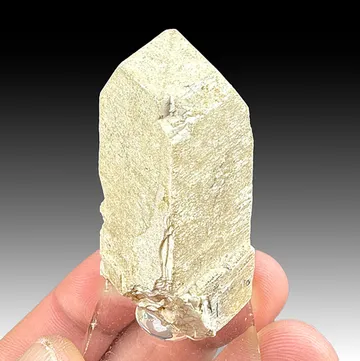
Orthoclase - classic potassium feldspar with colors from colorless to pink; famed for Carlsbad, Baveno and Manebach twins and Alpine adularia in clefts.
Key facts
Orthoclase is the classic potassium feldspar (KAlSi3O8), a cornerstone species of granites, pegmatites, and Alpine clefts. Monoclinic in symmetry, it forms blocky to prismatic crystals with bright vitreous luster and two excellent cleavages that intersect nearly at right angles—traits that define the feldspar look. Colors range from colorless and icy-white to warm flesh-pink, cream, honey, or light greenish hues; transparent crystals are uncommon but striking. Orthoclase is most celebrated for twinning—distinctive Carlsbad (penetration), Baveno, and Manebach (contact) twins are textbook forms that every collector learns. In low-temperature hydrothermal environments (especially Alpine clefts), orthoclase often crystallizes as adularia—exceptionally sharp, glassy crystals sometimes with a faint sheen, and in gem deposits it can exhibit adularescence (moonstone effect). As matrix accompaniments to smoky quartz, hematite “iron roses,” epidote, and chlorite, orthoclase and adularia are pillars of classic European alpine mineralogy.
Orthoclase is broadly available and typically affordable, but certain combinations—perfect twins on elegant Alpine matrix, or transparent crystals with pristine form—are scarce and command strong prices. The variety of forms (especially twinning), historical provenance, and association with world-class Alpine quartz make orthoclase a rewarding species to collect at all levels.
Orthoclase has anchored classic specimen collecting for centuries. Alpine adularia from Switzerland and Italy captivated early naturalists and gave the gem “moonstone” its historical center; the iconic twin laws (Carlsbad, Baveno, Manebach) are named for European localities where orthoclase made them famous. In museums and top collections, it often appears as elegant adularia perched on smoky quartz from the Grimsel–Furka zone or with hematite roses in Valais. Meanwhile, gem collectors know orthoclase through moonstone—polished, glowing cabochons from Sri Lanka or Mogok.
In today’s market, common single crystals are easy to obtain, but the “right” piece—a razor-sharp twin on aesthetic matrix, gemmy adularia with mirror luster, or a historic European specimen with labels—remains highly sought-after. Renewed finds from Alpine construction projects occasionally release superb material, but truly top pieces remain few and hotly contested.
While orthoclase occurs worldwide, a handful of classic districts have defined its reputation—particularly in the Alps (for adularia and iconic twins) and in gem regions known for moonstone.
Baveno, on the shores of Lago Maggiore, is synonymous with the Baveno twin. The local granites and pegmatites produced sharply formed pink to creamy orthoclase crystals, often on granite or with smoky quartz. Classic 19th–early 20th century pieces show crisp twin planes and blocky, balanced habit that became the standard for recognizing twinning in feldspar. Collectors prize Baveno for history, archetypal twinning, and refined aesthetics; complete, undamaged twins with bright luster and minimal cleavage marks are the benchmark.
Color and transparency:
Luster and surface quality:
Crystal form and twinning:
Matrix and associations:
Condition:
Aesthetics:
Repairs:
Treatments:
Orthoclase is Mohs 6–6.5 and cleaves readily along two directions—handle and store accordingly.
Handling:
Light and temperature:
Cleaning:
Storage and display:
With thoughtful selection—prioritizing twinning, luster, composition, and condition—orthoclase rewards collectors with timeless classics from the Alps to the gem gravels of Sri Lanka and Myanmar.