






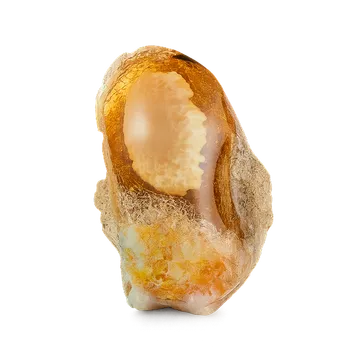
Opal aus Äthiopien — Wollo/Welo-Opal aus Wegel Tena, geschätzt für farbige Feuerungsspiel im milchigen bis klaren Körper und eine charakteristische vulkanische Herkunft.
Key facts
Äthiopischer Opal ist eine der großen modernen Überraschungen der Edelsteinkunde: ein junges Sammelfeld in historischen Begriffen, yet bereits breit genug, um Schokoladen-Nodulen aus Shewa, translucent white und crystal Opal aus Wollo, orange Fire Opal und natürlich dunkles bis schwarzes Material aus Stayish zu umfassen. Für Sammler bedeutet „äthiopischer Opal“ am häufigsten Wollo- oder Welo-Opal aus dem Hochland um Wegel Tena, wo helles Spiel-Farben durch einen blassen, milchigen, honigfarbenen oder wasserklaren Körper gleiten kann. Die besten Stücke können erstaunlich lebendig wirken: Rot und Grün, die über translucentem Grund rollen, blaues Körperleuchten in hochwertiger Cabochonformen, und breite Farbspektrumpatches, die den besten Steinen einen visuellen Punch verleihen, der ihre Preis im Vergleich zu lang etabliertem australischem Material deutlich übertrifft.

Foto: Dpulitzer, Wikimedia Commons
Die geologische Umgebung ist so markant wie der Look der Steine. Die Wollo-Vorkommen sind vulkanisch im Trägergestein, aber nicht einfach körnentragende vulkanische Opal im vertrauten mexikanischen Sinn. Um Wegel Tena kommt Opal in einer dünnen, lateral persistierenden Horizont innerhalb einer dicken Oligozän-Vulkan-Sedimentationssequenz aus Basalt und rhyolithischer Ignimbrite vor. Großteils wirkt das precious Material als Zement zwischen Körnern veränderter vulkanischer Trümmer oder füllt Brüche und Hohlräume, und spätere Forschungen haben das Vorkommen als mit Bodenbildung, Verwitterung und Silikataustragungsprozessen in einer alten vulkanischen Landschaft verbunden interpretiert. Dies hilft zu erklären, warum äthiopisches Material visuell wie sedimentärer weißer Opal wirken kann, gleichzeitig jedoch strukturelle und spektrale Affinitäten zu Opal-CT zeigt, die typisch für vulkanische Umgebungen sind.
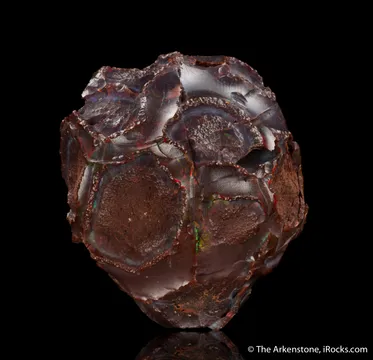
Historisch trat Äthiopien in den Opalhandel schrittweise ein. Material aus der Shewa-Provinz aus dem Yita Ridge–Mezezo-Gebiet wurde in den 1990er Jahren berichtet und bekannt für orange, rötlich-braune und „Schokoladen“-Feinopal in rhyolithischen Nodulen. Dieses frühe Material faszinierte Sammler, erlangte aber auch den Ruf von Instabilität. Die Entdeckung in Wollo 2008 nahe Wegel Tena veränderte das Ausmaß des äthiopischen Opals: Weiße, kristalline, Feuer- und braune Opale tauchten in signifikanten Mengen auf, und die besten weiß- bis durchscheinenden Wollo-Steine erwiesen sich als langlebiger als das ältere Shewa-Material. Im Jahr 2013 ergänzte die Stayish-Mine nahe Gashena ein eigenes Kapitel mit natürlichem dunklem und schwarzem Opal aus demselben breiten nördlichen äthiopischen Opal-Gürtel.Sammler achten zunächst auf Helligkeit und Farbenspiel-Verteilung: Vollflächen-Rot, Orange, Grün und Blau; kräftige Farben aus mehreren Blickwinkeln; und Muster, die unter gewöhnlichem Licht lebendig bleiben statt nur unter einer Punktquelle. In Wollo-Material gehört hydrophanes Charakter zur Identität. Viele Steine nehmen Wasser auf und verändern vorübergehend Transparenz, Farbdifferenz und die scheinbare Stärke des Farbenspiels. Diese Eigenschaft macht äthiopischen Opal unendlich faszinierend, aber sie macht auch Behandlungserkennung, Pflege und Offenlegung zentral, um ihn intelligent zu sammeln.

Foto: James St. John, Wikimedia Commons## Ausgewählte Exemplare
Nach specimens suchen: Alle Opal-Spezimenen aus Äthiopien ansehen
Der wichtigste moderne Fundort äthiopischer Opal liegt im Wollo-Hochland rund um Wegel Tena, insbesondere im Tsehay Mewcha-Gebiet in Delanta, im Norden Äthiopiens. Die Minen befinden sich auf hohen Tafelbergen etwa 3.000–3.200 m über dem Meeresspiegel, durchzogen von tiefen Tälern und Schluchtwänden. Die opalführende Ebene liegt Hunderte von Metern unter dem Plateau-Horizont, sodass der Bergbau von der Topografie diktiert wird: Bergleute steigen steile Fußwege hinab, um einen engen, nahezu horizontalen Horizont zu erreichen, der entlang von Klippenvorsprüngen und Hangsieseln freigelegt ist.
In Wegel Tena ist die Trägerschicht eine dicke vulkanische Ablagerung aus abwechselnd Basalt und rhyolithischer Ignimbrite, Teil der äthiopischen Vulkanprovinz, die mit dem ostafrikanischen Graben-System assoziiert ist. Innerhalb dieses Stapels konzentriert sich der Opal in einem dünnen Horizont, der im frühen GIA-Studienbericht als weniger als einen Meter dick angegeben wurde. Er verfestigt gewöhnlich vulkanische Trümmerkörner und kann auch Brüche und Hohlräume einnehmen. Spätere geochemische und isotopische Arbeiten haben die Interpretation gestärkt, dass der Edelopal während der Verwitterung und Bodenausbildung in der vulkanischen Sequenz entstand, als silikonreicher Fluide durch verändertes Glas, Feldspat, tonreiche Schichten und Hohlräume zirkulierten.
Der Bergbau begann 2008 bei der Wollo-Entdeckung, nachdem lokale Bauern farbwechselnden Opal nahe Wegel Tena gefunden hatten. Bis Januar 2009 wurde das Vorkommen von ungefähr 200 lokalen Bergleuten bearbeitet. Die frühe Produktion war vollständig artisanal: selbstgemachte Werkzeuge, Pickel, Hämmer und Schaufeln, wobei die Bergleute der opalführenden Schicht den Hang hinab folgten. Die Ausgrabungen waren zunächst flach und griffen im 2010er Bericht nur einen Meter oder zwei in den Berg hinein, doch später dokumentierten Feldberichte enge handgegrabene Tunnel, die mehr als 70 m lang werden konnten und stellenweise nur etwa 40 cm breit waren. Der Fels ist weich genug, dass Sprengstoffe nicht erforderlich sind, doch die Arbeit ist körperlich anspruchsvoll, feucht, sauerstoffarm und gefährlich.
Der Zugang für gewöhnliche Sammler ist kein lockeres Feldsammeln. Es handelt sich um aktive artisanal Bergbaugebiete, keine offenen Fundstellen gegen Gebühr, und die Minenflanken liegen in steilem agrarisch-hohem Gelände, in dem Bewegungen von lokalen Gemeinschaften, Bergbauverbänden und staatlichen Regelungen kontrolliert werden. Ernsthafte Sammler begegnen äthiopischem Opal normalerweise über den Rohhandel, Schmuckhändler oder Specimen-Händler statt durch Selbstsammeln an den Minen. Jaipur ist seit langem ein wichtiges Schneid- und Verarbeitungszentrum für einen Großteil des Wollo-Materials, das in den internationalen Markt gelangt.Die Produktion hat mehrere erkennbare Perioden durchlaufen. Das Material aus Shewa–Mezezo trat in den 1990er Jahren ins Bewusstsein, mit braunen, orangefarbenen, grauen und Contra-Luz-Opalen in vulkanischen Knollen. Die Entdeckung des weißen Opals aus Wegel Tena im Jahr 2008 brachte den ersten großen, nachhaltigen Zufluss äthiopischen Opals auf den modernen Edelsteinmarkt; zum Zeitpunkt des frühen wissenschaftlichen Berichts waren bereits mehr als 1.500 kg Rohmaterial extrahiert worden. Die Stayish-Mine nahe Gashena, die ab 2013 in Betrieb war, führte natürlichen dunklen und schwarzen Opal in Knollen und Brocken ein, üblicherweise einige Zentimeter groß, aber manchmal bis zu etwa 10 cm.
Bemerkenswerte Funde aus Wollo umfassen große, durchscheinende weiße Cabochons über 20 ct, ein 643,9 ct großes Rohexemplar aus Wollo im Smithsonian’s GeoGallery sowie seltene Cabochons, die ungewöhnliche optische Effekte zeigen, wie „Ziffernmuster“, punktgenau synchronisierte Beugung und kleine gebogene Rainbow-Beugungsbereiche. Ein besonders nützlicher Vergleich für Sammler ist die Ausstellung des Smithsonian, die älteren Mezezo-Schokoladenopal mit Wollo-Kristallopal und einem großen Wollo-Rohmaterial kombiniert, weil sie die beiden großen äthiopischen Kapitel erfasst: das braune, knollige Material aus Shewa und das blassere, marktdominantere Material aus Wollo.## Eigenschaften von Opal aus Äthiopien
Äthiopischer Opal ist eine mineraloide Form hydratisierter Silica, SiO2·nH2O, und der am besten untersuchte Wollo-Opal ist Opal-CT statt Opal-A. Die Steine bilden keine Kristalle. Sammlerexemplare treten als unregelmäßige Rohstücke, Knollen, verfestigte vulkanische Brekzienfragmente, Bruchfüllungen und polierte Cabochons oder Freiformen auf. Das Material von Wegel Tena ist oft unregelmäßig, weil der Opal zwischen Körnern veränderter vulkanischer Trümmer wuchs statt als ordentliche Hohlraumnodulen.
Die geläufigsten Wollo-Farben sind Weiß, durchscheinend Milchweiß, blasses Gelb, Honig, farbloses Kristall, Orangeroter Opal (Feueropal), bräunlich-rot, und gelegentlich schokoladenbraunes Material. Stayish fügt dunkles Grau bis Schwarz als Körperfarbe hinzu, manchmal mit dunklen gewöhnlichen Opal-Lagen. Das Farbenspiel kann den gesamten Spektralbereich umfassen, aber Sammlerinteresse steigt deutlich bei Rot, Orange und breiten mehrfarbigen Flecken. Große rote und orange Flecken wurden in der wissenschaftlichen Literatur als vergleichsweise selten in vielen brasilianischen und australischen Opalen hervorgehoben, was einer der Gründe ist, warum feine äthiopische Stücke visuell so eindrucksvoll wirken können.
Hydrophane Verhalten steht im Vordergrund. Undurchsichtige bis durchscheinende Wollo-Opale können nach Minuten bis einer Stunde im Wasser durchsichtiger werden, und die Veränderung kann nach dem Trocknen reversibel sein. Einige untersuchte Stücke nahmen beim Eintauchen bis zu etwa 10% an Gewicht zu, ein direkter Ausdruck der Porosität. Praktisch bedeutet dies, dass die scheinbare Körperfarbe, Transparenz und manchmal die Sichtbarkeit des Farbenspiels sich ändern kann, wenn der Stein nass, feucht, kürzlich geschnitten oder Flüssigkeiten ausgesetzt ist.
Eines der charakteristischen Strukturen im äthiopischen Opal ist das „Ziffern-Muster“: abgerundete, fingerartige Säulen oder vertikale Zonen, in denen Farbenspiel-Opal und gewöhnlicher Opal miteinander verschränken. Diese sind besonders aus Wegel Tena und Mezezo bekannt. Unter Vergrößerung oder bei geschnittenen Steinen können sie wie helle Finger, Säulen oder zellulare Flecken wirken. Sie sind nicht dasselbe wie die geraden, regelmäßigen säulenförmigen Strukturen von synthetischem Opal; natürliche äthiopische Ziffern-Muster neigen dazu, abgerundet, uneben und aus zwei sichtbar unterschiedlichen opalinischen Materialien zusammengesetzt zu sein.
Inklusionen sind oft hilfreich. Der Opal von Wegel Tena kann schwarze Mikrokristalle enthalten, die als Pyrit interpretiert werden, coating- oder Spaltfüllungen aus Barium-Manganoxid, natives Kohlenstoff- oder graphite-artiges Material, Titanoxid-Körner, die wahrscheinlich durch Rutile vertreten sind, und gelegentlich Siliziumdioxid-Röhren oder Zylinder, die als chalcedonartige Füllungen interpretiert werden. Shewa-Opale wurden beschrieben mit winzigen rotbraunen und schwarzen Partikeln, möglichem Pyrit oder verändertem Pyrit, hohlem röhrenartigen Einschlüssen und schwarzen plättchenartigen Manganoxiden. Pflanzliche Strukturen und fossilhafte organische Reste wurden ebenfalls in äthiopischen Opalen dokumentiert, konsistent mit der Bildung in einer verwitterten Bodenschicht.Typische Größen variieren je nach Deposit und Qualität. Shewa-Nodulen wurden berichtet, im Durchschnitt etwa 10 cm Durchmesser zu haben, obwohl ein Großteil dieses Volumens lockeres Gestein und kein Edelopal sein kann. Frühe Wollo-Studienproben reichten von Kabochons mit einigen Karat bis hin zu rauhen Stücken nahe 965 g, und spätere Feldberichte stellten fest, dass Stücke über 500 g routinemäßig in der äthiopischen Produktion vorkommen. Stayish-Schwarzopal wird üblicherweise als Noduli und Klumpen von ca. 2–5 cm gefunden, einige Stücke erreichen etwa 10 cm.
Qualitätsbewertung für Sammler sollte Glasigkeit, Stabilität, Farbverteilung, Körper-Ton, Klarheit, Muster und Offenlegung betonen. Weißes Hydrophan-Material mit starkem Rot-Grün-Spiel über die gesamte Fläche ist in ausreichender Menge vorhanden, um sammelbar zu sein und dennoch im High-Grade zufriedenstellend zu wirken. Farblose Kristallstücke mit intensivem Spiel sind schön, können aber anfälliger für Risse sein. Feiner schwarzer Stayish-Opal ist deutlich seltener und muss sorgfältig gegen behandeltes dunkleres Hydrophan-Opal bewertet werden. Matrixstücke, rauhe Nodulen und Bruchstücke-Breccie-Einheiten reizen Lokalitäts-Sammler, weil sie den geologischen Habitus bewahren statt nur die polierte Fläche.## Collector Notes
Die erste Regel bei äthiopischem Opal ist zu fragen, welcher Art äthiopischer Opal es ist. Shewa/Mezezo, Wegel Tena/Wollo und Stayish sind nicht austauschbar. Shewa-Schokolade und Feueropal haben historische Bedeutung, aber einen problematischeren Stabilitätsruf. Wegel Tena weißer und kristalliner Opal ist das hauptsächliche kommerzielle Material und ist üblicherweise hydrophan. Stayish schwarzer Opal ist ein eigenständiges natürlich dunkles Opal-Vorkommen und darf nicht mit geräuchertem, gefärbtem oder zucker-säurebehandeltem Wollo-Hydrophan verwechselt werden.
Behandlungen sind das zentrale Authentizitätsproblem. Da Wollo-Hydrophan-Opal Flüssigkeiten absorbiert, kann er Farbe, Öl, Harz, Rauchrückstände und Zucker-Säure-Kohlenstoffisierungsmittel aufnehmen. GIA dokumentierte lebhaft lilafarbenen Hydrophan-Opal, der als neues mexikanisches Material dargestellt wurde, sich jedoch als konsistent mit gefärbtem Wollo-Opal erwies. Spätere Berichte bestätigten gefärbtes rosa und blaues Hydrophan-Opal, wahrscheinlich aus Äthiopien, mit gesättigten Farben, konzentriert in Gruben und Kratzern; organische Farbstoffe wurden durch Laborverfahren nachgewiesen. Starke unnatürliche lila, knallpink, gesätteltes Blau oder gleichmäßig helle Bonbonfarben sollten als verdächtig gelten, bis zuverlässige Laborbelege und vollständige Offenlegung vorliegen.
Dunkle Steine erfordern besondere Vorsicht. Natürliches schwarzes Opal aus Stayish existiert, aber viel dunkles „äthiopisches schwarzes Opal“ auf dem Markt ist behandeltes Hydrophan-Wollo-Material. Rauchbehandlung und Zucker-Säure-Behandlung können blassen Opal verdunkeln; Zucker-Säure-Behandlung kann eine dunkle Oberflächenlage erzeugen, statt der tatsächlichen Grundfarbe durch den ganzen Stein. Natürliches Stayish schwarzes Opal, das von GIA beschrieben wurde, zeigte durch den Stein hindurch dunkle, gleichmäßige Farbe und keine schwarze Verfärbung, die in Oberflächen-Gruben oder Spalten konzentriert war; aber Raman-Kohlenstoffspitzen allein waren nicht ausreichend, um behandelten Wegel Tena-Opal vom natürlichen Stayish-Opal mit natürlicher Farbe zu unterscheiden. Für hochwertigen dunklen äthiopischen Opal ist ein seriöser Laborbericht nicht optional.
Hydrophanes Verhalten schafft auch Zustandsbedenken. Tauchen Sie wertvolle äthiopische Opale nicht einfach, um sie zu „testen“; Eintauchen kann vorhandene Mikrorisse vergrößern, und einige Steine kehren möglicherweise nicht exakt zurück, wie erwartet. Ein sichereres gemmologisches Vorgehen verwendet einen winzigen Wassertropfen unter Durchlichtung, um lokale Absorption zu bestätigen, aber selbst das sollte vorsichtig und vorzugsweise von jemandem mit Erfahrung durchgeführt werden. Sammler sollten Öle, Parfums, Ultraschallreinigungsgeräte, Haushaltschemikalien sowie wiederholte Nass-Trocken-Wechsel vermeiden. Ringe sind riskanter als Anhänger oder Exemplare, weil Händewaschen, Lotionen und Stöße routinemäßig vorkommen.Die Bedingung sollte unter Vergrößerung überprüft werden. Suchen Sie nach Rissbildung, faserartigen inneren Rissen, trüben „Eier“-Zonen in transparentem Orange oder Kristallmaterial, oberflächenreichenden Gruben mit verdächtiger Farbkonsentration, gefüllten Frakturen und Anzeichen von jüngster Ölung oder Harzinfiltration. Weiß- bis durchscheinender Wegel Tena Opal wurde in kontrollierten Beobachtungen als überraschend langlebig berichtet, aber transparenter Feueropal und Kristallopal sind anfälliger für Bruch und Destabilisierung. Besonders Shewa-Material verdient Skepsis, wenn es ohne Geschichte der Trocknung und Stabilität als Schmuckqualität angeboten wird.
Seltenheit ist relativ. Äthiopischer Wollo-Opal ist auf dem aktuellen Markt weit verfügbar und gehört nach wie vor zu den besten Werten im Edelopal mit starkem Farbenspiel. Feine Mustersteine, starke rot dominierende Stücke, stabiles Kristallopal, große saubere Rohstücke, natürlicher Stayish-Schwarzer Opal und gut dokumentierte ältere Shewa-Exemplare sind deutlich seltener. Für eine ernsthafte Sammlung wäre die ideale Suite enthalten: ein grobes Wollo-Stück mit Ummantelung; ein leuchtender weißer Hydrophan-Cabochon; ein Kristall- oder Feueropal, das die riskantere transparente Abgrenzung des Deposits zeigt; ein Digit-Pattern-Exemplar; ein Shewa-Schokoladen-Nodulus; und ein bestätigter natürlicher Stayish-Schwarzer Opal.## Geschichten & Feldnotizen
Die Geschichte des äthiopischen Opals beginnt nicht in einem alten Bergwerkslager, sondern in einer Landschaft aus Bauernhöfen, Plateaus und Felswänden von Canyons. Am Yita Ridge in der Provinz Shewa ragen die frühen opalführenden Gesteinsfelsen entlang der nördlichen Flanke einer ländlichen landwirtschaftlichen Kette von etwa 2.450 m Höhe heraus. In den späten 1990er Jahren war der Ort noch so abgelegen, dass die ausgewaschene Zufahrtstraße Berichten zufolge seit etwa einem Jahrzehnt unbenutzbar gewesen war; das Opalgebiet war nur über Maultierpfad oder Helikopter zugänglich. Weniger als 20 Bergleute arbeiteten dort mit Handwerkzeugen, weil Opal zu fragil für Sprengungen war. Die frühen Schätzungen waren verlockend: ein visuell geschätztes Feld von mindestens 7 × 7 km, Opal-Nodulen mit durchschnittlich etwa 10 cm Durchmesser, und nur etwa 1 % des Edelopal zeigte deutliches Feuer- bzw. Spiel der Farben.
Wollo liest sich wie ein zweites Akt, der auf einer viel größeren Bühne geschrieben wurde. Die Entdeckung von Wegel Tena im Jahr 2008 wurde von Farmern gemacht, und innerhalb eines Jahres arbeiteten etwa 200 lokale Bergleute am Vorkommen. Die Opalablage lag nicht in einem einfachen offenen Abbau, sondern an einer Klippe über einem Canyon-Zufluss des Blauen Nils, ungefähr 350 m unterhalb der Plateaukante. Das Erreichen der Fundstelle bedeutete eine Überquerung mit Allradfahrzeug und anschließend einen Abstieg zu Fuß, über steile Canyonpfade, 30 Minuten bis mehr als eine Stunde. Die frühen Fotografien zeigen eine geologische Linie in der Klippe: eine dünne opalführende Horizontlinie, die sich durch abwechselndes Basalt- und rhyolitisches Ignimbrite schneidet, die Art Schicht, die sich ein Sammler vorstellen kann, mit dem Auge zu folgen, lange bevor man einen Edelstein sieht.
Der frühe Bergbau war brutal einfach. Bergleute verwendeten selbst hergestellte Werkzeuge, Pickel, Hämmer und Schaufeln. Ein Foto aus dem 2010er Bericht zeigt einen geschnitzten Holzkopf, der zum Extrahieren von rauem Opal verwendet wurde. Die Ausgrabungen wurden nicht von Stütz- oder Verstärkungsbauden getragen, und die Studie verzeichnete zumindest 20 Bergleute, die durch einstürzendes Gestein ums Leben kamen. Diese Zahl verdient es, mit der Schönheit des Wollo-Opals verbunden zu bleiben. Die Steine, die in einer Vitrine schwerelos wirken, stammten aus einem schmalen Fugenband an einer hohen äthiopischen Canyonwand, von Hand bearbeitet unter instabilem Fels.
Die spätere GIA-Feldexpedition vermittelt ein noch physischeres Bild des Landes. Im März 2018 reiste das GIA-Team von Lalibela in Richtung Wegel Tena, eine direkte Distanz von nur ca. 50 km, doch der Bashilo-Canyon machte die Reise zu beinahe sieben Stunden. Die Straße wand sich durch Staub und Klippen, vorbei an einer Landschaft, in der Steinböcke, Greifvögel und Gelada-Affen die Fels- und Feldwände des Plateauwertes bewohnen. Der Niederschlag ist saisonal und heftig: Die Täler können einen Großteil des Jahres trocken sein, doch in den regenreichen Wochen können Ströme tonnenschwere Felsbrocken bewegen und die Canyons vertiefen.In den Minen befinden sich die opalkernenden Schichten alle ungefähr auf derselben Ebene in den Tälern. Vorräte müssen nach unten getragen werden; opalkerchiges Gestein muss wieder hinaufgetragen werden. Die GIA berichtete von Teams mit 10 bis 20 Bergleuten, die gemeinsam arbeiteten, enge Tunnel in den horizontalen Kontakt schräg schneidend bohrten und nur das Material entfernten, das sich vermutlich lohnen würde. Einige Tunnel erreichten mehr als 70 m, andere waren nur etwa 40 cm breit. Das Gestein ist weich, Explosivstoffe sind daher nicht nötig, aber die Luft im Inneren ist kühl, feucht und sauerstoffarm. Ein Vertreter einer Bergbauvereinigung sagte dem GIA-Team, dass im Tal mehr als 20 Tunnel aktiv seien, wobei jeder etwa 50–100 kg Opal pro Woche produziere.
Die Steine selbst lieferten unter dem Mikroskop und beim Sagen auch Geschichten. Ein Wegel-Tena-Kabochon zeigte einen außergewöhnlichen „perfekten Diffraktions“-Effekt: Anstelle gewöhnlicher Farbfelder erschienen spektrale Farben als winzige Punkte, die sich synchron bewegten, wenn der Stein oder das Licht sich bewegte. Ein anderes 9,51 ct Kabochon zeigte kleine, gebogene Regenbogenbereiche, 1–5 mm Durchmesser, in denen die spektralen Farben innerhalb eines einzigen Flecks verteilt waren, statt als homogene Farbe aufzutreten. Das sind keine kommerziellen Begriffe; es sind Momente, in denen die innere Ordnung der Siliziumdioxidkugeln als ein seltener optischer Effekt sichtbar wird.
Die hydrophane Natur des Wollo-Opals erzeugte eigene Sammleranekdoten. In den frühen Forschungen beschwerte sich eine Kundin, die ihren Opal ständig trug, dass er transparenter werde, wenn sie duschte, schwamm oder anderweitig die Hände ins Wasser tauchte. Danach kehrte der Stein wieder zu seinem normalen Aussehen zurück. Im Labor konnten opake bis durchsichtige Stücke nach dem Einweichen durchsichtig werden, manchmal mit stärkerem Farbspiel, und trockneten dann wieder innerhalb von einer Stunde bis wenigen Stunden. Diese Umkehrbarkeit gehört zu dem Zauber und zu der Angst des äthiopischen Opals.
Vielleicht das denkwürdigste Haltbarkeits-Ereignis geschah zufällig. Forscher stellten fest, dass Wegel-Tena-Opale einen Aufprall aus 1,5 m Höhe auf Beton ohne sichtbare Schäden überstehen konnten, selbst unter dem Mikroskop. Sie wiederholten den Falltest mit fünf ovalen Wegel-Tena-Kabochons, erneut ohne sichtbare Schäden. Dasselbe Experiment brach fünf ovale Kabochons aus Mezezo und drei weiße australische Opal-Kabochons, darunter einen Boulder-Opal. Das bedeutet nicht, dass Sammler Wollo-Opal gleichgültig behandeln sollten, aber es erklärt, warum die Entdeckung von 2008 rasch einigen der durch früheres unstabiles äthiopisches Material geschaffenen Verdachtsmomente entgegentrat.Stayish fügt eine dunklere Wendung hinzu. Im Jahr 2013 begannen Dorfbewohner in der Nähe von Gashena natürlich dunklen und schwarzen Opal aus horizontalen Tunneln zu fördern, die 15–20 m in den Berghang gegraben wurden. Die opalhaltige Tonlage war etwa 60 cm dick, und die Steine kamen als Knollen und Klumpen heraus, gewöhnlich 2–5 cm, aber manchmal 10 cm. Ihr Aussehen rief sofort gemmologische Verdachtsmomente hervor, weil sehr dunkler äthiopischer Opal wie farbige, geräucherte oder zucker-saure behandelte Hydrophan wirken konnte. Doch die besten Stayish-Steine zeigten eine dunkle, gleichmäßige Farbe durch das Material und fehlten die schwarze Verfärbung in Gruben und Spalten, wie sie bei behandelten Steinen erwartet wird. Für Sammler dient Stayish als Erinnerung daran, dass ein neues natürliches Vorkommen auftreten kann, gerade dann, wenn der Markt begonnen hat, die behandelte Nachahmung zu misstrauen.## Mineralogische Aufzeichnungen & Publikationen
Mary L. Johnson, Robert C. Kammerling, Dino G. DeGhionno, und John I. Koivula, “Opal aus der Shewa-Provinz, Äthiopien,” Gems & Gemology, Band 32, Nr. 2, 1996, S. 112–120 — Die grundlegende Studie zu Yita Ridge–Mezezo Opal, einschließlich Fundstellen von Nodulen, frühem Zugang, Bergbau-Schätzungen, Farben, Einschlüssen und Stabilitätstests. (gia.edu)
Benjamin Rondeau, Emmanuel Fritsch, Francesco Mazzero, Jean-Pierre Gauthier, Bénédicte Cenki-Tok, Eyassu Bekele, und Eloïse Gaillou, “Play-of-Color Opal aus Wegel Tena, Wollo-Provinz, Äthiopien,” Gems & Gemology, Band 46, Nr. 2, 2010, S. 90–105 — Die wesentliche wissenschaftliche und gemologische Referenz für die Entdeckung 2008 in Wollo, die Geologie, Hydrophan-Verhalten, Digit-Muster, Einschlüsse, Chemie, Haltbarkeit und Produktion dokumentiert. (gia.edu)
Benjamin Rondeau et al., “Geochemische und petrologische Charakterisierung von Edelopal aus Wegel Tena, Wollo, Äthiopien: Opal-Bildung in einem Oligozän-Sediment,” Geochemistry: Exploration, Environment, Analysis, 2012 — Eine petrologische Behandlung der Opal-Bildung in Wegel Tena, einschließlich verwehter rhyolithischer Ignimrit-Trägermaterialien und pflanzenfossilen Beobachtungen. (pinfire.de)
Pauline Chauviré et al., “Pedogenetische Herkunft: Kostbare Opale aus Wegel Tena (Äthiopien): Hinweise aus Spurenelementen und Sauerstoff-Isotopen,” Applied Geochemistry, 2017 — Eine Schlüsselausgabe, die eine Boden-/Verwitterung-Herkunft für Wegel Tena Opal unterstützt, basierend auf Spurenelementen und Sauerstoff-Isotopen. (sciencedirect.com)
Kehan Zhao und Feng Bai, “Kristallinität und Play-of-Colour in Gem Opal mit Digit-Mustern aus Wegel Tena, Äthiopien,” Minerals, Band 10, Nr. 7, 2020, Artikel 625 — Open-Access-Studie zu Digit-Muster-Opal mit FTIR, Raman, SEM und TEM, die opal-CT-Spektralmerkmale bestätigt und Play-of-Color mit Silizium-Sphären- und Schichtendimensionen verknüpft. ()- — Die wichtigste gemologische Notiz zum Stayish-Natur- schwarzer Opal nahe Gashena, einschließlich Geologie, Bergbaustil, Größen und Unterscheidung von behandeltem dunklem Opal. ()
Smithsonian National Museum of Natural History, „Ethiopian Opals,“ GeoGallery — Dokumentiert Museumsexemplare, darunter ein 8,86 ct Mezezo-Schokoladenopal-Kabochon, ein 33,15 ct Wollo-Kristallopal-Kabochon und ein 643,9 ct Wollo-Rohprobe. (naturalhistory.si.edu)
Jean-Pierre Gauthier et al., „Opal from Ethiopia: Usual gemology and unusual characteristics,“ Revue de Gemmologie a.f.g., No. 149, 2004, S. 15–23 — Häufig zitierte Studie in späterer äthiopischer Opal-Forschung zu Mezezo-Gemologie und den später mit Wollo-Material verglichenen ungewöhnlichen Merkmalen. (gia.edu)
Francesco Mazzero et al., „New deposit of Ethiopian opals in Welo Province: Early information,“ Revue de Gemmologie a.f.g., No. 167, 2009, S. 4–5 — Früh veröffentlichtes Hinweis auf die Entdeckung von Wollo, zitiert in der GIA-Referenzstudie 2010. (gia.edu)
Sergey V. Filin und Alexander I. Puzynin, „Prevention of cracking in Ethiopian opal,“ Australian Gemmologist, Band 23, Nr. 12, 2009, S. 579–582 — Von GIA erwähnte Arbeiten im Zusammenhang mit Stabilisierungsmethoden für äthiopischen Opal und dem umfassenderen Problem der Rissbildung-Prävention. (gia.edu)## Videos & Media
„Ethiopian Opals“ — GIA, eingebettet in „Land of Origins: A Gemological Expedition to Ethiopia“ — Field-media-Segment, das GIA’s Expeditionsbericht 2018 begleitet und den Abbaukontext äthiopischer Opale nahe Wegel Tena zeigt. (gia.edu)## Weiterführende Literatur & Externe Links
GIA: Play-of-Color Opal from Wegel Tena, Wollo Province, Ethiopia — Die beste einzelne technische Quelle zur Geologie, Gemmologie, Hydrophan-Verhalten, Einschlüsse und Stabilität von Wegel Tena/Wollo-Opalen.
GIA PDF: Opal from Shewa Province, Ethiopia — Wesentliche Hintergrundinformationen zum älteren Vorkommen Shewa–Mezezo und warum es sich von der späteren Wollo-Produktion unterscheidet.
GIA: New Deposit of Black Opal from Ethiopia — Die zentrale Referenz für natürlichen schwarzen Opal aus Stayish nahe Gashena und wie er sich von behandeltem dunkler Wollo-Opal unterscheidet.
GIA: A Useful Technique to Confirm the Hydrophane Nature of Opal — Praktische gemmologische Anleitung zur Identifizierung von Hydrophan-Opal, bei gleichzeitiger Reduktion des Risikos durch vollständiges Eintauchen.
GIA PDF: Dyed Purple Hydrophane Opal — Wichtige Behandlungserkennungspapier, das zeigt, dass lebhaft violettes Material gefärbter Hydrophan-Opal ist, konsistent mit Wollo-Ursprung.
GIA: Update on Dyed Hydrophane Opal — Dokumentiert spätere blaue und rosa gefärbte Hydrophan-Opale vermutlich aus Äthiopien und erläutert, warum Offenlegung von Behandlungen wichtig ist.
GIA: Hydrophane Opal Treatment — Labornotiz zu Öl- und Opticon-Behandlungen bei äthiopischem Hydrophan-Opal und wie instrumentelle Tests sie erkennen.
Smithsonian GeoGallery: Ethiopian Opals — Knapp gehaltvolle Museumsreferenz, die Mezezo- und Wollo-Opale nebeneinander zeigt, einschließlich eines großen Wollo-Rohmaterials.
MDPI Minerals: Crystallinity and Play-of-Colour in Gem Opal with Digit Patterns from Wegel Tena, Ethiopia — Open-Access-Forschung über Mikrostruktur und optische Bedeutung äthiopischer Digit- Muster.
ScienceDirect: Pedogenic origin of precious opals from Wegel Tena, Ethiopia — Wissenschaftliche Quelle zum Boden-/Wetterungsmodell der Entstehung von Wollo-Opal.
Wikimedia Commons: Rough Welo Ethiopian Opal — Freizugängiges Bild von grobem Wollo/Welo-Opal, nützlich zum Vergleich des typischen hellen Hydrophan-Rohmaterials mit Spiel-auf-Farbe.
Wikimedia Commons: Black opal from Stayish Mine, Wollo Province — Freizugängliches Bild eines geschnitzten natürlichen schwarzen äthiopischen Opals aus Stayish.- Ethiopian Minerals Corporation: Wollo Opal Fact Sheet — Äthiopische institutionelle Übersicht über Opalvarianten und Fundorte, einschließlich Wegel Tena und Stayish.
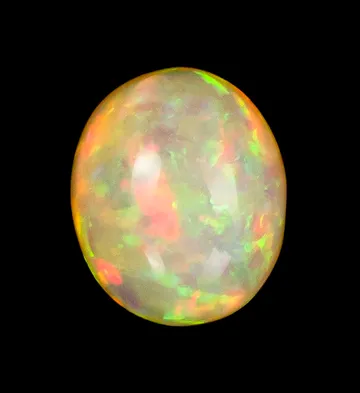

_13_(23558530160).jpg)