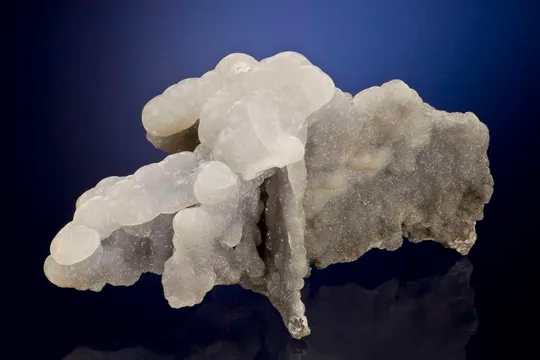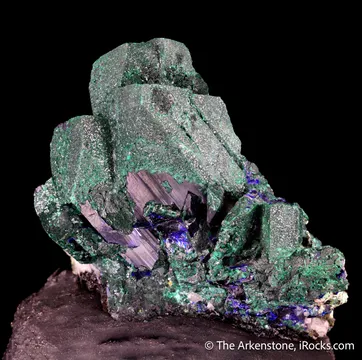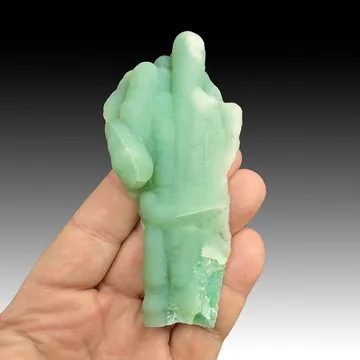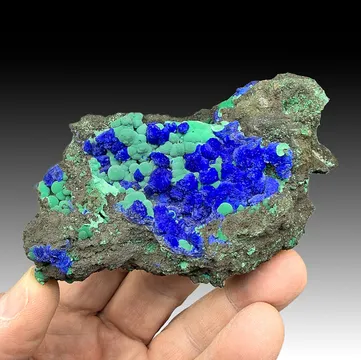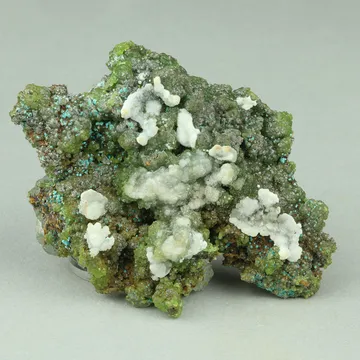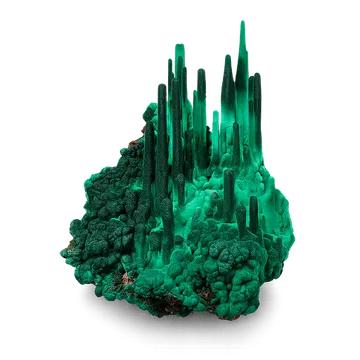
Malachit aus Lavrion, Griechenland — leuchtend grüne Schleier mit Azurit-Kontrast in einem historischen Oxidationsgebiet-Distrikt; geschätzt wegen der Fundstelle und dem Sammlerwert.
Key facts
Malachit aus dem Bergbaubereich Lavrion lässt sich am besten als Teil eines der großen Supergene-Mineraltheater der Welt verstehen, rather than als eine einzelne Kupferklassik im Sinne von Kongo oder Bisbee. Sein Reiz liegt in der Assoziation: frische grüne Malachit-Umhüllungen, Bälle, Bänder und samtige Flecken, die gegen elektrisierendes Blau von Azurit, eisenbraunem Goethit, Marmor, Quarz, Calcit, Smithsonit und einer langen Liste von Kupfer-, Zink-, Blei-, Arsensäure- und Carbonatverbindungen gesetzt sind. Auf einem feinen Lavrion-Exemplar übernimmt Malachit oft die farbige Gegenstimme, die das ganze Miniatur- oder Klein-Kabinettsstück zum Singen bringt.

Foto: Mineral Auctions
Die Umgebung ist außergewöhnlich. Lavrion liegt auf der südöstlichen Halbinsel Attika, innerhalb des Attik-Cycladischen Kristallinen Gürtels, wo Marmor, Schiefer, Detachment-Verwerfungen, Miozän-Magmatis mus, Carbonat-Erzgangkomplexe, Skarn, Adern, Brekzien und tiefe Oxidationen in einem erstaunlich kompakten Bezirk überlagert wurden. Die primäre Bergbaushistoire war Bleiglanz, Silber, Zink, Kupfer und verwandte Metalle; die Sammler-Story ist die Oxidationszone. Dort wurden Chalkopyrit, kupferhaltige Sulfide und Sulfosalze sowie assoziierte Polymetallerz-Inhalte durch zirkulierendes oxidierendes Wasser in ein dichtes sekundäres Gefüge umgewandelt. Malachit, Cu2(CO3)(OH)2, ist eines der bekannten Produkte dieser Oxidation, aber in Lavrion kommt er selten allein vor und wird oft wegen der Begleitstoffe gesammelt.
Historisch ist Lavrion untrennbar mit Athen verbunden. Der Bezirk wurde in der Antike bearbeitet, wobei der Kupferabbau in Thorikos bis ins dritte Jahrtausend v. Chr. zurückreicht und der Silber-Blei-Abbau seine klassische Bedeutung im 6. bis 4. Jahrhundert v. Chr. erreichte. Die moderne Ausbeutung wurde im 19. Jahrhundert wieder aufgenommen, als die alten Bergwerke, Schlacken und tiefere Sulfidkörper Industriefirmen zurück auf die Halbinsel zogen. Für Sammler verleiht diese Geschichte selbst modesten Malachit-tragenden Exemplaren ungewöhnliches Gewicht: Eine kleine Azurit-Malachit-Kruste aus Christiana oder Hilarion stammt aus einer Bergbaulandschaft, die prähistorischen Kupfer, klassischen athenischen Silber, 19. Jahrhundert industrieller Metallurgie und heutige mineralogische Forschung umfasst.
Die besten Lavrion-Malachit-Exemplare werden nicht nach Masse beurteilt. Sammler suchen nach präzisen Lokalisationsdetails, attraktiver Assoziation, sauberem Kontrast und intakten Oberflächen. Einige Millimeter leuchtend grüner Malachit auf funkensprühendem Azurit können begehrenswerter sein als eine größere, matte, anonyme grüne Kruste. Stücke aus Hilarion, Christiana, Kamariza, Sounion und verwandten Unterlokalitäten sind besonders interessant, wenn das Etikett den Minenname, die Schacht-Nummer, eine alte Sammlung oder das Funddatum bewahrt.## Hervorzuhebene Exemplare
Suche nach Proben: Alle Malachit-Proben aus dem Lavrion-Mining-Distrikt, Griechenland ansehen
Der Lavrion-Mining-Distrikt erstreckt sich über das Lavreotiki-Gebiet im Südosten von Attika, ca. 50 km südsüdöstlich von Athen, rund um Lavrion, Agios Konstantinos, Plaka, Sounion, Thorikos und angrenzende Bergbaugebiete. Der Distrikt ist polymetallisch und strukturell komplex. Zu seinen wirtschaftlich bedeutenden Erzen gehören Karbonat-Ersatz-Pb-Zn-Ag-Gänge, skarnverwandelte Mineralisation, Adern- und Brekzienerze sowie kleinere porphyrische Mo-W- und Cu-Mo-Vorkommen. Malachit gehört zur sekundären Kupferserie, die sich während der Oxidation der primären Sulfid- und Sulfosalt-Erze bildet.
Der geologische Rahmen ist direkt relevant für die Proben. Die Erzvorkommen treten in einem Komplex metamorpher Gesteine auf, der Marmor- und Schieferlagen der Kamariza- und Lavrion-Einheiten enthält, getrennt und durch gravierende Detachment-Verwerfungen modifiziert. Miozäne Intrusionen, einschließlich der Plaka-Granodiorit und verwandter Di- und Sills, haben die hydrothermalen Systeme vorangetrieben. Die karbonathaltigen Muttergesteine, insbesondere Marmor, boten reaktiven Untergrund für Ersatzminerale; die spätere Oxidationszone wandelte Teile des Sulfid-Systems in die lebendige Serie um, durch die Lavrion unter Sammlern berühmt wurde. Aus diesem Grund kann eine Lavrion-Malachitprobe auf Marmor, limonitischem Gossan, Quarz, Calcit oder verändertem Erz sitzen, statt auf kupferreichen Sandsteinen oder massiven Kupferkarbonaten, wie sie in anderen klassischen Malachit-Distrikten bekannt sind.
Der Bergbau war episodisch, aber langlebig. Die antike Ausbeutung begann mit Kupfer und wuchs zu einer Silber-Blei-Industrie von großer klassischer Bedeutung. Die antiken unterirdischen Arbeitsstätten des Distrikts sind umfangreich, mit Schächten, Stollen, Erzwaschern, Schmelbresten, Lither- und Schlacken-Überresten sowie verwandtem Archäometallurgie-Abfall, der noch heute die Landschaft prägt. Die modernen Betriebe begannen in den 1860er Jahren mit der Wiederaufarbeitung antiker Schlacken und Abfälle und erweiterten sich dann auf tiefergehende Untertagbauarbeiten. Die Hauptunternehmen der Moderne umfassten die griechischen und französischen Bergbau- und Metallurgieunternehmen, verbunden mit Lavrion und Kamariza. Die großtechnische Förderung nahm im 20. Jahrhundert ab, der Bergbau endete faktisch in den späten 1970er bis frühen 1980er Jahren, und die metallurgische Tätigkeit setzte sich etwas später fort.Für Sammler sind die wichtigsten malachithaltigen Sublokalitäten nicht nur der Distrikt-Name, sondern die einzelnen Minen und Gebiete. Die Hilarion-Mine in der Kamariza-Gruppe ist eine klassische Quelle farbiger Azurit-Malachit-Kombinationen und kupferhaltiger Sekundärbildungen. Die Christiana-Mine und die Christiana-Mine Nr. 132 im Mercati- und Kamariza-Gebiet haben einprägsamen Azurit mit Malachit produziert, darunter botryoide und funkelnd blaue Azurit-Krusten, die leuchtend grüne Malachit-Kugeln oder - Flecken tragen. Die weiter gefassten Kamariza-Minen, Jean Baptiste, Serpieri, Sounion-Gebiet-Minen und Barbara Mine treten in Malachit-Archivaufzeichnungen ebenfalls auf. Da Lavrion-Bezeichnungen über viele Generationen und in mehreren Schreibtraditionen erstellt wurden, können „Lavrion“, „Laurion“ und „Laurium“ auf denselben historischen Distrikt hinweisen, während Kamariza, Kamareza und Agios Konstantinos zusammen oder separat auf älteren Beschriftungen erscheinen können.
Die Zugangsaufnahme zum Sammeln sollte konservativ behandelt werden. Der Distrikt ist kein offener Spielplatz sicherer Bergbaulager. Viele Stollen sind aufgegeben, instabil, überflutet, archäologisch sensibel oder Teil geschützter historischer Landschaften. Tiefere Ebenen einiger Minen stehen heute unter Wasser; andere Gänge enthalten eingestürzte Bodenzüge, altes Gerüstwerk, Gleise, Schächte und Hindernisse mit geringer Sicht. Modernes Lavrion-Sammeln ist daher weitgehend eine Frage alter Sammlungen, rechtlich erworbener Oberflächenmaterialien, Händlervorrat und Material mit dokumentierter Provenienz. Ernsthafte Sammler sollten Wert auf Beschriftungen legen und Material vermeiden, das unsichere oder unbefugte untertägige Sammelaktivitäten fördert.
Bemerkenswerte Funde von Malachit hängen in der Regel mit Azurit oder gemischten sekundären Bildungen zusammen, statt mit eigenständigen Malachit-Schau-Stücken. Hilarion-Präparate wurden als kleine Kabinett-tische Platten mit Malachit-Bändern durchroyalen Azurit-Mikrokrystalien verzeichnet. Christiana-Präparate aus den frühen 2010er-Jahren umfassen Klein-/Kabinettstücke mit funkelndem Azurit-Botryoid und verstreuten grünen Malachit-Kugeln; einige polierte, marmorhaltige Christiana-Stücke zeigen mittelblauen Azurit mit sanften grünen Malachitflecken. Auf Mikromount-Ebene kann Lavrion-Malachit als winzige grüne Kugeln und faserige oder kugelige Aggregate in Zusammenhang mit den selteneren Kupfer-Arsenat- und Kupfer-Zink-Verbindungen auftreten.## Eigenschaften von Malachit aus dem Lavrion-Abbaugebiet, Griechenland
Lavrion-Malachit ist typischerweise hell- bis mittelgrün, manchmal blass apfelgrün oder sanft mentholgrün, wenn er fein zerteilt ist, und dunkler smaragdgrün bis waldgrün, wo er dichter oder faseriger ist. Seine charakteristischsten Formen sind Überzüge, pudrige bis samtige Rinden, kleine gerundete Bälle, botryoidale Flecken, faserige Aggregate und Bänder. Klar kristallisierter Malachit ist nicht der definierende Lavrion-Stil; der Ort wird eher wegen reicher Paragenese, Farbabstufungen und mikroskopischer Komplexität bewundert.
Das klassische visuelle Paar ist Malachit mit Azurit. Hilarion- und Christiana-Stücke können tiefe blaue Azuritrüstungen oder -kugeln zeigen, wobei Malachit einen grünen Streifen durch die Matrix bildet, verteilte Kugeln oder weiche samtige Aggregate zwischen Azuritgruppen. Bei einigen Stücken ist der Malachit ein deutlicher sekundärer Akzent; bei anderen kann er die Umwandlung früherer Azurit- oder Kupferminerale darstellen und grüne pseudomorphische oder ersetzende Strukturen erzeugen. Wenn Azurit brillant bleibt und der Malachit sauber ist, ist der Kontrast außergewöhnlich.
Die Größenbereiche sind bescheiden. Viele Lavrion-Malachit-Vorkommen sind Mikro- oder Thumbnail-Ansichten: Millimeter-große Kugeln, Unterzentimeter-Patches und dünne grüne Überzüge. Händler- und Auktionsaufzeichnungen zeigen größere Handexemplare, bei denen Malachit ein sichtbarer, aber untergeordneter Teil eines azuritführenden Exemplars von 4 bis 11 cm ist. Ein kabinettsgroßes Exemplar mit reichlich sichtbarem Malachit kann attraktiv sein, aber die Stärke des Fundorts liegt nicht in großen Massen; es ist mineralogische Dichte und Assoziation.
Begleitminerale variieren nach Unterlokalität. Häufige und wichtige Begleiter sind Azurit, Goethit, Calcit, Quarz, Cerussit, Smithsonit, Hemimorphit, Chrysokolla, Brochantit, Cuprit, rotes Kupfer, Konichalkzit, Adamit, Zinkolivenit, Alimente der Agardit-Gruppe, Mixit sowie andere sekundäre Arsenate und Sulfate. Im weiteren Lavrion-Oxidationskontext befindet sich Malachit inmitten eines der nekt reichhaltigsten sekundären Mineralassemblagen, die aus irgendeinem Bergbaugebiet bekannt sind.
Die Qualität wird anhand von vier Hauptfaktoren beurteilt. Erstens die Lokalisationspräzision: „Christiana-Mine Nr. 132, Mercati-Minene, Agios Konstantinos, Lavrion“ oder „Hilarion-Mine, Kamariza-Minen“ liefern wertvollere Informationen als ein vages „Griechenland“. Zweitens der Kontrast: lebhaftes Grün des Malachits gegenüber glänzendem Azurit, weißem Calcit, blassem Smithsonit oder matrixähnlichem Limonit ist besonders attraktiv. Drittens der Oberflächenzustand: botryoide und samtige Malachit-Störungen, Reibungen und Staub lösen sich leicht, daher unbeschädigte Bälle und saubere Flecken sind wichtig. Viertens die Paragenese: ein Malachit-tragendes Lavrion-Exemplar mit identifizierten selteneren Begleitern mag interessanter sein als ein visuell größerer, mineralogisch einfacher Stück.Unter Vergrößerung verbessern sich Lavrion-Stücke oft. Was wie ein grüner Staub aussieht, kann sich in faserige Büschel, winzige abgerundete Aggregate oder Veränderungshaut auf älterem blauem Kupfercarbonat auflösen. Viele Präparate lassen sich am besten mit einer Lupe oder einem Stereomikroskop würdigen, insbesondere diejenigen aus Kamariza und Hilarion, wo Malachit neben Kupferarsenaten, Zink-Kupfer-Sulfaten oder winzigen Kristallen von Adamit und verwandten Arten auftreten kann.## Collector Notes
Das wichtigste Authentizitätsproblem bei Lavrion-Malachit ist nicht der weit verbreitete künstliche Malachitherstellung; es ist die Kennzeichnung. Der Distrikt wird seit Generationen gesammelt, und Etiketten können Lavrion, Laurion, Laurium, Attika, Kamariza, Kamareza, Agios Konstantinos, Hilarion, Christiana, Sounion oder Bergwerksnummern in inkonsistenten Kombinationen verwenden. Für ernsthafte Sammler bewahren die besten Etiketten sowohl die historische Schreibung als auch die moderne Sublokalitätsinterpretation. Ein Exemplar, das einfach als „Lavrion“ beschriftet ist, kann legitim sein, verliert aber viel von dem Ortswert, der dieses Gebiet so interessant macht.
Seien Sie aufmerksam auf polierte oder geschliffene Materialien. Einige Christiana-Azurit-Malachit auf Marmor wurden absichtlich geschnitten und poliert, um blaue und grüne Flecken im Marmor zu zeigen. Das ist an sich kein Problem, wenn es offengelegt wird; es ist eine andere Art von Exemplar und sollte nicht mit einer natürlichen unpolierten Ausstellungsoberfläche verwechselt werden. Die Oberflächenstruktur, der Glanz, Sägespuren, flache Geometrie und die Etikettenbeschreibung machen die Unterscheidung in der Regel offensichtlich.
Der Zustand ist eine echte Sorge. Malachitbeschichtungen können auf Hochpunkten eingerieben werden, und staubige oder samtige Aggregate können sich lösen. Azurit-Partneren können Prellungen, gebrochene Botryoide oder Kantenverschleiß aufweisen, insbesondere bei älteren Bergwerk-Abraum-Stücken und Exemplaren, die mehrere Sammlungen durchlaufen haben. Limonitische Matrix kann bröckelig sein. Stücke mit offenen Vorkommen sollten von der Matrix, nicht von der farbenfrohen Kruste, gehandhabt werden. Vermeiden Sie es, empfindliche Lavrion-Exemplare zu waschen; lose sekundäre Minerale, Ton und lösliche Salze können durch Wasser beschädigt werden. Eine Blasengebläse und eine weiche Bürste sind sicherer als aggressives Reinigen.
Malachit aus Lavrion ist als Speziesvorkommen nicht selten, aber gute Ausstellungsstücke sind selektiv. Häufiges Material erscheint als grüne Zusatzkruste in gemischten sekundären Stücken. Wünschenswertere Exemplare zeigen sauberes, gut platziertes Malachit in blau-grünen Azuritkombinationen oder tragen eine spezifische Minenherkunft wie Hilarion oder Christiana Nr. 132. Das höchste Sammlerinteresse steigt, wenn das Exemplar starke Ästhetik mit einem alten Etikett, einem bekannten Funddatum, einer bekannten Sammlung oder einer ungewöhnlichen Paragenese verbindet.
Marktverfügbarkeit ist stabil, aber uneinheitlich. Kleine gemischte Exemplare und Mikromontagen aus Lavrion erscheinen periodisch, oft zu erschwinglichen Preisen. Bessere Azurit-Malachit-Stücke aus Christiana und Hilarion haben stärkeren Konkurrenzkampf ausgelöst, insbesondere wenn der Azurit glänzend, edelsteinartig, botryoidal oder ungewöhnlich groß für den Ort ist. Kabinettgröße-Stücke mit feiner Farbe und spezifischer Minenherkunft sind viel seltener, als es die casualen „Lavrion-Malachit“-Etiketten vermuten lassen.## Stories & Field Notes
Im Mai 2019 betraten eine kleine Gruppe Höhlenforscher das Hilarion-Minenkomplex mit einer Frage, die jedem bekannt vorkommt, der alte Lavrion-Abbaustätten durchlaufen hat: Was passiert, wenn die Mine einfach weiter nach unten führt? Sie fuhren von Athen Richtung der Südküste von Attika, ließen Tageslicht hinter sich und begaben sich in Korridore, die mehr als ein Jahrhundert alt waren. Der Gang zeigte die vertraute Archäologie einer verlassenen Mine: halbeinstürzende Kammern, Holzkonstruktionen, rostige Schienen, rutschiger Boden und das langsame Ansteigen der Feuchtigkeit nach der vierten Ebene. Nach mehr als einer Stunde unter der Erde erreichten sie eine Kammer, die mit Wasser gefüllt war, eine unterirdische Lagune, in der der Gang eindeutig weiterging, der trockene Weg jedoch endete.
Die Idee, ihn zu tauchen, klang eigenartig genug, um unwiderstehlich zu erscheinen. Maria Fotiadi nahm Kontakt mit Erikos Kranidiotis und Stelios Stamatakis vom Addicted2H2O-Team auf, erfahrene Höhlen- und Wracktauchpartner. Ihre Antwort traf den Momentgeist: „Minen-Tauchen in Griechenland? Das wäre sicher etwas anderes!“ Der schwierige Teil bestand nicht nur im Unterwasser-Tauchgang; es ging darum, Taucher, Flaschen, Lichter, Rollen und Unterstützungsausrüstung durch die trockenen Gänge zum Sumpf zu bekommen. Das Team beschrieb einen stündigen Marsch über matschigen und felsigen Boden, bevor die Taucher überhaupt ins Wasser gelangen konnten.
Der erste Unterwasser-Erkundungsgang fand am 20. Juli 2019 statt. Unterhalb des überfluteten Schwellenbereichs endete die Mine nicht. Sie setzte sich in Naturfelskammern fort, mit Holzstützsäulen an den Kammer-Eingängen und Schienen, die noch ins Innere zum alten Arbeitskern der Mine führten. Die Taucher fanden drei Hauptkorridore. Der zentrale Korridor führte zu einer weiteren Kammer mit drei Verzweigungen; dahinter war ein Hauptgang, der von vier Reihen Holzbalken getragen wurde. Das Wasser war frisches Grundwasser aus dem Aquifer, gemessen ca. 20°C, nicht Salzwasser wie manche aufgrund von Lavrions Küstenlage erwartet hatten. Die Sicht war beim Hineingehen hervorragend, auf dem Rückweg verschlechterte sie sich, da ausgeatmete Blasen und Flossenbewegungen feinen Sediment in das Wasser zogen.
Am 19. November 2019 kehrte das Team mit mehr Unterstützung zurück und verschaffte sich etwa 500 m weiter ins Minengebäude hinein Tauchausrüstung bis zu einer Tiefe von rund 120 m. Diesmal betraten die Taucher die sechste Ebene und bestätigten, dass die drei Abschnitte des ersten Tauchgangs miteinander verbunden waren. Sie fanden auch einen vierten Korridor, zugänglich von einem nahegelegenen trockenen Teil der Mine: einen engen, abwärts geneigten Eingang, der zu einem überfluteten Abschnitt mit Gleisen führte. Die Gleise datierten mindestens aus den 1930er-Jahren und verbanden die trockene vierte Ebene mit der unter Wasser liegenden sechsten Ebene, die Route, die einst zum Ore-Abtransport mit dem Wagen genutzt wurde. Die Entdeckung war sowohl praktisch als auch historisch bedeutsam; sie bot einen alternativen Ausgang, falls etwas Unterwasser schiefgehen sollte.Bis zum 24. Mai 2020 war das Hilarion-Projekt von der Erkundung ins Mapping übergegangen. Mit dem von Stelios Stamatakis entwickelten Vermessungstool VPLOTTER kartete das Team 126 m eines Unterwassergangs. Sie drangen weiter vor als zuvor und erreichten am Ende einen kleinen Schacht, der zur Lagerung von Erz genutzt wurde. Eingänge, eingerahmt von Holzsäulen, Bahnen an Ort und Stelle erhalten, klares Wasser in den tieferen Galerien – der ertrunkene Bergwerkskomplex hatte das unheimliche Gefühl eines industriellen Standorts, der mitten im Satz pausiert war.
Die Taucher dachten später darüber nach, dass das Wasser etwas Paradoxes bewirkt habe. Über den überschwemmten Ebenen hatten Verlassenheit, Besucher, Zusammenbruch und Zeit das Bergwerk verändert; darunter hatten Wasserwege Passage vor ungeplanter Störung versiegelt. Ihre Worte sind schwer zu verbessern: „Möglicherweise ist das Wasser-Element das, was das Bild des Bergwerks geschützt und bewahrt hat, als die Bergleute ihre Arbeiten einstellten.“ Für einen Mineraliensammler hat dieser Satz eine besondere Resonanz. Die gleichen oxidierenden und zirkulierenden Gewässer, die Erze mit Kupfergehalt in Malachit und Azurit verwandelten, beanspruchten später auch die unteren Maulwurfbereiche, bewahrten Bahnen, Schächte und Kammern, die einst die lange Menschheitsgeschichte von Livrion gespeist hatten.## Mineralogische Aufzeichnungen & Publikationen- Voudouris, P., et al. “The Lavrion Mines: A Unique Site of Geological and Mineralogical Heritage.” Minerals 11, no. 1, 76, 2021. Eine umfassende moderne Übersicht über Lavrion-Geologie, Mineralisationsstile, Bergbaugeschichte, Supergene-Mineralogie und Geoerbe-Erhaltung.
Pappa, F. K., et al. “Provenance of Coastal and Seabed Sediments Relative to Mining and Processing Wastes: The Case of Lavrion, Attiki Peninsula, Greece.” Minerals 14, no. 1, 33, 2024. Nützlich für die regionale Geologie des Distrikts, Erztypen, Bergbauchronologie und moderne Umweltbilanz.
Scheffer, C., et al. “Evolution of a hydrothermal ore-forming system recorded by sulfide mineral chemistry: a case study from the Plaka Pb–Zn–Ag Deposit, Lavrion, Greece.” Mineralium Deposita 57, 2022. Detaillierte Arbeit zum Plaka-System, Distriktsgeologie, Mineralisationsstadien und hydrothermaler Entwicklung.
Skarpelis, N. “The Lavrion deposit (SE Attica, Greece): Geology, mineralogy and minor elements chemistry.” Neues Jahrbuch für Mineralogie - Abhandlungen 183, no. 3, 227–249, 2007. Eine Schlüsselarbeit über den karbonatähnlichen Ersatzcharakter des Distrikts sowie die strukturellen und lithologischen Kontrollen auf das Erz.
Skarpelis, N., and Argyraki, A. “Geology and Origin of Supergene Ore at the Lavrion Pb-Ag-Zn Deposit, Attica, Greece.” Resource Geology 59, no. 1, 1–14, 2009. Wichtig zum Verständnis der Supergene-Oxidationsprozesse, die sekundäre Mineralien wie Malachit, Azurit, Smithsonit und Gossan-Assemblagen erzeugten.
Mindat: “Malachite from Lavrion Mining District, Lavreotiki, East Attica, Attica, Greece.” Der nützlichste Online-Lokalitätenindex für malachitführende Lavrion-Unterlokalitäten, einschließlich Hilarion, Christiana, Kamariza, Barbara Mine, Sounion und verwandte Referenzen.
Mindat minID TEP-RQG: “Azurite, Malachite” from Hilarion Mine, Kamariza Mines. Ein dokumentiertes Hilarion-Azurit-Malachit-Exemplar mit 9,4 x 9,2 x 4,1 cm, als Referenz für den Blaustich-Grün der Lokalität.
Mineral Auctions: “Azurite, Malachite” from Christiana Mine, Lavrion, Greece. Ein dokumentiertes Christiana-Exemplar aus einer kleinen Anfangs-2012-Fundstelle, mit botryoidalen Azuriten und verstreuten Malachit-Kugeln.
Ein Auktionsrekord aus 2025 für ein kabinettsgroßes Christiana No. 132 Azurit-Malachit-Exemplar, ehemals Jack Halpern.
MMineralauktionen: „Azurit und Malachit auf Marmor“ aus der Christiana Mine Nr. 132. Nützliche Aufzeichnung von geschnittenem und poliertem, marmorhaltigem Azurit-Malachit-Material aus Christiana Nr. 132.## Videos & Media
“Lavrio Mines Underwater” — Addicted2H2O — Dokumentarprojektseite zur Unterwassererkundung der von Überflutung betroffenen Lavrion-Minenstollen in 2019–2020, einschließlich Planung, Vorbereitung und dem ersten Unterwasserfilmmaterial aus griechischen Minen.
“Hilarion Mine” — Addicted2H2O — Projektseite zur Unterwassererkundung der Hilarion-Mine mit Tauchterminen, Kartierungsnotizen, historischem Hintergrund und der 2D/3D-Kartierungsarbeit.
“Underwater Ancient Greek Mines at Lavrio Explored” — Greek Reporter — Artikel, der die Addicted2H2O-Dokumentation und Interviews über die überfluteten Schächte, Minenhistorie und Höhlentauchgefahren präsentiert.
“Hilarion: Exploring the Greek Silver Mines of Lavreotiki” — X-Ray Mag — Feldbericht von Maria Fotiadi, Erikos Kranidiotis und Stelios Stamatakis, der die Erkundungen von 2019 in Hilarion beschreibt.## Weiterführende Lektüre & Externe Links
Mindat: Lavrion Mining District, Lavreotiki, East Attica, Attica, Greece — Kernlokalitätsseite des Distrikts, seiner Unterlokalitäten, Mineralienliste, Fotos, Referenzen und Schreibvarianten.
Mindat: Malachit aus dem Lavrion Mining District — Artenspezifische Fundortseite, die malachitführende Lavrion-Unterlokalitäten und Referenzen auflistet.
The Lavrion Mines: A Unique Site of Geological and Mineralogical Heritage — Beste Open-Access-Übersicht zur Geologie, Mineralvielfalt, Bergbauhistorie und geoheritage-Wert von Lavrion.
Provenance of Coastal and Seabed Sediments Relative to Mining and Processing Wastes: The Case of Lavrion, Attiki Peninsula, Greece — Klarer moderner Überblick über regionale Geologie, Erzlagerarttypen, Bergbauchronologie und Abfallgeschichte.
Evolution of a hydrothermal ore-forming system recorded by sulfide mineral chemistry: Plaka Pb–Zn–Ag Deposit, Lavrion — Technische Studie zur hydrothermalen Evolution im Plaka-Teil des Distrikts.
Hilarion: Exploring the Greek Silver Mines of Lavreotiki — Lebendiger Feldbericht über moderne Erkundungen in den überfluteten Hilarion-Lagerstätten.
Addicted2H2O: Hilarion Mine — Ausführliche Projektseite zur Unterwassererkundung von Hilarion, Kartierung und historischem Kontext.
Mineral Auctions: Azurite & Malachite from Hilarion Mine — Foto-reicher Bericht über eine klassische Hilarion-Azurit-Malachit-Probe.
Mineral Auctions: Azurite, Malachite from Christiana Mine — Nützlicher Markt- und Probenbericht für Christiana-Azurit-Malachit aus dem frühen Fund 2012.