Magnetite Collectors Guide
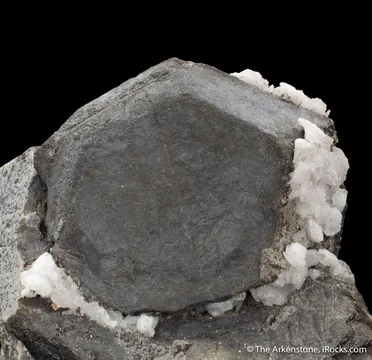
Magnetite (Fe3O4) is the iconic magnetic iron oxide and one of the most recognizable minerals in the hobby. Collectors cherish its crisp isometric crystal forms—especially sharp octahedra and combinations with dodecahedra—ranging from micromounts with brilliant mirror luster to cabinet-sized, jet-black clusters perched on contrasting calcite or quartz. Although magnetite occurs in enormous quantities as an iron ore, well-formed, lustrous crystals on attractive matrix remain surprisingly uncommon and highly collectible. The very best show textbook geometry, glossy faces, and minimal edge wear; some are natural “lodestones,” retaining a permanent magnetization. Values span from inexpensive single crystals to dramatic, aesthetic matrix pieces that anchor display shelves.
Magnetite’s appeal is universal: it’s scientifically important, visually striking, and has a neat “party trick” (it attracts iron). Historic classics from Elba and Sweden populate museum cases, while modern finds from China’s Huanggang Mine redefined what collectors expect—large, ultra-bright octahedra, often in striking groups. Magnetite is also a favorite for micromounters and field collectors because it’s widely distributed and instantly testable with a magnet. Compared with flashy copper carbonates or gem silicates, magnetite is less color-driven; instead, aesthetics hinge on form, luster, association, and composition. As a result, superb, balanced clusters with clean edges and bright faces have continued to rise in desirability and price, especially with strong provenance.
While magnetite occurs globally, a handful of localities are especially prized for size, luster, and classic form.
The Huanggang skarn and skarn-replacement systems (Inner Mongolia) produced a modern benchmark of magnetite: large, razor-sharp octahedra and spinel-law twins with jet-black, mirror-bright luster. Many crystals are 2–10 cm, with clusters surpassing 20 cm featuring geometric symmetry and superb contrast on white calcite or quartz. Some show subtle surface “growth hillocks” yet remain glossy; others are sculptural intergrowths forming star-like twins. These specimens exhibit the “complete package” aesthetics—size, luster, form, and striking matrix—and are among the most widely sought magnetites of recent decades.
- Form and habit: Magnetite crystallizes in the isometric system. The most desirable habits are:
- Sharp octahedra 111, sometimes with fine striations or growth hillocks.
- Octahedron–dodecahedron 111+110 combinations; cube 100 is rare.
- Spinel-law twins creating star-like or cruciform intergrowths.
- Aesthetic clusters with multiple terminations aligned in harmonious arrangements earn strong premiums over singles.
- Luster and surface quality: Top magnetite has a bright metallic to submetallic luster. Mirror-bright faces with minimal pitting or etching look best under case lights. Matte or heavily etched surfaces can be interesting but typically trade at discounts unless compositionally or paragenetically special.
- Matrix and contrast: Because single magnetite crystals are common, matrix association often distinguishes high-end pieces. White calcite, snow-white quartz, or pale skarn minerals provide ideal contrast, making black crystals “pop.” A well-composed specimen, with crystals oriented and balanced on matrix, will outshine a loose crystal of the same size.
- Size versus sharpness: Large crystals are impressive, but magnetite’s edges can be prone to micro-chipping. Clean edges, intact vertices, and an undamaged primary display face are crucial. Many collectors prefer a smaller, pristine octahedron over a larger one with obvious edge wear.
- Magnetism: All magnetite is magnetic; some are naturally magnetized lodestones. While lodestones are neat, most collectors focus on aesthetics; a piece need not be a lodestone to be top-tier. If a seller emphasizes “lodestone,” ensure the overall specimen quality still measures up.
- Associations and paragenesis: Skarn associations (diopside, hedenbergite, garnet), sulfides (pyrrhotite), and calcite or quartz can add context and value. Classic locality associations—e.g., Huanggang on calcite, Elba with hematite/quartz—carry strong appeal.
- Condition: Inspect edges and corners under a loupe. Even tiny nicks on jet-black faces can catch light as pale specks. Prioritize undamaged terminations and minimize abrasions on prominent faces. Watch for polishing (see below).
Magnetite is relatively tough (Mohs ~5.5–6.5) and chemically stable, but observe the following to keep specimens pristine:
- Handling and mounting:
- Support heavy matrix pieces with both hands; magnetite is dense and can shear off if lifted by a single crystal.
- Use minimal, neutral museum putty on matrix, not directly on crystal faces.
- Environment:
- Store dry and at stable room temperature. Magnetite itself is not prone to “rusting,” but prolonged dampness can encourage oxidation on accessory iron-bearing matrix minerals.
- Keep away from sources of iron filings or ferrous dust—magnetite can attract these, making cleanup tedious.
- Light and heat:
- Normal indoor lighting is fine. Avoid high heat; excessive heating can alter surface oxidation states and dull luster.
- Cleaning:
- Dust gently with a soft brush or bulb blower. For fingerprints or grime, use lukewarm water with a drop of mild dish soap; rinse and dry thoroughly.
- Avoid acids (including vinegar) and strong oxidizers; they can attack matrix or change surface appearance.
- Skip ultrasonic/steam cleaners; vibrations can propagate microfractures and heat can harm adhesives if any repairs exist.
- If ferrous “specks” adhere magnetically, use a strip of painter’s tape or kneaded putty to dab them off—never scrape.
- Storage and display precautions:
- Give magnetic specimens a few centimeters of space from delicate mechanical watches, compasses, or magnetic media. Normal display distances are fine; the magnetic field falls off quickly.
- Earthquake or vibration zones: secure pieces with discrete stands or tack.
- Polishing and resurfacing:
- Polished faces look unnaturally “glassy” and may lack subtle growth textures. Natural octahedra often show fine striations or micro-hillocks; a mirror-flat, perfectly uniform face can indicate a lapped or buffed surface to disguise edge wear. Inspect under raking light to spot polishing swirls or discontinuities.
- Reattachments:
- Matrix-mounted crystals may be glued. Look for faint, glossy glue lines at the crystal–matrix interface or tiny resin halos. UV can help if adhesives fluoresce.
- Artificial magnetization:
- Some pieces are deliberately magnetized to sell as “lodestone.” This isn’t a repair per se, but it should be disclosed; natural lightning-induced lodestones are uncommon. Artificial magnetization doesn’t harm the specimen but should not substitute for form and condition.
- Misidentifications (important):
- Martite (hematite pseudomorph after magnetite) can look similar but is weakly to non-magnetic and leaves a reddish streak, whereas magnetite’s streak is black. A quick streak test on unimportant rough or a spare chip helps confirm identity.
SPECIES ID REFERENCE: Magnetite = 462
LOCALITY IDS USED ABOVE:
- Huanggang Mine, China = 114410
- Rio Marina, Elba Island, Italy = 214231
- Magnet Cove, Arkansas, USA = 153918
- Malmberget, Sweden = 155099
- Korshunovskoye Iron Deposit, Russia = 132715
- Långban Mine, Sweden = 138426