Gypsum Collectors Guide
Gypsum is a common but surprisingly diverse sulfate mineral prized by collectors for its crystal variety and sculptural beauty. It forms in a wide range of habits, from perfectly transparent, sword-like selenite crystals to silky, fibrous satin spar, massive alabaster suitable for carving, and iconic “desert roses” shaped by windblown sand. Colorless to white is typical, but pale honey, golden, smoky, and iron-stained orange-browns occur. Crystal forms often include spectacular contact twins—“swallowtail” or “fishtail”—and rare curved “ram’s horn” aggregates. Its low hardness (Mohs 2) and perfect cleavage make pristine gypsum challenging to extract and preserve, so undamaged, well-formed specimens—especially large, gem-clear twins or showy matrix pieces—are more coveted than the species’ abundance might suggest.
Gypsum’s appeal spans from beginner to advanced collectors. Affordable examples of satin spar and desert rose make it a staple in starter collections and educational kits. At the same time, elite pieces—such as razor-clear selenite from Spain, giant Naica crystals (seen in museums), or elegant fishtail twins from Canada—hold a secure place in fine collections. Aesthetics drive demand: clarity, brightness, and dramatic twin forms are highly sought after. Historical interest also adds allure; for millennia, large selenite plates served as “window stone” (lapis specularis), and classic European salt mines produced famous “ram’s horn” crystals. Because gypsum is soft and delicate, top-condition pieces are genuinely scarce relative to the overall volume mined, keeping prices strong for the very best.
Below are noteworthy gypsum localities with a track record of producing distinctive, collectible material.
Naica (Chihuahua) is legendary for the “Cave of the Crystals,” where selenite grew to colossal sizes—some over {010} meters—under hot, saturated hydrothermal conditions. While those giants remain in situ, the broader mine has produced more practical, cabinet-sized selenite crystals: colorless to pale honey blades and thick, glassy prisms with superb luster. Collectors value Naica for the unparalleled story and the sheer perfection of its best crystals. Even modest-sized, undamaged blades with good transparency are special when they show the hallmark aqueous clarity and clean terminations. True Cave-of-the-Crystals pieces are museum objects; market specimens typically come from other parts of the Naica system.
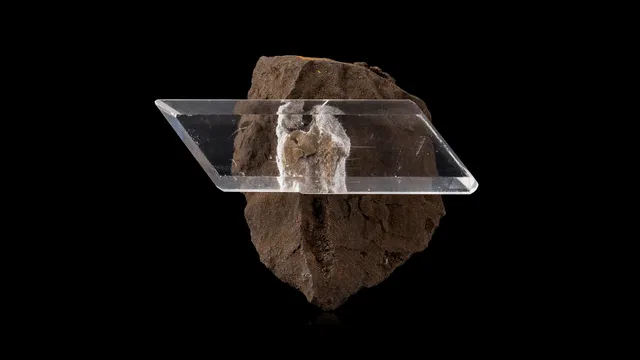
Fuentes de Ebro (Zaragoza) has produced some of Europe’s finest selenite—broad, water-clear blades and thick prisms with exceptionally high luster. Classic specimens show broad windows of clarity, gentle striations, and sharp, unchipped edges. Crystals may be matrix-free or attached to marls; on matrix, they display beautifully and command a premium. Collectors prize Fuentes de Ebro for large, transparent crystals that read across a room—true “glass-like” gypsum that shows why the Romans used selenite for window panes.
-
Color and clarity:
- Water-clear selenite is the benchmark for aesthetic gypsum. Look for limpid interiors, minimal veils, and vivid surface reflections.
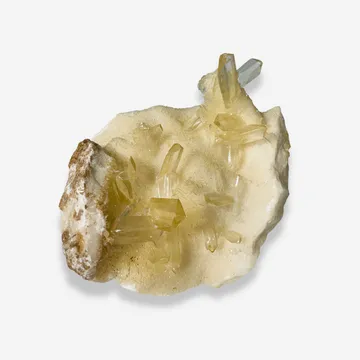
- Color is typically subtle; pale honey, smoky, or orange-brown tones from iron-rich clay can be attractive, especially when even. Strong, uniform color is generally better than blotchy staining.
- Satin spar (fibrous) is valued for silky chatoyance and curvature; alabaster is collected mostly for sculptural or historical interest.
-
Form and twinning:
- Sharp blades and thick, well-terminated prisms are classic. Fishtail (swallowtail) twins, arrowheads, and X-shaped twinned clusters are more desirable than singles of comparable size.
- Rare habits like “ram’s horn” curved selenite are especially collectible for uniqueness.
- Desert roses are valued for symmetry, crisp petals, and intact, undusted faces; fine, tight rosettes with good contrast bring premiums.
-
Luster and surfaces:
- Bright, glassy faces on selenite make a specimen pop. Natural growth hillocks or subtle striations are fine if they don’t dull reflections.
- Avoid heavily abraded or frosted surfaces (unless frosting is natural and even) and avoid visible cleaning scratches—gypsum scratches very easily.
-
Size and proportion:
- Larger isn’t always better. Because gypsum cleaves and scratches so easily, pristine, balanced small-cabinet pieces can outshine larger but dinged specimens.
- Composition matters: a cluster with harmonious angles or a well-situated crystal on matrix presents better than an awkward, flat single.
-
Condition:
- Inspect edges and terminations carefully for nicks—the softness of gypsum makes tiny chips common and conspicuous.
- Check for cleavage cracks and internal fractures. Tight, minimally visible internal planes are acceptable; open, reflective cracks distract.
- Matrix adds value but can be unstable (soft marls, clays). Ensure the matrix is consolidated and that crystals are well anchored.
-
Locality and provenance:
-
Repairs and reattachments:
- Because gypsum cleaves perfectly on {010}, re-glued breaks are common. Look for straight, planar seams, slight offsets in growth lines, or a glossy film along junctions.
- A UV light can reveal epoxy fluorescence at joins. Inspect crystal-to-matrix contact points carefully.
- Desert roses may be reassembled from petals; look for plaster-like residue or granular glue between “petals.”
-
Polishing and alterations:
- Polished faces (to hide scratches or chips) can look unnaturally mirror-like and lack minute growth texture. Natural terminations usually show subtle hillocks or etch patterns.
- Some massive alabaster and satin spar are cut/polished; for specimen collecting, machining should be disclosed.
-
Fakes:
- Cast “desert roses” made from plaster exist. Telltales: mold lines, repetitive patterns, trapped air bubbles, and a chalky feel at edges. Real gypsum roses are crystalline, with distinct cleavage surfaces and a harder, crystalline sheen (despite overall softness).
Gypsum is soft (Mohs 2), has perfect cleavage, and is somewhat water-soluble. Careful handling and a dry environment preserve its beauty.
-
Handling and display:
- Support from beneath with both hands; never lift large pieces by a single blade.
- Use inert mineral tack or custom stands; avoid point loads on thin edges or terminations.
- In quake-prone areas, secure specimens so they cannot slide.
-
Cleaning:
- Prefer dry methods: soft blower bulb, clean makeup brush, or antistatic microfiber cloth.
- If necessary, use a just-damp lint-free cloth, immediately followed by thorough drying. Avoid soaking—gypsum is slightly soluble and edges can soften or bloom.
- No ultrasonic or steam cleaners, and avoid acids or harsh chemicals. Do not use abrasive pads; they scratch instantly.
-
Environment:
- Keep dry and at stable room temperatures. Avoid high heat; gypsum dehydrates to bassanite/anhydrite at elevated temperatures, and heat can induce fracturing.
- Normal light is fine; prolonged direct sun can heat specimens and encourage microcracking or adhesive creep on repaired pieces.
-
Storage:
- Individual padded boxes or lined drawers are ideal. Keep away from harder minerals that could scratch it, and away from softer, friable species that gypsum could abrade.
- For desert roses, store with gentle padding that doesn’t shed fibers (which can snag on “petals”).
- Label provenance—locality and acquisition date—since locality drives desirability (e.g., Naica vs. generic selenite).
Properly curated, gypsum can display extraordinary elegance—from the liquid transparency of selenite blades to the architectural symmetry of fishtail twins and the sculptural poetry of ram’s horn crystals. Despite its softness, it rewards careful collectors with timeless aesthetics and rich mineralogical history.