ExploreMarketCollectors

Earthwonders

The global marketplace for authentic geological specimens. Connecting passionate collectors with trusted dealers worldwide.

Get on the list for the latest from EarthWonders
Privacy Policy
Join Our Community
InstagramLinkedInFacebookYouTube
Discover

Browse Market

Browse specimens

Collector Profiles

Learn

Guides

All Policies

Blog

Newsletter

Company

About Us

Our Story

Contribute

Careers

© 2026 earthwonders
    GuidesEventsBlog
    AllFeaturedJust droppedUnder $500Statement piecesGreenBluePurpleAmethystQuartzFluoriteTourmalineMalachiteAzuriteRhodochrosite🇳🇦Tsumeb🇲🇽Mexico🇧🇷Brazil🇮🇳India
    0 views
    Login to Edit Guide
    Translated from English—See original

    Garnet from Sierra de Cruces, Coahuila, Mexico

    Overview

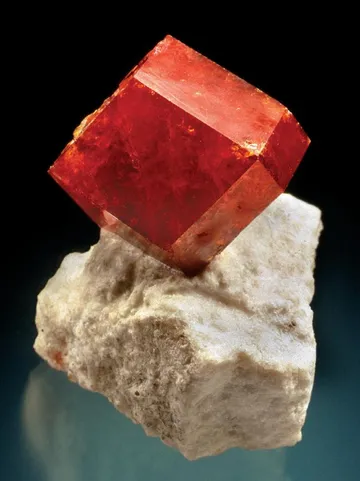
    Sierra de Cruces grossular is one of the great Mexican garnet classics: sharp dodecahedra and modified dodecahedra in raspberry, rose, peach, cream, golden-green, and olive tones, usually set against pale skarn matrix. The most coveted pieces have that unmistakable “raspberry” look—glassy pink to red grossular crystals scattered over white calcite, quartz, wollastonite, and scapolite, often with vesuvianite as a visual and mineralogical companion. In good examples the contrast is immediate: candy-colored garnet on a pale granular matrix, with enough luster and crystal definition to read from across a case.

    raspberry-red grossular crystals on white matrix — credit: Géry Parent / Wikimedia Commons

    Photo: Géry Parent / Wikimedia Commons

    Mineralogically, the locality is a skarn story. Sierra de Cruces is a carbonate-hosted contact-metamorphic environment developed where intrusive rocks interacted with Cretaceous limestone and subordinate dolomite. That setting supplied the ingredients collectors see in the specimens: calcium-rich silicates, white carbonate and quartz matrix, vesuvianite, wollastonite, scapolite, and the grossular–andradite garnet chemistry responsible for the range of colors and internal zoning.

    The red material is especially significant because it is not just “pink garnet” in a casual trade sense. Scientific work on Sierra de Cruces material has shown that the raspberry color is tied to manganese in the grossular, while dark internal zones are richer in iron, titanium, and andradite-related components. Many crystals show a sharp visual transition between a raspberry-red rim and a black or dark core or mantle; in some studied pieces there is even a white core. These zoned crystals are a major part of the locality’s identity, and a broken or sectioned crystal can be as mineralogically interesting as a perfect cabinet specimen.

    studied raspberry-red grossular crystals showing pink rim, dark mantle, and white core — credit: Wu, Zhao, Zhao & Zhang / Minerals, MDPI

    Photo: Wu, Zhao, Zhao & Zhang / Minerals, MDPI

    For collectors, the best Sierra de Cruces garnets combine three qualities: saturated color, sharp complete form, and attractive matrix. Raspberry-red dodecahedra on white matrix are the signature, but connoisseurs also prize old-label loose floaters, unusual pale peach or light-gray crystals, and greenish crystals that show excellent form and luster. The locality’s history adds another layer of interest, because many older specimens circulated under the incorrect label “Lake Jaco,” a name that still appears in collections and dealer inventories.

    Featured Specimens

    Locality Information

    Search for specimens: View all garnet specimens from Sierra de Cruces, Coahuila, Mexico

    Sierra de Cruces lies in the Sierra Mojada Municipality of western Coahuila, in arid high-plateau country close to the Coahuila–Chihuahua border. The locality is commonly recorded as Sierra de Cruces, Sierra Mojada Municipality, Coahuila, Mexico; older and erroneous labels may read “Lake Jaco,” “Sierra de la Cruz,” or “Sierra de las Cruces.” The Mindat locality coordinates place Sierra de Cruces at 27°58'30" N, 103°41'49" W.

    The mineral deposit is a calcareous skarn developed in carbonate host rocks near an intrusive body. Published geological summaries describe the range as dominated by Cretaceous limestone, alkaline diorite, and minor dolomite, with skarn formed by contact metamorphism at the interface between the plutonic body and limestone. The grossular-bearing assemblage is typical of a calcium-rich skarn: grossular with calcite, quartz, vesuvianite, wollastonite, and scapolite, with additional reported species including andradite, sphalerite, strontianite, dolomite, wiluite, and epidote or idocrase in the broader skarn environment.

    The region’s mining context is tied to the remote mining town of Hércules and the huge iron deposits at the northwestern end of the Sierra de Cruces area. A dirt road from Hércules, about 25 miles to the north, improved access to the range; before that, remoteness and desert conditions helped keep the garnet locality from becoming a routine collecting destination. The terrain is rugged, dry, and hot, with sparse desert vegetation and the practical hazards one expects in the Chihuahuan Desert.

    Specimen-quality grossular appears in the record in several waves. Older “Lake Jaco” labels trace back to mid-20th-century collecting and dealing, especially specimens associated with George Burnham. A later account in the Mineralogical Record describes a 1974 discovery by a Mexican rancher who came across a small red crystal, had it identified as grossular, and staked a claim with help from mineral dealer Benny Fenn. That find brought large quantities of attractive pink-to-red dodecahedral grossular and mustard-yellow vesuvianite in snow-white calcite and quartz matrix to the collector market.

    Access should be treated as private-claim and ranch-country access, not casual public collecting. The productive areas have been claimed and worked for specimens, and modern collectors should obtain material through reputable dealers or through clearly permissioned field arrangements. The locality’s remoteness, heat, rough ground, and desert fauna are not romantic inconveniences; they are practical barriers that shaped the history and availability of the material.

    Characteristics of Garnet from Sierra de Cruces, Coahuila, Mexico

    The classic Sierra de Cruces crystal is a dodecahedron: compact, equant, lustrous, and typically sharp enough that the pentagonal and rhombic faces give the specimen its architecture even when the crystal is only a few millimeters across. Modified dodecahedral forms also occur, and dealer descriptions and old collection pieces record loose floaters, near-floaters, crystals perched on matrix, and matrix plates sprinkled with multiple garnets. A tabular habit has also been recorded among marketed specimens, but the locality’s dominant look remains the dodecahedral grossular crystal.

    Color is the locality’s great range. Raspberry red and rose-pink are the signature colors, but Sierra de Cruces also produces pinkish-brown, peach, light gray, cream, pale olive-green, golden-green, and greenish-brown grossular. The raspberry-red crystals are the most famous; saturated, translucent red examples with glossy faces and little damage are markedly scarcer than the more common opaque to subtranslucent pink material. Pale gray and fine peach crystals are also notable because they are less typical than the familiar red-pink pieces.

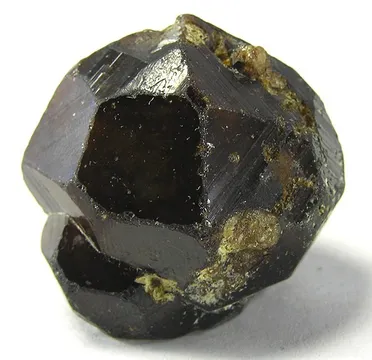
    Many red crystals are internally zoned. Studied material shows pink rims, black mantles or cores, and in some specimens a white core. In polished or broken sections the color boundary can be abrupt, giving the crystal a dramatic core-and-rim structure. Chemical and spectroscopic studies show that the pink to raspberry coloration is linked to manganese, while the dark zones are richer in iron and titanium and include a stronger andradite-related component. The black interior should not automatically be dismissed as “matrix” or “inclusion”; in analyzed examples it is part of the garnet’s own compositional history.

    Typical display crystals are small. Many matrix pieces show crystals from a few millimeters to about 1 cm, and scientific and gemological descriptions repeatedly note crystals approaching or around 1 cm. Dealer and collection records document larger individuals: thumbnail crystals around 2–3 cm, single crystals around 4 cm, and rare old-collection floaters exceeding 5 cm. In practice, a sharp, undamaged, well-colored 1 cm raspberry crystal on matrix is already a desirable specimen; larger complete crystals are far more selective.

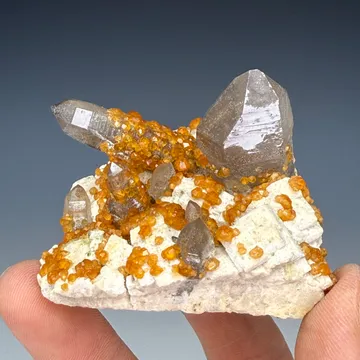
    The matrix is an important quality factor. The most recognizable pieces show red or pink grossular standing out from white to off-white calcite, quartz, wollastonite, and scapolite-rich skarn. Vesuvianite is the signature associated mineral and may appear as yellow, mustard, tan, or brownish crystals with grossular. Quartz and calcite inclusions have also been observed in studied garnet samples, linking the internal mineralogy of the crystals to the surrounding skarn assemblage.

    Collectors should judge Sierra de Cruces garnet by color, luster, crystal completion, face sharpness, freedom from bruising, and matrix aesthetics. The best red matrix specimens have saturated raspberry crystals, clean white contrast, and three-dimensional exposure rather than crystals buried flush in massive matrix. For loose crystals, the top qualities are complete all-around form, minimal attachment, clean edges, and strong glassy luster. For zoned or broken-study pieces, a clean view into the raspberry rim and black core can be an asset rather than a flaw.

    Collector Notes

    The main authenticity issue is locality, not treatment. “Lake Jaco” is the classic wrong label: older specimens so marked are generally understood by modern locality scholarship to have come from Sierra de Cruces, not from the lake itself. Other variants such as “Sierra de la Cruz” and “Sierra de las Cruces” also appear on labels. These old names can add historical interest, but a serious collection label should preserve the old label while adding the corrected locality: Sierra de Cruces, Sierra Mojada Municipality, Coahuila, Mexico.

    No locality-specific treatment tradition is documented for Sierra de Cruces grossular in the sources reviewed. The more realistic concern is misdescription: raspberry grossular may be casually called “rosolite,” “raspberry garnet,” or simply “garnet from Lake Jaco,” while broken crystals with black interiors may be mistaken for garnet with a foreign black mineral included in it. In analyzed material the dark zone can be part of the garnet’s own compositional zoning, so a black core is not automatically a defect or evidence of repair.

    Condition is a central issue. Many specimens were mechanically excavated, and minor chipping, incomplete crystals, damaged points, and contact areas are common. The faces may be lustrous but bruised along edges; larger loose crystals often show small rubs or attachment scars. Matrix pieces can have partial crystals because the garnets grew interlocked with calcite, quartz, wollastonite, scapolite, and vesuvianite, and extraction rarely releases every crystal cleanly.

    Repairs and restorations should be assessed specimen by specimen. Dealer records for some Sierra de Cruces pieces specifically emphasize “no repairs,” which tells you what the market worries about: large or especially aesthetic crystals on matrix are worth enough that repairs would matter. Use magnification to check for glued contacts, color-matched fills, or unnatural junctions between crystal and matrix, particularly on high-value red-on-white cabinet specimens.

    Availability is moderate but uneven. Small matrix pieces and older commercial-stock examples continue to appear, often at accessible prices when the color is pale, brownish, greenish, or the crystals are incomplete. Fine saturated raspberry crystals, clean thumbnail floaters, old-label pieces from notable collections, and attractive cabinet specimens with many sharp red crystals are much scarcer and command a premium. Recent dealer and auction records show the material still circulating, including December 1991 and December 1992 collected pieces attributed to Casey Jones, Graham Sutton, and Bob Griffis, as well as old George Burnham and other collection specimens.

    Stories & Field Notes

    The most persistent story attached to Sierra de Cruces garnet is the “Lake Jaco” label. In the 1950s, George Burnham of Monrovia, California, was in Mexico collecting at Mapimí after arranging permission with a local mining collective. A representative of Peñoles arrived at Burnham’s campsite, and the encounter began with tension: the visitor wanted to know what Burnham was doing there. Once Burnham explained his arrangement with the colectivo, the mood changed. The Peñoles man knew minerals, and the conversation turned friendly enough that they spent hours talking specimens.

    During that conversation the Peñoles representative asked Burnham whether he had ever seen pink garnets. Burnham had not. The man told him of another Peñoles property where such crystals could be obtained, and Burnham later arranged a visit. When he finally reached the mine office, the pink garnets were indeed there—but they were not from the mine. They came from the hacienda of a relative of one of the mine employees, near the Sierra de la Cruz in Coahuila.

    The owner of the hacienda did not want a parade of mineral collectors bothering him. From the top of the mountain Burnham could look west into Chihuahua toward a large dry lake, dry at least part of the time: Lake Jaco. For discretion and convenience, Burnham labeled his specimens “Lake Jaco, Mexico.” The label stuck. Decades later, many Mexican pink grossulars still carry it, even though the garnets themselves are not from Lake Jaco. A corrected specimen label is now part mineralogy, part detective work: the old romance of “Lake Jaco” kept as historical provenance, with Sierra de Cruces recorded as the true source.

    A second chapter begins in 1974, when a Mexican rancher reportedly found a small red crystal and had it identified as grossular. With help from mineral dealer Benny Fenn, the rancher staked claims at the site. That discovery opened the locality in the form most collectors know today: pink-to-red dodecahedral grossular and mustard-yellow vesuvianite in a matrix described as snow-white calcite and quartz. From that point onward, Sierra de Cruces was no longer just an old-label curiosity; it became a recognized Mexican classic with enough production to place attractive specimens into American and international collections.

    Mineralogical Records & Publications

    • Charles A. Geiger, Andreas Stahl, and George R. Rossman, “Raspberry-red grossular from Sierra de Cruces Range, Coahuila, Mexico,” European Journal of Mineralogy, 11(6), 1109–1113, 1999 — The foundational spectroscopic and chemical study of the raspberry-red color, linking the unusual hue to Mn3+ in octahedral coordination.
    • Robert W. Jones and Virgil W. Lueth, “Red Grossular from the Sierra de Cruces, Coahuila, Mexico,” Mineralogical Record, 34(6), 73–79, 95, 2003 — The classic collector-locality article, cited for the deposit history, red grossular occurrence, and specimen context.
    • Virgil W. Lueth and Robert Jones, “Red grossular from the Sierra de Cruces, Coahuila, Mexico,” ResearchGate abstract page — Useful abstract preserving the 1974 rancher discovery account and the red grossular–vesuvianite–calcite–quartz assemblage.
    • Ziyin Sun and Nathan D. Renfro, “Raspberry-red garnet with black core,” Gems & Gemology, Summer 2017, Gem News International — GIA’s analytical note on the black core, reporting LA-ICP-MS work, morimotoite and schorlomite components, TiO2, FeOtot, and ZrO2 in the dark zone.
    • Christopher Gates, Elizabeth R. McTaggert, Airlie Lyle, Dustin R. Williams, and Elizabeth A. Johnson, “Skarn Fluid History Recorded in OH and Trace Element Zoning in a Raspberry Garnet from Sierra de Cruces, Mexico,” Geological Society of America Abstracts with Programs, Vol. 47, No. 7, p. 530, 2015 — A GSA poster abstract tying OH concentration and trace chemistry zoning to pulsed changes in the mineralizing environment.
    • Sytle M. Antao, “Crystal Chemistry of Six Grossular Garnet Samples from Different Well-Known Localities,” Minerals, 11(7), 767, 2021 — Includes a raspberry-red grossular sample from Sierra de Cruces and discusses two cubic phases, strain-induced optical anisotropy, and grossular–andradite structural variation.
    • Siyuan Wu, Siyi Zhao, Yi Zhao, and Chenxi Zhang, “Chromogenic Mechanism and Formation of Zonal Genesis of Raspberry-Red Grossular from the Sierra de Cruces Range, Mexico,” Minerals, 15(2), 138, 2025 — The most detailed recent open-access treatment of the pink rim, black mantle, and white-core zoning, using gemological testing, XRD, Raman, EPR, EPMA, LA-ICP-MS, and oxygen isotopes.

    Further Reading & External Links

    • Mindat locality page: Sierra de Cruces, Sierra Mojada Municipality, Coahuila, Mexico — Essential locality reference for coordinates, alternate names, species list, and the “Lake Jaco” correction.
    • Mindat occurrence page: Grossular from Sierra de Cruces — Focused grossular occurrence data, associated minerals, references, and photo-based associations.
    • Mindat photo gallery: Sierra de Cruces — A useful visual survey of matrix pieces, loose crystals, red and green examples, and older collection material.
    • Wikimedia Commons: Grossular from Sierra de Cruces by Géry Parent — Open-licensed close-up photograph showing raspberry grossular on pale matrix.
    • Mineral of the Month Club, October 2017 grossular write-up — Collector-oriented geological and historical summary with notes on access, skarn setting, and crystal habits.
    • GIA Gem News International PDF, Summer 2017 — Includes the “Raspberry-red garnet with black core” note and analytical details on the dark core chemistry.
    • Mineral Auctions archive: Grossular Garnet, ex George Burnham and Dr. Alex Schauss — Market and provenance example documenting a sharp light-gray dodecahedral floater and the historical Lake Jaco labeling issue.
    • Mineral Auctions archive: golden-green grossular from Sierra de Cruces — Good example of non-red Sierra de Cruces material and late-1970s old-stock market context.
    • MCP Gallery: cabinet specimen of raspberry-red grossular from Sierra de Cruces — Contemporary dealer example showing cabinet-scale market positioning for richly covered red grossular matrix specimens.
    • Main garnet Collector's Guide