Itaguaçu, Espírito Santo – Chrysoberyl known for sixlings and cyclic twinning, yellow-green to greenish hues, with alexandrite and cat’s-eye forms prized by co…
Key facts
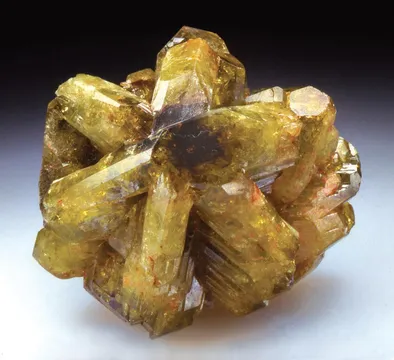
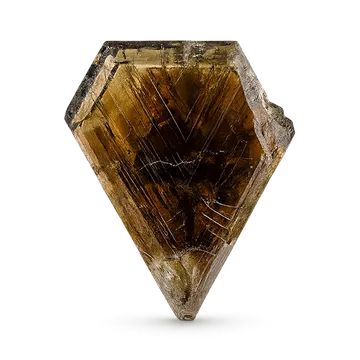
Itaguaçu is one of the classic names in chrysoberyl collecting: a Brazilian locality whose best specimens are prized not merely as “good chrysoberyl,” but as archetypes of the species’ cyclic twinning. The signature pieces are yellow-green to greenish-yellow twins and sixlings, typically lustrous, translucent to gemmy, and compact enough to sit in a thumbnail box while still carrying the sculptural authority of a major classic. The most admired crystals show the repeated penetration twinning that gives chrysoberyl its pseudohexagonal, star-like, or “sixling” appearance, often with sharp re-entrant angles and a darker central area that emphasizes the geometry.
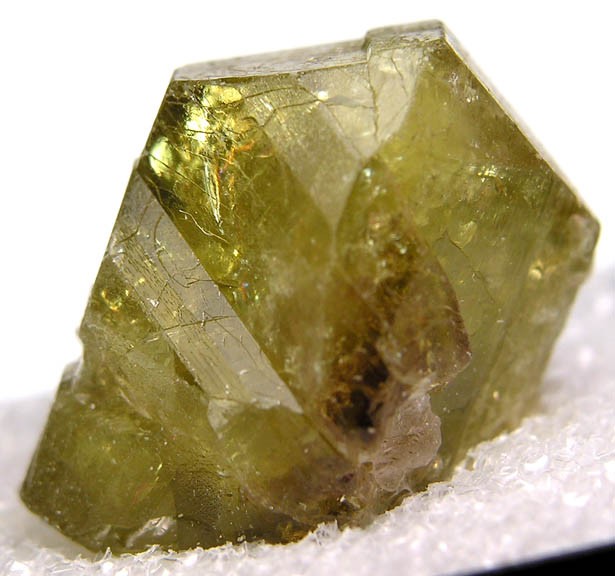
Photo: Wikimedia Commons
Geologically, the Itaguaçu material belongs to the gem-mineral world of eastern Brazil’s pegmatite province. In the Itaguaçu district the collectible chrysoberyl is tied to beryllium-bearing primary sources, chiefly granitic pegmatites, but much of the material actually recovered and sold came from secondary deposits: alluvial plains formed by erosion, transport, and sedimentation of those primary sources. That secondary history matters to collectors. It explains why many specimens are floaters or nearly floaters, why matrix is scarce, and why edge wear, natural contacting, and rounded or naturally abraded areas have to be judged with more nuance than on a freshly opened pegmatite pocket.

Photo: Wikimedia Commons
Historically, Itaguaçu’s standing rests above all on the celebrated finds associated with Allan Caplan around 1940. Those sixlings entered major collections, dealer lore, and the literature as some of the finest crystallized chrysoberyls known. Later mineralogical work in Espírito Santo confirmed that the municipality remained an expressive chrysoberyl occurrence, with crystals found in yellow-green to yellow-brown tones, diagnostic internal features, and gem varieties including alexandrite and cat’s-eye chrysoberyl reported from the region. For the collector, however, the canonical Itaguaçu object remains the sharp yellow-green sixling: complete, lustrous, gemmy at the edges, and carrying a persuasive old Brazilian provenance.
Search for specimens: View all chrysoberyl specimens from Itaguaçu, Espírito Santo, Brazil
Itaguaçu is a municipality in the mountainous interior of Espírito Santo, in southeastern Brazil, roughly 137 km from Vitória and about 35 km southwest of Colatina. The mineral locality is generally treated at the municipal scale rather than as a single precisely delimited mine, and that is important: many labels simply say “Itaguaçu, Espírito Santo,” while older and trade labels may use unaccented “Itaguacu” or broader “Espirito Santo, Brazil.”
The deposit model is best understood as a secondary chrysoberyl field fed by beryllium-bearing primary sources, principally granitic pegmatites. UFES workers described the productive ground as alluvial plains representing torrential deposits from an older erosion cycle, later covered by calmer sedimentation, extending for more than three kilometers. Those alluvial deposits were reported to account for nearly all of the chrysoberyl then being commercialized from the region. In practical collecting terms, the crystals were not simply being split from clean pocket walls; they were recovered from transported gem gravels derived from decomposed pegmatitic and related sources.
Mining has been characteristically small-scale and manual. The same UFES abstract describes pits placed rather opportunistically, dug down to the rocky layer, shored, and dewatered with small pumps. This kind of working favors the recovery of loose crystals, floaters, gem pebbles, and fragments rather than large matrix plates. It also explains why matrix associations from Itaguaçu are unusual and why a complete, well-preserved sixling has a special premium: the specimen had to survive both geological transport and human recovery.
The best-known production episode is the Caplan-era find around 1940, the source of the legendary large sixlings that now anchor the locality’s reputation. Later sources record Itaguaçu crystals as large as 9.5 cm for exceptional cyclic twins, while UFES field and lab work described crystals from the municipality commonly reaching up to 5 cm in length. A Mineralogical Record cover specimen from the William Larson collection measured 6.3 cm and carried an ex-Edward Gübelin, ex-Allan Caplan provenance, collected circa 1940. Those numbers are large for fine chrysoberyl crystals and help explain why Itaguaçu is discussed alongside the great chrysoberyl localities of Russia, Brazil, and Madagascar rather than as a merely regional occurrence.
Documented minerals from the Itaguaçu locality include chrysoberyl, beryl including aquamarine, andalusite, and a yellow scapolite reported from the Antonio Coelho mine near Itaguaçu. The chrysoberyl occurrence is therefore part of a broader gem-mineral setting rather than an isolated curiosity. Still, from the collector’s perspective, the Itaguaçu name is overwhelmingly tied to yellow-green cyclic twins and sixlings.
Collecting access should be approached as private working ground, not as a public field-collecting destination. The known material came from garimpo-style alluvial workings and historical finds, and any modern visit would require explicit permission from landowners and mineral-rights holders, as well as local knowledge of current conditions. For most collectors, the realistic route to Itaguaçu chrysoberyl is the specimen market, old collection dispersals, and carefully vetted dealer material.
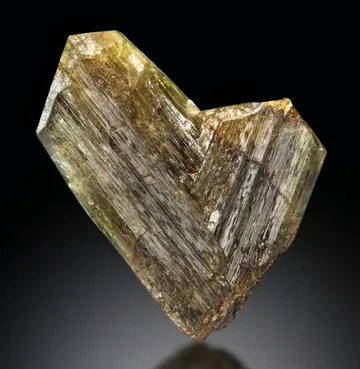
The classic Itaguaçu habit is the cyclic twin or sixling: interpenetrating chrysoberyl crystals arranged in a pseudohexagonal form, often with radiating striations, flattened lustrous faces, and re-entrant angles. Some specimens are complete star-like sixlings; others are partial sixlings, V-twins, heart-shaped twins, or irregular twinned groups that hint at the full cyclic form without completing it. The finest examples are sharp enough that the twinning reads instantly across a room, yet gemmy enough at the edges to glow when backlit.
Color ranges from yellow-green through greenish yellow to yellow-brown. The most collectible color is the lively yellow-green associated with the old classics: not too brown, not too gray, and ideally bright enough to show through the thinner crystal edges. Some pieces have darker central areas or smoky internal zones; this can either diminish the gem impression or, on well-formed twins, add contrast that makes the sixling architecture more legible.
Size is a major locality marker. Many market examples are thumbnails around 1 to 3 cm, including compact sixlings and twinned floaters. Good miniatures in the 3 to 5 cm range are substantially scarcer, and complete historical sixlings above that size are major specimens. Literature reports exceptional Itaguaçu cyclic twins to 9.5 cm, while UFES work notes crystals from the municipality reaching up to 5 cm in length. A complete, sharp, lustrous sixling even at thumbnail size can outrank a larger but incomplete, dull, or heavily contacted crystal.
Itaguaçu chrysoberyl is commonly translucent rather than fully transparent, but the best crystals have bright vitreous luster and gemmy margins. Collectors look for crisp crystal boundaries, even development of the cyclic twin, minimal edge bruising, and a pleasing balance between form and color. A true floater, complete all around, is especially desirable because much of the locality’s production was recovered from secondary deposits where crystals were prone to abrasion, breakage, or contacting.
Internal features documented in Itaguaçu material include fine acicular growth tubes, mineral inclusions of mica, quartz, and apatite, and two- and three-phase fluid inclusions. These are useful not only mineralogically but also commercially: they support natural origin and are consistent with chrysoberyl formed in a pegmatitic-to-secondary gem environment. Cat’s-eye chrysoberyl from the region depends on the alignment of such tubular or needle-like internal structures, while alexandrite owes its value to color-change behavior rather than to the yellow-green sixling look.
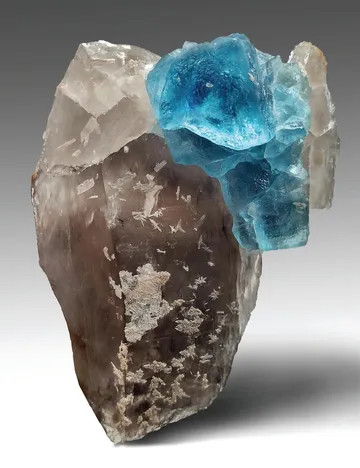
Associated minerals at the locality scale include beryl and aquamarine, andalusite, and yellow scapolite. A small number of marketed specimens from a reported late-2017 find were described as chrysoberyl associated with smoky quartz and minor albite, an association considered noteworthy precisely because most Itaguaçu chrysoberyl is encountered without matrix or conspicuous companions. Such pieces should be evaluated carefully, because an unusual association is attractive only when the locality evidence is strong.
The first collector question is locality confidence. “Itaguaçu” is a famous name, but Espírito Santo contains several chrysoberyl-producing areas, including Colatina, Santa Teresa, Pancas, and others. Old labels may say only “Espirito Santo,” and trade labels sometimes blur municipality-level distinctions. A specimen with an old Caplan, Gübelin, Larson, Kosnar, Noble, Prieto, or similarly traceable provenance is far stronger than an unsupported modern label. For unprovenanced pieces, the form and color may be consistent with Itaguaçu, but they do not prove it.
Condition must be judged with the deposit type in mind. Because much of the material came from secondary deposits, minor natural abrasion, contacts, and non-display-side wear are common. That said, damage to the key visual elements—the sixling points, re-entrant angles, central twin junction, and lustrous display faces—affects value sharply. The best specimens are complete floaters or near-floaters with only trivial peripheral contacting. Repairs should be checked for at twin junctions and along edges, where a broken cyclic twin can be reattached convincingly if the repair is skillful.
Matrix is rare and should not be expected. A beautiful loose sixling is not “incomplete” because it lacks matrix; for Itaguaçu, that is the normal and historically important mode. Conversely, a claimed matrix piece deserves extra scrutiny, especially if it is unusually aesthetic or carries an association not commonly seen from the locality. Natural attachment surfaces, compatible matrix minerals, old labels, and a believable chain of custody matter.
No documented locality-specific fake industry is known for Itaguaçu chrysoberyl specimens, but the species has broader authenticity issues. Synthetic alexandrite and synthetic chrysoberyl exist, including Czochralski-grown and flux-grown material, and synthetic cat’s-eye alexandrite has been commercially produced. These are mainly gem-market concerns rather than common mineral-specimen fakes, but any loose, intensely colored, unusually clean “alexandrite” or cat’s-eye material sold as natural Itaguaçu should be approached gemologically, not just aesthetically. Refractive indices, specific gravity, microscopic inclusions, spectroscopy, and lab reports are appropriate for high-value stones.
Treatments are not a major concern for ordinary yellow-green Itaguaçu crystal specimens, but polishing is. Chrysoberyl’s high hardness makes it durable enough to be fashioned, and cat’s-eye material is routinely cut en cabochon. On crystals, watch for unnatural flatness, rounded edges inconsistent with natural alluvial wear, glassy repolished faces lacking growth texture, or a specimen that has been “improved” from rough into a display object. A natural crystal face should have the optical character of growth, not lapidary finish.
Market availability is intermittent. Small Itaguaçu thumbnails and partial twins appear from time to time, often from older collections. Fine complete sixlings, especially old Caplan-associated specimens and pieces above miniature size, are genuinely scarce and tend to move through major dealers, auctions, or private placements. Published and dealer examples show a broad range: small sixlings in the 1–2 cm class, unusual twins around 3–4 cm, and historic miniatures in the 4–6 cm range. The premium climbs quickly for symmetry, completeness, luster, gemminess, and old provenance.
The defining Itaguaçu story begins not with a modern mine plan but with a single pocket around 1940 and Allan Caplan, one of the great American figures in Brazilian gem-mineral history. The story has survived because the specimens were so improbable: cyclic chrysoberyl twins of a quality that still set the standard decades later. Later accounts describe that one pocket as having produced most of the world’s finest chrysoberyls, and Caplan’s own recollection reduced the haul to an image every collector remembers—a “gunny sack full” of chrysoberyl.
That phrase is startling because the surviving objects are anything but ordinary bulk gem rough. One famous 4.6 cm sixling, later in the Gene and Roz Meieran collection, was described as one of about a dozen great specimens known from the find. Other Caplan chrysoberyls are recorded in the William Larson collection, the Wayne Leicht collection, the Houston Museum of Natural Science, and the Smithsonian Institution. The best pieces from that sack became not just good Brazilian minerals but reference points for the species.
The afterlife of the Caplan pocket is part of the Itaguaçu mystique. A 6.3 cm sixling from the William Larson collection, ex-Edward Gübelin and ex-Allan Caplan, collected circa 1940, was chosen for the cover of the November–December 2023 Mineralogical Record issue on the Espírito Santo pegmatite district. That cover choice says what collectors already knew: Itaguaçu chrysoberyl is one of the few locality-species combinations whose silhouette alone can carry a major mineralogical publication.
The story also influenced a later generation of field collectors. In the Mineralogical Record’s Ikons supplement, Caplan’s account is credited with helping inspire a young Wayne Thompson toward a career in mineral mining and recovery. That is a remarkable chain of influence: a Brazilian chrysoberyl pocket, a sack of sixlings, a story told by Caplan, and then a young collector’s imagination redirected toward the work of finding crystals in the ground.
A quieter modern episode came from the market in 2018, when specimens from a reported end-of-2017 find were offered as chrysoberyl with smoky quartz from Itaguaçu. The attraction was not simply chrysoberyl—collectors already knew Itaguaçu for that—but the association. The described pieces had sharp translucent yellow-green chrysoberyl crystals alternating with glassy smoky quartz and a little albite at the base. The seller emphasized that Brazilian chrysoberyl is usually seen alone and that any convincing associated material from the classic locality was noteworthy. For cautious collectors, that kind of find is both exciting and demanding: exciting because it adds a new visual chapter to a classic locality, demanding because unusual associations require especially good documentation.
Pagel, U. R.; Jesus, R. X.; Candeias, L. M. M.; Soares, P. V. D.; Carolino, J. “Caracterização Mineralógica dos Crisoberilos do Município de Itaguaçu, Espírito Santo.” Universidade Federal do Espírito Santo. Key locality-specific abstract documenting Itaguaçu chrysoberyl colors, inclusions, secondary alluvial deposits, manual mining, and gem varieties.
White, J. S. “Interview: Allan Caplan.” The Mineralogical Record, vol. 11, no. 6, 1980, pp. 351–360. The essential historical reference behind the Caplan-era Itaguaçu sixlings.
Mineralogical Record Vol. 11, No. 6, 1980 issue page. Issue listing for the original Allan Caplan interview.
Proctor, K. “Chrysoberyl and Alexandrite from the Pegmatite Districts of Minas Gerais, Brazil.” Gems & Gemology, Spring 1988. Includes a concise but important note on Itaguaçu as a famous Espírito Santo deposit with cyclic sixling twins reported as large as 9.5 cm.
Chaves, M. L.; Bartorelli, A.; Cornejo, C. “Minerals of the Espirito Santo Pegmatite District, Eastern Brazil.” The Mineralogical Record, vol. 54, no. 6, 2023, pp. 697–742. Major modern article on the Espírito Santo pegmatite district; the issue cover features a 6.3 cm Itaguaçu chrysoberyl sixling from the William Larson collection, ex-Edward Gübelin, ex-Allan Caplan.
Mineralogical Record Special Supplement, “Ikons: Classic and Contemporary Masterpieces,” January–February 2007. Documents a 4.6 cm Itaguaçu sixling collected by Allan Caplan in 1940 and summarizes the famous single-pocket story.
Marçal, F. A.; Newman, D. T. C. de; Newman, J. A.; Sousa, G. A.; Paula, B. N.; Perini, D. S.; Soares, P. V. D. “Ocorrências de Crisoberilo no Espírito Santo: Resgate Histórico e Atualização.” Universidade Federal do Espírito Santo. Useful statewide context for Espírito Santo chrysoberyl, including secondary deposits and the distribution of alexandrite and cat’s-eye occurrences.
Marçal, F. A.; Newman, D. T. C. de; Newman, J. A.; Sousa, G. A.; Paula, B. N.; Perini, D. S. “Potencial Gemológico do Espírito Santo: Microrregião Central Serrana – Dados Preliminares.” Universidade Federal do Espírito Santo. Regional gemological context for Itaguaçu, Santa Teresa, Itarana, Santa Maria de Jetibá, and Santa Leopoldina.
Mindat: Itaguaçu, Espírito Santo, Brazil — Core locality page with mineral list, references, and Itaguaçu chrysoberyl photo links.
Mindat: Chrysoberyl species page — Species-level crystallography, twinning, geological environment, and reference bibliography.
Wikimedia Commons: Minerals of Itaguaçu — Open-licensed chrysoberyl photographs from the locality, including classic Lavinsky/iRocks images.
Wikimedia Commons: Chrysoberyl-119748.jpg — Photo page for a 2.1 x 1.9 x 1.8 cm yellow-green Itaguaçu chrysoberyl from the Kosnar Collection.
Wikimedia Commons: Chrysoberyl-119762.jpg — Photo page for a 4.4 x 3.4 x 1.2 cm Itaguaçu sixling, ex-Kosnar Collection.
Mineral Auctions: Chrysoberyl sixling, old classic 1940s finds — Archived market example of a 4.6 cm Itaguaçu sixling tied to the Caplan-era finds.
Mineral Auctions: Chrysoberyl with Smoky Quartz, new find — Archived 2018 listing documenting a reported late-2017 Itaguaçu association with smoky quartz and minor albite.
Fabre Minerals: Chrysoberyl search results — Dealer archive and current market context for Itaguaçu and other chrysoberyl specimens.
Mineral Classics: Chrysoberyl unique twin — Archived dealer example of an unusual elongated Itaguaçu twin, useful for understanding non-sixling habits.
GIA: Titanium-Bearing Synthetic Alexandrite and Chrysoberyl — Gemological reference for synthetic chrysoberyl and alexandrite issues relevant to high-value stones.