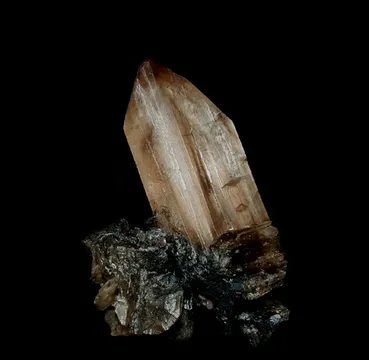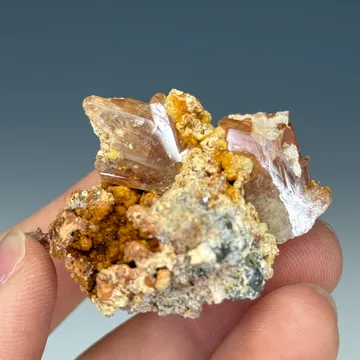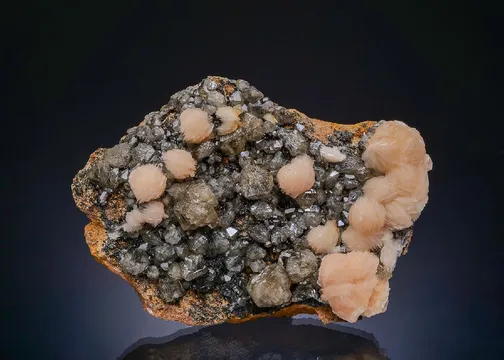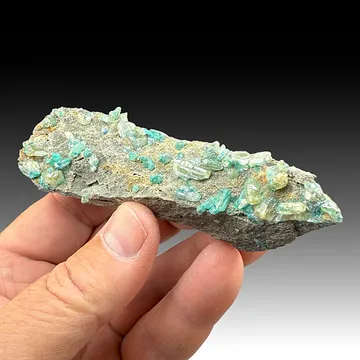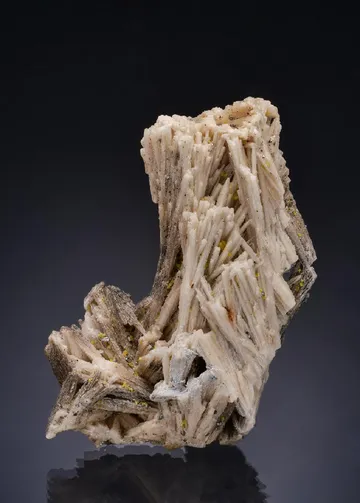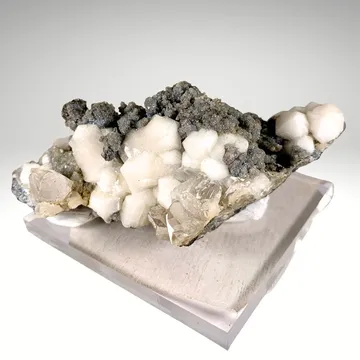
Cerussite - lead carbonate famed for adamantine luster, dramatic V-twins and snowflake reticulations; prized from Tsumeb, Mibladen and Ojuela.
Key facts
Cerussite (lead carbonate, PbCO3) is one of the great classics of the oxidation zone in lead deposits. It is renowned for its brilliant adamantine luster, high dispersion (diamond-like fire), and spectacular twinning. Collectors know cerussite for dramatic habits: slender, reticulated “snowflake” networks; elegant V-twins; pseudohexagonal sixlings; and stout, glassy prisms that can be colorless, smoky, or honey-brown. The finest pieces, especially on contrasting iron-oxide or dolomite matrix, have tremendous visual impact and are centerpieces in many collections. While affordable small examples exist, top twins from Tsumeb, Touissit, Mibladen, Ojuela, or Broken Hill command premium prices due to rarity, delicacy, and the challenge of extracting undamaged crystals.
Cerussite has been coveted since the earliest days of mineral collecting. Historic districts such as the Tri-State (USA), Broken Hill (Australia), Tsumeb (Namibia), and Touissit/Mibladen (Morocco) set enduring standards for reticulated and cyclic twins. Mexico’s Ojuela Mine produced multitudes of exquisite snowflake networks and continues to supply sought-after cabinet pieces. Despite being relatively soft and fragile, the species’ brightness, twinning variety, and elegant geometry keep it perennially popular. Modern collectors pursue both textbook single-crystal V-twins and intricate reticulated clusters that seem impossible in nature. Because cerussite breaks easily and often requires careful preparation, pristine, unrepaired matrix showpieces are scarce and especially prized.
Below are renowned sources that have produced many of the world’s most important cerussite specimens.
The Tsumeb Mine is a legendary cerussite locality. It yielded just about every habit: superb, gemmy V-twins, complex cyclic twins, and reticulated clusters, from colorless to smoky and warm honey tones. Luster can be blindingly bright; dispersion gives flashes of fire under strong light. Classic associations include dolomite, smithsonite, azurite, malachite, and occasionally dioptase or mottramite, yielding dramatic color contrasts. Large, damage-free twins on matrix are exceedingly rare and among the most valuable cerussites known. Tsumeb’s breadth of forms and quality make it the benchmark for the species.
The Touissit-Bou Beker district produced razor-sharp V-twins and intricate reticulated groups, typically colorless to smoky with an adamantine sheen. Many are perched on iron-oxide gossan or paired with azurite and anglesite, creating elegant display contrasts. “Jackstraw” intergrowths and pseudohexagonal sixlings are classics of the locality. Carefully prepared, complete twin clusters from Touissit embody the quintessential “cerussite aesthetic” and remain highly sought after by connoisseurs.
Mibladen is famed for delicate, snowflake-like reticulated twins and colorless to smoky V-twins on dark goethite/limonite matrix—often alongside the district’s famous vanadinite. The contrast of bright, glassy cerussite against chocolate-brown gossan is irresistible on a shelf. Mibladen’s best specimens are complete, geometrically appealing networks with minimal breakage, a rarity given cerussite’s fragility and the crumbly host rock.
At Mapimí’s Ojuela Mine, reticulated cerussite reached an apex: graceful snowflake clusters and “jackstraw” lattices, often with a warm smoky hue, on classic gossanous matrix. Associations with wulfenite, hemimorphite, and aurichalcite add color. While many Ojuela pieces are delicate, the finest show intricate, symmetrical architecture and strong luster. The locality remains a cornerstone for collectors building a comprehensive suite of cerussite twins.
Broken Hill produced historic reticulated “snowflake” cerussites and stout, lustrous twins, frequently on dark iron oxides or with classic lead-zinc sulfides. Many vintage pieces date to early 20th-century mining and have a distinctive presence—bold geometry and slightly smoky color. Fine, undamaged clusters are scarce, and well-preserved specimens with strong provenance are keenly pursued.
The Tri-State district of Missouri-Kansas-Oklahoma produced classic reticulated cerussite “snowflakes,” often on dolomite or with galena. These are staples of American mineralogy—historic, well-documented, and pleasingly geometric. Many Tri-State cerussites are older finds, so pristine condition and attractive composition can bring substantial premiums, particularly for balanced clusters with intact terminations and clean, bright luster.
The Flux Mine (Patagonia Mountains, Arizona) is known for sharp V-twins and delicate reticulated clusters with brilliant luster on rusty gossan. The best pieces show complete, intergrown lattices—textbook examples of cerussite twin architecture. While many are modest in size, the locality’s finely formed twinning and strong display contrast make Flux a favorite among U.S. collectors.
Given cerussite’s fragility, repairs are common—especially on reticulated twins.
Cerussite requires gentle, informed care.
By focusing on sharp, lustrous twinning, strong composition and contrast, and the best condition you can find, you can build a cerussite suite that captures the species’ unmatched elegance—while careful handling and storage will keep these delicate masterpieces safe for decades to come.