Boleite Collectors Guide
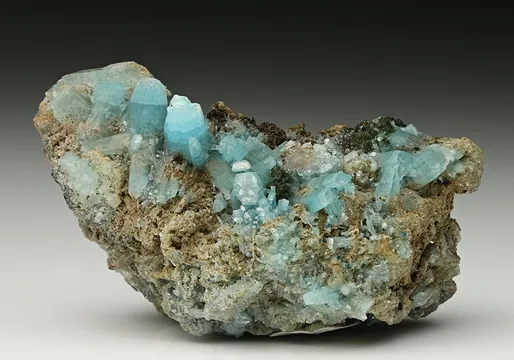
Boleite is a classic and coveted secondary copper–lead halide from the oxidized zones of coastal deposits. Its deep royal-to-indigo blue color and sharp cubic form make it instantly recognizable. The best crystals are glassy, highly lustrous cubes that can reach 1–2 cm from the famed Baja California Sur occurrences. Boleite is also famous for its associations: epitaxial overgrowths of cumengeite can produce striking six-armed blue “stars” perched on boleite cubes, and pseudoboleite may form as complementary blue crystals—together comprising one of the most iconic trio associations in mineral collecting.
Crystals are typically translucent to locally transparent along edges, with crisp corners and brilliant faces. Because boleite forms in fragile, clayey gossans and along fractures in chloride-rich environments, pristine matrix specimens are uncommon, especially larger examples. The species’ combination of color, form, rarity, and historical importance has cemented boleite as a must-have for advanced systematic and aesthetic collectors alike.
Since its 19th-century discovery at El Boleo, Mexico, boleite has been a “bucket list” species. The best old material—sharp, sizeable cubes with or without cumengeite stars—is tightly held and steadily appreciates. Even small, undamaged cubes are prized thumbnails. Later finds at other localities tend to produce smaller crystals (often micro size) but are valuable for rounding out a locality suite. Strong demand persists because:
- Color and form are top-tier and immediately eye-catching.
- Historic cachet: Boleo District pieces are legendary classics.
- Associations: cumengeite-on-boleite is a world-famous combination.
- Limited supply: few modern sources, and most classic pockets are long exhausted.
Below are historically important or collectible sources for boleite with records tied to the mineral’s story. Availability and crystal size vary greatly by locality.
The Mammoth–St. Anthony Mine (Tiger) is a renowned Arizona classic known for an extraordinary suite of oxidized-zone minerals. Boleite occurs here as rare micro to small crystals, typically sharp, deep blue cubes or grouped aggregates in vugs, sometimes with lead chlorides and secondary copper species. Though generally much smaller than the Mexican material, Tiger specimens carry strong historic appeal and can show textbook crystal form under magnification.
- Color and saturation:
- The most desirable boleite shows a rich, saturated indigo-to-royal blue, even in ambient light. Edges may “glow” when backlit. Pale or grayish tones are less desirable.
- Luster and clarity:
- Top cubes have glassy to subadamantine luster with crisp reflections. Some show translucency at edges and corners; this enhances aesthetics. Matte or etched faces reduce impact unless the piece is otherwise exceptional.
- Crystal form:
- Look for sharp, undistorted cubes with well-defined corners and edges. Penetration twinning is common but should remain symmetrical and attractive. Epitaxial cumengeite “stars” on boleite dramatically increase desirability when sharp and undamaged.
- Size:
- At the type district, crystals range from millimeters up to 1–2 cm (rare). Larger, undamaged cubes are scarce and command premiums. At secondary localities, microcrystals are the norm; perfection and associations matter most there.
- Matrix and associations:
- Original matrix is often soft gossan or clayey limonite—frequently fragile. Intact matrix pieces provide valuable context and contrast, but many fine cubes are loose. Associations with cumengeite and pseudoboleite are highly valued; classic, aesthetic combinations are trophy-level.
- Condition:
- Boleite is brittle with good cleavage; corner nicks and cleaved faces are common detractions. Prioritize clean corners and unabraded edges. Any repairs or reattachments should be disclosed and reflected in price.
- Reattachments and assembled matrices:
- Many boleite crystals were found loose in clay pockets; some were later reattached to matrix. Inspect the crystal–matrix junction under a loupe for glue films or unnatural gaps. UV can help reveal certain adhesives. Be wary of “too-perfect” arrangements or crystals that sit unnaturally proud with no imprint.
- Composite associations:
- Cumengeite-on-boleite is natural and well documented, but fabricated pairings exist. Look for consistent chemistry and coherent epitaxial orientation; random, misaligned “stars” or mixed matrices may be red flags.
- Polished or recut faces:
- Rare, but a broken or cleaved face may be lightly polished to mimic a natural surface. Natural faces show subtle growth features; polished surfaces look overly mirror-like and may lack micro-growth textures.
- Color enhancement:
- Not typical for specimen-grade boleite. If a color appears suspiciously uniform and artificial, compare to known references and ask for provenance.
Boleite is a lead–copper halide and should be treated as a delicate species.
- Handling:
- Support matrix pieces with both hands; avoid pinching crystal corners. Do not apply point pressure to edges—boleite cleaves and chips easily.
- Environment:
- Store in a stable, low-humidity environment. While boleite is not highly water-soluble like some halides, prolonged humidity or wet cleaning can weaken matrix and risk surface alteration. Use desiccants in display cases if your climate is humid.
- Light and heat:
- Display under cool LED lighting. Avoid hot case lights and direct sunlight for extended periods (to prevent thermal stress and potential long-term effects on color or matrix).
- Cleaning:
- Prefer dry methods: a soft air bulb or very soft brush to remove dust. If absolutely necessary, use minimal distilled water on a cotton swab, then dry immediately and thoroughly. Avoid acids, chelators, and strong chemical cleaners (including aggressive rust removers); these can attack halide surfaces or fragile matrices. Never use ultrasonic or steam cleaners.
- Mounting and transport:
- Secure specimens with a small amount of museum putty at the base (not touching crystal edges). During transport, immobilize specimens in foam or cotton with corner protection to prevent edge chipping.
- Long-term care:
- Periodically check for any signs of matrix deterioration or loose reattachments. Maintain labels and provenance—classic Boleo District or well-documented locality examples hold enduring historical and monetary value.