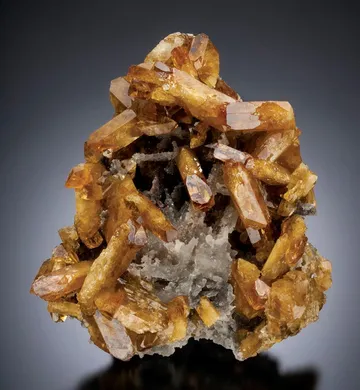
Barite: dense barium sulfate prized for blue blades and honey clusters; top localities include Elk Creek, Meikle, Spain, Morocco; quality factors and care.
Key facts
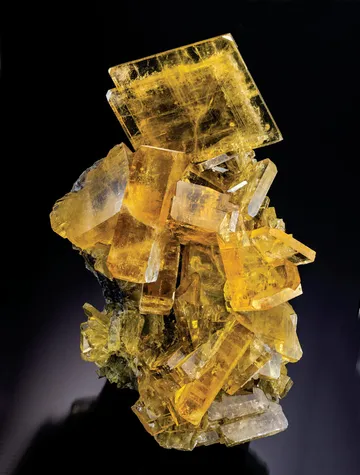
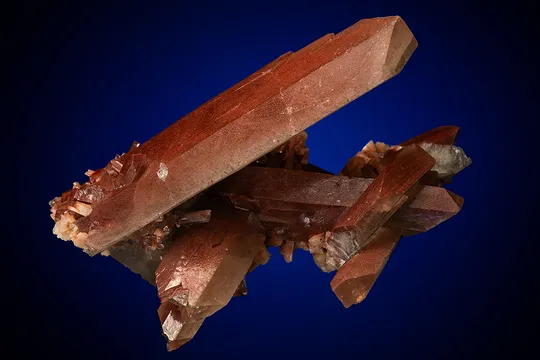
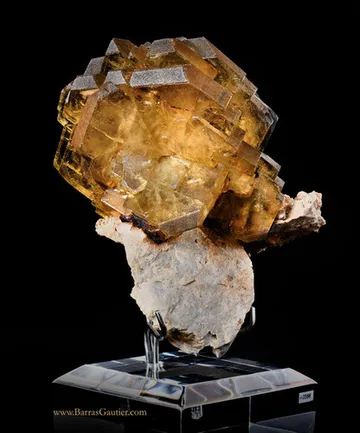
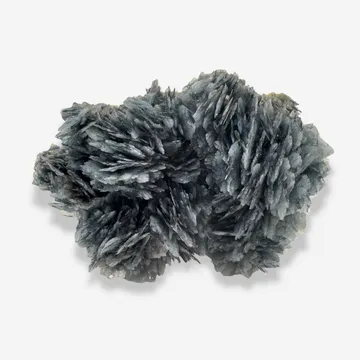
Barite (baryte) is barium sulfate, BaSO4—instantly recognizable by its surprising heft (specific gravity ~4.5) relative to its modest hardness (Mohs 3–3.5). For collectors, it is a mineral of elegance and variety: sharp, tabular “blades,” cockscomb fans, thick blocky prisms, delicate rosettes, and spherical aggregates all occur. Colors span water-clear and milky white to honey-gold, sky blue, steel blue, gray, brown, and rarely green or pinkish hues. Many specimens show superb luster and transparency, and on contrasting matrix (quartz, calcite, fluorite, iron oxides, or sulfides) they can be spectacular.
Despite its industrial fame (as drilling mud and radiation shielding), fine barite is a mainstay of mineral cabinets at every level. It offers exceptional aesthetics at approachable prices—yet the great pieces from iconic localities (golden Elk Creek, gemmy Meikle, sky-blue Spain and Morocco, honey-gold Peru, and classic European mines) command enthusiasm and strong demand.
Barite’s enduring appeal lies in its blend of:
Notable benchmarks include the honey-golden generations from Cerro Warihuyn (Peru), the luminous butterscotch crystals from Meikle (Nevada), the iconic golden Elk Creek blades (South Dakota), the sky-blue Spanish and Moroccan pieces, and glassy colorless-to-white fans from Dalnegorsk (Russia) and classic European districts (Germany, Romania, UK). With frequent associations to calcite, fluorite, sulfides, and iron oxides, barite often delivers excellent contrast and composition—central reasons why it’s a perennial favorite for display.
Below are renowned sources with a track record of producing specimens that define the species for color, habit, and overall aesthetics. Each locality link offers more background tailored to collectors.
Cerro Warihuyn in the Huánuco region set the modern standard for honey-golden barite. The best pieces show brilliantly lustrous, transparent to translucent tabular crystals—sometimes stacked like pages—on contrasting quartz or sulfide matrix. Sharp bevels, clean edges, and textbook form make these immensely appealing. Production was episodic, peaking in the late 2000s–2010s, and while the market saw good volumes then, top matrix clusters with superb luster and minimal damage remain highly desired.
Collectors value: saturated honey color, high clarity, razor-sharp form, and balanced matrix aesthetics. Many specimens exhibit elegant parallel growth or offset fans that display beautifully under case lighting.
The Meikle Mine (Carlin Trend) produced some of the most coveted modern barites: stout, transparent golden crystals to impressive sizes with bright, clean faces. Specimens may occur with sulfides or iron oxides, and the best radiate a glowing butterscotch hue even in ambient light. Many top pieces came out in the 1990s–2000s; pristine examples are now firmly in collections.
Collectors value: saturated color, strong internal light, and bold, architectural crystal form. These often serve as the benchmark for “gemmy golden” barite.
Pöhla in Saxony became famous for its sky-blue to steel-blue barite, often in thick tabular crystals with velvety to glassy luster. Some show superb transparency at the edges and distinctive blue saturation rare in the species. Mining ended decades ago; today, fine pieces are firmly “classic” and increasingly scarce on the market.
Collectors value: the uniquely saturated blue color, sharp thickness, and clean, architectural morphology. Intact crystals with good translucency are particularly prized.
Cavnic (Maramureș) is a classic European source of snowy-white fans and cockscomb aggregates, sometimes with sulfides or quartz for contrast. While color is more subdued than blue or honey locales, the sculptural bouquets and excellent luster can be superb. With mining greatly reduced, older pieces are cherished as historic standards of the habit.
Collectors value: striking fan architecture, bright white luster, and pleasing arrangements that display well across a case.
From the classic iron-ore mines of Cumberland (Frizington/Egremont area) came elegant white to gray barite blades and rosettes, sometimes dusted with hematite for a delicate pinkish cast. Historic pieces, often on ironstone, have a timeless appeal and represent an important chapter in British mineralogy.
Collectors value: historic provenance, refined morphology, and gentle color contrasts with iron oxide matrix. Pristine, well-documented specimens are increasingly scarce and collectible.
Color and Transparency:
Luster and Faces:
Crystal Form and Habit:
Matrix and Associations:
Size vs. Condition:
Aesthetics and Presence:
Repairs:
Polishing/Grinding:
Coatings/Treatments:
Barite is heavy, brittle, and cleaves readily—handle with care.
Handling and Mounting:
Light and Temperature:
Cleaning:
Storage:
By focusing on color, luster, sharp form, and clean presentation—and by handling gently—you can build a barite suite that ranges from affordable charmers to centerpiece-level showstoppers.