






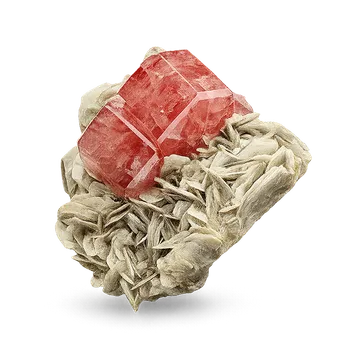
Apatite de la mine Sapo, Brésil : cristaux verts à zonage de couleur avec des variétés hydroxylapatite et fluorapatite ; une pierre vedette de pegmatite appréciée pour sa forme et sa couleur.
Key facts
Sapo Mine apatite n’est pas une localité à effet unique. Elle va de tours sculpturaux de fluorapatite empilés à des dipyramides d’hydroxylapatite vert aplati, devenues célèbres, qui ressemblent presque à des lozenges hexagonaux pressés contre le feldspath pâle. Les meilleures pièces affichent une audace pegmatitique brésilienne — couleur vive, architecture cristalline ouverte et fort contraste de la matrice — mais elles possèdent aussi une étrangeté qui les rend instantanément reconnaissables pour les collectionneurs expérimentés. L’apatite de Sapo peut être verte, bleu-verte, vert-gris, à zones jaunes, ou presque incolore sur les bords, et ses cristaux s’écartent souvent de l’habitus hexagonal prismatique ordinaire que les collectionneurs attendent de l’apatite.

Photo : Wikimedia Commons
La mine est un pegmatite granitique dans le district de pegmatite Aimorés, province pegmatitique estBRésilienne, au sein du district Ferruginha de Conselheiro Pena, Minas Gerais. Cette configuration explique à la fois l’esthétique et la complexité minéralogique : l’apatite a prospéré avec l’ensemble pegmatitique classique comprenant de l’albite, de la microcline ou de l’orthoclase, du quartz, de la muscovite, du béryle, de la tourmaline et des phosphates rares. En termes de collectionneurs, Sapo est l’une des rares pegmatites brésiliennes où l’apatite est devenue une espèce phare plutôt qu’un simple accèsory à la tourmaline.
Les hydroxylapatites de Sapo sont particulièrement prisées car elles combinent une chimie peu commune à une forme inhabituelle. Nombre d’entre elles ne sont pas de la fluorapatite ordinaire : des spécimens Sapo sélectionnés ont été identifiés comme hydroxylapatite, Ca5(PO4)3(OH), et des travaux ultérieurs ont montré que certaines présentent une zonation structurelle et chimique à travers la frontière de la série des apatites, avec des composants d’hydroxylapatite verts et de fluorapatite grisâtres. Cette complexité compte pour les collectionneurs car elle est visible : les cristaux présentent souvent des pourtours verts, des cœurs jaunâtres ou pâles, et une zonation nette sous lumière visible et UV.

Photo : Wikimedia Commons
La renommée plus large de Sapo repose sur plus que l’apatite. La mine a produit d’importants quartz et la célèbre tourmaline elbaïte « à toque bleue » avant que l’apatite n’occupe le devant de la scène. Mais les trouvailles d’apatite du milieu des années 2000 ont donné à la localité une seconde identité. Lors du Munich Show 2005, les spécimens d’hydroxylapatite nouvellement arrivés ont été considérés comme une grande découverte : des cristaux aplatis, verts à bleu-vert, sur feldspath pâle, certains sur quartz, avec un habitus suffisamment étrange pour que l’affectation correcte de l’espèce prenne du temps à se stabiliser.Pour les collectionneurs, les apatites Sapo les plus recherchées sont celles qui sont incontestablement tridimensionnelles et propres à leur localité: dipyramides d’apatite hydroxylée profondément vertes ou bicolores sur feldspath, cristaux verts isolés équilibrés contre le quartz, et groupes de fluorapatite avec une architecture empilée ou « bloquée ». La matrice compte ici. Les plaques de feldspath pâles donnent une forte scène visuelle aux cristaux verts; les pièces hébergées par le quartz sont plus rares et peuvent être plus élégantes; les fluorapatites hébergées par l’albite peuvent avoir une présence nette et sculpturale. Les meilleurs exemples ressemblent moins à une apatite générique et plus à du Sapo — aplatis, zonés, architecturalement étrange et visiblement pegmatitiques.## Pièces exceptionnelles
Rechercher des spécimens : Voir tous les spécimens d’apatite de la Mine Sapo, Brésil
La Mine Sapo se situe dans le district de Ferruginha à Conselheiro Pena, Minas Gerais, Brésil, dans la région de la vallée du Doce. Sa localisation a suscité des confusions car elle est plus proche de Goiabeira que du centre-ville de Conselheiro Pena, et les étiquettes de spécimens plus anciennes la placent couramment à Goiabeira ou Aimorés. La localité est aujourd’hui considérée comme faisant partie de Conselheiro Pena. Mindat donne la localité moderne comme Mine Sapo, Ferruginha, Conselheiro Pena, Minas Gerais, Brésil, et la situe dans le district pegmatitique d’Aimorés de la province pegmatitique orientale du Brésil.
Le gîte est un pegmatite granitique exploité pour les minéraux de collection et gemmes. Il appartient à la même grande culture pegmatitique qui a rendu le nord-est de Minas Gerais célèbre pour la tourmaline, le béryl, le quartz, le feldspath, les phosphates et les minéraux des éléments rares. La liste minérale de Sapo comprend l’albite, le microcline, l’orthose, la muscovite, le quartz, le quartz fumé, la citrine, le béryl, l’elbaïte, la fluorapatite, l’hydroxylapatite, l’hydroxylherderite, les minéraux de la série columbite-tantalite, la pyrite, l’arsénopyrite, et plusieurs phosphates secondaires. C’est la signature d’un pegmatite complexe et évolué plutôt que d’un simple corps feldspath-quartz.
L’histoire moderne de la collecte de la mine commence au milieu des années 1980, lorsque des signes de tourmaline verte sur une propriété voisine ont attiré des garimpeiros dans la région. Les premières fouilles dans et autour du pegmatite ont révélé des poches de tourmaline et de quartz, mais l’exploitation a été à plusieurs reprises entravée par l’eau, car le pegmatite se trouve sous un terrain marécageux et est traversé ou affecté par le ruisseau Horácio. Le nom de la mine reflète ce cadre : « sapo » signifie grenouille, et le pegmatite était associé à une marécage riche en grenouilles.
Une phase plus réussie a commencé en 1992 lorsque Clóvis Martins Coelho, connu sous le nom de Clóvis « Baiano », a obtenu un bail et a foré une galerie qui intersectait le pegmatite à seulement quelques mètres sous la surface. Ce travail a produit de grands cristaux de quartz — incolores, citrine, fumés, « alligator », et habitudes « cathedrale » — ainsi que du béryl vert, bleu, rouge-vert, pastèque et bleu-cap Elbaïte. Ces tourmalines ont rendu la mine internationalement connue avant que les spécimens d’apatite ne deviennent célèbres.
Les inondations font partie de l’histoire de la localité. Vers Noël 2001, de fortes pluies ont provoqué le débordement du Horácio Creek, inondant les travaux et remplissant les tunnels et la galerie d’accès d’importantes quantités de sédiments. Cet épisode ne relève pas seulement d’une anecdote minière; il aide à expliquer pourquoi la production de Sapo est arrivée par épisodes plutôt que de manière continue. Les poches de pegmatite sont déjà discontinues, et ici la logistique souterraine ajoute une couche de difficulté.Les découvertes d’apatite qui comptent le plus pour les collectionneurs sont apparues dans les années 2000. Le matériau d’apatite hydroxylée associé à la période 2004–2006 a produit des cristaux aplatis en dipyramide, généralement sur feldspath et plus rarement sur quartz. En 2005, le matériau a attiré une attention particulière lors du Salon de Munich. Plus tard, les découvertes et les records de vente de fluorapatite décrivent un matériau du milieu des années 2000 avec des cristaux verts empilés, entrecroisés et fortement facettés sur de l’albite, du quartz, de la muscovite et d’autres matrices pegmatitiques. Certains spécimens portent des dates de découverte 2006 ou 2007 dans les registres des marchands et des collections.
L’accès doit être traité comme un accès privé-minier, et non comme une collecte publique ouverte. La localité est une mine de pegmatite active ou autrefois exploitée située en milieu rural dans le Minas Gerais, et la collecte nécessite l’autorisation du propriétaire de la mine ou des contacts locaux autorisés. Les poches anciennes, les puits, les couloirs remplis d’eau, les parois instables de pegmatite et les conditions tropicales de la saison des pluies rendent l’entrée occasionnelle inappropriée. Pour la plupart des collectionneurs, le matériel Sapo est acquis par l’intermédiaire de marchands de minéraux établis, d’anciennes collections brésiliennes, de reventes lors de ventes aux enchères et de spécimens qui ont quitté la mine pendant la période de production du milieu des années 2000.## Caractéristiques de l’apatite de la mine Sapo, Brésil
L’apatite de Sapo se présente principalement sous fluorapatite, Ca5(PO4)3F, et hydroxylapatite, Ca5(PO4)3(OH). Le mot « apatite » sur une étiquette de Sapo peut donc dissimuler une distinction minéralogique significative. Les étiquettes plus anciennes peuvent indiquer simplement apatite, apatite-(CaF), apatite-(CaOH), fluorapatite, hydroxylapatite, ou même des noms obsolètes ou erronés. Les collectionneurs sérieux devraient faire attention à savoir si un spécimen a été identifié analytiquement, en particulier pour les pièces vendues comme hydroxylapatite.
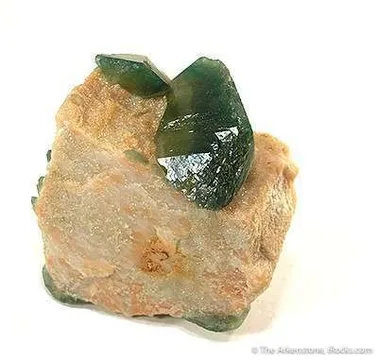
L’habitus le plus célèbre de l’hydroxylapatite est un dipyramide hexagonal aplati avec peu ou pas de développement du prisme. De bons échantillons ressemblent à des doubles pyramides vertes comprimées en une tablette ou une lentille, avec des faces biseautées se rejoignant sur des arêtes nettes. Certains cristaux ne montrent que de minuscules faces prismatiques, ce qui est une des raisons pour lesquelles le matériau paraissait si inhabituel lors de sa première apparition. Les tailles de cristaux sur les échantillons publiés et décrits par les négociants se situent couramment autour de 1–3 cm, les pièces sur matrice allant de petites miniatures à des échantillons de cabinet dépassant 10 cm de diamètre.
La couleur est un facteur de qualité majeur. La couleur classique de l’hydroxylapatite est verte à bleu-vert, souvent inégalement répartie sur les faces des cristaux. Nombreux cristaux présentent des centres jaunâtre-verdâtre pâle avec des bords plus verts, ou des noyaux clairs à pâles qui s’étendent vers un vert plus profond. Sur les pièces les plus fines de feldspath, ce zoning donne aux cristaux un aspect lumineux et stratifié contre le feldspath crème, beige ou légèrement rosé. Certains échantillons présentent une fluorescence zonée documentée sous lumière ultraviolette long et court d’onde, communément décrite en tons jaune à jaune orangé.

Photo : Wikimedia Commons
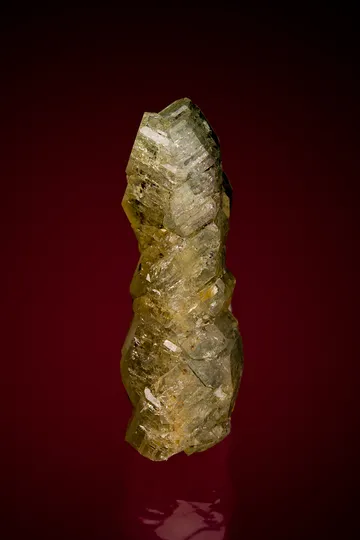
La fluorapatite de Sapo a une personnalité différente. Au lieu de dipyramides aplaties et isolées, de nombreuses spécimens de fluorapatite forment des blocs allongés, des colonnes empilées, des groupes hexagonaux intergrillés et des amas sculpturaux. Certains cristaux sont verts avec des composants grisâtres, incolores ou bleuâtres; d’autres présentent des pointes creuses, une croissance en roue dentée, ou des intercroissances verticalement arrangées. De beaux spécimens de fluorapatite sur albite ou muscovite peuvent paraître architecturaux, presque comme de petites tours de cristaux d’apatite assemblés sur une base pegmatitique.
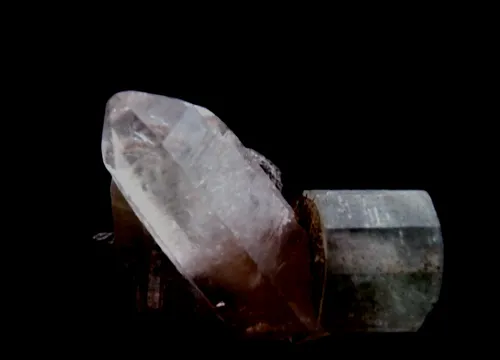
Les minéraux associés sont centraux pour l’identification et l’esthétique. L’hydroxylapatite apparaît le plus souvent avec microcline ou orthose, et chez certains échantillons avec quartz, albite ou muscovite. Les hydroxylapatites associées au quartz sont notablement moins courantes que celles associées au feldspath et sont particulièrement prisées lorsque le cristal d’apatite est isolé et bien placé. La fluorapatite apparaît avec albite, muscovite, quartz, tourmaline et feldspath ; des exemples rares reposent sur la tourmaline ou présentent des effets de couleur internes inhabituels.Les meilleures apatites de Sapo se jugent sur cinq facteurs liés: habitude unmistakable (caractère indubitable), zonage de couleur fort, éclat, contraste de la matrice et état de conservation. Un seul dipyramide vert net surfeldspath pâle peut être plus désirable qu'une plaque de cabinet avec des cristaux ternes. Inversement, une plaque de cabinet avec de nombreux dipyramides bien espacés peut être une pièce maîtresse si les cristaux sont propres, brillants et d’un intérêt structurel. Pour l’apatite fluorée, les collectionneurs apprécient un agencement sculptural, une géométrie hexagonale nette, des terminaisons intacts et la présence d’une matrice albite ou muscovite qui fait tenir l’apatite visuellement debout.
La taille seule n’est pas la mesure d’une apatite de Sapo. Une hydroxylapatite de 2 cm avec zonage clair et une silhouette dipyramidal nette et complète peut être bien plus importante qu’une plaque plus grande mais endommagée. L’attrait de la localité réside dans la spécificité: un collectionneur doit pouvoir reconnaître l’échantillon comme étant de Sapo à travers une vitrine.## Notes du collectionneur
Le principal problème d’authenticité avec l’apatite de Sapo n’est pas la contrefaçon à grande échelle mais le nommage et le traitement. Un problème documenté est survenu lorsque des spécimens offerts comme « apatite carbonate » ou « apatite riche en carbonate » de Sapo ont ensuite été rapportés comme étant fortement huilés fluorapatites. Cela compte car l’huilage peut intensifier la couleur apparente, améliorer la translucidité et dissimuler des fissures en surface ou des aspect givré. Les acheteurs doivent faire preuve de prudence avec des cristaux d’apatite unusually glossy, dark, or wet-looking, surtout si l’étiquette utilise des noms vagues ou obsolètes.
L’identification des espèces est une autre préoccupation. De nombreux spécimens de Sapo ont historiquement été étiquetés simplement « apatite », et certains matériaux initialement pensé comme fluorapatite ont été reconnus plus tard comme hydroxylapatite. Des travaux plus récents indiquent que certaines crystals de Sapo sont chimiquement et structurellement zonés, avec des composants hydroxylapatite et fluorapatite dans le même spécimen ou cristal. Une étiquette de marchand peut être adéquate pour la collection d’exposition, mais une hydroxylapatite de prix élevé devrait idéalement s’accompagner d’un historique analytique crédible, d’une référence de publication, ou d’une provenance vers une trouvaille connue.
L’état nécessite une inspection minutieuse. L’apatite a une dureté de Mohs de 5 et est plus vulnérable que le quartz ou le tourmaline dans une poche de pegmatite. Les cristaux d’hydroxylapatite aplatis peuvent s’écailler le long des arêtes et des pointes ; les faces brillantes peuvent être abrasées ; et les cristaux sur des plaques de feldspath peuvent présenter des marques de contact où la paroi de la poche ou les cristaux voisins les ont pressés. Sur des morceaux en matrice, vérifiez à la fois les faces d’exposition visibles et les bases des cristaux. Un contact sur le dessous d’un dipyramide peut être acceptable ; un bord frontal meurtri sur le cristal principal est une question de valeur.
Pour les amas de fluorapatite, recherchez des terminaisons cassées, des amas empilés réparés et des contacts autour de la périphérie. Certaines pièces sculpturales sont naturellement intergrillées et complexes, donc tous les bords irréguliers ne sont pas des dégâts. Toutefois, la fluorapatite de Sapo peut être friable, et les amas allongés empilés doivent être examinés pour les lignes de colle, le lustre non homogène à travers les cassures et les nouvelles surfaces de fracture blanches.
La rareté varie selon le type. Les petites apatites de Sapo figurent encore sur le marché, notamment en revente à partir de vieux stocks de marchands et de collections, mais les fines plaques d’hydroxylapatite des trouvailles 2004–2006 ne sont plus courantes. L’hydroxylapatite associée au quartz est plus rare que le matériel associé au feldspath. de grandes plaques non endommagées, fortement zonées, à lustre élevé et contenant plusieurs cristaux sont véritablement difficiles à remplacer. Les amas de fluorapatite des années milieu-2000 restent disponibles seulement de manière intermittente, les meilleurs exemples sculpturaux attirant la concurrence aussi bien des spécialistes d’apatites que des collectionneurs de pegmatites brésiliennes.La disponibilité sur le marché est donc épisodique. Un collectionneur peut trouver des échantillons modestes d’apatite Sapo dans une plage de quelques centaines de dollars, tandis que d’excellentes pièces pour cabinet, des exemples publiés, des groupes d’hydroxylapatite hautement esthétiques ou des fluorapatites d’une architecture inhabituelle peuvent se vendre bien plus cher. La provenance ajoute de la valeur : des exemples liés à des négociants reconnus, l’apparition de 2005 à Munich, le matériau Luiz Menezes, d’anciennes collections brésiliennes, ou des spécimens Mindat illustrés sont plus faciles à faire confiance et à revendre.## Stories & Field Notes
L’histoire du Sapo commence, malgré tout, par des fourmis.
En 1985, un paysan local remarqua des signes de tourmaline verte à l’extérieur d’une colonie de fourmis sur sa propriété, de l’autre côté d’une colline par rapport à l’actuelle mine. Le premier travail minier fut appelé Lavra da Formiga—« formiga » signifiant fourmi— et la découverte attira des centaines de garimpeiros. Leurs puits étaient courts, verticaux et nombreux. La récompense fut réelle : plusieurs centaines de kilogrammes de cristaux de tourmaline verte, bleue et bicolore seraient sortis de cette première ruée inspirée par les fourmis. Mais la foule créa un nouveau problème. Il n’y avait pas assez de terrain pour tous ceux qui voulaient creuser, si bien que certains mineurs obtinrent l’autorisation d’exploiter de l’autre côté de la colline. En faisant cela, ils découvrirent la pegmatite Sapo.
La nouvelle pegmatite tira son nom des grenouilles. « Sapo » signifie grenouille en portugais, et le site se situait sous un terrain marécageux vivant avec elles. Ce même décor fut une malédiction pour l’exploitation minière. Le ruisseau Horácio traversait le marais, la saison des pluies inondait à plusieurs reprises la zone, et les premiers travaux restèrent limités même si de petites poches de tourmaline et de quartz furent trouvées.
Le destin de la mine changea en 1992, lorsque Clóvis Martins Coelho—connu sous le nom de Clóvis « Baiano », car il est né en Bahia—obtint une concession et lança une nouvelle galerie. À seulement environ 5 mètres sous la surface, la galerie croisa la pegmatite. L’exploitation devint fortement productive. Sortirent plusieurs dizaines de tonnes de gros cristaux de quartz, y compris du quartz incolore, citrine, fumé, « alligator », et « cathédrale ». Vint ensuite l’elbaïte : vert, bleu, vert-rouge, pastèque, et les cristaux à cap bleu qui firent de Sapo l’un des noms de tourmaline les mieux connus au Brésil.
Juste avant Noël 2001, l’ancien problème revint avec force. Des pluies torrentielles firent déborder Horácio Creek et la mine se retrouva complètement inondée. Les tunnels et le puits d’accès furent remplis de centaines de tonnes de sédiments. Pour une localité de pegmatite, ce genre d’événement est plus qu’un simple contretemps. Il peut sceller les travaux qui pourraient autrement mener à la prochaine poche, ramenant une mine souterraine productive à un marais enfoui.
Le chapitre sur l’apatit arriva plus tard et surprit les collectionneurs, car le matériel ne ressemblait pas à de l’apatite de pegmatite ordinaire. Lors du Munich Show 2005, les apatites hydroxylapates de Sapo furent décrites comme la grande nouvelle en termes de quantité et d’attrait visuel. Le marchand italien Riccardo Prato était allé au Brésil lorsque la poche fut révélée et obtint la majeure partie du meilleur matériau. Les cristaux étaient des bipyramidales vertes aplaties, dispersées sur des plaques de feldspath pâle ou, plus rarement, perchées sur du quartz. Ils étaient si étranges dans leur habitus qu’il fallut du temps pour les classifier correctement; finalement, une grande partie du matériel classique fut reconnue comme hydroxylapatite plutôt que comme fluorapatite ordinaire.Ces spécimens devinrent le raccourci d’un collectionneur : feldspath pâle, dipyramides vertes comprimées, zonage jaunâtre, et une fraîcheur inimitable de pegmatite brésilienne. Dans les années qui suivirent, les fluorapatites de Sapo ajoutèrent une autre langue visuelle — piles, blocs, pointes creuses et amas sculpturaux — de sorte que la mine rejoignit la courte liste des localités où l’apatite elle-même, pas seulement la tourmaline ou le quartz, devint le récit.## Registres et publications minéralogiques
Luiz Menezes, “Famous mineral localities: The Sapo mine, Ferruginha district, Conselheiro Pena, Minas Gerais, Brazil,” The Mineralogical Record, 40(4), 273–292, 2009 — L’article de localité essentiel pour l’histoire de Sapo, sa géologie, ses minéraux et la production majeure de spécimens.
The Mineralogical Record, July–August 2009, Vol. 40, No. 4 — Liste des numéros arrière pour le numéro contenant l’article sur la mine Sapo de Menezes.
Steffen Jahn, “Carbonat-Apatit” aus der Sapo Mine — nur stark geölter Fluorapatit!, Mineralien-Welt, 17(2), 2, 2006 — Important note de traitement et de mauvaise identification documentant le « carbonate apatite » de Sapo comme fluorapatite fortement huilé.
H. Richards, S. Kelly, et J. Rakovan, “Structural and chemical complexities of hydroxylapatite from the Sapo Mine, Brazil,” dans Rocks & Minerals, 93(5), 460–462, 2018 — Résumé du Rochester Mineralogical Symposium signalant des zonations complexes dans l’hydroxylapatite et la fluorapatite de Sapo.
James P. Greenwood et al., “Hydrogen and D/H analysis of apatite by Elemental Analyzer-Chromium/High-Temperature Conversion-Isotope Ratio Mass Spectrometry,” Chemical Geology, 500, 175–181, 2018 — Article analytique utilisant l’hydroxylapatite de la mine Sapo parmi les standards d’apatite pour les travaux sur l’hydrogène et les isotopes.
John Rakovan, “Parting Shots – Unusual apatite composites from the Sapo Pegmatite, Minas Gerais Brazil,” Elements, 4, 144, 2008 — Brève note minéralogique sur les composites d’apatite inhabituels de Sapo.
Mindat hydroxylapatite occurrence page for Sapo Mine — Utile pour les statistiques de photos de minéraux associés, références d’occurrence et la grande galerie d’hydroxylapatite.
Mindat fluorapatite occurrence page for Sapo Mine — Utile pour les références spécifiques à la fluorapatite, photos et données d’occurrence liées à la localité.
« DMB0485 FLUORAPATITE sur L’ALBITE, Sapo Mine, Brésil » — Crystal Classics — Vidéo de spécimen montrant une fluorapatite de Sapo sur albite, utile pour évaluer l’arrangement cristallin en trois dimensions et la brillance.
Catégorie Wikimedia Commons : Minéraux de la Mine Sapo — Large galerie d’images ouverte incluant apatite, elbaïte, quartz et autres minéraux de la Mine Sapo.## Lectures complémentaires et liens externes
Mindat locality page: Sapo Mine, Ferruginha, Conselheiro Pena, Minas Gerais, Brazil — La meilleure référence unique en ligne par localité pour les coordonnées, la liste des minéraux, les références et les galeries photo.
Wikimedia Commons: Minerals of the Sapo Mine — Archive d’images ouverte avec de nombreuses photographies d’apatite de Sapo par Rob Lavinsky et d’autres.
Fabre Minerals hydroxylapatite search results — Archive de marchands avec des descriptions détaillées des habitudes d’hydroxylapatite de Sapo, identification des espèces et exemples publiés.
Mindat hydroxylapatite gallery page — Galeries étendues d’hydroxylapatite incluant de nombreux exemples de la mine de Sapo avec dimensions, associations et notes de fluorescence.
Mineral Auctions: Hydroxylapatite from the famous 2004 Sapo find — Enchère illustrant l’habitus aplati en dipyramide, le zonage bicolore et le traitement du marché de revente de la localité.
Mineral Auctions: Fluorapatite, 2007 find, Sapo Mine — Enregistrement utile du marché et descriptif pour la fluorapatite de Sapo des années milieu-2000 sur albite.
Heritage Auctions: Fluorapatite, Sapo Mine — Description d’enchère d’un cluster de fluorapatite Sapo empilé et intergrégé avec provenance et mesures.
FMF discussion: Sapo Mine tourmaline and locality history — Fil de forum conservant des extraits détaillés d’histoire de localité, y compris l’anecdote de découverte par une colonie de fourmis, l’origine du nom d’étang aux grenouilles, et l’inondation de 2001.
Fluomin hydroxylapatite luminescence page — Référence de fluorescence notant l’hydroxylapatite de la mine de Sapo avec réponse ultraviolette longue et courte en zonage.
-Orthoclase-233170.jpg)
-Quartz-197440.jpg)
-236460.jpg)