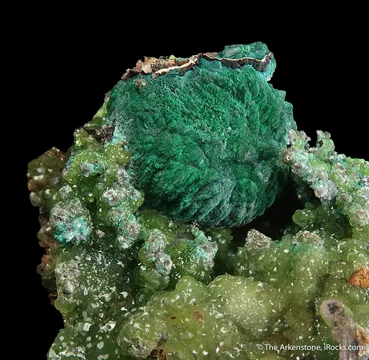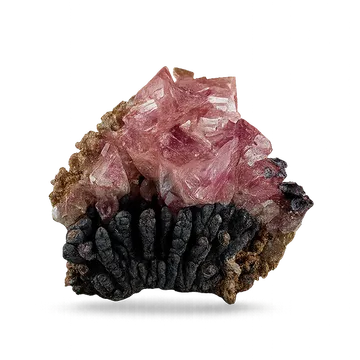
Adamite de Lavrion, Grèce – boulots botryoïdes émeraude à vert pomme et agrégats vitrés sur gossan; un minéral supergène complexe provenant d’un district historique Pb-Zn-Ag w…
Key facts
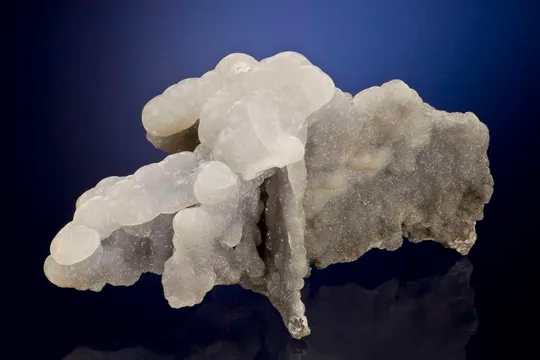
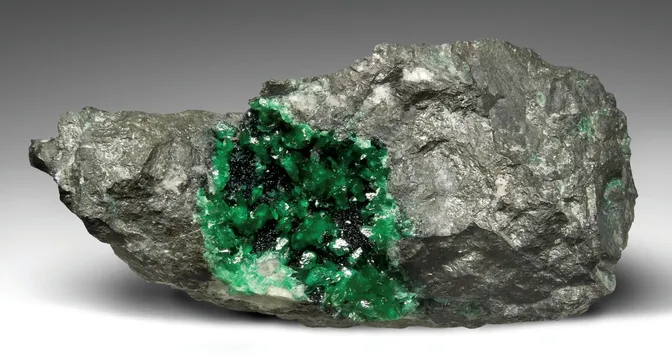
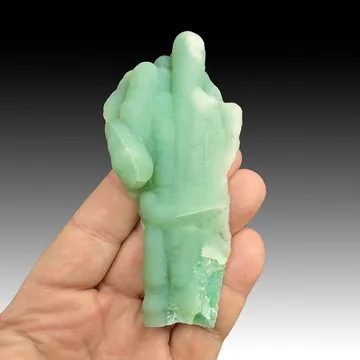
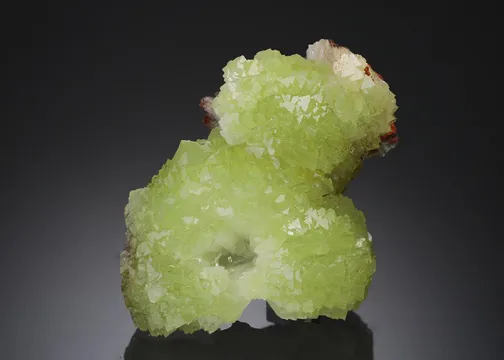
L’adamite du district minier de Lavrion est un minerai de collectionneur où la beauté et l’histoire du lieu s’accordent de manière particulièrement harmonieuse. Les pièces les plus fines ne se limitent pas à du « adamite verte »; il s’agit de petits registres scintillants d’un système supergène complexe développé au-dessus d’un des districts miniers Pb-Zn-Ag les plus célèbres sur Terre. À Lavrion, l’adamite se présente dans les portions oxydées des minerais polymétalliques, communément sur la gossan, la calcite, la smithsonite, l’hydrozincite, la limonite et d’autres minéraux secondaires. L’attrait est immédiat : botryoids émeraude à vert pomme, croûtes bleu-vert porteuses de cuivre, agrégats sphériques vitreux, et formes pale pistache ou jaunâtres qui peuvent créer un fort contraste avec une matrice de carbonate blanc ou d’oxyde de fer rouillé.

Photo : Rob Lavinsky / iRocks.com via Wikimedia Commons
Le look distinctif de Lavrion provient autant de la chimie que de l’habitude. Des travaux modernes sur les “adamites” de Lavrion ont montré que les noms de collectionneur tels que « adamite cuprifère », « cuproadamite », « aluminium-adamite » et « zincian olivenite » peuvent être visuellement pratiques mais chimiquement difficiles à définir. L’adamite, Zn2(AsO4)(OH), forme une relation de solution solide avec l’olivenite, Cu2(AsO4)(OH), et certains échantillons verts historiquement vendus comme adamite peuvent appartenir à des champs intermédiaires ou riches en cuivre plutôt qu’à l’adamite sensu stricto. Cette ambiguïté n’est pas un défaut pour la réputation du lieu; elle fait partie des raisons pour lesquelles le matériel de Lavrion est scientifiquement intéressant. Les collectionneurs sérieux attachent de plus en plus de valeur à des pièces analysées ou soigneusement documentées, surtout lorsque la couleur, l’habitus et l’attribution minière sont crédibles.

Photo : Rob Lavinsky / iRocks.com via Wikimedia Commons
Le cadre plus large est exceptionnel. Lavrion occupe la péninsule attique sud-est, à environ 50 km au sud-est d’Athènes, au sein de la bande cristalline attique-cycladique. L’histoire minière du district reflète le métamorphisme, le magmatisme miocène, le remplacement hydrothermal, les systèmes de veines et de brèches, et plus tard l’oxydation des minerais sulfureux riches en plomb, zinc, cuivre, arsenic, argent et d’autres éléments. Cette séquence a produit l’un des assemblages minéralogiques les plus denses connus dans tout district minier. Pour l’adamite, les ingrédients critiques furent le zinc, l’arsenic, le cuivre en quantités variables, des roches hôtes carbonatées et un environnement d’oxydation durable capable de constituer de petits mais fortement esthétiques assemblages d’arsénates.Historiquement, Lavrion est indissociable de l'argent de l'ancienne Athènes. L'exploitation minière dans la région remonte à la période final Néolithique ou début Helladique, et les travaux d’argent classiques des VIe–IVe siècles av. J.-C. ont aidé à financer la puissance athénienne. Pour le collectionneur, cette histoire confère même à une mine bone une adamite une certaine place: les mêmes collines qui produisaient le métal derrière les monnaies antiques et la puissance navale ont ensuite fourni des arséniates vifs issus de puits abandonnés, de corps de remplacement et de décharges autour de Kamariza, Hilarion, Jean Baptiste, Christiana, Plaka, et les travaux connexes.
Les collectionneurs recherchent la saturation de couleur, l’éclat, le contraste propre de la matrice et un détail d locality honnête. L’adamite de Lavrion est souvent mieux appréciée sous grossissement: un échantillon à la main qui paraît vert velours à bout de bras peut se résoudre en botryoïdes lustrés, en groupes de cristaux arrondis, en microcristaux pseudo-octaédriques, ou en surfaces d’agrégats fortement tranchées. Les pièces les plus prisées allient une couleur bleu-vert intense à émeraude avec une couverture cristalline intacte, une matrice de contraste stable, et une attribution minière plus précise que simplement « Laurion ».## Spécimens en vedette
Search for specimens: View all adamite specimens from Lavrion Mining District, Greece
Lavrion lies in southeastern Attica, in the Lavreotiki area, where a compact but extraordinarily complicated district contains ancient and modern workings spread across roughly 150 km2. The mining landscape is organized around subdistricts and mine groups such as Kamariza, Plaka, Agios Konstantinos, Hilarion, Jean Baptiste, Christiana, Serpieri, Adami, and the numbered mine localities used by mining geologists and collectors. Labels may appear as Lavrion, Laurion, Laurium, Lavreotiki, Kamariza, or individual mine names; for serious specimen work, the specific mine matters.
Geologically, the district sits on the western side of the Attic-Cycladic crystalline belt. The Lavrion area exposes tectonic units that include marbles, schists, blueschist-related rocks, metabasites, hornfels, and Miocene intrusive rocks. Ore deposition is strongly tied to structural contacts, marble horizons, detachment-related deformation, and hydrothermal circulation. The district contains several closely associated mineralization styles, including porphyry Mo-W, Fe-Cu-Bi-Au skarn, carbonate-replacement Pb-Zn-Cu-Ag-Au bodies, and Pb-Zn-Ag-Au veins and breccias. For adamite collectors, the carbonate-replacement ores and the later oxidation of polymetallic sulfides are especially important.
The primary ore assemblages included galena, sphalerite, pyrite, chalcopyrite, arsenopyrite and related sulfides and sulfosalts, with quartz, calcite, fluorite, and carbonate alteration minerals as gangue. Oxidation transformed this metal-rich framework into a remarkable suite of secondary species: carbonates, sulfates, arsenates, phosphates, halides, and hydrated alteration products. Adamite developed where zinc and arsenic were available in the oxidized zone, with copper locally entering the structure or producing closely related Cu-Zn arsenates. That is why Lavrion adamite is most often discussed together with cuprian adamite, olivenite, zincolivenite, conichalcite, agardite-group minerals, smithsonite, azurite, malachite, calcite, hydrozincite, goethite, and limonite.
Mining history at Lavrion is unusually long. Archaeological and geochemical evidence places early mining activity in the Final Neolithic or Early Helladic period, around the late 4th to early 3rd millennium BC. Classical exploitation intensified in the 6th–4th centuries BC, especially after rich Kamariza-area silver mineralization became important in 483 BC. The ancient mines were worked through shafts, galleries, ore washeries, smelting sites, and processing installations, many of which survive as archaeological remains.L’exploitation moderne a commencé au 19e siècle après une nouvelle reconnaissance de la valeur du district. Andreas Kordellas a aidé à attirer l’attention sur les ressources antiques de Lavrion, et Gianbattista Serpieri et des sociétés associées ont développé des opérations modernes à grande échelle. Les sociétés françaises et grecques ont retravaillé les scories, les résidus et les minerais, construit des installations industrielles et aidé à transformer Lavrion en une ville minière et métallurgique. L’exploitation minière à grande échelle a décliné tout au long du XXe siècle; différentes sources traitent la phase finale différemment, l’extraction du minerai étant couramment citée jusqu’aux années 1970 et des travaux liés à EMMEL se poursuivant jusqu’au début des années 1990 avant que les installations industrielles ne deviennent partie du Lavrion Technological Cultural Park.
Pour les collectionneurs, Lavrion n’est pas un seul « fouilleur ». C’est un paysage minier historique avec des sites archéologiques, des zones protégées, des galeries abandonnées dangereuses et des restrictions locales. La zone du parc national de la Forêt de Sounion/Réserve naturelle comporte des restrictions de collecte particulières, et l’entrée dans les zones militaires restreintes est interdite et contrôlée. L’exploration souterraine est dangereuse : anciens soutènements en bois, galeries effondrées, niveaux inondés, air problématique, terrain instable et puits non balisés constituent de réels risques. Une collecte responsable se limite donc à l’accès légal, aux zones autorisées et au matériel de surface lorsque cela est permis. Nombre des meilleurs spécimens modernes ont transité par des collectionneurs et marchands locaux plutôt que par une collecte touristique occasionnelle.
Parmi les noms producteurs d’adamite les plus notables sur les étiquettes de spécimens figurent la Mine Hilarion, la Mine Jean Baptiste, la Mine Christiana, les mines de Kamariza et les localités plus larges Agios Konstantinos/Kamariza. Hilarion est particulièrement familier des collectionneurs d’adamite cuprifère bleu-vert et vert sur goémon ou matrice carbonatée. Christiana a donné une adamite attractive avec de la calcite et d’autres minéraux cuivreux. Jean Baptiste apparaît sur les étiquettes d’adamite et est également connu pour un certain nombre d’espèces secondaires rares. Le grand charme du district réside dans la manière dont un petit échantillon unique peut porter à la fois la complexité de la localité et l’intimité mineralogique : quelques centimètres carrés de goémon peuvent accueillir de l’adamite, d’azurite, de malachite, de calcite, de smithsonite, de conichalcite ou d’autres espèces secondaires en étroite association.## Caractéristiques de l'adamite du district minier de Lavrio, Grèce
L'adamite de Lavrio est principalement une minéral de collectionneur de type micro- à petit cabinet. Les cristaux individuels et les groupes de cristaux mesurent généralement des millimètres, mais la couverture peut être suffisamment dense pour produire des spécimens à main très spectaculaires. Des exemples documentés incluent des cristaux atteignant plusieurs millimètres de largeur, des agrégats sphériques jusqu'à environ un centimètre, des échantillons de cabinet de plus de 10 cm, et de grands morceaux de matrice où l'adamite est dispersé sur de la calcite ou du gossan plutôt que de former une masse cristalline unique. La force du lieu n’est pas les cristaux géants; elle réside dans la couleur, la brillance, la couverture et la richesse paragénique.
L’habitus classique est arrondi à botrioïdal, formant souvent des perles et des croûtes vert émeraude ou bleu-vert gemmes sur une matrice à dominante ferreuse ou sur carbonate pâle. Ces botryoïdes peuvent être fortement brillants, presque lumineux sous une lumière directe, et peuvent être suffisamment denses pour donner une surface mousseuse ou veloutée. D’autres pièces présentent des microcristaux pseudo-octaédriques ou en forme de coin plus nets, des agrégats en lames, des croûtes, des évasements ou des revêtements drusulés. Sous une loupe, les meilleures pièces présentent des surfaces cristallines nettes plutôt que des croûtes poudreuses et ternes.
La couleur est l’une des caractéristiques déterminantes. L’adamite de Lavrio au sens strict peut être transparent à jaune pâle, jaune-vert, verdâtre ou bleu, tandis que les matériaux portant du cuivre et les arséniates Cu-Zn apparentés produisent des teintes turquoise vives, bleu ciel, émeraude, vert pomme et pistache. Des travaux chimiques récents jouent ici un rôle important: dans les échantillons étudiés, le matériel « adamite » à teinte verte couvrait une plage de composition vers la zincolivenite et l’olivénite, tandis que certains cristaux transparents, jaunes et bleus se situaient comme adamite au sens strict. En termes pratiques de collecte, un spécimen lavrion vert vendu comme « adamite » peut être correctement étiqueté dans le sens ancien du collectionneur mais mérite toutefois une confirmation analytique si l’identité exacte de l’espèce importe.
Les minéraux associated font partie de l’attrait du lieu. Des associations courantes et bien documentées incluent la calcite, la smithsonite, l’hydrozincite, l’aragonite, la limonite/géotite, l’azurite, la malachite, la conichalcite, l’olivénite, les minéraux du groupe d’agardite et d’autres arsenates. Une matrice de calcite blanche ou d’hydrozincite offre un contraste particulièrement fort avec l’adamite vert ou bleu-vert. Le gossan rouillé confère un caractère plus rugueux, de mine ancienne, et peut intensifier la couleur apparente des revêtements brillants d’adamite. Des spécimens avec azurite ou malachite apportent un contraste cuivre-minéral bleu-vert mais exigent également une identification soignée, car plusieurs arsenates secondaires du cuivre peuvent apparaître ensemble à la même échelle.Les facteurs de qualité commencent par la couleur et l’éclat. Un adamite de Lavrion de premier ordre devrait présenter une couleur naturelle saturée, un scintillement vif et une couverture attrayante à l’œil nu, mais qui se révèle sous grossissement. Vient ensuite l’état : l’adamite botryoïde peut montrer des points élevés meurtris, des arêtes éraflées ou des perles cassées ; les matrices de calcite peuvent s’écailler facilement ; et des croûtes fines peuvent se défaire si la matrice est friable. L’équilibre esthétique compte autant que la rareté. Un thumbnail avec un champ parfait de sphères vert gazon vitreux sur calcite blanche peut être préférable à un spécimen plus grand avec une couverture sparse et terne.
La localisation précise est un autre facteur de qualité. « Lavrion » est acceptable pour les spécimens plus anciens, mais « Mine d’Hilarion, Kamariza », « Mine Christiana » ou « Mine Jean Baptiste » apportent de la valeur lorsque cela peut être crédible. Le district compte de nombreuses mines, et les étiquettes anciennes peuvent être incohérentes. Certains noms de mine trompeurs et usages de localité abrégés circulent généralement dans le matériel de Lavrion ; les collectionneurs attentifs conservent les étiquettes d’origine mais mettent aussi à jour les informations de localisation lorsque l’usage moderne du district clarifie la source.
La fluorescence peut être un atout mais ne devrait pas être la base principale d’un achat. Certains spécimens d’adamite de Lavrion ont été décrits comme fluorescents d’un vert lime lumineux, et la calcite associée peut fluorescer en rose sous UV. Comme la fluorescence peut varier selon la chimie, la matrice et l’état de la surface, il est préférable de la considérer comme une caractéristique spécifique au spécimen plutôt que comme un trait universel de Lavrion.## Notes du collectionneur
Le principal problème d’authenticité avec l’adamite de Lavrion n’est pas une épidémie de traitements célèbres, mais l’identité correcte et la précision de la localité. Le district produit une série visuellement superposée d’arsénates Zn-Cu et de minéraux secondaires du cuivre. Des croûtes vertes, bleu-vert et pistache peuvent être étiquetées adamite, adamite cuprienne, zincolivenite, olivenite, conichalcite, ou des espèces mixtes en fonction de la chimie et de l’époque de l’étiquette. Pour une collection d’exposition ordinaire, « adamite cuprienne de Lavrion » est souvent une étiquette pratique du marché. Pour des collections systématiques, un soutien analytique par Raman, SEM-EDS, EPMA ou XRD est souhaitable, en particulier pour les matériaux de couleur inhabituellement soutenue ou pour des affirmations de zincolivenite, de compositions riches en olivenite, ou de coloration « enrichie en terres rares ».
La provenance mérite une attention particulière. Les spécimens plus anciens peuvent être étiquetés simplement Laurion, Laurium, Lavrion ou Grèce; c’est normal. Des étiquettes plus précises devraient être plausibles pour l’espèce et l’association. Hilarion, Kamariza, Jean-Baptiste et Christiana sont des noms crédibles pour du matériel portant de l’adamite. Méfiez-vous des noms de mine vagues ou inventés, des étiquettes « Km » confuses, ou des étiquettes commerciales qui exagèrent la précision sans balises de soutien plus anciennes. Conservez toutes les étiquettes, même celles qui sont imperfectes, car la nomenclature de Lavrion a évolué au fil du temps.
Les problèmes de condition sont courants et faciles à manquer. Des perles d’adamite botryoïdales peuvent être meurtries le long des arêtes exposées; des croûtes vert intense peuvent présenter de petites zones abrasionnées où la couleur disparaît dans un carbonate pâle ou dans le gossan brun; et la matrice de calcite peut montrer des copeaux de clivage. Les revêtements blancs d’hydrozincite ou de calcite peuvent paraître poudreux ou sales, et les matrices de gossan peuvent libérer de petits grains. Examinez les points élevés avec une loupe. Sur les spécimens plus anciens, une légère usure des arêtes peut être acceptable, mais une colle évidente, des cassures fraîches, une couleur concentrée dans des fissures, ou un revêtement brillant uniformément suspect doivent être remis en question.
Il n’y a aucune raison de supposer que la couleur vive est artificielle simplement parce qu’elle est brillante. Lavrion produit naturellement des matériaux arsénates portant du cuivre, allant du bleu-vert au émeraude. Dans le même temps, les risques généraux du marché des minéraux s’appliquent encore: matrice poreuse teintée, composites collés, smithsonite ou calcite mal étiquetés, et des photographies trop saturées peuvent tous induire en erreur les acheteurs. Achetez auprès de marchands qui divulguent les réparations, fournissent les dimensions et les détails de la localité, et qui sont à l’aise avec la distinction entre adamite au sens strict et “adamite” portant du cuivre dans le sens plus large du collectionneur.La rareté est classée par niveaux. Des revêtements d’adamite vert clair provenant de Lavrio sont suffisamment fréquents pour que la localité reste accessible aux collectionneurs. Des spécimens fins, intacts, saturés et bien localisés avec une couverture riche sont beaucoup moins courants. Des exemplaires bleu à bleu-vert, gemmeux, brillants cupriens issus de matériel de style Hilarion peuvent commander des prix élevés, surtout lorsqu’ils proviennent de trouvailles modernes spécifiques ou de collections établies. Des spécimens de cabinet de grande taille avec une couverture d’adamite attrayante sont plus rares que les miniatures et les petits cabinets, car les cristaux sont généralement petits et la matrice est souvent fragile.
La disponibilité actuelle sur le marché est saine mais inégale. L’adamite de Lavrio apparaît chez des marchands spécialisés, aux enchères, dans des collections grecques, des cercles de micromounts et des annonces en ligne occasionnelles. Les prix varient considérablement: des micromounts modestes et de petites croûtes peuvent être peu coûteux, tandis que des petits cabinets fins et des pièces de cabinet avec couleur saturée, lustre et provenance peuvent se vendre à plusieurs centaines de dollars ou plus. Les meilleures opportunités d’achat surviennent lorsque les spécimens sont décrits avec précision quant à la mine, l’association, la taille et l’état plutôt que d’être commercialisés uniquement par la couleur.## Stories & Field Notes
Les récits les plus spectaculaires de Lavrion commencent longtemps avant que l’adamite ne devienne un minéral de cabinet. En 483 av. J.-C., une découverte d’argent exceptionnellement riche sous le deuxième horizon calcaire changea le cours de l’histoire athénienne. Le plan proposé était de distribuer l’aubaine aux citoyens, dix drachmes par tête. Thémistocle préconisa plutôt la puissance navale: cent talents d’argent pour cent trirèmes. Deux ans plus tard, à Salamine en 480 av. J.-C., cette décision aida Athènes et ses alliés à vaincre la flotte perse. Les arsénates verts et bleus prisés par les collectionneurs aujourd’hui sont des produits de l’oxydation tardive, mais ils s’inscrivent dans le même paysage minier dont l’argent contribua à faire d’Athènes une puissance maritime.
Un compte rendu de 1979 par Richard Birrer offre un portrait de Lavrion avant que le langage patrimonial moderne n’adoucisse ses contours. Il arriva par la vallée de Berzeko, où les habitants souriaient vaguement et indiquaient vers l’ouest la source des « spécimens minéraux irisants ». Suivant des pistes poussiéreuses, il trouva colline après colline de rebuts et de petites ouvertures cachées dans les flancs rocheux. Porteur d’une lampe sur la tête et d’une autre dans la main, il entra dans une galerie avec de la poussière cendrée sur le sol et aucune voie ferrée pour le guider. À une intersection à cinq branches, un forage diagonal révéla des travaux modernes, mais plus loin, des verts, des roses et des blancs doux apparurent dans des niches et des fissures le long des murs.
Puis le tunnel moderne croisa quelque chose d’ancien: une fosse carrée d’environ un mètre sur un mètre, dont les murs étaient couverts de milliers de petites marques d’éclats. Utilisant des trous taillés dans un mur comme des escaliers, il descendit vers d’autres couloirs et une galerie d’environ vingt mètres de haut, soutenue par des colonnes en pierre gravées délibérément. Il vit des spécimens minéraux épars et des éclats de poterie sous terre. Après quatre heures sous terre, il émergea à la lumière du jour et le charme se brisa lorsqu’un homme sur un tracteur passa en claquant sur la route pierreuse. La scène rappelle que les spécimens de Lavrion ne provenaient pas d’une localité abstraite; ils provenaient d’un labyrinthe dur et façonné par l’homme de galeries, d’alcônes, de colonnes, de poussière et de minerai.
La moderne histoire d’Hilarion ajoute l’eau, le silence et l’exploration technique à ce monde minier antique. En 2019, l’archéologue et plongeuse Maria Fotiadi et l’équipe Addicted2H2O pénétrèrent dans le complexe minier d’Hilarion et descendirent par des passages sombres et humides vieux de plus d’un siècle. Ils franchirent des chambres semi-effondrées, des poutres en bois, des rails rouillés, des sols glissants et une eau croissante après le quatrième niveau. Après plus d’une heure sous terre, ils atteignirent une salle remplie d’eau, un lagon souterrain où la mine se poursuivait sous la surface.Le 20 juillet 2019, les plongeurs Erikos Kranidiotis et Stelios Stamatakis ont effectué la première plongée exploratoire. Sous l’eau, ils ont découvert des chambres dans la roche naturelle, des entrées avec des colonnes de soutènement en bois, et des rails encore menant vers l’intérieur. Trois couloirs principaux sont apparus. Le couloir central menait à une autre chambre avec trois intersections, puis à un passage soutenu par quatre rangées de poutres en bois. L’eau n’était pas de l’eau de mer, malgré la proximité du golfe Saronique, mais de l’eau douce provenant de l’aquifère à environ 20 °C. La visibilité était excellente au début ; à la sortie, les bulles et le mouvement des nageoires remuaient la vase jusqu’à ce que la clarté diminue, le danger familier de la plongée en grotte par percolation.
La deuxième expédition, le 19 novembre 2019, a poussé l’histoire plus loin. Des équipes de soutien ont transporté l’équipement de plongée sur environ 500 m à l’intérieur de la mine jusqu’à une profondeur d’environ 120 m. Les plongeurs ont confirmé que les sections vues sous l’eau auparavant étaient reliées. Un quatrième couloir pouvait être atteint depuis une autre zone sèche, par une entrée étroite descendant vers une section inondée avec voie ferrée. Un membre du soutien effectuait la surveillance du côté sec au moment où les plongeurs approchaient sous l’eau ; lorsqu’elle a vu leurs lumières passer, elle a braqué sa lampe vers eux. L’instant était important car il prouvait une autre connexion et offrait à l’équipe une voie de sortie alternative.
Le 24 mai 2020, l’équipe Hilarion a cartographié plus loin qu’auparavant, atteignant l’extrémité d’un petit puits utilisé pour déposer le minerai. En utilisant un outil de levé conçu par Stelios Stamatakis, ils ont produit une carte en vue aérienne 2D de 126 m de passages sous-marins. Le lendemain, un effort de cartographie en 3D a été réalisé avec le arpenteur Yiannis Psaltakis et Landmark Loutridis. Leur conclusion était presque poétique : l’eau, qui avait scellé les niveaux inférieurs après l’arrêt des pompages, avait préservé l’image de la mine telle qu’elle était au moment où les travaux ont cessé. Pour les collectionneurs, cette histoire inondée de Hilarion jette une lumière différente sur les beaux spécimens d’adamite issus du même groupe de mines. Les croûtes vertes et les sphères bleues restent la partie facile à détenir ; le site qui se cache derrière elles est un labyrinthe de puits de ventilation antiques, d’exploitations de l’ère française, de lignes ferroviaires, d’aquifères et d’obscurité minéralisée.## Registres et publications minéralogiques
J. Ralph et al., Mindat occurrence record: Adamite from Lavrion Mining District, Lavreotiki, East Attica, Attica, Greece — Fiche d’occurrence listant l’adamite, formule Zn2(AsO4)(OH), statut de confirmation, localités minières de Lavrion, données photographiques, minéraux associés et références historiques.
Panagiotis Voudouris et al. (2021), “The Lavrion Mines: A Unique Site of Geological and Mineralogical Heritage,” Minerals 11(1), 76 — Vue d’ensemble moderne essentielle de la géologie de Lavrion, de l’histoire minière, du géo‑héritage, de la diversité minérale et des principaux styles de minéralisation du district.
Constantinos Mavrogonatos et al. (2022), “Colour and chemical variations in adamite-olivenite solid solution minerals from the Lavrion mines, Attica, Greece” — Travail concentré de conférence sur la chimie, la couleur et les problèmes de nomenclature des spécimens de Lavrion « adamite » dans le système solide‑solution adamite‑olivenite.
Nikos Skarpelis (2007), “The Lavrion deposit (SE Attica, Greece): geology, mineralogy and minor elements chemistry,” Neues Jahrbuch für Mineralogie - Abhandlungen 183(3), 227–249 — Traitement géologique et minéralogique détaillé du gisement de Lavrion, y compris le contrôle structurel et lithologique des minerais d’ Pb-Zn-Ag carbonatés.
Todd A. Bonsall et al. (2011), “The Geochemistry of Carbonate-Replacement Pb-Zn-Ag Mineralization in the Lavrion District, Attica, Greece,” Economic Geology 106(4), 619–651 — Étude géochimique par peer-review de la minéralisation de remplacement carbonate qui forme le fondement économique et minéralogique d’une grande partie de la suite supergene ultérieure du district.
Irene Liebhart (2023), “Contributions to the mineralogy of the Lavrion mining district, Greece” — Thèse de Master avec contexte local utile, notes de mine, discussion sur la zone d’oxydation et références aux découvertes modernes dans le district.
Wikimedia Commons: File: Adamite-271652.jpg — Photographie de Rob Lavinsky et fiche d’échantillon pour un adamite cuprifère de Lavrion mesurant 10,7 x 7,0 x 4,2 cm, montrant du matériel botryoidal vert sur le gossan.
Wikimedia Commons: File: Adamite-Calcite-39027.jpg — Photographie de Rob Lavinsky et fiche d’échantillon pour un échantillon Lavrion Adamite‑Calcite de 7,2 x 5,3 x 3,2 cm avec des agrégats sphériques vert vif.## Vidéos & Médias
“GG20-10 - Cuprian Adamite - iRocks.com” — The Arkenstone / iRocks.com — Short video d’échantillon d’adamite cuprienne de Lavrion, utile pour percevoir la brillance et la couleur au-delà de la photographie fixe.
“Adamite (Cuprian) (classic material)” — Mineralauctions.com — Vidéo d’enchères pour le matériau classique d’adamite cuprienne, montrant comment les pièces de Lavrion se présentent sous une lumière en mouvement.
“JHG3995 Adamite on Calcite, Lavrion, Greece” — Crystal Classics — Vidéo d’échantillon d’adamite sur calcite de Lavrion, utile pour le contraste de la matrice et l’échelle d’exposition.
“Hilarion Mine” — Addicted2H2O — Page d’exploration riche en médias avec vidéos intégrées et notes de cartographie des galeries inondées de la mine Hilarion.
“Hilarion: Exploring the Greek Silver Mines of Lavreotiki” — X-Ray Mag — Article illustré sur les expéditions de plongée dans la mine Hilarion en 2019, avec contexte historique et d’exploration souterraine.## Lectures complémentaires et liens externes
Mindat : page de localisation du district minier de Lavrion — Le meilleur point de départ pour la hiérarchie des localités, les noms de mines, les listes de minéraux, les photos et les notes des collectionneurs sur l’accès et les questions liées aux étiquettes.
Mindat : Adamite du district minier de Lavrion — Page d’occurrence spécifique à l’adamite avec minéraux associés et localités minières liées par photo.
Voudouris et al. (2021), Les Mines de Lavrion : un site unique de patrimoine géologique et minéralogique — Aperçu autoritaire en libre accès sur la géologie, l’histoire minière, les styles de minéralisation et le géopatrimoine.
Mavrogonatos et al. (2022), étude sur la couleur et la chimie de l’adamite-olivenite — Lecture essentielle pour comprendre pourquoi les noms de couleur « adamite » de Lavrion ne correspondent pas nécessairement à une chimie minérale précise.
UNESCO : Géoparc mondial Lavreotiki UNESCO — Contexte de Lavreotiki en tant que paysage géologique, minier, archéologique et culturel.
Oryktos Ploutos : minéraux de Lavrion et patrimoine minéralogique grec — Perspective sur le patrimoine minéral grec, avec emphasis sur les minéraux secondaires classiques de Lavrion et l’importance des musées locaux.
Addicted2H2O : Mine Hilarion — Compte-rendu détaillé de plongée et de cartographie de l’ensemble Hilarion, incluant dates, distances, conditions hydriques et équipes d’exploration.
The Athenian : « The Underworld of Lavrion » — Récit vivant de 1979 sur l’exploration des anciens puits de Lavrion, des galeries antiques et du paysage souterrain minéralisé.