Tourmaline from Brazil


- $20.00 shipping
- Seller offers an extended return window of up to 14 days
 Ships from USA
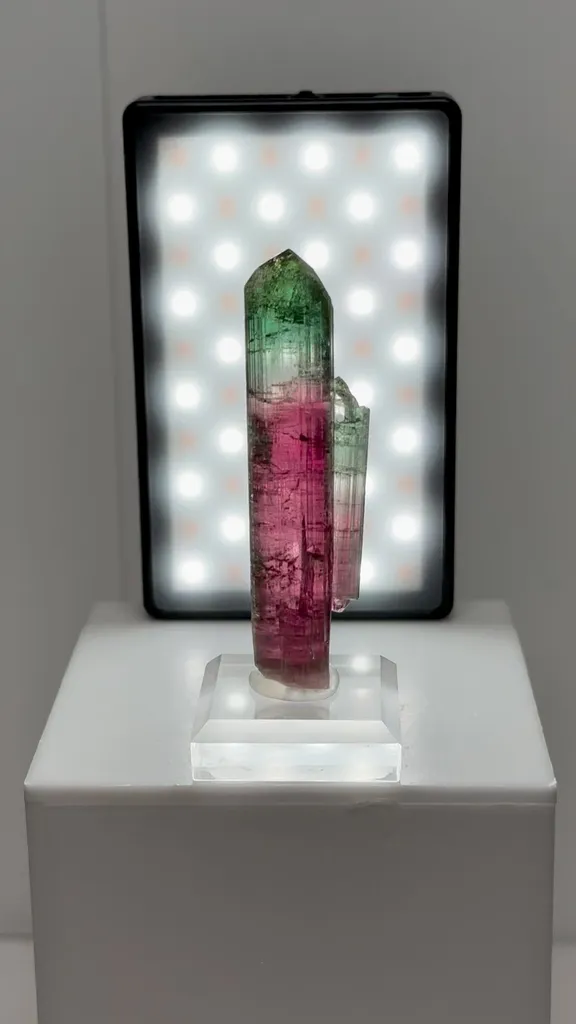
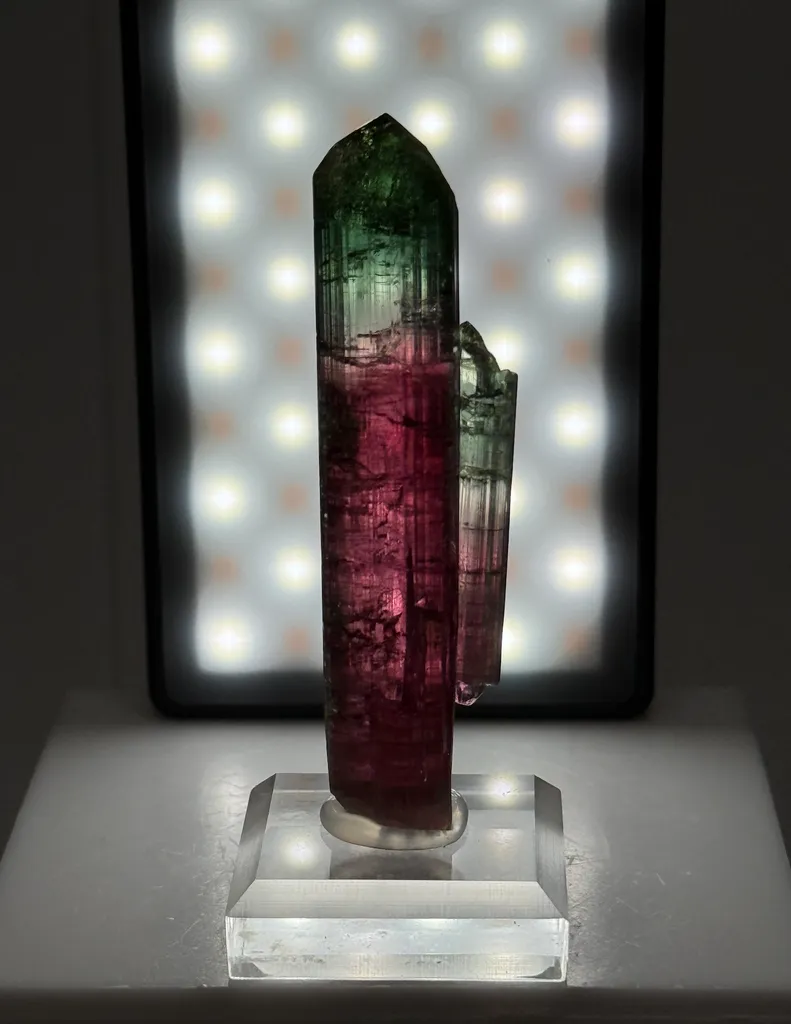
One of my faves… 🩷💚Chameleon Pocket Tourmaline 🩷💚
This exquisite crystal specimen of Elbaite Tourmaline comes from the Aricanga Mine in the Safira region of Minas Gerais, Brazil—an area long celebrated for its prolific pegmatite fields and its profound contributions to the worlds of both fine crystal and mineral collecting and gemology. The specimen was unearthed in early 2018 from the now-iconic “Chameleon Pocket,” a find that immediately distinguished itself as one of the most important tourmaline discoveries in recent history. Of the approximately 500 crystals recovered from the pocket, many of those merely single crystals, only a small group—perhaps a dozen—rose to the highest echelon of quality, all of the importance of the discovery was held in this small group. This piece is among that select few.
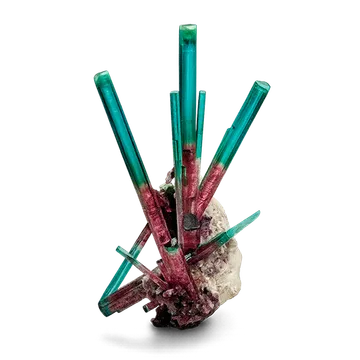
The visual appeal is undeniable: a radiating cluster of elongated, prismatic tourmaline crystals with intense crimson-magenta color that shift moving upward through transitional zones into vivid apple-green terminations. Two distinct crystal forms are easily visible on the piece, those with flat terminations and those with multifaceted steep peaked ones. This is not merely incidental but reflects the presence of two distinct growth directions within the same pocket—crystals that developed toward the analogous pole, and those that grew toward the antilogous pole. The analogous crystals display flat, pinacoidal terminations and carry saturated red coloration up to the tip, where they quickly transition to a stipe of clarity and finally terminate in a flat, striking green cap. The antilogous crystals, by contrast, are characterized by steep, pointed, multi-faceted terminations. Their internal color progression evolves more gradually, transitioning from magenta to a glassy pale intermediate, and finally into a neon-like green tip. The architectural interplay of these two habits in a single, cohesive cluster creates a piece that is both scientifically complex and visually electrifying.
Product details
Learn more
Comments