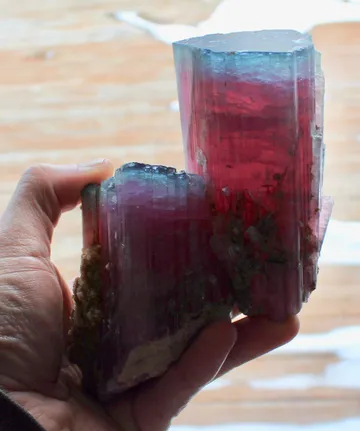
Tourmaline: color range and crystal variety define a diverse group; top localities, value factors, quality assessment, and care tips for collectors.
Key facts
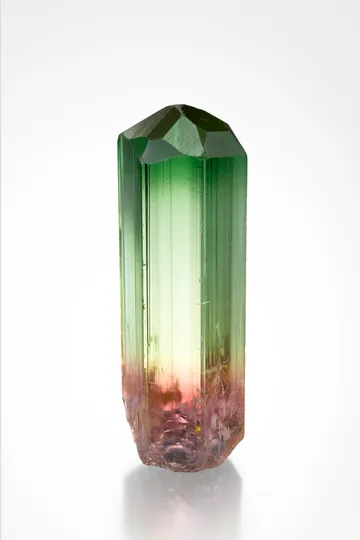
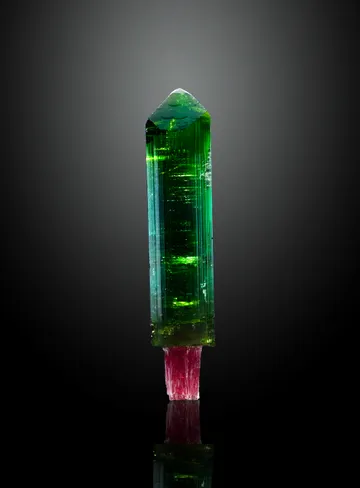
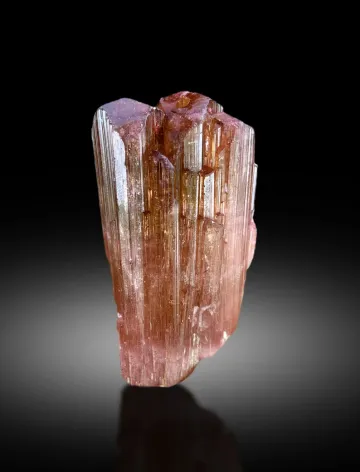
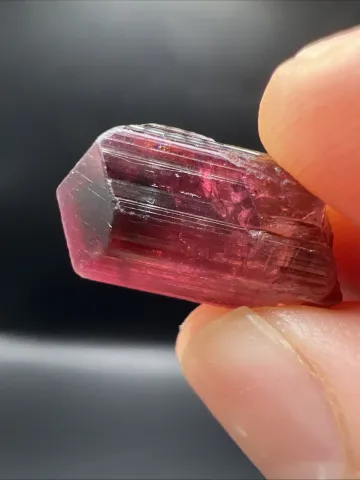
Tourmaline is a diverse mineral group famed for its rainbow of colors and elegant crystal forms. From vivid rubellite reds to neon-blue indicolites and lush greens, its spectrum is unmatched. Crystals usually form as elongated prisms with triangular cross-sections and a bright luster. Exceptional pieces—gemmy crystals often contrasting against white albite or quartz—are showpieces in any collection. Collectors value tourmaline for both beauty and variety: it is possible to assemble an entire rainbow from this single mineral group. Prices span widely, from affordable black schorl or small colorful shards to world-class specimens commanding sums rivaling fine emeralds or rubies.
Tourmaline has long been prized as both gem and specimen. In the late 1800s, California pink tourmaline famously adorned the Empress Dowager of China, cementing its prestige. Today, its popularity endures, driven by infinite variety and ongoing discoveries. Beginners often start with common black or green crystals, while advanced collectors chase Paraíba neon blues, watermelon bicolors, or the massive rubellites that made history. Benchmark finds like the Jonas cranberry-red rubellites or Paraíba’s glowing blues set the standard. Though abundant material is accessible worldwide, the finest crystals remain rare, fiercely competed for, and sometimes astronomically priced. Tourmaline’s enduring appeal lies in this balance—broad accessibility alongside the thrill of the spectacular, with even small new finds capable of shaking the collector world.
While tourmaline is found around the globe, certain localities are renowned for producing extraordinary specimens that set world-class standards. Below we explore some of the most famous tourmaline sources, each known for a distinctive type of specimen prized by collectors.
Pederneira is famed for spectacular multi-color clusters in vibrant blues, greens, and pinks, often on albite and lepidolite for dramatic contrast. Classic finds include the “Blue Cap,” “Rocket,” and “Sailboat” pockets, which produced sharp color zoning and striking crystal forms. Specimens range from slender blue indicolites to robust bi-colors, with some clusters rivaling any in the world for brilliance. Many are repaired due to pocket breakage, but intact matrix pieces remain showpieces in top collections. One celebrated example, “The 9 Iron,” is a 30+ cm gemmy indicolite, underscoring why Pederneira is regarded as the most famous tourmaline mine worldwide.
Discovered in 1978, Jonas became instantly famous for producing the world’s finest cranberry-red rubellite crystals. Some of these were enormous—over a foot long—yet still gemmy, with rich color that has never been equaled elsewhere. Even small Jonas thumbnails are coveted today, while cabinet specimens are among the most valuable tourmalines ever mined.
Perhaps the most legendary find of all time occurred at the Jonas Mine (Itatiaia) in 1978, where miners uncovered a pocket containing “the largest and finest crystals of rubellite tourmaline ever seen”. This discovery – about 3.6 tons of high-quality rubellite, including huge transparent red crystals – stunned the world.
Another Brazilian icon is the Cruzeiro Mine, which has operated for decades and consistently produced beautiful rubellites and verdelite (green) tourmalines. Cruzeiro is known especially for elegant red and hot-pink tourmaline crystals, some in slender intersecting clusters. These tend to be smaller than Jonas pieces but can have superb transparency and color. They often come with cleavelandite or quartz matrix, adding to their visual appeal. Other notable Brazilian localities include the Paraíba region (for the rare electric-blue copper-bearing tourmalines, typically seen as cut gems but occasionally as small vivid crystal specimens) and the ancient mines like those in the Aracuai district or Gov. Valadares area which have yielded classic green and blue cap tourmalines historically.
Cruzeiro is one of the longest-operating and most productive tourmaline mines in Brazil. It consistently yields hot pink to red rubellites and greens, typically as slender crystals or sprays.
The Malkhan pegmatite field in Siberia (Zabaykalsky Krai, Russia) has become renowned over the past two decades for superb rubellite tourmalines. First noted in the 1980s and developed more seriously in the 2000s, it began producing deep wine-red to raspberry crystals that rival Brazil and California. Many are stout, lustrous prisms associated with snowy cleavelandite and smoky quartz, giving dramatic red-on-white contrast. By 2015, spectacular transparent crystals up to 15–20 cm appeared, firmly establishing Malkhan as a world-class source; a famous pair even graced the cover of Mineralogical Record in 2019.
Collectors prize these tourmalines for size, saturated cranberry hues, and sharp form. Classic specimens show robust trigonal crystals with glossy faces and flat terminations, often color-zoned with darker caps or cores. Top pieces are gemmy, glowing when lit, and matrix examples with little or no repair are especially coveted. With their combination of scale, color, and availability during a period of few major new finds, Malkhan tourmalines are considered a modern classic and stand among the most desirable red tourmalines in collections today.
Rubaya in North Kivu, D.R. Congo, emerged around 2014–2017 as a surprising new source of world-class tourmaline. The pegmatites here produced crystals of extraordinary transparency and vivid color zoning – peach-pink blending to emerald or mint green, often sharply divided like candy sticks. Most are slender, prismatic crystals 3–10 cm long, with flawless interiors, glassy luster, and sharply pyramidal terminations. Because the host rock is crumbly, nearly all are loose crystals; true matrix specimens are virtually unknown.
Collectors prize Rubaya tourmalines for their “textbook” perfection – limpid, gem-clear prisms that look naturally faceted. Many were cut into gems, making intact crystals rarer. Production peaked between 2017 and 2019 but quickly slowed due to political and mining challenges, so supply is limited. Today, even small Rubaya crystals with strong zoning and undamaged tips command high prices. Despite their modest size, they are already considered modern classics, representing some of the most perfectly formed tourmalines of recent decades.
Madagascar’s Anjanabonoina pegmatites are the type locality of liddicoatite, a calcium-rich tourmaline famous for its kaleidoscopic color zoning. Discovered mid-20th century, these crystals often reveal triangular patterns of pink, green, and brown when sliced, resembling abstract stained glass. The 1977 definition of liddicoatite as a distinct species cemented Madagascar’s place in tourmaline history.
Collectors value these crystals for their vivid polychrome zoning and unusual forms. A single piece may shift from pink to green to colorless, capped by a dark termination, with striated or etched prism faces. While clarity is often limited and matrix specimens rare, the colors are unmatched – neon peach, vermilion, olive, or rainbow combinations in one crystal. Many ended up in alluvial gravels, explaining the popularity of polished slices. Complete terminated crystals are scarce but prized, especially those showing the triangular cross-section zoning unique to liddicoatite. Though not as large or transparent as Brazil’s or Afghanistan’s, Madagascar tourmalines are natural artworks, collected for their striking geometric color patterns and diversity.
Southern California’s Pala District (San Diego County) is one of the world’s classic tourmaline localities. The Tourmaline King, Queen, and Himalaya mines began producing in the late 1800s, when large quantities of pink crystals were exported to the Chinese Imperial Court. Surviving examples show the bright bubblegum color and fine form that made them so desirable.
Pala’s true fame came in the 1970s with the Tourmaline Queen “blue cap” pocket, where gemmy pink prisms terminated in vivid indigo blue. These iconic specimens – unique to that discovery – are among the most celebrated tourmalines ever found. Other highlights include the Himalaya Mine’s hot-pink and red crystals, often with lepidolite, and pockets such as the 1980s “Six-Pack” cluster.
Collectors value Pala tourmaline for both its intense colors and historic importance. Crystals are often found on matrix or in clusters, adding dramatic appeal, though pristine pieces are scarce because many were damaged during mining. Production today is minimal, making older finds highly sought after. Prices remain strong: even small clusters from Pala can rival much larger specimens from Brazil. In short, the district holds an essential place in tourmaline collecting history, with its pinks, reds, and legendary blue caps standing as enduring symbols of American mineralogy.
Afghanistan’s Nuristan region (Paprok, Mawi, Kunar) became famous in the 1980s–1990s as the country opened to trade. These pegmatites yield classic bi-color and multi-color elbaites, especially pink-green “watermelon” crystals. They are typically slender, transparent, and brightly colored—bubblegum pinks, mint greens, with occasional blues. Terminations are sharp, either steeply pyramidal or smooth pinacoids. Paprok in particular is known for elegant sprays of pink and green crystals on cleavelandite or quartz, often with lilac lepidolite. Many pieces are virtually gem grade, and while single crystals are common, cabinet-sized matrix specimens are scarcer than in Brazil.
Collectors prize Afghan tourmaline for its strong aesthetics, vibrant colors, and relative availability. In the 2000s, material flowed heavily into Western markets, cementing Nuristan as a key source. Top pieces rival Brazilian classics, with deep pinks and sharp luster. Unique growths also occur, such as rare Mawi blue-cap terminations and skeletal or hollow crystals. Intact, unrepaired matrix specimens are less common, but when present they greatly enhance appeal. Overall, Afghan tourmaline remains a staple of modern collections—colorful, well-formed, and consistently desirable.
When assessing a tourmaline specimen, collectors often consider the “Four Cs” similar to gemstones – color, clarity, crystal form, and condition – along with overall aesthetics and any matrix association.
Color: The first thing you notice is color. Tourmaline’s value generally follows the intensity and rarity of its color. In general, saturated, vivid colors are most prized: a neon blue Paraíba-type or a rich “stoplight” red rubellite will outshine a dull brownish-green. Look for depth and vibrancy in hue. For example, Jonas Mine rubellites are treasured for their extraordinary cranberry-red that “remains unrivaled”, and a Paprok bi-color with bright bubblegum-pink and mint-green zones will be more desirable than one with pale colors. Some tourmalines exhibit color zoning – this can either enhance a specimen (dramatic contrasts like a pink core with green rim, i.e. watermelon, are very collectible) or detract if the zoning makes the color look uneven in normal display. Ideally, the portion of the crystal facing forward should show as much of the best color as possible. Keep in mind that color preferences can be subjective: one collector might favor a pure emerald-green, another a hot pink. But truly exceptional colors (such as the electric blues or a “Siberian” purple-pink) will generally command attention from all.
Clarity & Luster: Tourmaline crystals range from opaque to completely transparent. Higher clarity, especially in the terminations or upper portions of the crystal, greatly increases visual impact – a gemmy tourmaline “with water-like clarity” sparkles and transmits light beautifully when backlit. Many top specimens have at least some gem-clear zones. That said, certain colors (like the darkest reds or blues) can be more included by nature. As long as the crystal faces are lustrous and reflective, even an included crystal can look stunning. Luster is critical: fresh, unetched crystal faces with a bright glassy luster are ideal. Dull or pitted surfaces diminish the appeal unless it’s a naturally frosted/etched crystal being valued for other reasons. Some tourmalines, especially from granite pegmatites, have striated sides – these often still gleam if well-polished by nature. The termination luster is particularly important; a lustrous termination that reflects light like a mirror will make the specimen “pop.” Inclusions can sometimes add interest (like slender needle inclusions or fluid bubbles), but large internal cracks or cloudiness will generally lower a specimen’s desirability (except in historically significant pieces). In summary, prefer tourmalines that are at least partly transparent and have sharp, shiny crystal faces.
Crystal Form: A good tourmaline specimen typically has well-developed, symmetric crystal form. Look at the termination: is it complete and nicely shaped (whether a simple flat pinacoid or a complex pyramidal multifaceted tip)? Broken or missing terminations are major detractions – a tourmaline with a chipped tip is generally considered specimen-grade only if it’s extraordinarily large or rare. The prism section should be well-formed too: straight, with natural striations or growth patterns but not bends or cracks. Tourmaline often grows in groups; clusters can be very aesthetic if the crystals are distinct and not jumbled. In a cluster, multiple terminations pointing at different angles can create a dynamic display. If the specimen includes matrix, evaluate how the crystals are positioned – a pleasing composition might have crystals radiating from a base of white albite or nestled in quartz. Matrix often adds both beauty and value, as it provides context and contrast (imagine a dark green tourmaline on white matrix, or a pink tourmaline on lavender lepidolite – the colors complement each other). However, matrix pieces are also more prone to damage and repairs. Unattached single crystals are easier to handle but sometimes less visually interesting; still, a perfect, freestanding crystal can be a jewel of a specimen, especially if it stands upright. Unusual crystal habits (e.g. sceptered tourmalines, “mushroom” tourmalines, or exceptionally elongated needles) can be highly sought for their rarity. Ultimately, the crystal form should be well-defined and representative of the species – collectors often seek at least one textbook tourmaline with a sharp triangular cross-section and a pristine termination as a showcase piece.
Condition: As with all mineral specimens, condition is paramount. Tourmaline, despite a hardness of 7–7.5, can be brittle (toughness is only fair) and often has internal stress, so many crystals are found broken. A top-quality specimen ideally has no damage or minimal damage, especially to the main crystal tips. Even tiny nicks on a termination can show up as white spots and hurt the value. Inspect edges and terminations carefully under good light; pristine edges will be sharp and glassy, whereas chips will catch the light awkwardly or feel rough. Because tourmaline crystals commonly detach in their pockets, repaired specimens are common (more on that below). A well-done repair on a significant piece is generally acceptable to many collectors, but it should be disclosed. Still, an unrepaired specimen carries a premium because it’s more “intact” as found. Try to avoid specimens with multiple broken crystals or large sections of restoration – unless the piece is so huge or important that it’s still worthy. For instance, a giant matrix piece with dozens of crystals might still be collectible if most are perfect and only a couple have minor dings, but if all terminations are damaged, it becomes more of an educational sample than a collector’s prize. In practice, almost all major tourmaline specimens have some imperfections (very few pockets yield completely damage-free crystals). The key is to find one where any damage is small, not distracting, and preferably located on the back or bottom. Don’t shy away from a piece with an invisible repair or a tiny ding if it offers superb color/form otherwise – but do factor it into the price. As a rule, always buy the best condition you can afford; a smaller pristine tourmaline will generally garner more admiration than a larger one with obvious broken tips.
Aesthetics: Beyond the individual criteria, step back and look at the specimen’s overall impact. Does it display well? Is there good contrast (e.g., green crystal on white matrix, or a cluster of multicolor crystals that play off each other)? Is the piece balanced, not awkwardly lopsided or with all the interest on one side? Oftentimes, this is subjective, but collectors develop an eye for specimens that just have that “wow factor.” For tourmaline, combinations of multiple colors are a huge plus – for example, a blue-cap on pink body on cleavelandite checks many aesthetic boxes. Similarly, a cluster of parallel rubellite crystals with varying heights can be more exciting than a single straight crystal. Luster, sparkles from any attached quartz, and the geometry of the arrangement all contribute. If possible, place the specimen under different lighting: tourmaline can look dramatically different in daylight vs. indoor light (some reds and pinks have a slight color shift). A truly fine specimen will hold its charm in any lighting. Collectors often say a great tourmaline “displays well from all angles,” meaning you can rotate it and still enjoy a pleasing view (though having one prime display angle is normal). If a piece has to be strongly lit from behind to show color, it might underwhelm on a shelf; ideally it should show color even in ambient light. In essence, evaluate how all the factors – color, clarity, form, condition – synthesize into an eye-catching piece. If it makes you instinctively smile or stare a bit longer, that’s a good sign!
Proper care will keep your tourmaline specimens looking vibrant for the long term. Although tourmaline is relatively hard (7–7.5 on Mohs scale) and not water-sensitive, it still requires gentle handling due to its brittleness and possible sensitivities. Here are key points for caring for tourmaline specimens:
Handling: Always handle tourmaline crystals with care, especially those with sharp terminations. Use both hands to support larger matrix pieces. Avoid touching the tips or putting pressure on slender crystals – tourmaline can have natural internal stresses or cleavage that might cause a crystal to snap if bent or knocked. When transporting a specimen, wrap it in soft tissue or foam. Remember that tourmaline’s toughness is fair, meaning it’s more fragile than it might appear – a sudden jolt can cleave a crystal.
Light Exposure: Natural, untreated tourmaline colors are generally stable to light and won’t fade quickly. You can display tourmalines in normal room lighting without worry. However, prolonged direct sunlight is best avoided for any colored mineral. In tourmaline’s case, there’s an extra consideration: if a crystal was irradiated to enhance its color (a treatment sometimes done to pale pinks or yellows), that color can fade with extended UV exposure. It’s not always possible to know if a specimen was treated, but as a precaution, do not leave your tourmaline in a sunlit window for months on end. Short exposure (minutes to hours) is fine – for instance, using sunlight to backlight a crystal and admire its color is okay, just don’t treat it like a sun-catcher ornament permanently. A cabinet with LED lighting is ideal (LEDs have minimal UV output). If displaying under strong case lights, monitor that the case doesn’t overheat; tourmaline can be sensitive to high heat (see below).
Temperature and Environment: Tourmaline can be damaged by high heat or sudden temperature changes. Avoid placing specimens near heat sources like radiators, hot lights, or in a window that gets very hot. Excessive heat can alter some tourmaline colors (for example, it might turn pinks to brown or drive off color centers). More immediately, a quick temperature shock – say moving a specimen from a cold air-conditioned room to direct hot sunlight – could potentially cause fractures (thermal shock). It’s best to keep the storage temperature moderate and stable. Also, tourmaline is slightly pyroelectric/piezoelectric (it can develop charges when temperature changes), which isn’t harmful per se, but underscores that it shouldn’t be baked or frozen. Normal room conditions (humidity, etc.) pose no issue; just avoid extremes like very dry heated environments that might cause mounting putty to dry out and loosen, or overly humid places that could affect matrix minerals.
Cleaning: Routine cleaning of tourmaline is straightforward. The safest method is a gentle dusting with a soft brush (e.g., a makeup brush or canned air on low pressure) to remove surface dust. If a deeper clean is needed (e.g., fingerprints or grime on crystal faces), use lukewarm water with a drop of mild dish soap. Gently swish or use a very soft toothbrush to lightly scrub the crystal surfaces and any crevices in matrix. Rinse thoroughly with clean water and pat dry with a lint-free cloth or let air-dry on a towel. Avoid harsh chemicals or acids unless you’re experienced in mineral preparation – while tourmaline itself is fairly acid-resistant, the matrix (like calcite, feldspar, or mica) could be damaged by acids. One common issue is iron staining on matrix or crystal edges; collectors sometimes use a solution like Iron Out (sodium dithionite) to remove rust stains – this is generally safe for tourmaline and most matrix, but always test cautiously. Do not use ultrasonic cleaners or steam cleaners on tourmaline specimens; the intense vibrations and heat can crack crystals or loosen glued repairs. Similarly, never boil or heat-tourmaline in an attempt to clean – you risk altering its color or causing cracks. If a tourmaline has attached clay or pocket mud, a brief soak in plain water can soften the clay for removal, but avoid long soaks if the piece has delicate matrix attached (water could undermine a clay-based matrix). Always handle wet specimens carefully, as water lubrication can make assembled repairs slip or crystals turn in their sockets. After cleaning, ensure the specimen and any nooks (like undercut bases) are fully dry before returning it to a display case or box, especially if you’re in a humid climate where residual moisture could encourage mold on organics like old label glue or wooden bases.
Storage: Store tourmalines in a padded container if not on display. Individual cushioned boxes or wrapped in acid-free tissue in drawers works well. Keep them separate from harder minerals (don’t let a heavy quartz or corundum specimen sit on a tourmaline – it could scratch or crush it). Conversely, remember tourmaline at 7 is harder than many minerals; it can scratch calcites or fluorites if jostled, so give each piece its own space or padding. If you live in an earthquake-prone area or have vibrations, make sure displayed pieces are secured (with a tiny bit of mineral tack or a proper stand) so they won’t roll or fall off shelves. Label your specimens to keep track of locality – provenance is a big part of tourmaline’s value (e.g., a green cap tourmaline from Maine vs. Afghanistan might look similar but have different values). Lastly, occasionally inspect stored pieces for any signs of changes: though rare, some tourmalines might very slowly fade if exposed to light over years (especially those known to be irradiated, which can fade with light or heat). By following these care guidelines, your tourmalines should retain their vivid colors and brilliant luster indefinitely.
The high value of fine tourmaline specimens means that many have undergone repairs or, in fewer cases, treatments. Being able to detect these is an important skill for collectors to ensure you know exactly what you’re getting.
Repairs and Reattachment: It is very common for tourmaline crystals to be found detached from matrix or broken into segments when miners extract them. Skilled preparators often repair these breaks using clear epoxy, effectively gluing crystals back together or back onto matrix. A well-done repair can be nearly invisible, but there are ways to spot them. Under close inspection, look along the crystal for any perfectly straight junction lines or slight offsets in the striations – a break often doesn’t align 100% perfectly when reattached, so a discontinuity in surface features might indicate a repair. Using a 10x loupe can help: examine around the base of each crystal where it meets the matrix, and around any junction where color or texture suddenly changes – these could be glue lines. Sometimes a thin film of epoxy can be seen protruding from a repaired crack; it may look like a glossy seam or droplets. UV light (longwave) can be useful too, as some epoxies fluoresce blue or green, revealing a repair line. Gently tapping a crystal (very carefully!) to see if it’s loose is not advisable as you might cause damage – instead, the “knock test” is better done by softly flicking near the base to sense any movement. Many dealers will openly tell you how many repairs a specimen has (e.g., “one repair” is quite acceptable on a large tourmaline; multiple repairs start to lower the value). As a collector, decide your comfort level – a single clean break restoration in a 10 cm crystal that is otherwise stunning might be fine, but if a piece is a jigsaw puzzle of many re-glued bits, it might be less desirable. Also watch out for assembled matrices: occasionally, a crystal from one find is mounted on a matrix from another to create a more showy (but fake) specimen. This often can be detected by differences in matrix mineral that don’t match known associations (e.g., a tourmaline glued to an oddly different rock), or glue residues at the interface. If the matrix around where a crystal attaches looks discolored or chemically “melted,” that could indicate adhesive. Trusted dealers and labels help mitigate these risks – provenance and reputation go a long way.
Treatments: Unlike cut gemstones, mineral specimens are rarely treated in drastic ways because collectors generally demand natural crystals. However, there are a few things to be aware of. Heat treatment can alter tourmaline color (for example, turning certain pinks to red, or greens to blue, or removing brown tones). Most heat-treated tourmalines end up in the gem trade, not sold as crystals, because the heating often leaves telltale changes (and many crystals would crack on heating). That said, if a crystal’s color seems “too good to be true” and especially if only part of it is vividly colored, one might wonder if it was partially heated. There’s no easy visual test for heat treatment – gem labs use spectroscopy and such – but one clue could be an unusually bright neon color in a crystal that otherwise has a heat-sensitive inclusion (which would have exploded if heated). This is esoteric; practically, collectors encounter very few knowingly heat-treated specimens. Irradiation is another gem treatment (often to turn light pink tourmaline to vivid pink or green to yellow). Irradiated colors, as noted, can fade with time or heat. If you acquire a startlingly vibrant pink tourmaline of a type that is typically pale, and over a year it noticeably dulls despite no sun exposure, it might have been irradiated. But again, this is uncommon in specimens; dealers would more likely sell the material as cut stones if they were going to treat it. Oiling or Coating: Occasionally, fractures on a crystal might be filled with oil or resin to improve clarity (this is done routinely in emeralds). In tourmaline specimens, this is rarely reported, but not impossible. If a crystal has a significantly glossy, somewhat “plastic” look in a crevice or fracture that doesn’t match the rest of the luster, it could be filled. You can test by dipping the specimen in water and seeing if the refractive index change makes any filled cracks more visible. Polishing: A more common “enhancement” in the mineral hobby is polishing a broken tourmaline termination to make it look terminated. If you see a tourmaline with a strangely perfectly flat termination and unusually high gloss, consider if it might have been polished. Natural flat terminations often have slight growth hillocks or tiny pits; a polished one might look like a mirror. The distinction can be subtle – some preparators polish just enough to reduce a chip’s visibility. However, polishing is generally frowned upon for high-end specimens and should be disclosed.
Fakes: Completely fake tourmaline crystals (like lab-grown) are not a big issue in collecting; synthesized tourmaline is not readily available in large crystal form. One might encounter imitations like glass rods sold as tourmaline – these can usually be distinguished by the absence of natural growth features (no striations, no inclusions, too uniform). Always examine suspiciously perfect crystals under magnification for natural patterns versus mold lines or bubbles (glass will have round bubbles; tourmaline will have elongated growth tubes or angular inclusions). Thankfully, outright fakes are rare; modifications or repairs are the main concerns.
In practice, the best way to avoid surprises is to buy from reputable sources and ask questions. Experienced collectors will shine a UV light and a loupe on a prospective tourmaline, looking for any clues of glue or unnatural tampering. Don’t be afraid to ask a dealer, “Has this specimen been repaired or treated in any way?” Most will answer honestly, knowing the importance of trust. Over time, you’ll get a feel for how natural terminations and contacts look, versus cut or glued ones. And if you do end up with a repaired piece, remember it’s not the end of the world – many museum-caliber tourmalines are repaired (some Malkhan and Pederneira pieces have multiple repairs but are still in top collections). The key is being informed: a collector who can detect repairs or enhancements will make better decisions and appreciate the unaltered beauty of their specimens all the more.