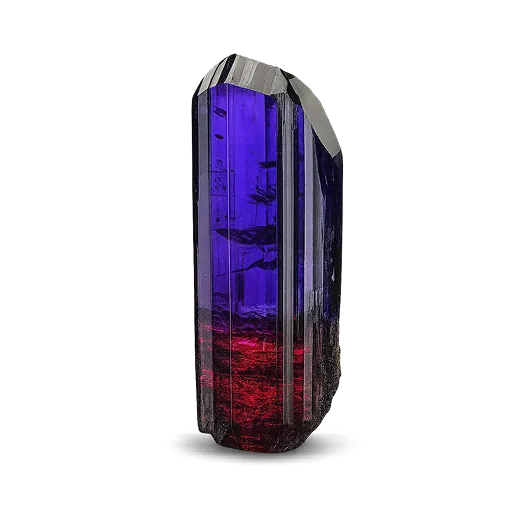
The tanzanite locality is confined to the Mererani Hills in the Manyara Region of northern Tanzania, where a narrow 2 × 8 km zone of metamorphic rock hosts gem-quality zoisite colored by trace vanadium. First noted by local artisanal miners in the late 1950s and officially “discovered” in January 1967 by Jumanne Mhero Ngoma, the deposit lies within schists and gneisses formed during late Precambrian–early Palaeozoic tectonism, with tanzanite crystals typically occurring in silica‐rich veins. Though production peaked in the 1970s and the mines were nationalized in 1971, block leases held by private companies have driven extensive tunneling (over 160 km of workings) to depths exceeding 200 m; the area remains the world’s only commercial source of tanzanite, with annual yields now limited as high‐grade pockets become scarce.
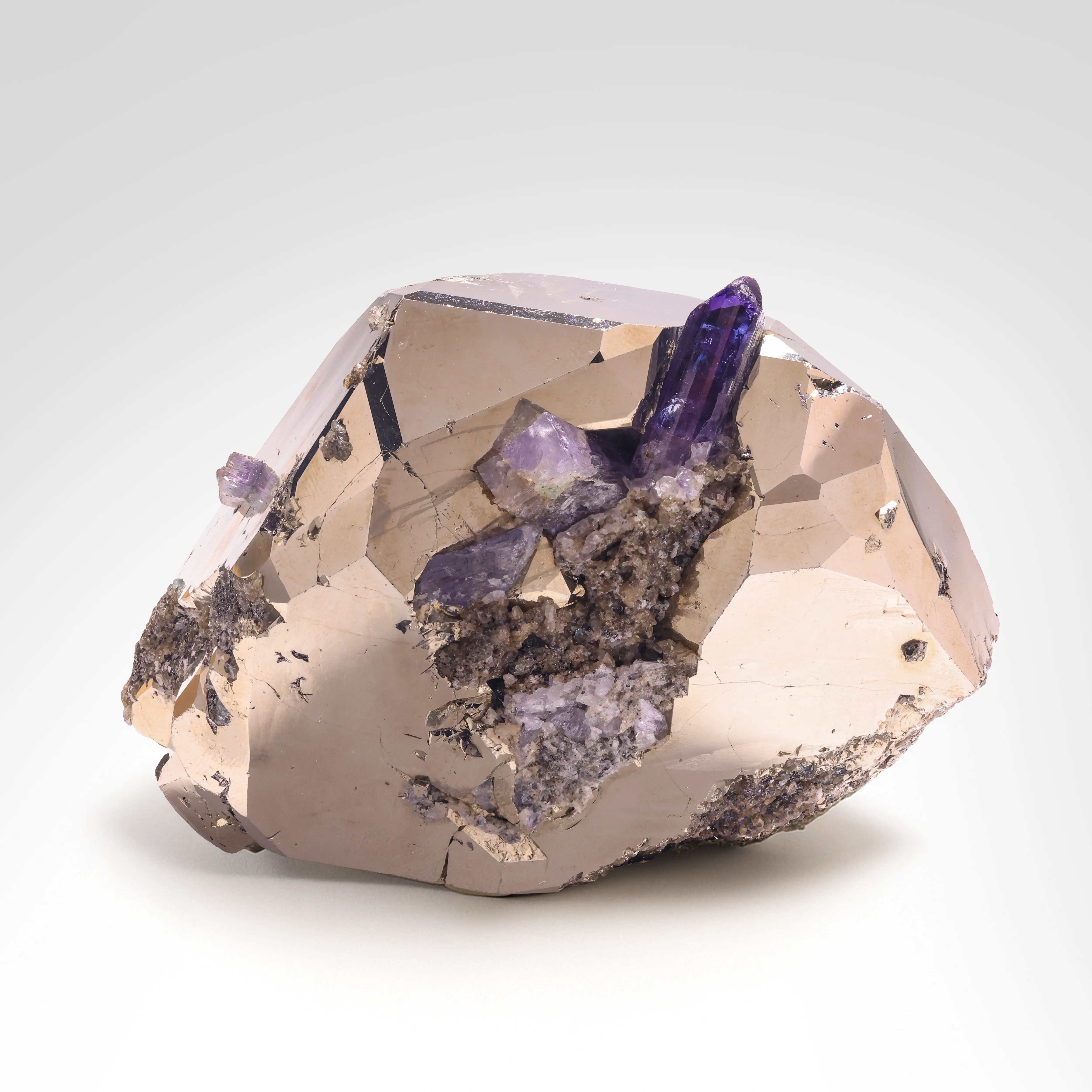
This particular specimen stands out due to the unusual association: it is rare for Tanzanite to occur with large pyrite crystals. The specimen is one unusually large (10cm wide) pyrite crystal with a terminated tanzanite crystal perched aesthetically in the middle. The specimen displays nicely in spite of some damage and missing crystals.