
1
Malachite after Azurite
1


- Free shipping
- Seller offers an extended return window of up to 14 days
 Ships from USA
WM
Weinrich MineralsFeatured
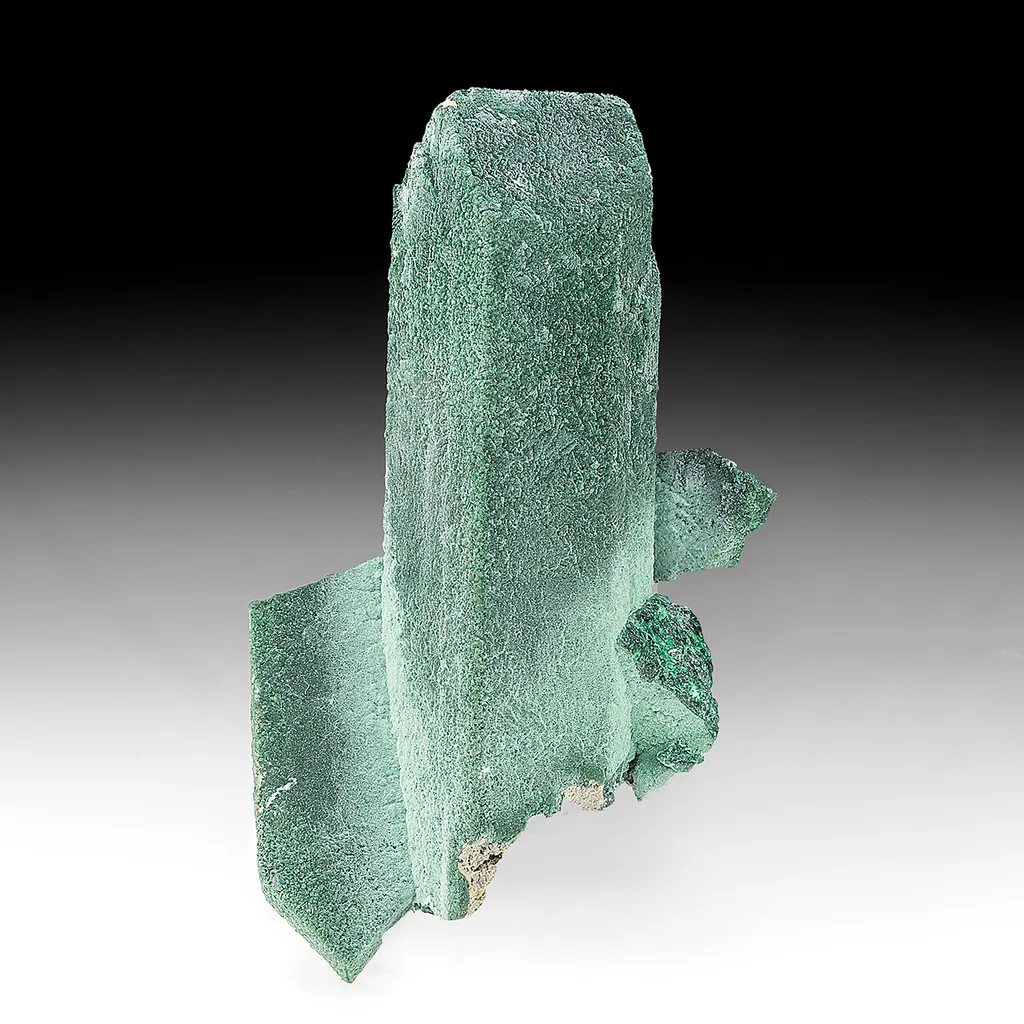
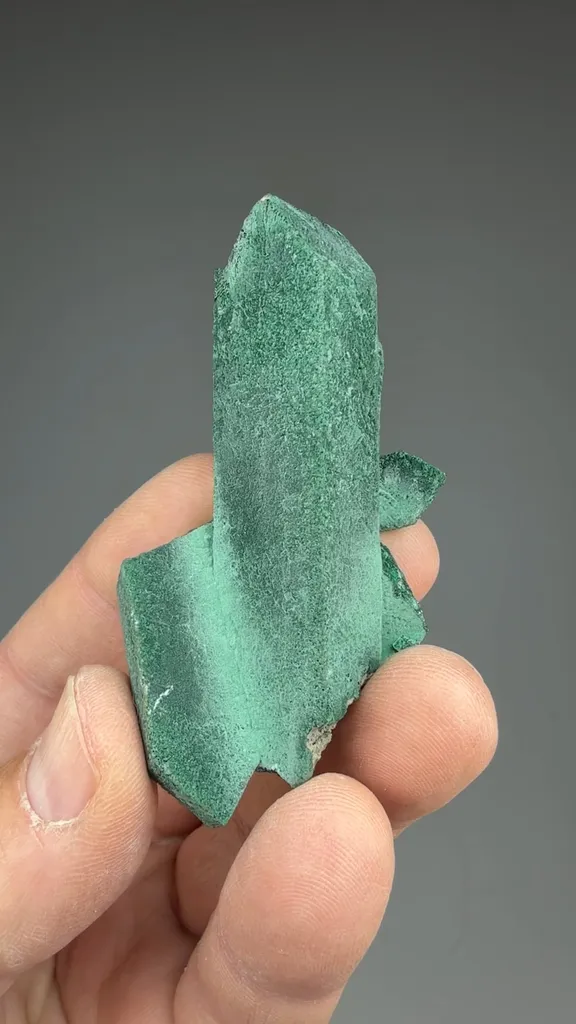
An excellent grouping of thick sharply formed azurite crystals now replaced by malachite. These are set on a small amount of matrix, the specimen is in super condition.
The Tsumeb Mine, located in the Otavi Mountainland of northern Namibia, is widely considered the most significant mineral locality in the world due to its immense species diversity and high-grade ore. Geologically, it is a polymetallic pipe-like deposit hosted within Neoproterozoic carbonate rocks of the Otavi Group. The ore body formed as a hydrothermal replacement deposit in a karst-related breccia pipe, where metal-rich fluids deposited primary sulfides of lead, copper, and zinc. Over millions of years, multiple stages of oxidation and secondary enrichment occurred, creating three distinct oxidation zones reaching depths of over 1,000 meters. Historically, the outcrop was known to local tribes for centuries, but industrial mining began in 1900 under the Otavi Minen- und Eisenbahn-Gesellschaft (OMEG). The mine operated nearly continuously for almost a century, surviving both World Wars and several changes in corporate ownership, until its official closure in 1996. It produced millions of tons of high-grade ore and remains the type locality for over 70 different mineral species.
Pseudomorphs from Tsumeb are legendary, particularly the remarkable examples of malachite after azurite. A pseudomorph is a mineralogical occurrence where one mineral replaces another while perfectly retaining the original external shape of the first crystal. At Tsumeb, large and sharp azurite crystals often became chemically unstable as environmental conditions changed, specifically through the introduction of more water and carbon dioxide in the oxidation zones. This caused the azurite to transform into malachite, resulting in a specimen that has the brilliant, velvety green color and fibrous structure of malachite but possesses the distinct, sharp, and often massive geometric form of the original azurite crystal. These "malachite after azurite" specimens are highly coveted by collectors because they represent a frozen moment in geological time, illustrating the complex chemical transitions that occur deep within an ore deposit as minerals react to changing groundwater chemistry.
Product details
SizeSmall Cabinet
Dimensions8.0 x 3.5 x 3.0 cm
Listed on07/16/2026
LocalityNamibia, Oshikoto Region, Tsumeb
SKU8282120
Comments