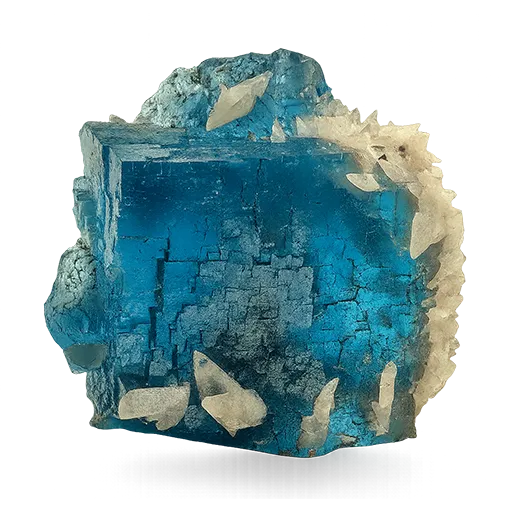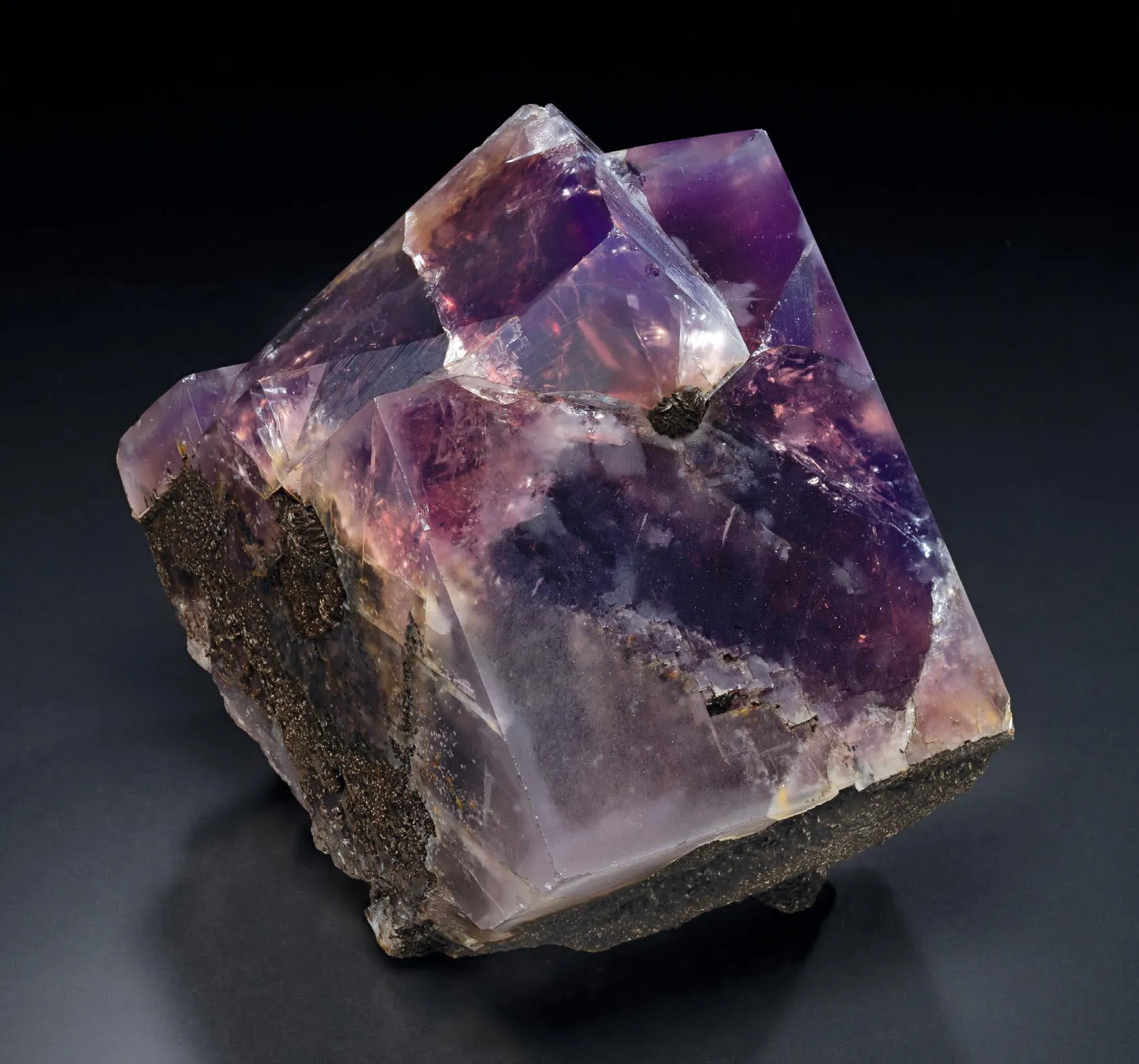
Source special issue: mineral-collection-university-of-delaware, PDF page: 44. Label: Figure 52. Fluorite, 14 cm, from the Boltsburn mine, Rookhope, Weardale, Durham, England. Mining in the Weardale area commenced around the time of the Norman Conquest (1066 A.D.), but the 18th century saw the greatest development of lead mining in the region. Sir William Blackett founded a lead mining company around 1700 and acquired leases in the Weardale area; his company abandoned them in 1884, when work at the Boltsburn mine became unprofitable. The Weardale Iron Company then stepped in and developed the Boltsburn West level, exploiting deposits of limonite. When they reached unoxidized ore, though, they gave up iron mining there, and the Weardale Lead Company took over, mining lead ores. The Boltsburn mine became the most profitable lead mine in the northern Pennines ore field, until its closure in 1940. During the late 19th and early 20th centuries the Boltsburn mine became famous among mineral collectors for its wonderful specimens of fluorite in a range of attractive colors, and in crystal sizes up to 23 cm. The large, single crystals were most commonly mauve in color, like the specimen shown here from the du Pont collection.
Origin: Boltsburn mine, Rookhope, Weardale, Durham, England