$165Median
511Sold (12 mo)
$200Last sale
Recent salesSee more
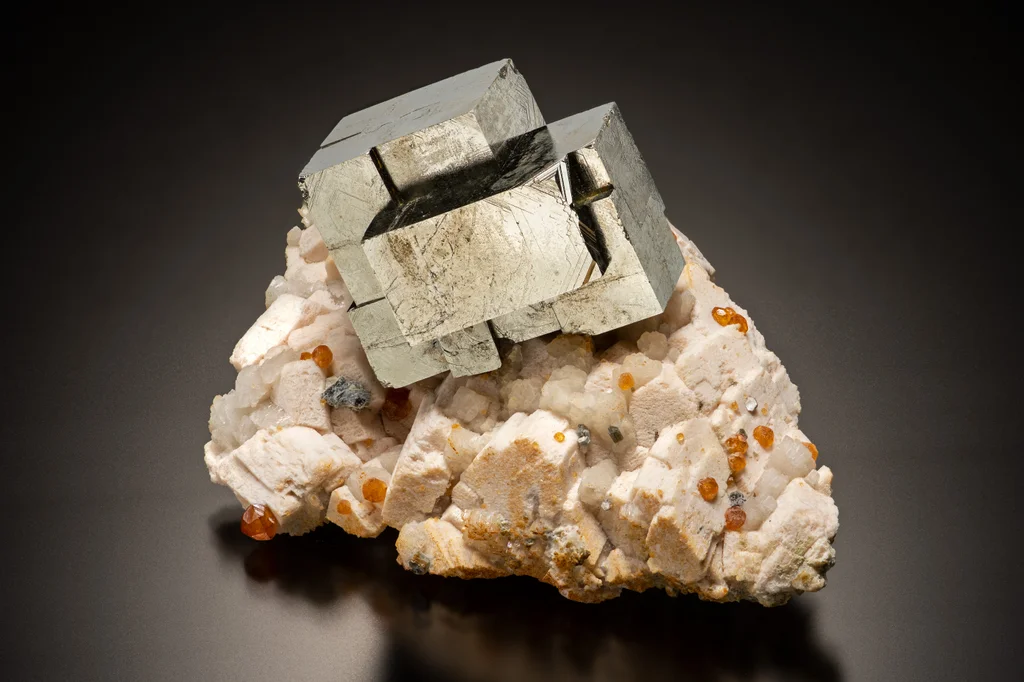
The Wushan granite pluton in Tongbei has been the primary focus of my personal collection interests for many years. Currently, my study coincidentally addresses the formation of these anomalously high trace element granite type: A-type granites. Until I started my PhD, I was unaware of the various types of granite, but this discovery has prompted me to explore their correlations in depth.
A-type granites typically form in extensional tectonic settings, ranging from post-orogenic to anorogenic environments. The high concentration of trace elements in these magmas leads to interesting mineralization processes. As the magma evolves, volatile components are progressively expelled from the crystallizing minerals. Volatiles such as fluorine contribute to the formation of minerals like fluorite and topaz. Water, although its role is less clear, may contribute to the concentration of elements that form minerals like spessartine in the late stages of crystallization.
Sulfide minerals such as pyrite, while uncommon in granites, do occur in some A-type granite localities. This occurrence may be attributed to the iron-rich nature of A-type granites combined with post-forming hydrothermal or meteoric water alteration, which introduces sulfate solutions that precipitate pyrite.
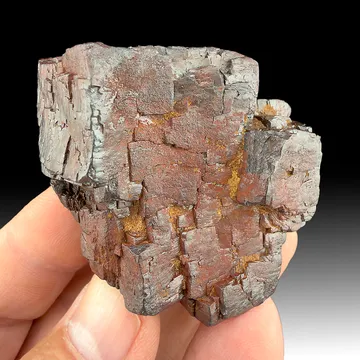
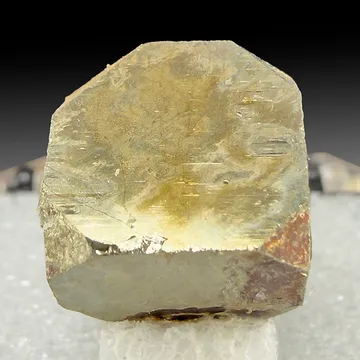
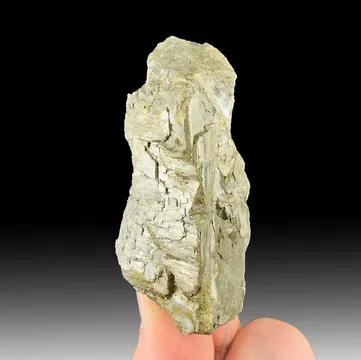
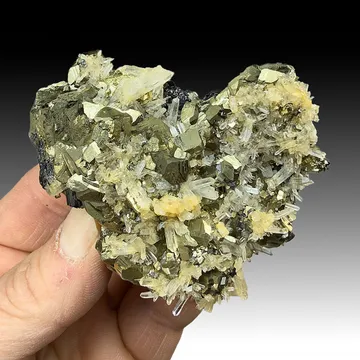
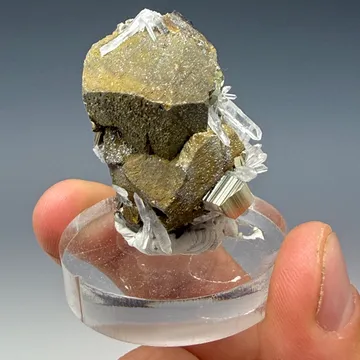
Tongbei is famous for spessartine&smokey quartz combo, and some unusual fluorite. Specimen for pyrite is less well-known as garnet in that locality because they are more rare. I am happy for having this "pyrite-dominates" specimen in my Tongbei collection and the combo already showed the local.
6.8cm, Pyrite on orthoclase with spessartine,Wushan spessartine mine, Tongbei, Yunxiao County, Zhang- zhou, Fujian, China. Tom Zhang Coll, Jeff Scovil photo.
Comments