
Updated 10h ago
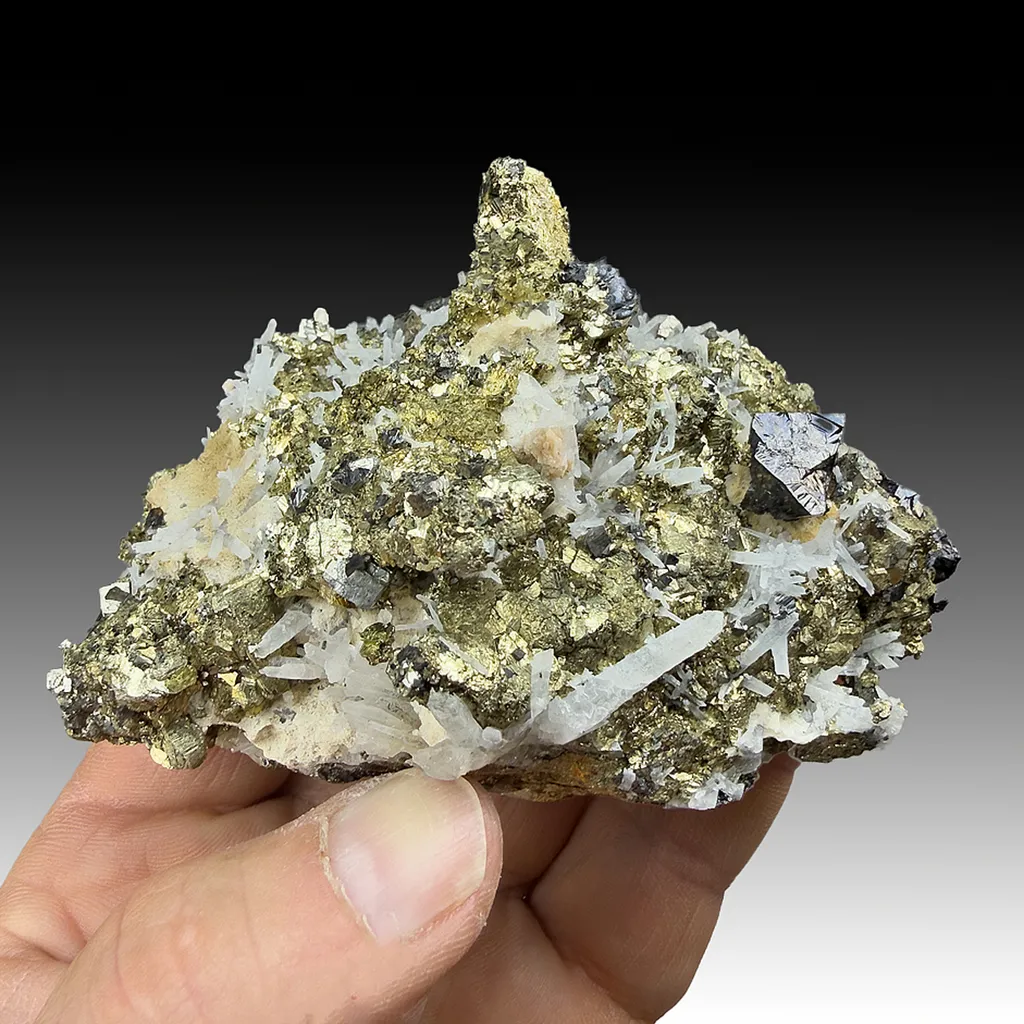
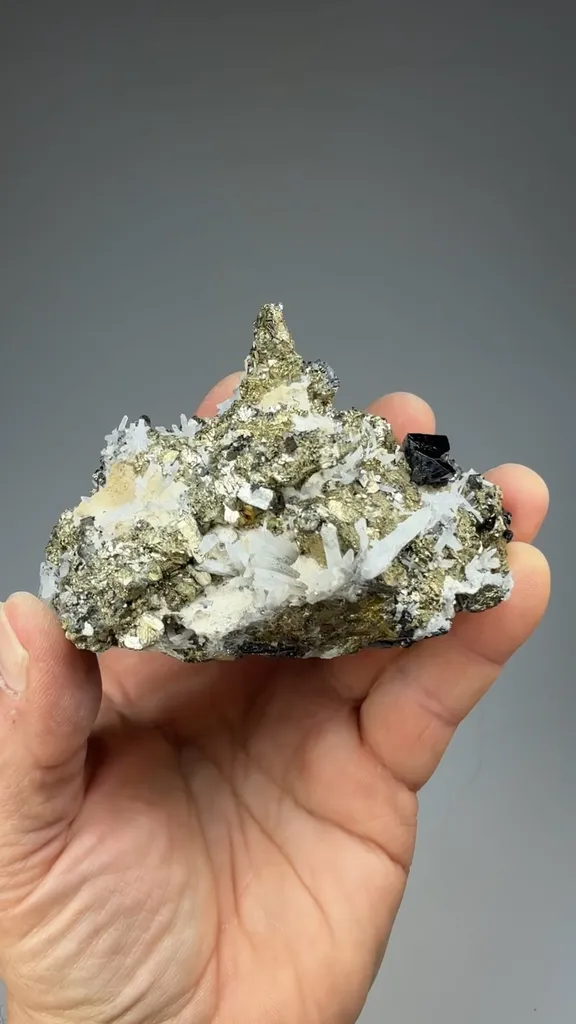
Pyrite after Pyrrhotite with Sphalerite


- Free shipping
- Seller offers an extended return window of up to 14 days
 Ships from USA
Crystals of what were once pseudo-hexagonal pyrrhotite, these now replaced by crystallized pyrite, on matrix with crystallized sphalerite and quartz. In good condition.The Trepca mining complex, located in the Mitrovica district of Kosovo, is one of the largest and most significant lead-zinc-silver deposits in Europe. Geologically, it is a skarn and hydrothermal replacement deposit formed during the Tertiary period, where mineralizing fluids interacted with Paleozoic carbonate rocks and volcanic tuffs within the Vardar Zone. The mineralization is complex, featuring massive bodies of galena and sphalerite alongside a diverse array of over sixty different mineral species. Historically, mining at Trepca dates back to at least the Roman era and was highly active during the medieval Serbian Kingdom, but the modern industrial phase began in 1927 with the British company Selection Trust Ltd. The complex reached its production peak during the mid-20th century under Yugoslav state control, becoming a cornerstone of the regional economy. Trepca is world-renowned among mineralogists for its aesthetic specimens, particularly sharp, lustrous crystals of galena, black sphalerite (marmatite), and translucent pink rhodochrosite. Although production was severely disrupted by the conflicts of the 1990s, portions of the Stari Trg mine continue to operate today, maintaining its legacy as both an industrial powerhouse and a source of museum-quality mineral specimens.A pseudomorph is a mineralogical phenomenon where one mineral replaces another while perfectly retaining the outward crystal form of the original species. In the case of pyrite after pyrrhotite, the process typically involves a chemical alteration where the less stable iron monosulfide, pyrrhotite, is transformed into the more stable iron disulfide, pyrite, often due to changes in sulfur fugacity or hydrothermal fluid composition. Geologically, this often occurs in metallic vein deposits or skarns where hexagonal, platy, or tabular crystals of pyrrhotite are gradually replaced by a fine-grained or massive aggregate of pyrite. The result is a specimen that possesses the distinct, often complex crystal habit of pyrrhotite but the brassy yellow color, hardness, and chemical signature of pyrite. These specimens are highly valued by collectors because they provide a frozen record of the changing geochemical conditions within a mineral deposit, effectively capturing the transition from one mineral phase to another while preserving the unique geometry of the precursor.
Product details
Species
SizeSmall Cabinet
Dimensions10.0 x 6.0 x 5.5 cm
Locality
SKU2113019
Listed on05/10/2026
Learn more
Mineral guideLearn about Pyritebrilliant metallic luster, perfect cubes, and golden color; collectors prize affordable pieces to top specimens, with Navajún and Huanzala localities.
Regional guidePyrite from Trepča Stari Trg MineSign in to contribute
OriginTrepča Stari Trg MineAbout specimens from Trepča Stari Trg Mine
Comments