
Quartz
Unknown Owner
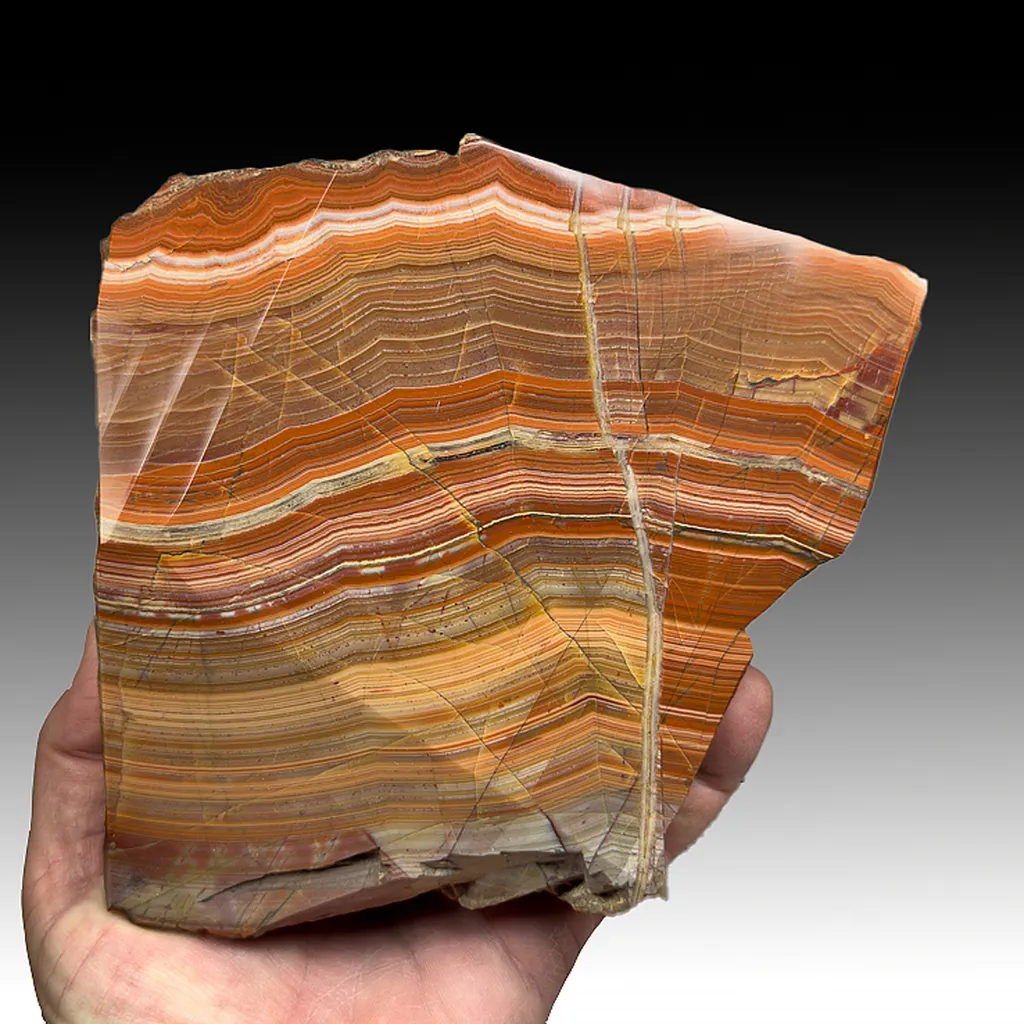
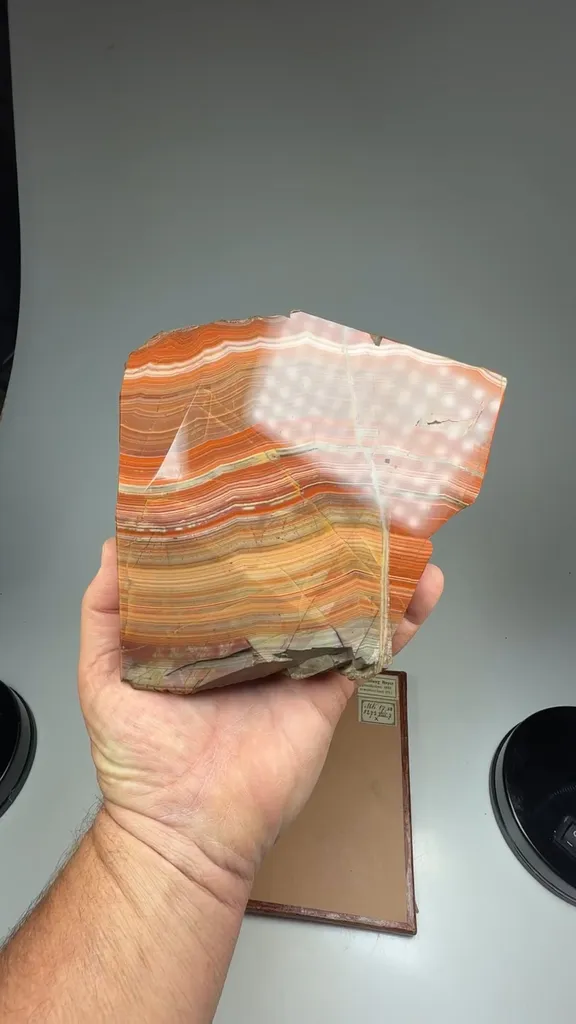
A beautiful colorful banded agates specimen polished across the front face from this famous European locality. This antique specimen comes with an old label and at one time was part of the collection of Wilhelm Hoyer. This dates to the 19th century.Schlottwitz, located in the Eastern Erzgebirge Mountains of Saxony, Germany, is one of the most famous European localities for amethyst-agate breccia. Geologically, the deposit formed within a major tectonic fault zone known as the Schlottwitz-Rabenau Fault, where hydrothermal fluids rich in silica circulated through fractured Permian-aged volcanic and sedimentary rocks. This process created unique amethyst veins and complexly banded agates that often cement together fragments of older rock, resulting in the iconic "Schlottwitz Breccia." Historically, the site was first discovered in the mid-1700s, and its beautifully patterned stones were highly sought after for the manufacture of luxury items for the Saxon court in Dresden. Systematic mining and quarrying for decorative stone occurred intermittently from the 18th century through the mid-20th century, with significant recovery efforts during the late 1800s. Today, the classic outcrops are largely protected or inaccessible, but the locality remains legendary among mineralogists for its high-contrast patterns of purple amethyst and rhythmic, fortification agate banding.Wilhelm Hoyer was a notable 19th-century German collector and researcher whose work focused heavily on the mineralogy and geology of the Hannover region and the Harz Mountains. Geologically, he was deeply interested in the sedimentary formations of the North German Basin, particularly the salt deposits and the mineral-rich veins of the classic Harz localities. Historically, Hoyer is recognized for assembling an extensive and scientifically significant collection of minerals, many of which were carefully documented in the mineralogical literature of the late 1800s. He was a frequent contributor to professional journals and maintainted close ties with the major academic institutions of his time, helping to preserve specimens from mines that were already beginning to close. His legacy survives through the many fine specimens that eventually found their way into major museum collections, providing a vital snapshot of the mining history and mineral diversity of northern Germany during the height of its industrial development.
Product details
Species
SizeLarge Cabinet
Dimensions16.0 x 16.0 x 6.5 cm
Added on04/13/2026
Locality
Known provenance
| Date | Collector | Acquisition price |
|---|---|---|
| 05/2026 | Unknown Owner | $1,250.00 |
| — | Weinrich Minerals | Not disclosed |
Comments