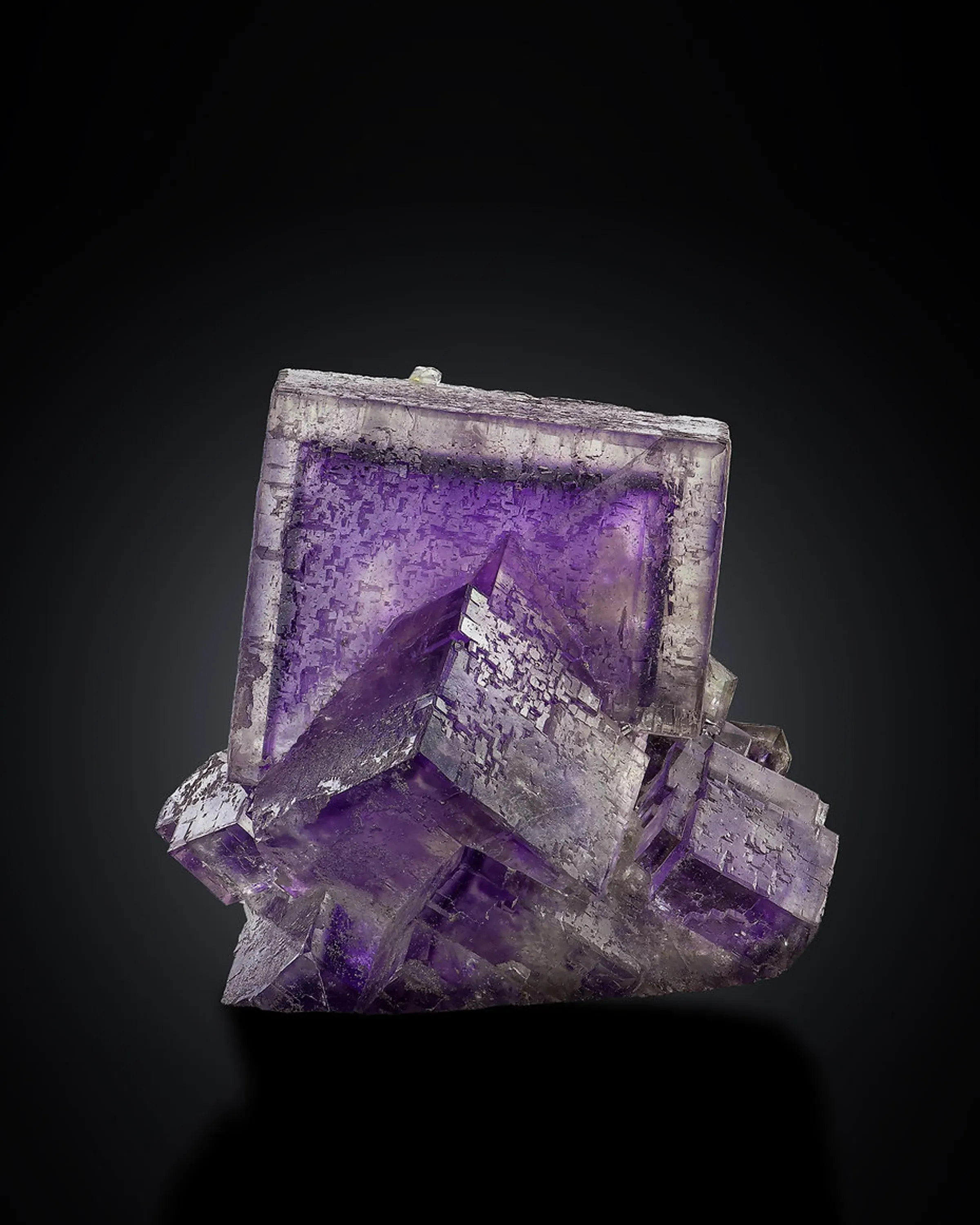
Some specimens require explanation. Others explain themselves.
The difference often comes down to whether the specimen clearly communicates its formation.
When crystal growth is visible and coherent, the specimen becomes easier to understand. Terminations point in a consistent direction, matrix relationships are clear, and the mineral appears anchored within its geological context.
The viewer does not need specialized knowledge to appreciate this. Even someone new to collecting can sense when a piece feels logically formed rather than randomly assembled.
This clarity often gives the specimen a sense of stability.
Many collectors initially focus on color or rarity, but over time structure becomes far more important.
A specimen with modest color but strong structural expression can be far more compelling than a brightly colored piece that lacks coherence.
Clear growth patterns reveal how the mineral formed: where crystals nucleated, how they expanded, and how the surrounding environment shaped the final structure.
In these cases the specimen becomes almost educational, visually explaining the geological process that created it.
Collectors tend to remember specimens that feel understandable.
When the structure, growth, and proportions align, the piece becomes easier to mentally map. The viewer can reconstruct its formation almost instinctively.
This is why certain specimens stay in memory long after seeing them. They are not simply attractive objects — they are visual records of geological processes made legible through crystal growth.
And when a mineral specimen tells its story clearly, the viewer does not need words to understand it.