Thank you for being an EarthWonders newsletter subscriber. We're super happy to share fresh content with you every week.
EarthWonders Is Coming To Tucson
Our team is coming to Tucson on the 30th of January and hopes to meet as many dealers and collectors as we can. You can find us at 248 West Lester Street where we will help sellers set up exclusive listings on EarthWonders!
We are putting finishing touches on the logistics of the EarthWonders studio and will share an update in next week's newsletter. If you are reading this and haven't subscribed yet - subscribe now!
Will visited Tucson a week before the show and shared insights about early buyer activity - WATCH THE VIDEO HERE
We are bringing you new mineral specimens every day with over 75 000 items for sale, in private collections and museums! The team continues refining locality information and finding new ones to share with you!
Some of you will already know these famous localities. EarthWonders brings you many specimens from these localities - for sale and not for sale - from top dealers, publications and private collections, all in one place. Check out the links below!
This week, ahead of the Tucson show, we are bringing you some Arizona localities:
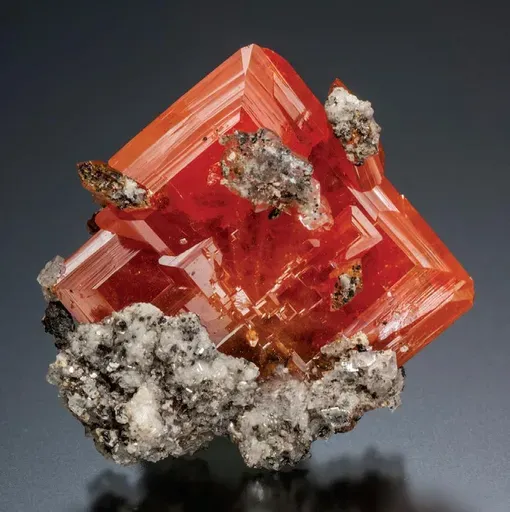
Red Cloud Mine Red Cloud Mine - Wulfenite
The Red Cloud Mine is legendary among wulfenite localities, having produced what many consider the finest examples of this mineral ever found. Its distinctive plates of deep orange-red wulfenite, reaching sizes over 5cm across, combine vivid color with exceptional crystal form. Unlike the thinner, more delicate crystals from other Arizona localities, Red Cloud wulfenites are notable for their robust thickness and rich, nearly transparent color zoning. When the mine hit its productive zones in the late 1800s and again during modern collecting operations, it yielded combinations of brilliant orange crystals on contrasting dark matrix that set standards for the species. While Mexican localities like Los Lamentos would later produce larger crystals, the Red Cloud specimens maintain their status for their unique combination of size, color intensity, and crystallographic perfection.
The Czar Mine stands as a benchmark locality for azurite, producing specimens that redefined collector expectations for the species. Rich midnight-blue crystals, often reaching several centimeters, show exceptional luster and sharp crystal form that sets them apart from the more common massive material. What makes Czar Mine specimens particularly distinctive is their association with brilliant green malachite and snow-white calcite, creating dramatic aesthetic combinations that showcase Arizona's mineral wealth. The mine's upper oxidation zones yielded some of North America's finest azurite specimens during its productive years, with many of these pieces now preserved in major museum collections worldwide.
Duquesne-Washington Camp - Japan Law Twins
Japan law twins from the Duquesne-Washington Camp district represent quartz's most distinctive twinning habit. When two quartz crystals interlock at a precise 84°33' angle, they form what's known as a Japan law twin - named after similar specimens first studied from Japan's Narushima mine. While these twins also occur at localities like the Swiss Alps and Brazil's Minas Gerais, the Duquesne specimens are noteworthy for their exceptional clarity, sharp terminations, and distinctive smoky color. The district produced some of the finest examples of this twinning law during its mining heyday, specimens that remain highly sought after by collectors and crystallographers alike. The way these twins intersect often creates a heart-shaped outline, making them particularly appealing as Valentine's Day or anniversary gifts for the mineral enthusiast in your life.
North Geronimo Mine - Vanadinite, Wulfenite
The North Geronimo Mine produced a striking combination of vanadinite and wulfenite that exemplifies the best of Arizona mineral heritage. Deep red vanadinite crystals, sharp and well-formed, contrast beautifully with the amber tablets of wulfenite beneath them. While other Arizona localities like the Red Cloud or Old Yuma mines are better known for single-species specimens, the North Geronimo stands out for these remarkable composite pieces. The quality and aesthetics of these specimens reflect a specific moment in the mine's history when ideal conditions allowed these two minerals to form in perfect harmony.
79 Mine 79 Mine - Aurichalcite
The 79 Mine sets the standard for aurichalcite specimens with sprays of pastel blue crystals that seem to defy gravity. Unlike the typically compact, matted masses from other localities, the 79 Mine produced delicate, elongated crystals up to several centimeters long - some of the largest known for the species. These slender needles form graceful radiating clusters that catch the light with a silky, almost ethereal luster. The contrast between the soft blue crystals and the darker host rock creates specimens of remarkable visual impact. What truly sets this locality apart is not just crystal size, but the exceptional preservation of these fragile specimens, which emerged pristine from the old zinc workings during the mine's heyday in the early 1900s.






