We've completely reorganized how you manage your collection with a new Collection Manager accessible from your user menu. We listened when you told us "Stores" were complicated and confusing, so we've removed that concept entirely and greatly simplified how you list items and manage both your collection items and for sale items. You can now filter within collections to find exactly what you need, see previously owned items where your name appears in the provenance, and toggle between List View and Grid View when browsing personal collections. Watch the VIDEO HERE.
We reached out to Rob Lavinsky from Arkenstone for the inside story on what's become the most expensive mineral specimen ever sold at a public show. What he shared with us reveals how two legendary silver specimens, separated since 1947, finally came back together in one of the most significant mineral transactions in history.
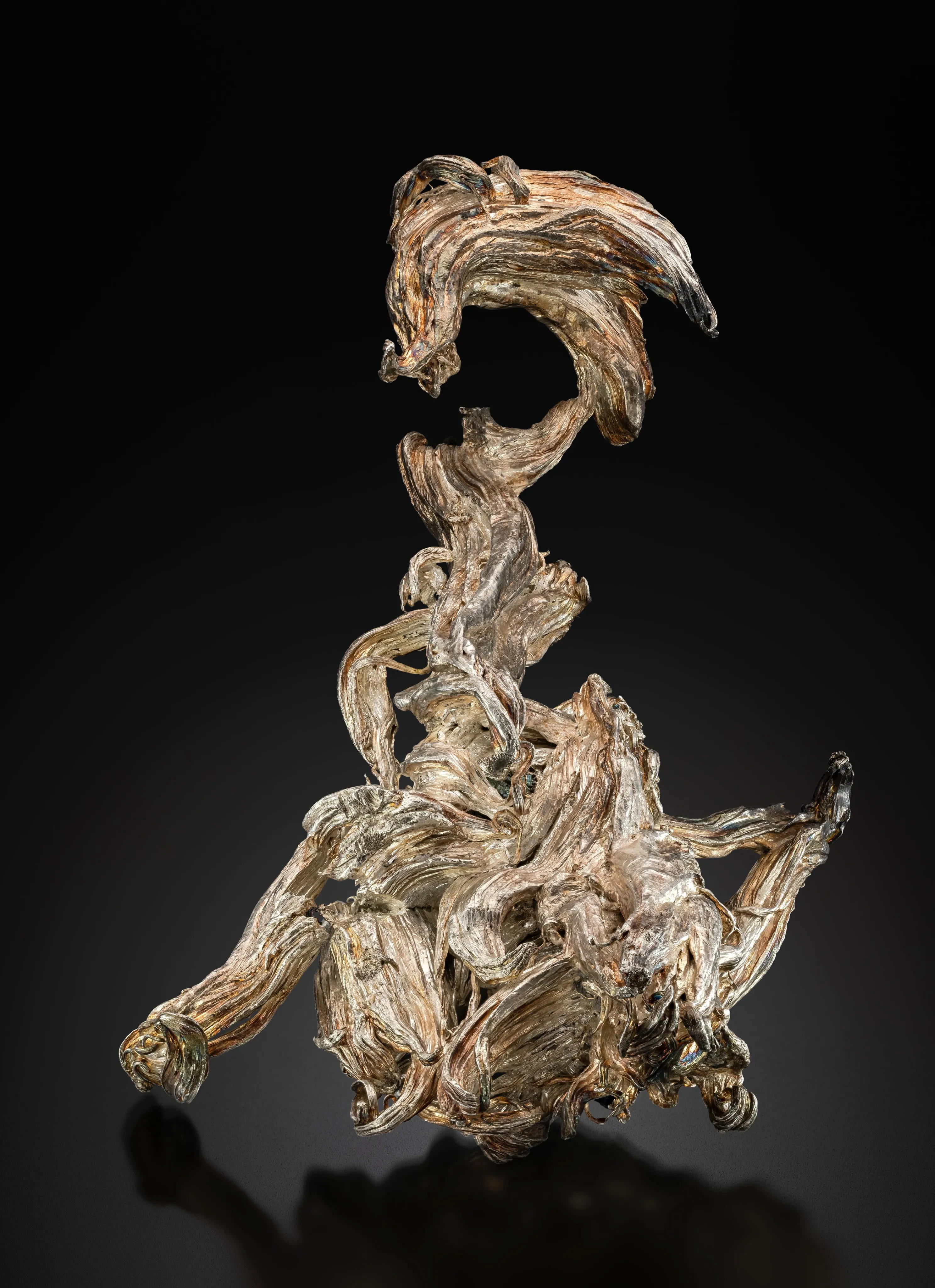
By now you've probably heard the rumours floating around the mineral collecting community, but let me confirm what everyone's been whispering about a Kongsberg silver specimen just sold for ten million dollars at the Denver Mineral Show, officially becoming the most expensive mineral ever sold at a show.
Yes, you read that correctly. Ten million.
The story behind it is even more extraordinary than the price. Thanks to Rob Lavinsky and the other dealers involved sharing the complete backstory of this historic transaction, we can now reveal the full tale of these remarkable treasures.
According to newly uncovered documentation from the Kongsberg Mine archives, this spectacular 22cm tall, 1,896 gram silver specimen isn't just any wire silver; it's one half of a legendary pair that's been separated since 1947. Peter Lyckberg, the foremost authority on Kongsberg silvers, believes these specimens likely came from a remarkable 1938 pocket that was held until sale nearly a decade later.
The story of their rediscovery begins with a boot getting caught in a silver wire. When miners in the 1930s accidentally discovered this underwater pocket, they found specimens with unusually bright, fresh, lustrous surfaces, a rarity for Kongsberg silvers that were typically exposed to air. The authenticity of this luster is confirmed by small sphalerite inclusions showing natural greenish tarnish that would have been affected by any treatment.
The 1947 Kongsberg Mine ledgers tell a fascinating tale. When this pocket was finally sold, the pieces went to remarkable destinations:
Those last two pieces? They disappeared into private hands for 75 years.
In 2022, Marcus Budil flew to Norway when one of the Olsen specimens appeared at auction. After aggressive competitive bidding, he secured it and immediately placed it on public display at the Houston Museum of Natural Science, where it was recognized as one of the finest, most massive Kongsberg silvers in private hands.
But the real detective work began when Budil examined the original mining company documentation that came with the specimen. Realizing there was a "brother" piece sold in the same lot, he embarked on a two-year quest to find it. With help from the auction house, he traced the Olsen family connections across Europe.
The twist? The missing specimen had been sitting in a home in Monaco, less than an hour from Budil's own house, serving as family decor and a souvenir of family history. The descendants had no idea of its significance to the collecting world.
For the first time since 1947, both Olsen specimens were reunited when the second piece premiered at the Denver Hard Rock Summit. In an unusually collaborative and transparent process, Rob Lavinsky, Marcus Budil, and Wayne Thompson worked together to place this treasure with anonymous collector. This open collaboration between three prominent dealers working in tandem for the common good represents a rare moment of transparency in the high end mineral market.
The specimen's size is staggering, about the size of a football, with crystallized silver wires creating flowing, organic forms that showcase exactly why Kongsberg silver commands such respect. László Kupi's photography reveals details that justify one observer's description of "aesthetics almost beyond imagination."
This isn't just about a big number. When mineral specimens command prices rivaling major artworks, it signals a new level of recognition for our field. The transparency of this sale, conducted publicly at the show rather than in shadowy backroom deals, sends a powerful message about the maturity and legitimacy of the mineral collecting market.
Several dealers believe this sale will have ripple effects throughout the community. Collections sitting quietly for decades might suddenly be reevaluated. Estate sales will get second looks. And who knows what other "lost" specimens might emerge from the shadows?
While the new owner remains anonymous for security reasons, their track record suggests this specimen will eventually grace museum exhibitions where the public can appreciate this natural masterpiece. The mineral collecting world has always been generous about sharing its greatest treasures.
One thing's certain! Denver 2026 is going to be very interesting. If this sale taught us anything, it's that the ceiling for exceptional minerals might be higher than any of us imagined, and that sometimes, the greatest treasures are hiding in plain sight, waiting for someone with vision to recognize their true value.
Note: Special thanks to Marcus Budil, Rob Lavinsky, Wayne Thompson, László Kupi, and Peter Lyckberg for their contributions to documenting this historic transaction.






