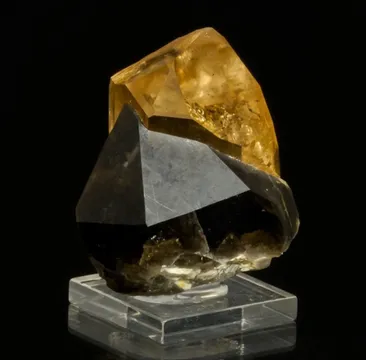

Tony H. Gill on the gem-quality topaz found near Esenköy in Muğla Province, Türkiye: the geological setting, three collecting trips, the crystals and matrix specimens, and the questions still open.
This article was written by collector Tony H. Gill.
A recent discovery of gem-quality topaz crystals has been documented near Esenköy in the Yatağan district of Muğla Province, Türkiye. This new reported locality, situated in a mountainous region of southwestern Türkiye, has produced well-formed prismatic crystals of significant mineralogical and geological interest. The deposit's unique geological setting, coupled with the circumstances of its discovery, establishes it as another important emerging locality for topaz.
Geological Context
The Esenköy deposit is said to be situated at the intersection of Permian (260 million years) and Permo-Carboniferous (300 million years) sedimentary and metamorphic layers, intruded by granitic pegmatites formed during later stages of tectonic and hydrothermal processes. It is thought that hydrothermal fluids enriched with fluorine and silica facilitated the crystallization of topaz and associated minerals in this geologically complex region.
The discovery was made possible following a wildfire in August 2021, which burned approximately 10,000 hectares of forest in the area. The fire removed dense vegetation and pine needle cover, exposing previously concealed geological outcrops. Firefighting operations further improved accessibility by cutting forest roads, which allowed local collectors to examine areas of pegmatite exposures that had not been previously explored.
Discovery and Fieldwork
The discovery of the Esenköy deposit was the result of systematic exploration by a team of field collectors and mineral enthusiasts. Over the course of three expeditions, the team uncovered a range of topaz specimens that has revealed the locality's potential:
- First Trip: The initial exploration yielded a small number of white and champagne-colored single crystals. These specimens were relatively small and provided an initial indication of the presence of topaz.
- Second Trip: Larger crystals were recovered during subsequent work, including notable examples of red and pink topaz. These findings suggested the potential for producing specimens of both scientific and aesthetic significance.
- Third Trip: The final expedition uncovered additional single crystals and a number of matrix specimens. These matrix samples are of particular importance, as they preserve geological context and provide clues about the formation processes of the topaz.
The team included mineral enthusiasts and lapidary specialists from across Türkiye, including Habib Şanlı, Zafer Yumuk, Erdem Heral, Celal and Cem Uysal, and Burhan Çucuk. Their combined expertise in fieldwork, lapidary, and gemology was instrumental in the systematic exploration of the locality.
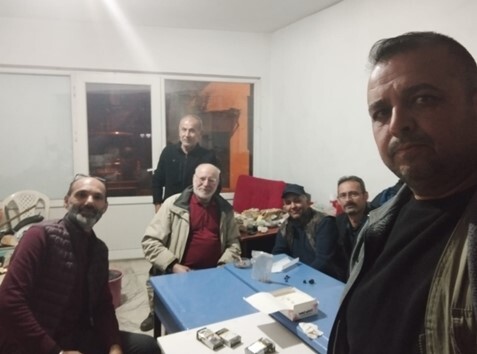
The discovery team, from left to right: Habib Şanlı, Zafer Yumuk, Erdem Heral, Celal Uysal, Burhan Çucuk, and Cem Uysal. Photo courtesy of Tony H. Gill.
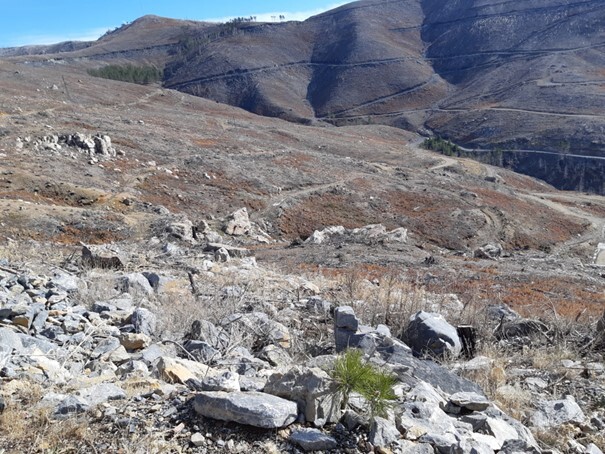
Esenköy locality, Esenköy, Yatağan, Muğla, Türkiye. Photo courtesy of Tony H. Gill.
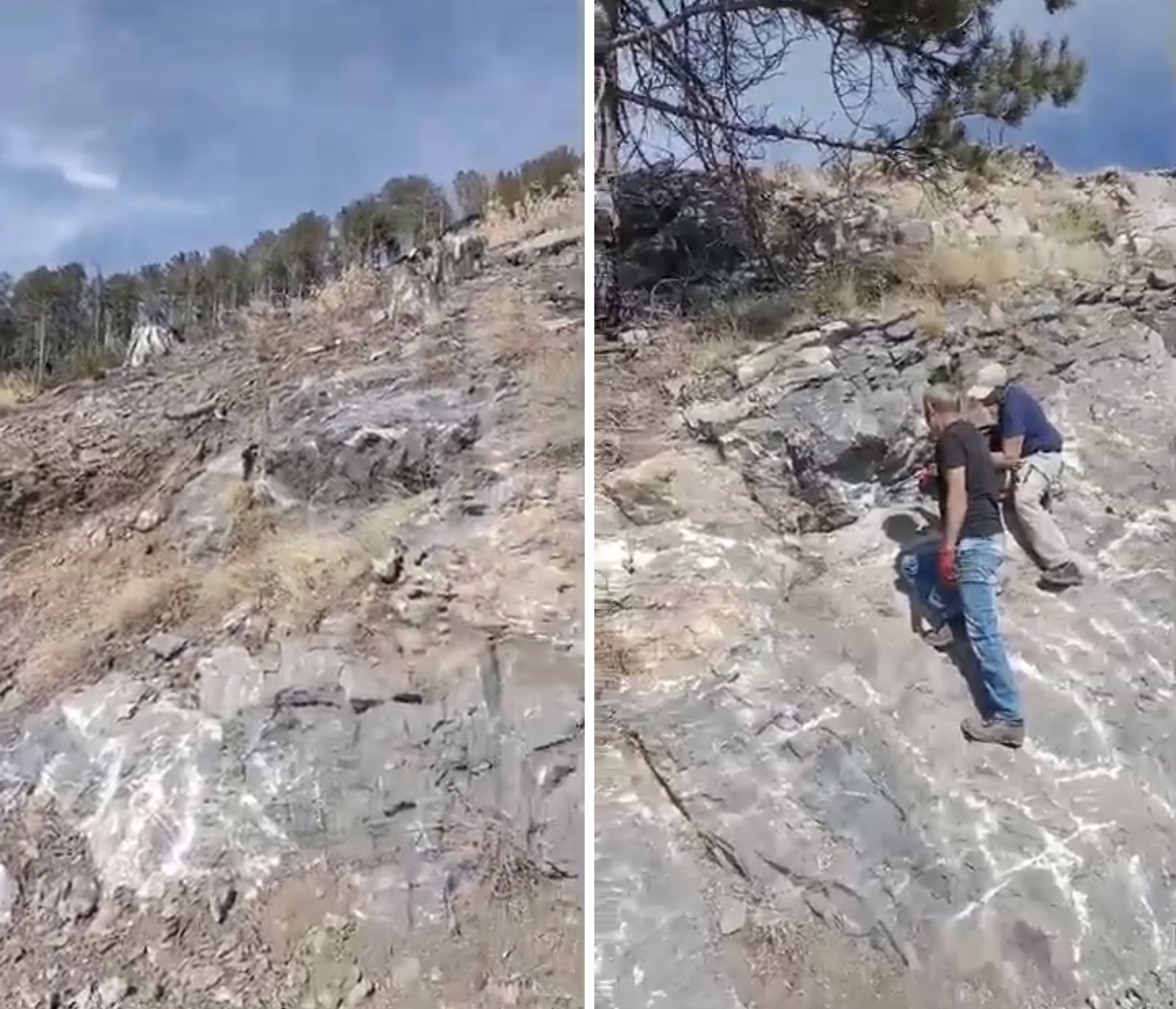
Left: Looking up the hill, the pegmatite in the foreground and burnt forest in the background, Esenköy, Yatağan, Muğla, Türkiye. Right: Some of the team, drilling into the rock vein, looking to recover topaz crystals. Locality: Esenköy, Yatağan, Muğla, Türkiye. Photos courtesy of Tony H. Gill.
Crystallographic and Visual Characteristics
The Esenköy topaz crystals exhibit well-formed prismatic habits with basal terminations. Individual crystals reach lengths of up to approximately 5cm, with colors ranging from pale champagne to deep golden hues, and less commonly, pink and red tones. The crystals display high transparency with minimal inclusions, which adds to their value for both mineralogical study and potential gem applications. Some of the crystals also demonstrate a silky appearance throughout.
Matrix specimens, where topaz is associated with the pegmatitic host rock, are especially noteworthy. These specimens provide insights into the geological environment of the deposit and allow for a more complete understanding of the mineralogical associations and paragenesis within the pegmatites.
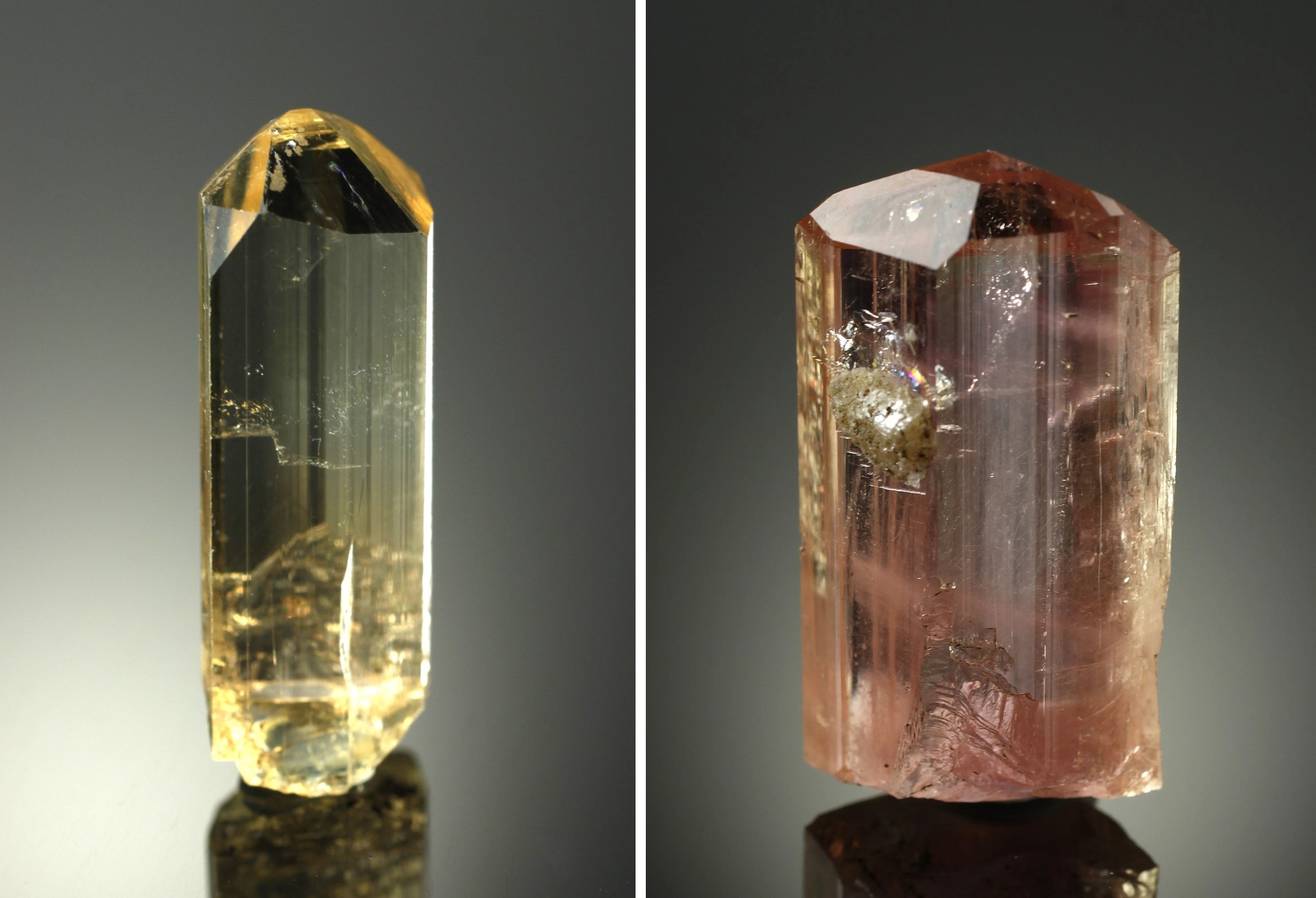
Left: Highly transparent Sherry topaz crystal, 2.5cm x 1cm (view specimen). Right: Highly transparent Pink topaz crystal, 2.8cm x 1.6cm (view specimen). Locality: Esenköy, Yatağan, Muğla, Türkiye. Photographer & Specimen Owner: Tony Gill.
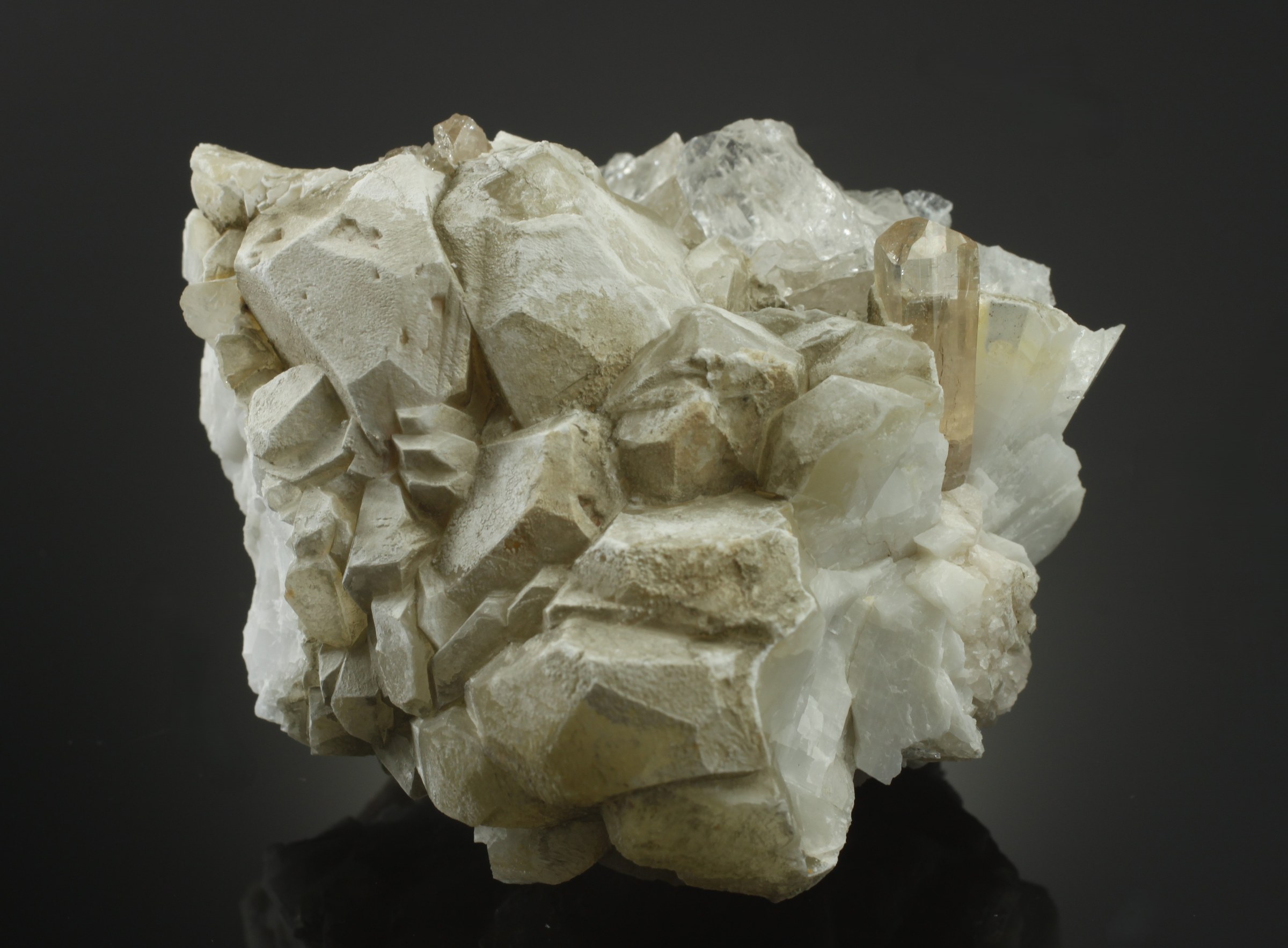
Sherry topaz crystal on Calcite and Quartz matrix, 8cm x 8cm, crystal size 2cm x 0.8cm. Locality: Esenköy, Yatağan, Muğla, Türkiye. Photographer & Specimen Owner: Tony Gill.
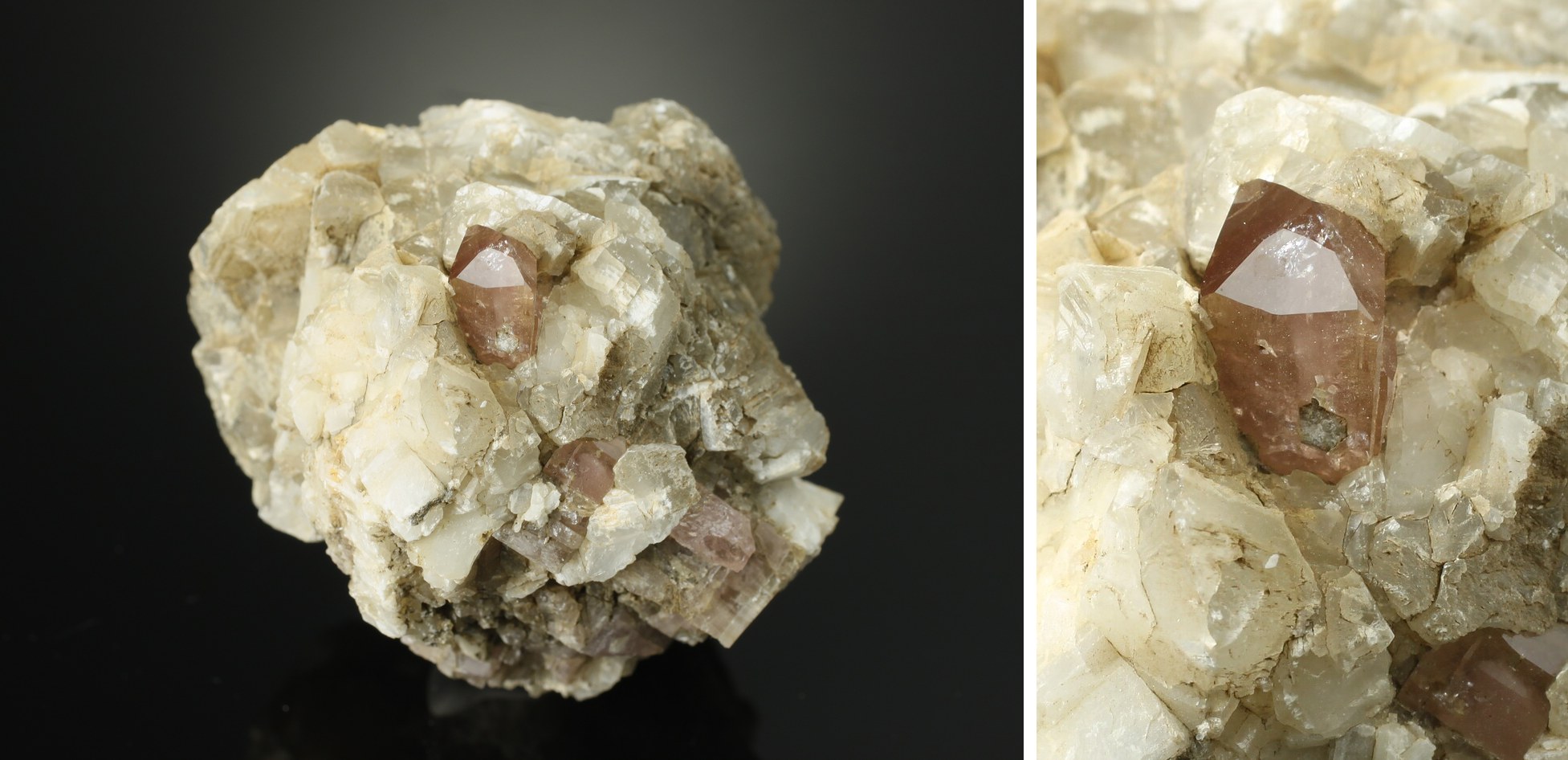
Left: Pink topaz crystal on Calcite and Quartz matrix, 4cm x 4cm. Crystal size 1cm x 0.8cm. Right: Close up view of the same Pink topaz crystal. Locality: Esenköy, Yatağan, Muğla, Türkiye. Photographer & Specimen Owner: Tony Gill.
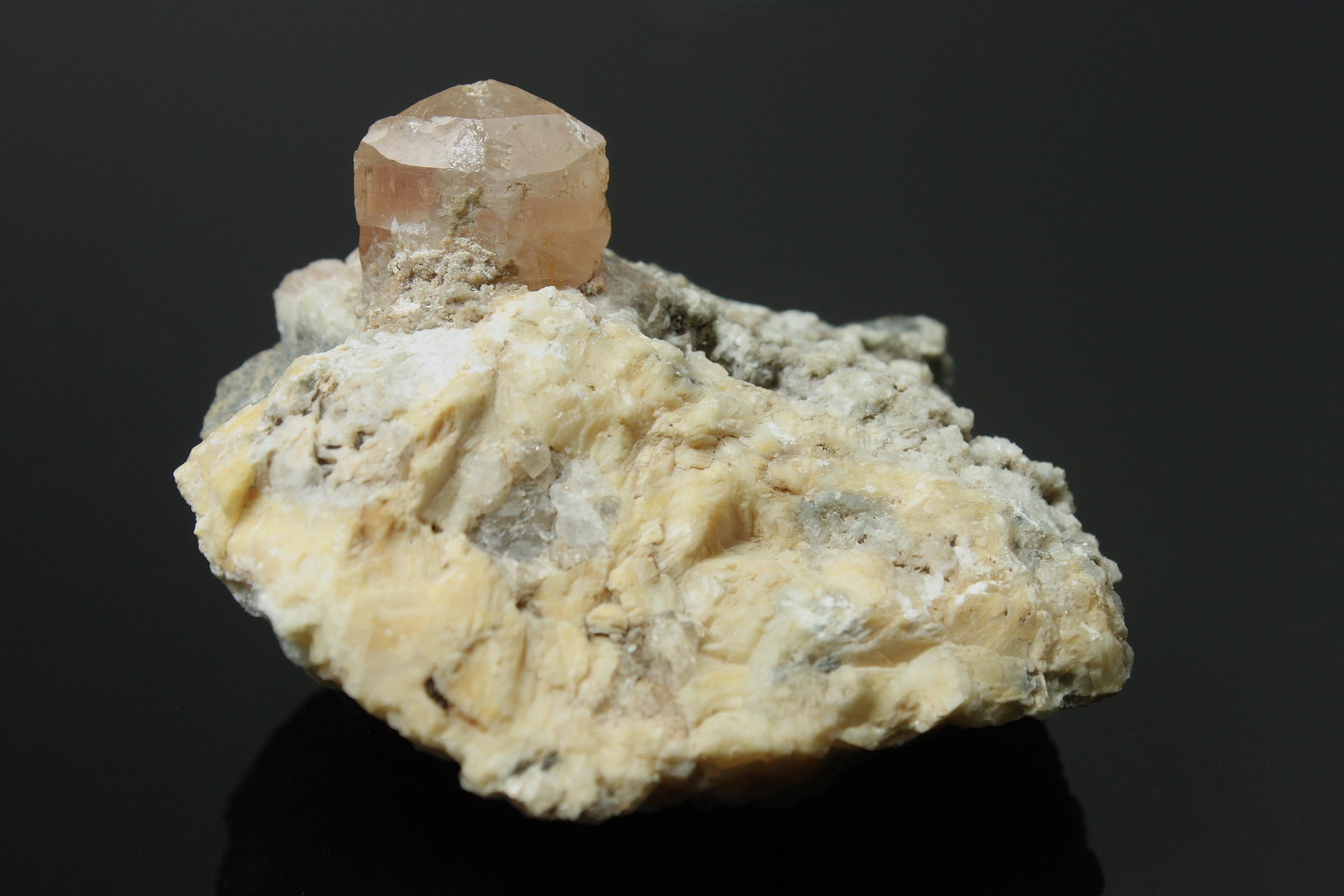
Sherry to Peach topaz crystal demonstrating silky appearance. Topaz crystal on Calcite and Quartz matrix, 6cm x 5cm x 5cm. Crystal size 1.5cm. Locality: Esenköy, Yatağan, Muğla, Türkiye. Photographer & Specimen Owner: Tony Gill.
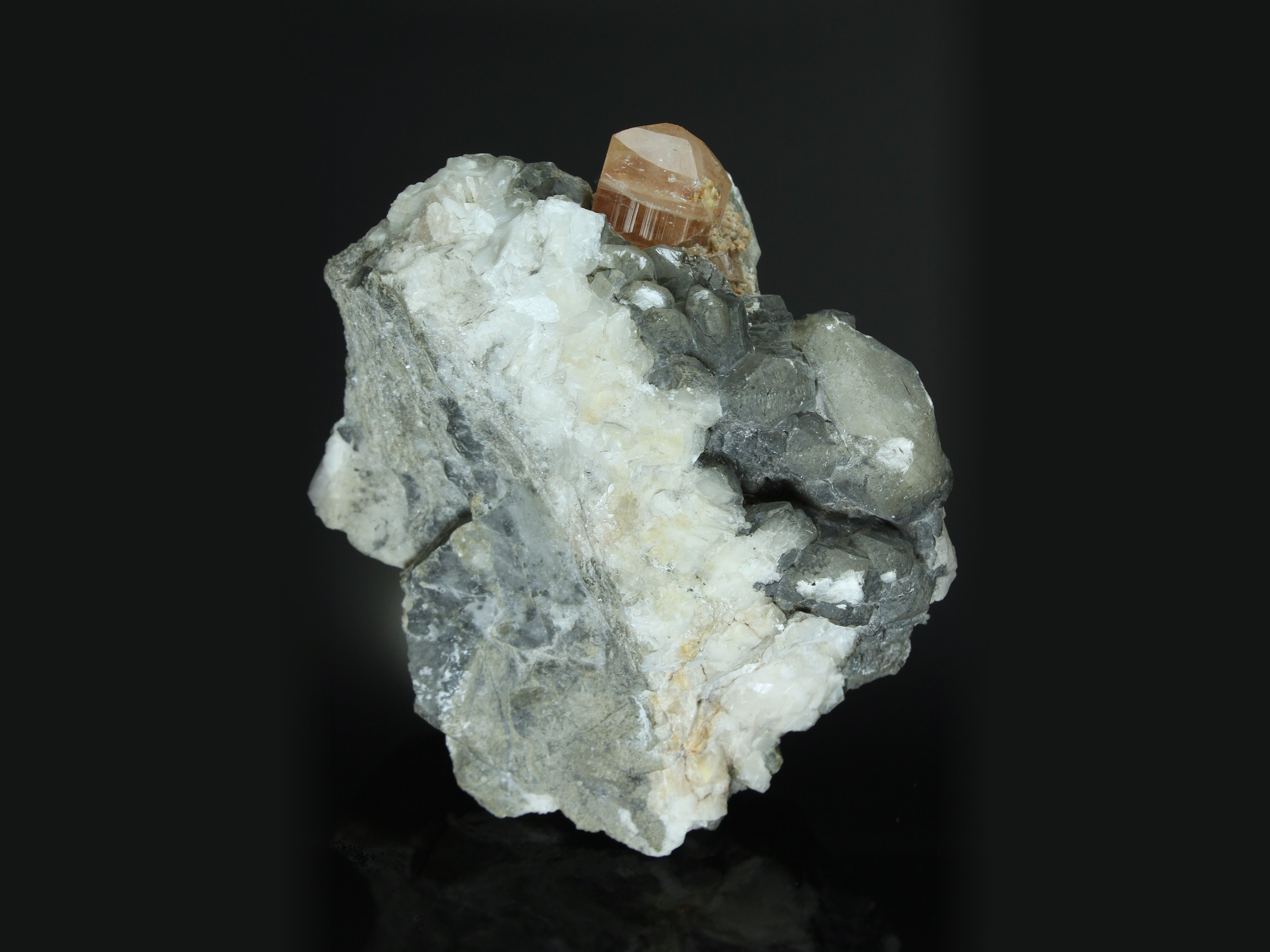
Sherry to Peach topaz crystal demonstrating silky appearance. Topaz crystal on Calcite and Quartz matrix, 11cm x 9.5cm x 7cm. Crystal size 1.5cm. Locality: Esenköy, Yatağan, Muğla, Türkiye. Photographer & Specimen Owner: Tony Gill.
Mineralogical and Geochemical Features
Chemical analysis is suspected to confirm that the Esenköy topaz conforms to the fluorine-rich composition. It is also suspected that trace-element studies will indicate an enrichment of iron, which likely contributes to the golden and reddish hues observed in some crystals. Geochemical studies will provide important data points for understanding the genesis of the deposit.
Like other significant topaz localities, such as Katlang, Pakistan, the Esenköy crystals and matrix examples appear remarkably similar and this may hint at the processes that led to the formation of the deposit.
Preliminary Observations and Future Study
The discovery of the Esenköy deposit raises several questions that require further scientific investigation:
- Trace-Element Variations: Detailed geochemical analysis of the trace elements present in the crystals will help clarify their influence on the coloration and crystal chemistry.
- Formation Processes: A comprehensive study of the pegmatite veins and associated host rocks is needed to understand the sequence of events that led to the crystallization of topaz.
- Mineralogical Associations: Investigations into associated minerals within the pegmatites could provide additional context for the depositional environment.
Future fieldwork and analytical studies, including spectroscopic and X-ray diffraction methods, are expected to yield important insights into the deposit's formation and its relationship to other topaz localities.
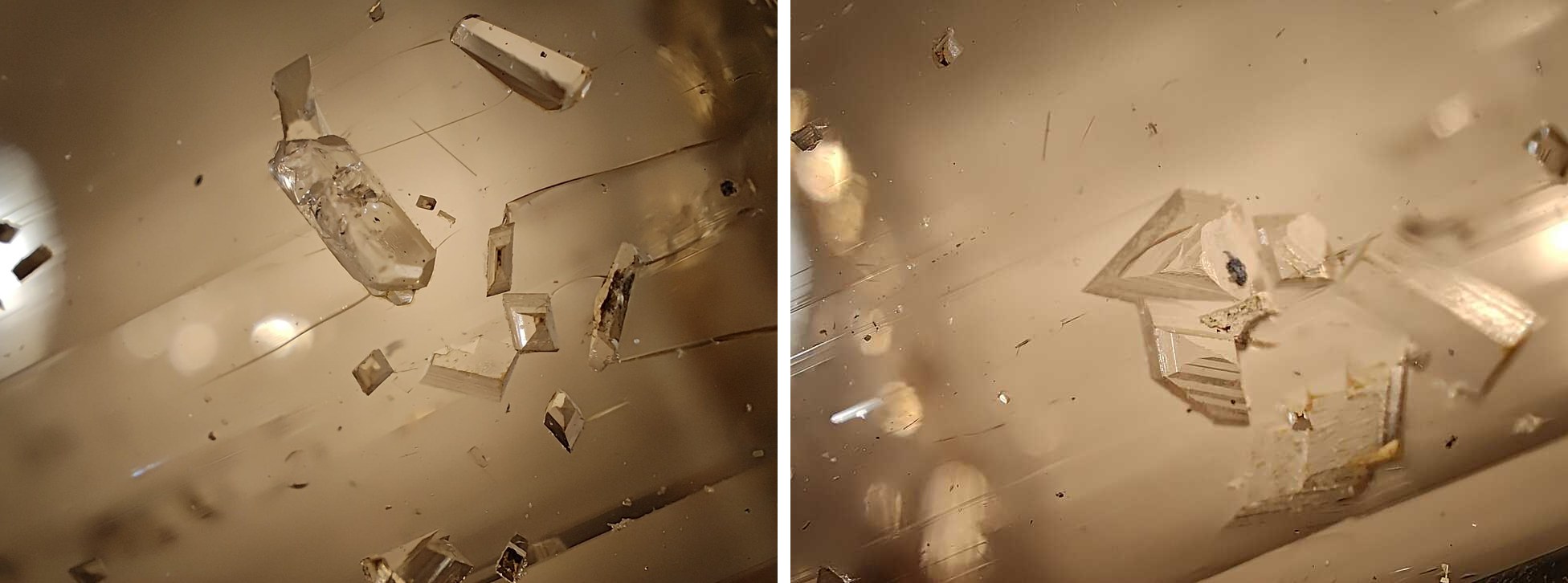
Close up view of Sherry topaz crystal (view specimen). Locality: Esenköy, Yatağan, Muğla, Türkiye. Photographer & Specimen Owner: Erdem Heral.
Scientific and Collecting Significance
The Esenköy deposit offers a unique opportunity to study the formation of pegmatite-hosted topaz in a previously undocumented geological setting. Its position at the intersection of Permian and Permo-Carboniferous layers, combined with likely hydrothermal activity, provides a valuable case study for understanding mineralization processes in such environments.
For collectors, the discovery represents an emerging locality with specimens of high scientific and aesthetic interest. The presence of matrix specimens, in particular, adds to the locality's significance, offering opportunities for further study and documentation of the geological context.
Conclusion
The Esenköy topaz deposit is a significant new locality for gem-quality topaz, with important implications for both mineralogical research and collecting. While preliminary findings highlight the aesthetic and structural qualities of the crystals, much remains to be understood about the deposit's formation processes and mineralogical associations. Continued exploration and detailed analytical work are needed to fully realize the scientific potential of this discovery.
References
- Turkish Forestry Institute. (2023). "Post-Fire Geological Changes in Türkiye."
Written by Tony H. Gill. See his Esenköy topaz and the rest of his collection on EarthWonders.