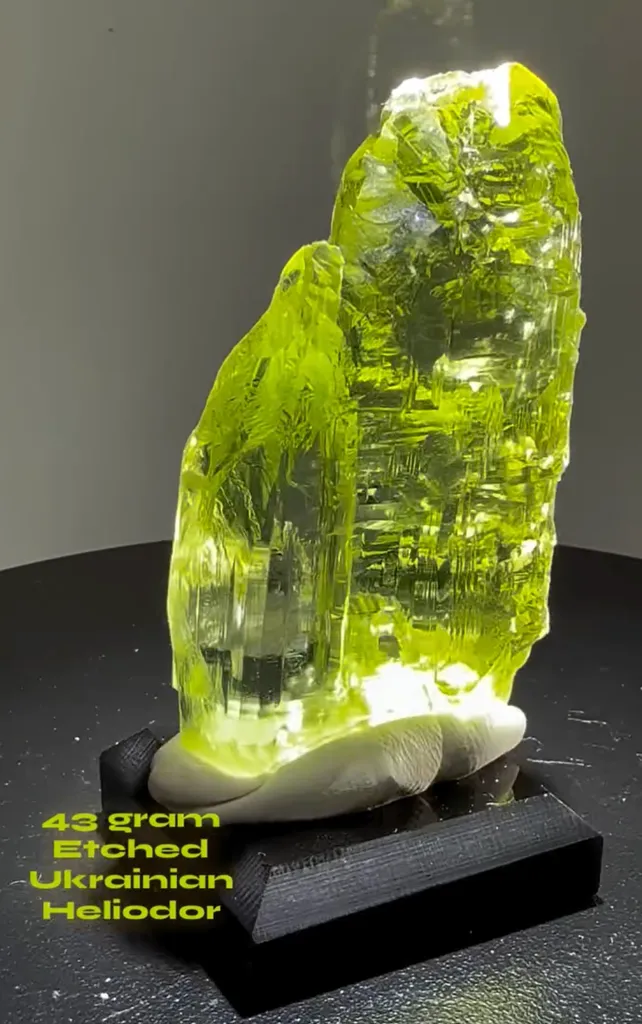
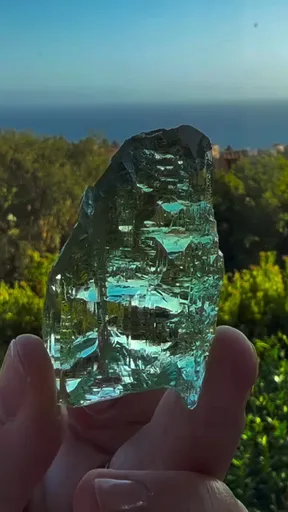
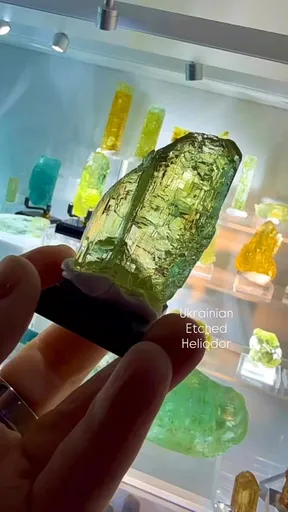
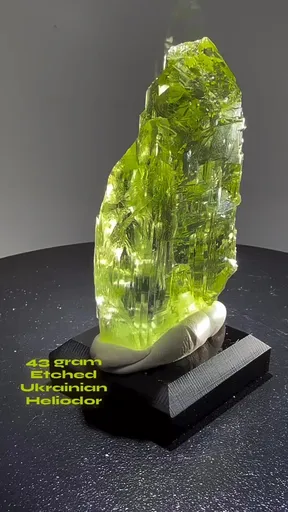
Absolutely one of my favorite Etched Heliodors …
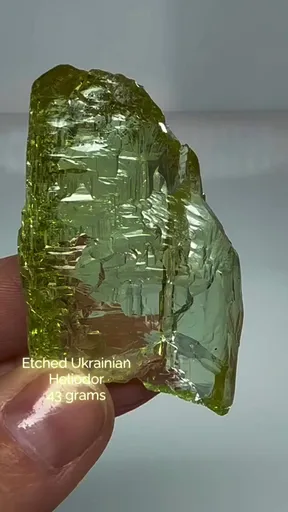
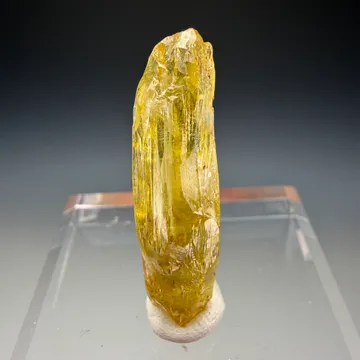
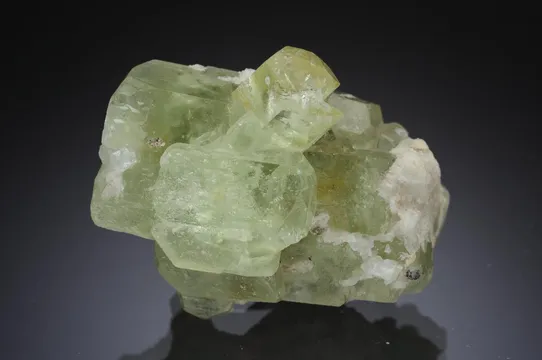
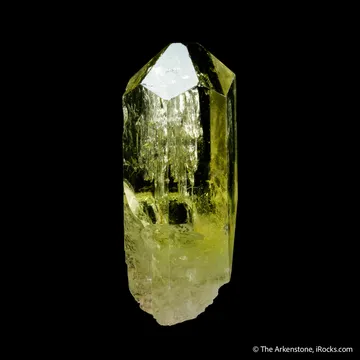
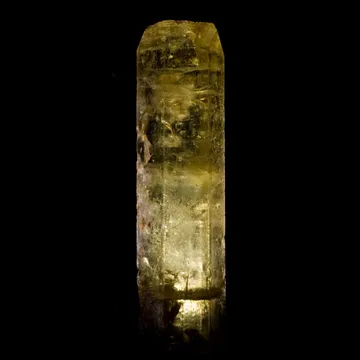
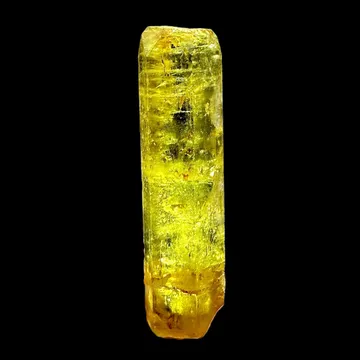
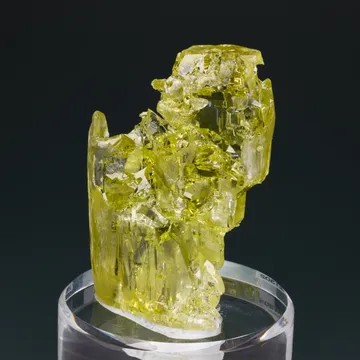
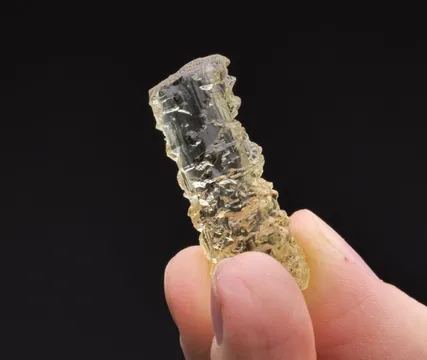
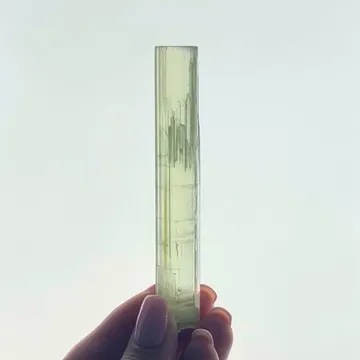
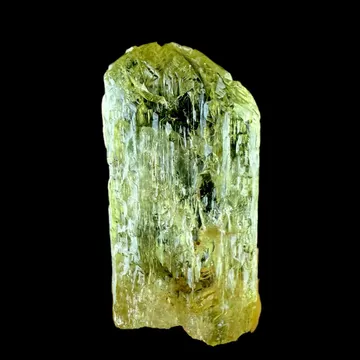
43 gram Etched Ukrainian Heliodor Volyn deposit, Ukraine
Ukrainian heliodor properties include a range of golden yellow to yellow-green colors, hexagonal crystal structure, and a vitreous (glass-like) luster. A distinctive characteristic is the natural "etching" on the crystal surfaces from the Volyn pegmatite field, along with high clarity and color saturation, making these specimens highly prized for collections and jewelry. This rare, high-quality beryl was mined extensively in the mid-1980s but is no longer available as mining ceased in 1996.
Key Characteristics
- Color: Ranging from a light yellow-green to a deep golden-yellow.
- Crystal Structure: Hexagonal, often forming elongated rods.
- Luster: Vitreous (glass-like).
- Transparency: Ranges from transparent to opaque, with high transparency being a desirable quality.
- Etching: A unique characteristic is the intricate, natural surface patterns caused by dissolution processes, a hallmark of Ukrainian heliodor.
- Origin: The Volyn pegmatite field (also known as Volodarsk-Volynskii) in Ukraine is the primary source for this specific type of heliodor.
Physical and Metaphysical Aspects
- Hardness: Heliodor is a hard mineral, ranking 7.5-8 on the Mohs scale.
- Mineral Family: It is a variety of the mineral beryl, colored by iron impurities.
- Metaphysical Properties: Often associated with the solar plexus chakra, heliodor is believed to promote personal power, self-esteem, confidence, and happiness.
Historical Context
- Discovery:
- While the term heliodor was first coined in Namibia, major deposits were later found in Ukraine.
- Mining:
- The Ukrainian pegmatites, particularly the Volyn area, were heavily mined, primarily for piezoelectric quartz, with gem-grade heliodor being recovered as a byproduct.


 Ships from USA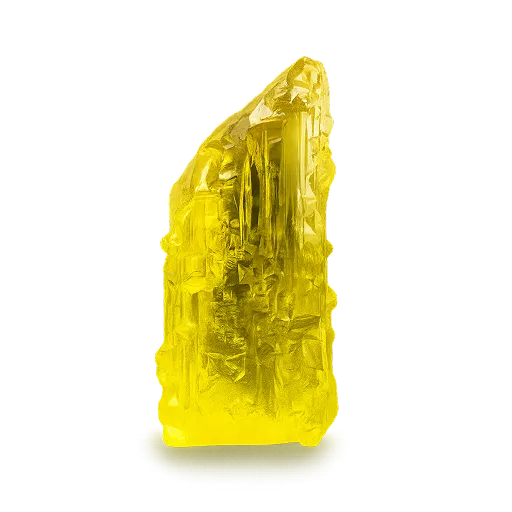
Comments