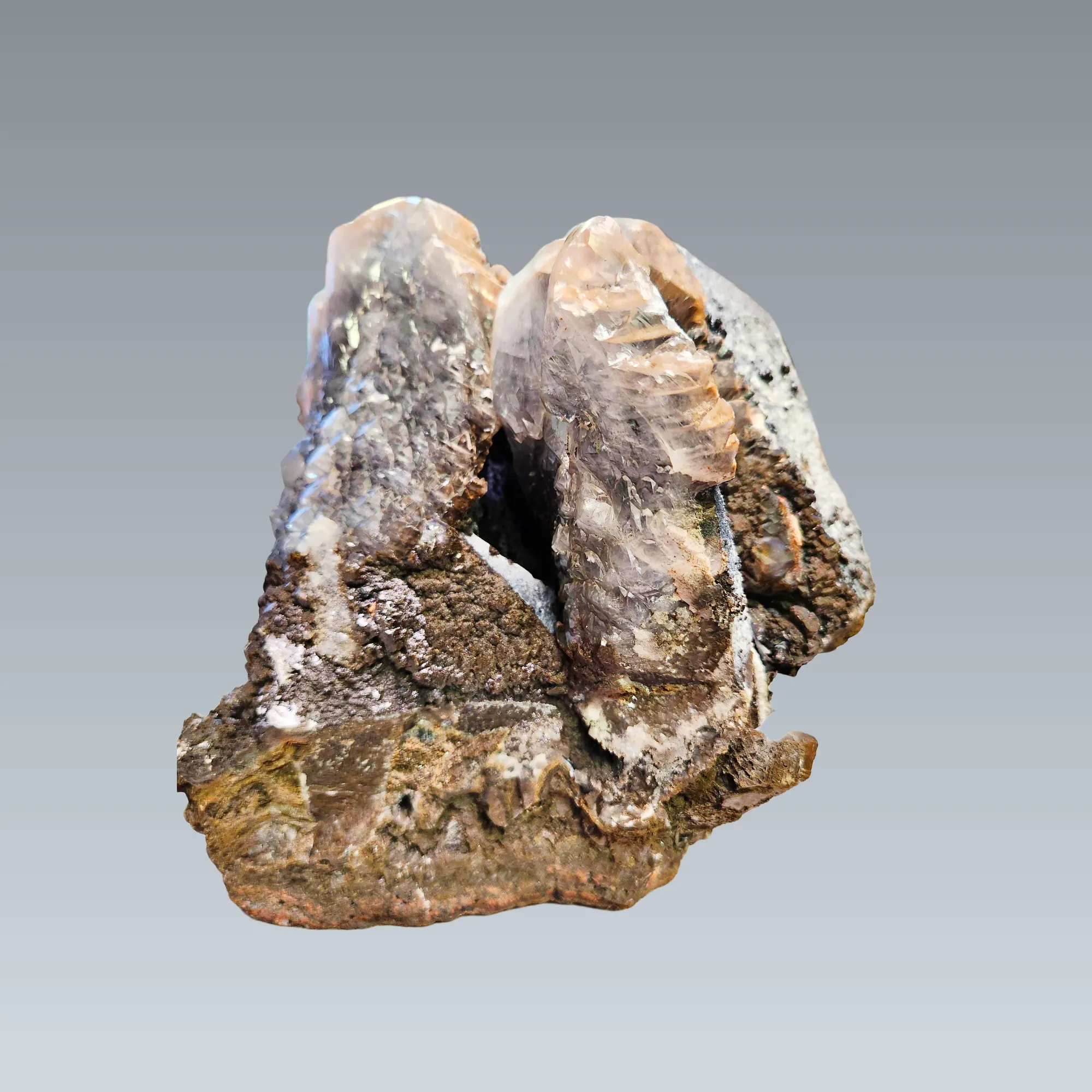
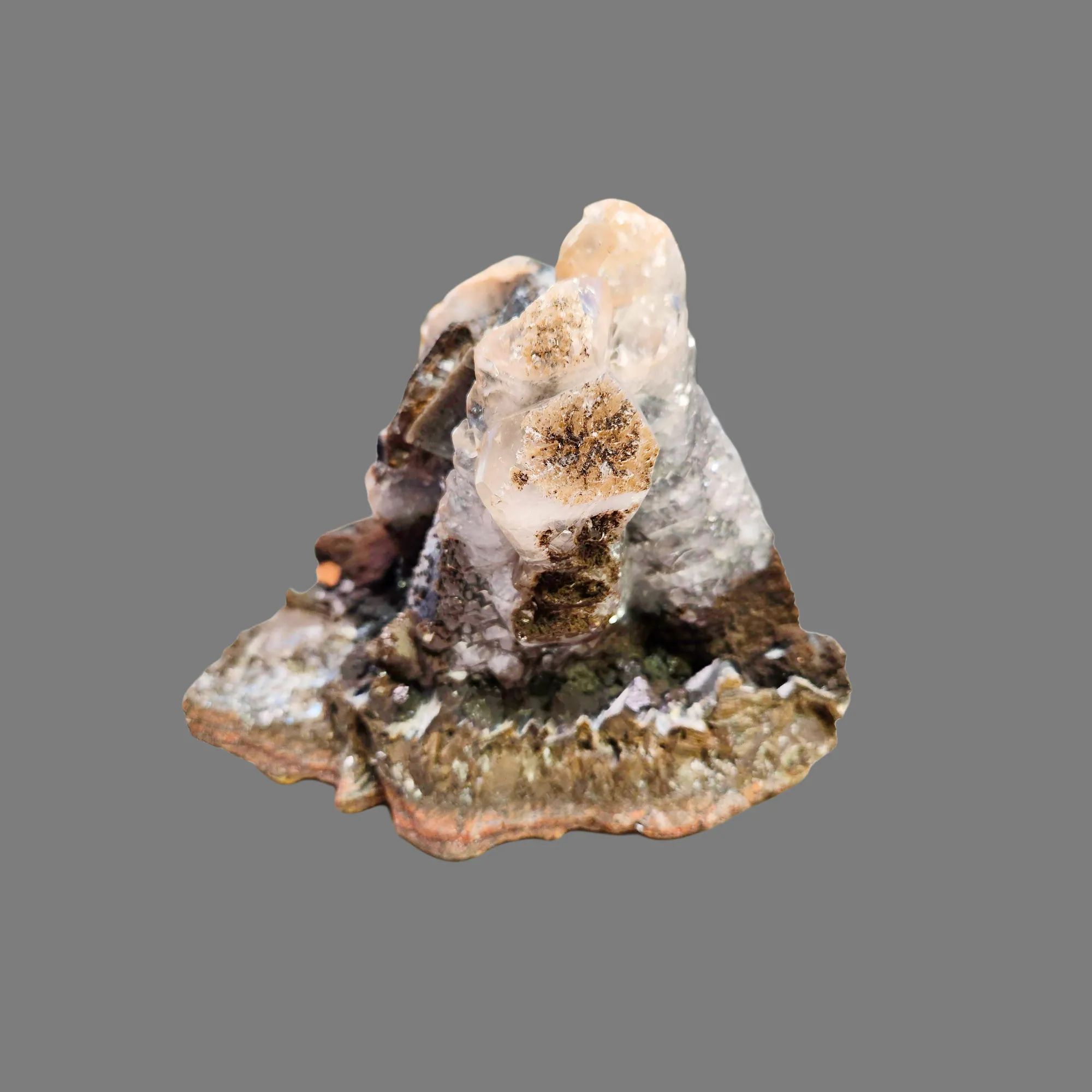
Palmarejo Mine, Palmarejo, Chínipas Municipality, Chihuahua, Mexico
18x22x20cm
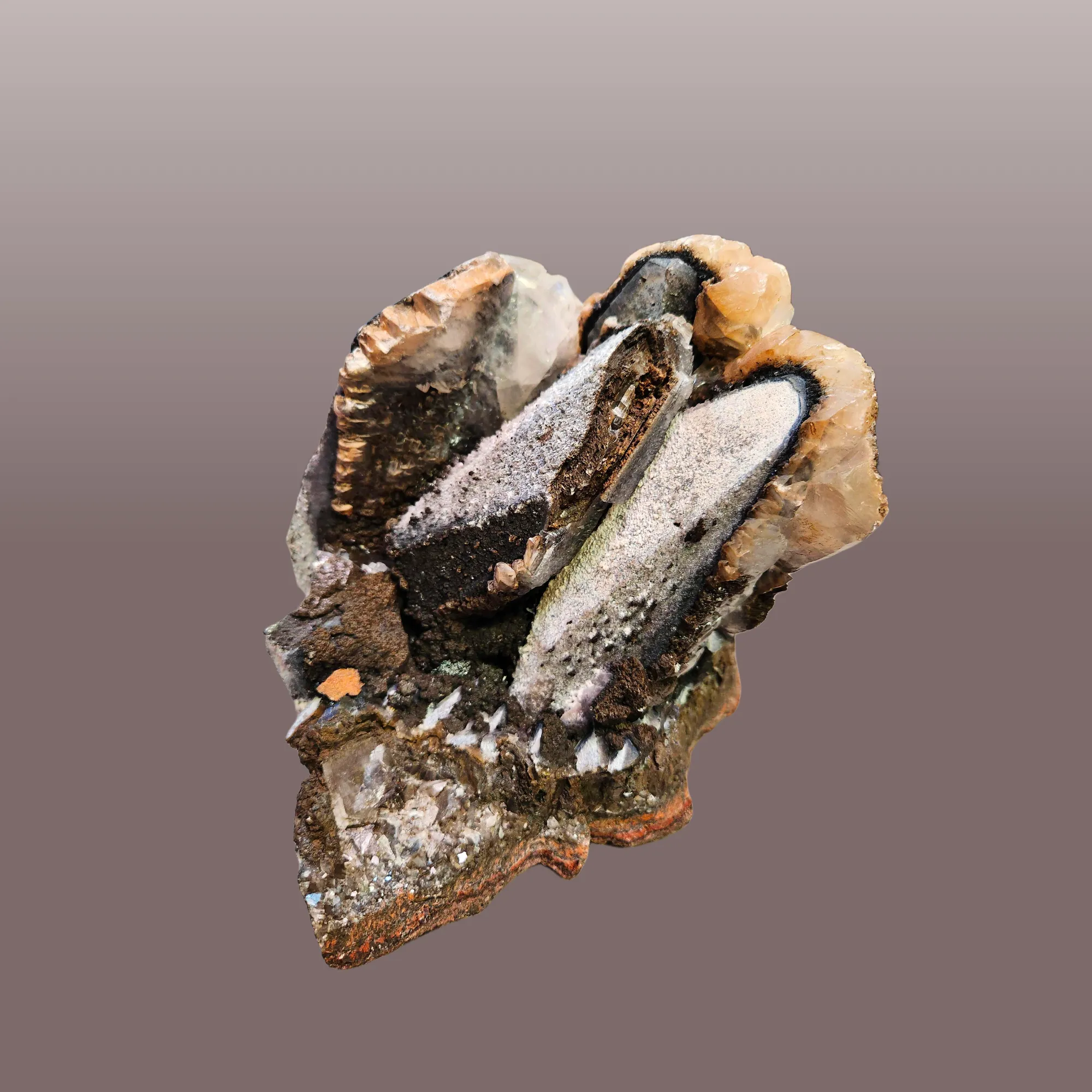
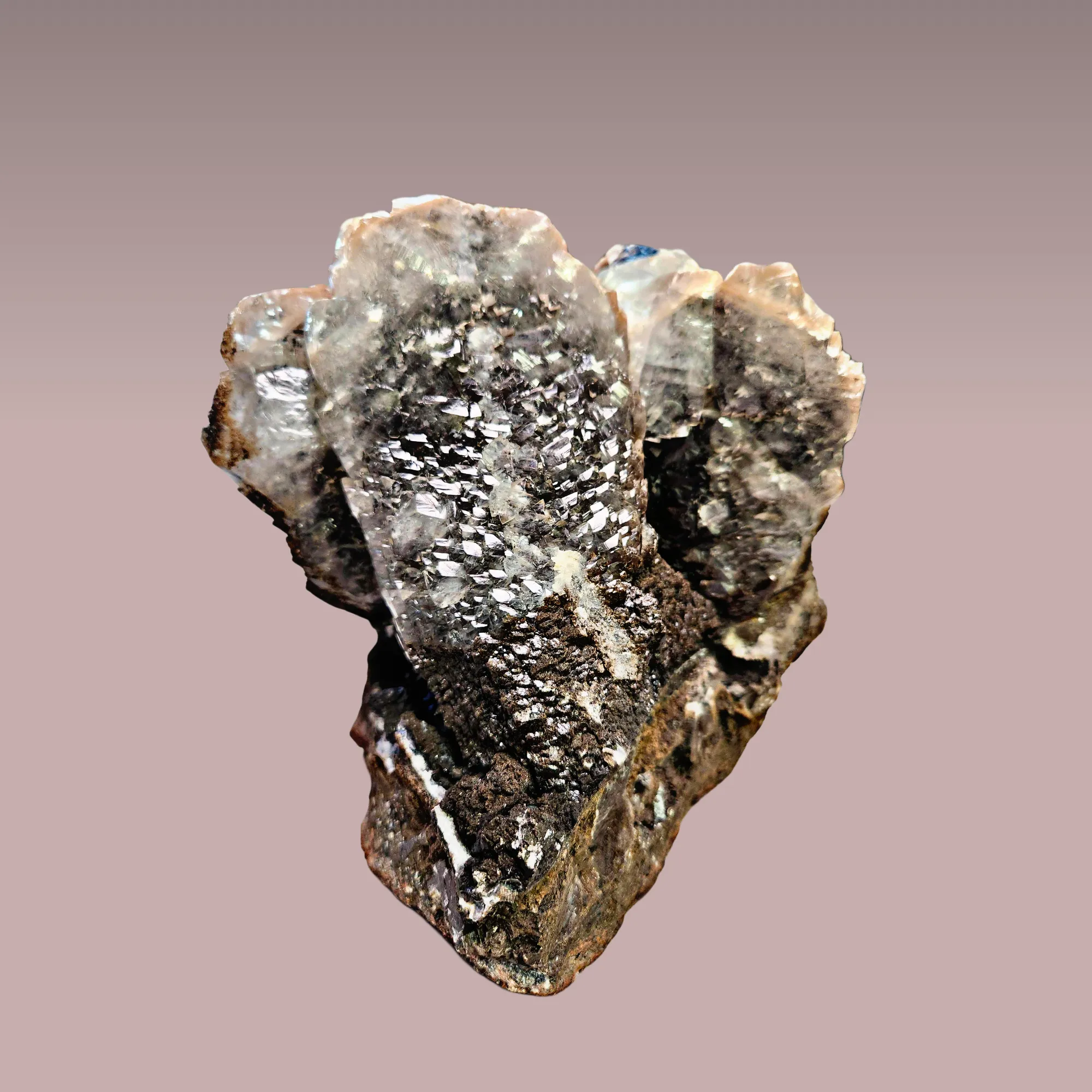
Palmarejo is located in northern Mexico and is part of the historic Sierra Madre Occidental gold-silver belt. Aside from its gold and silver reserves, the area has also become notable to mineral collectors for its distinctive outcrop of twinned, multigenerational calcite specimens. This is a great example with striking contrast and a particularly artistic combination of aesthetics. At its forefront are large, twinned, calcite crystals. Their conjoined form has earned them a few nicknames such as, “rabbit ear” calcites, “heart-twins,” and “fishtails.” The twinned calcite crystals are perched atop a bed of sharp, scalenohedral calcite crystals. All the calcite is naturally coated in a second generation of mineralization, a thin, epitaxial layer of matte, white palygorskite. In sharp contrast to the white areas are tiny, lustrous, black calcite crystals that get their color from inclusions of the manganese oxide, romanèchite. As if applied by an artist, the color zones are preferential, having formed only on selective areas that happen to punctuate the crystals’ forms. Yet another, later generation of calcite crystals has also formed along the outer edges of some of the crystals, framing them with a contrasting, tan coloration.