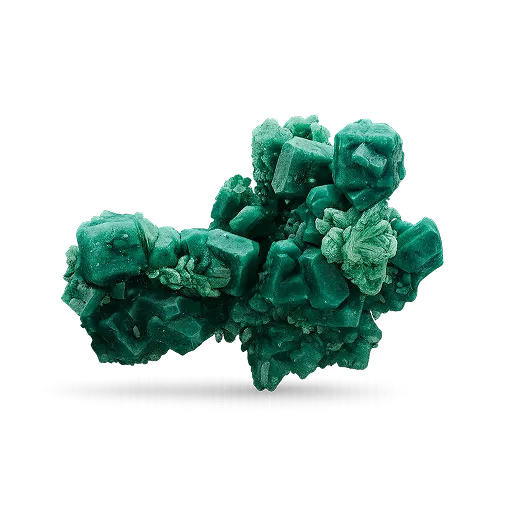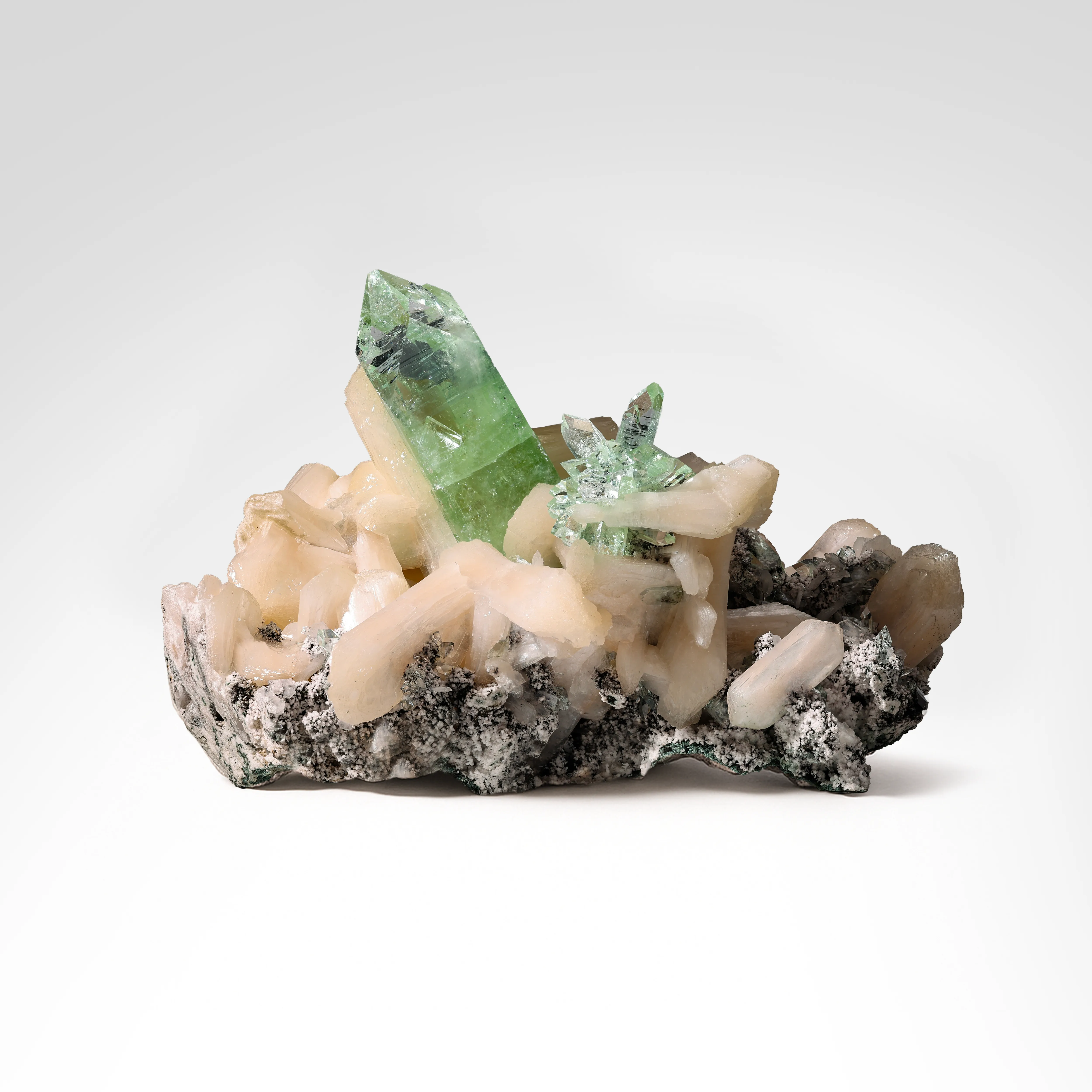
The Deccan Traps of western India, notably in the Jalgaon, Pune, and Nasik districts of Maharashtra, host some of the world’s finest apophyllite and stilbite specimens; these minerals crystallize in amygdaloidal cavities within the tholeiitic basalt flows of the Tertiary volcanic province. Apophyllite appears as lustrous, transparent to greenish or colorless prismatic crystals typically terminated by steep pyramidal faces, often clustered in groups atop stilbite or other zeolite minerals. Stilbite forms sheaf-like or bow-tie aggregates of soft pink to white tabular crystals, frequently found intergrown with apophyllite on the basalt matrix and prized for its pastel hues and fountain-like crystal sprays . Collectors value these Indian zeolites for their aesthetic formations and relative abundance, as seasonal quarrying and well-drilling in the Deccan Traps continue to yield. In spite of such abundance, fine examples in large sizes like this are very hard to find.