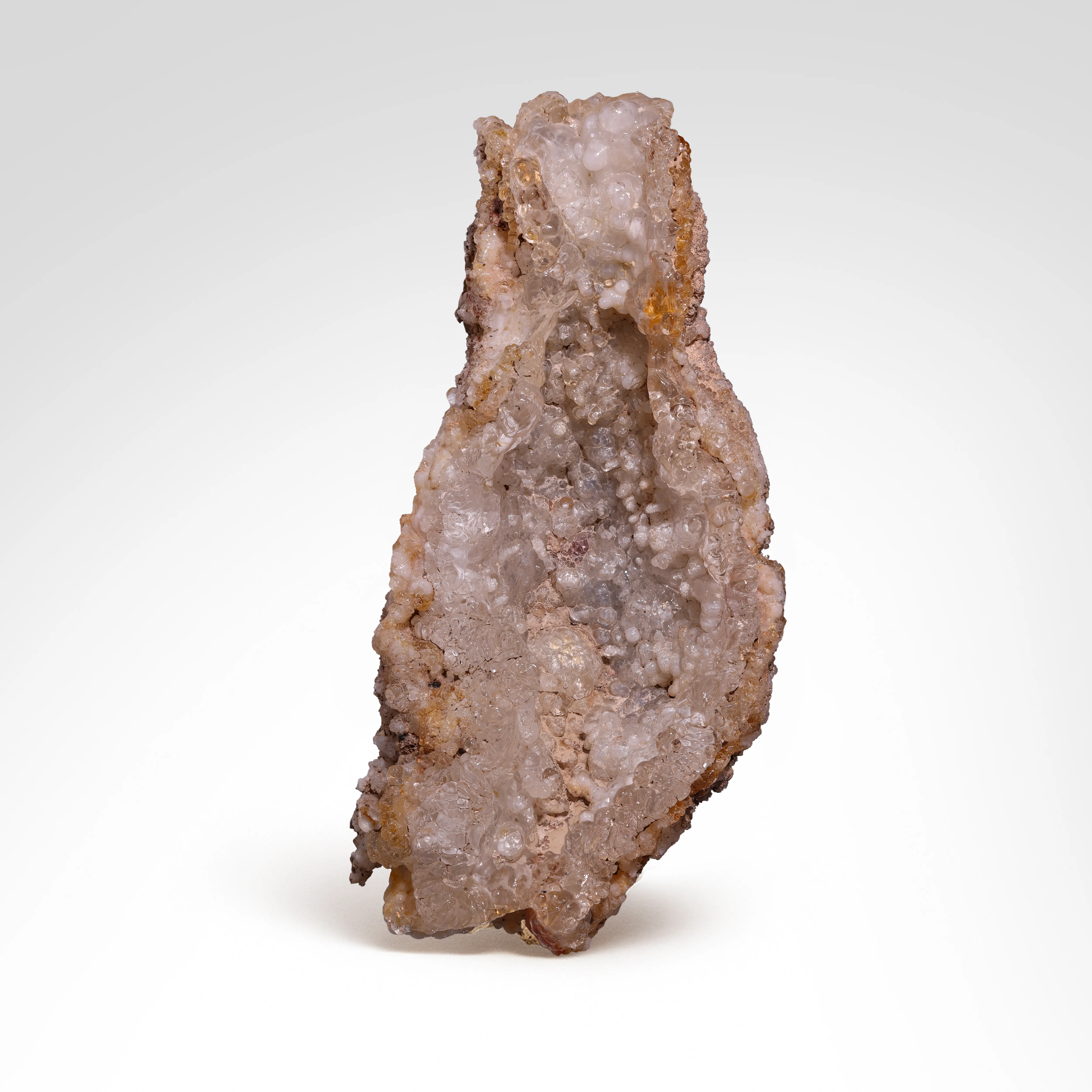
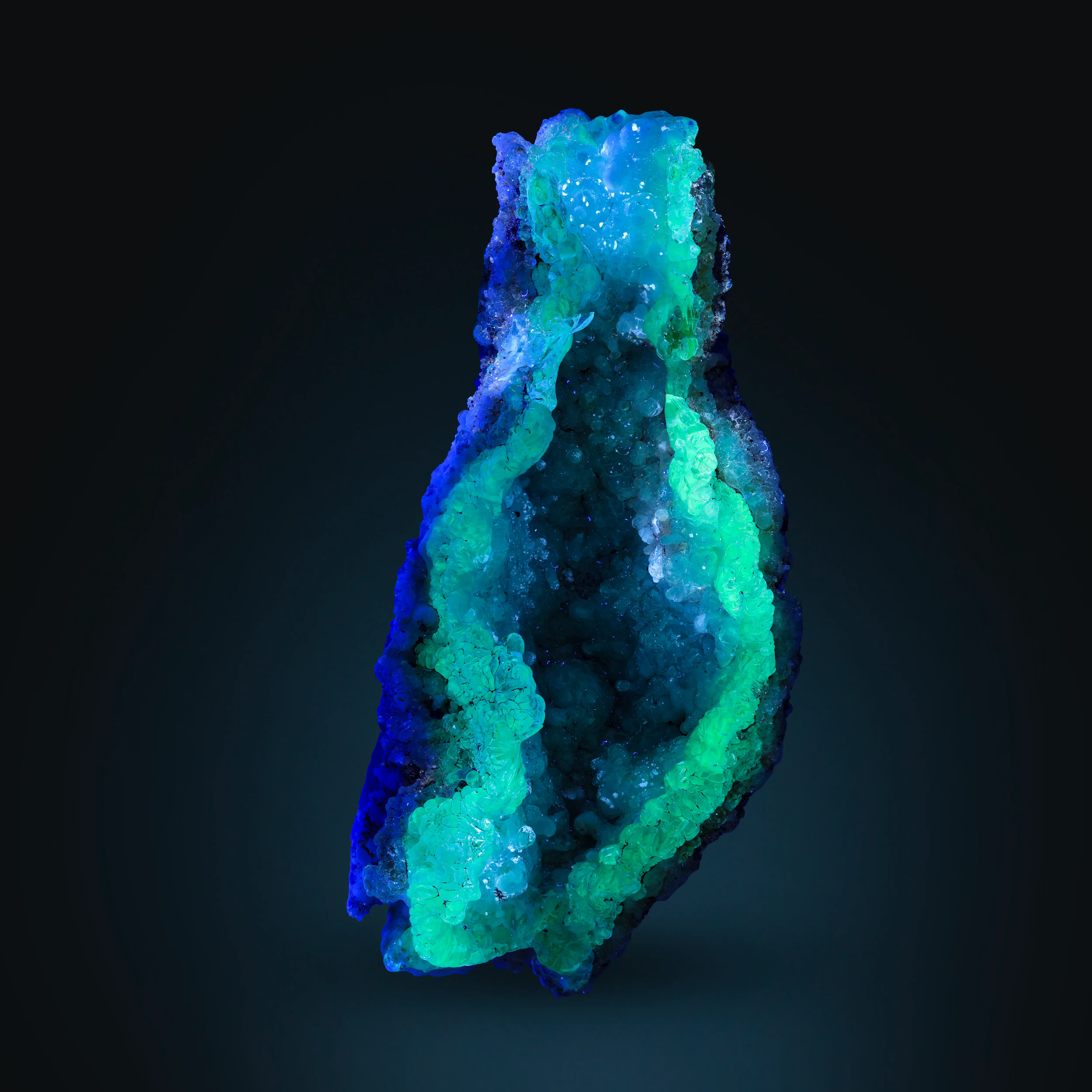
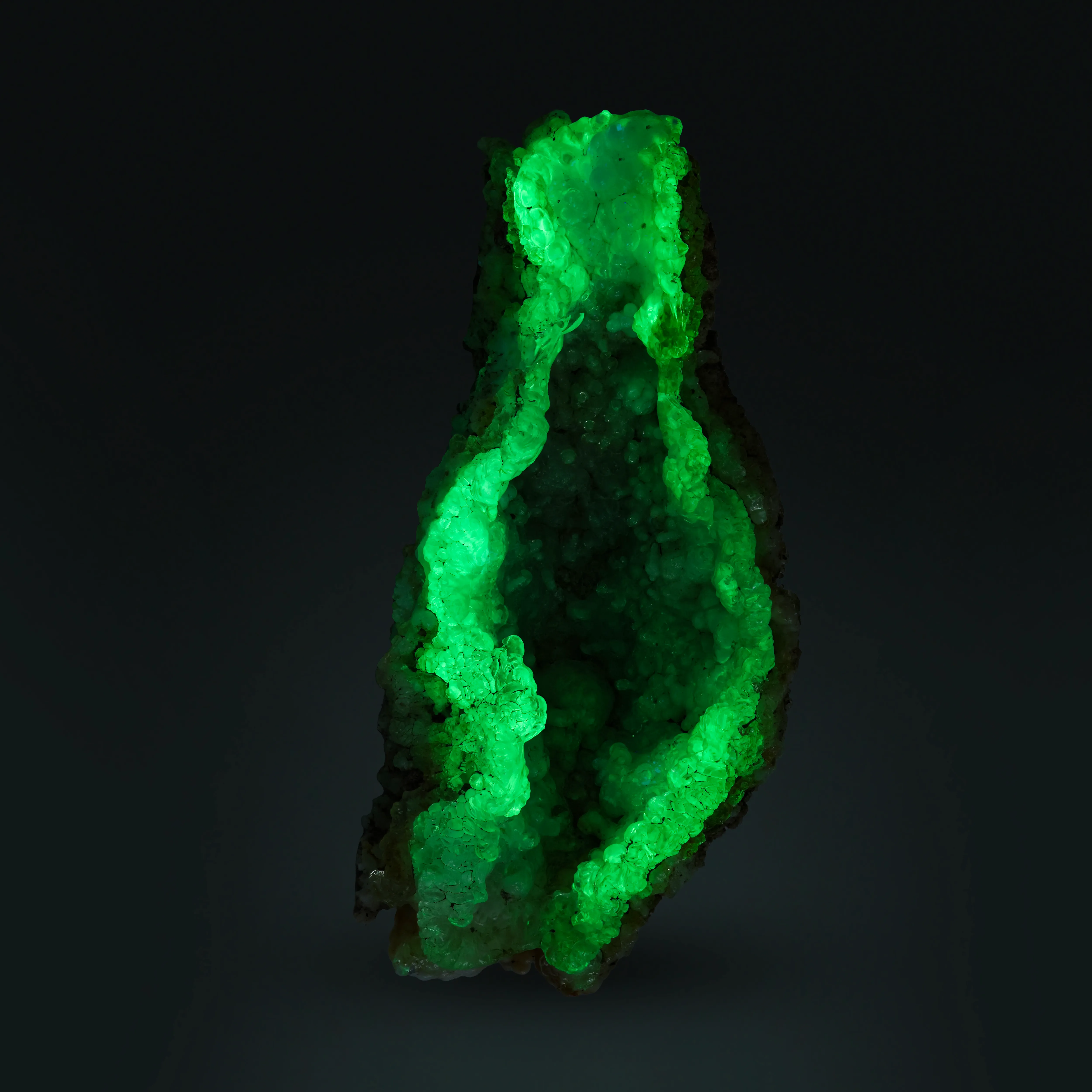
Hyalite opal geodes from Mexico form in rhyolitic volcanic rocks—most notably at the Candelaria mine near Moctezuma, Sonora, and in mid-Tertiary caldera-related rhyolites of Zacatecas—where silica-rich, uranium-bearing fluids filled gas cavities and cooled to produce botryoidal, colorless hyalite opal often accompanied by small quartz “flowers” within a hollow, rhyolitic shell. These geodes typically range from a few to several centimeters across and are prized for their bright green fluorescence under short-wave UV, caused by trace uranyl impurities, as well as their aesthetic interplay of glassy opal and quartz against the rough volcanic exterior.
This specimen is unusually large for the deposit, a fine example of this rare mineral. It glows with a vibrant green color under UV light.